Prioritising: Eisenhower and Eating Frogs

We are all busy. We have many things competing for our attention all the time. In this week’s blog, I want to introduce you to the techniques that I use to help me to prioritise all the things I have to do. They really work!

The Eisenhower Matrix

The Eisenhower Matrix or Grid. It’s often drawn in a different configuration, but I always think of it this way, like a graph!

The idea is simple. You make a simple grid with four quadrants, as in the image above, and you place the tasks on your to do list in one of the four quadrants according to how urgent, and how important, they are.

  • Quadrant 1 – urgent and important: DO NOW. Items in the top right corner of the grid are the most important and the most urgent. They need to be done right away and they cannot wait. The aim is to work smart to make sure as few things as possible end up in this quadrant, by doing them in plenty of time so they don’t become urgent. But sometimes, stuff happens, and it needs to be dealt with right away!
  • Quadrant 2 – important but not urgent: WORK IN THIS ZONE. This is where I try to spend most of my time. Here, you are dealing with things that are important, but not yet urgent. Spending time in this zone should prevent things moving into quadrant 1 where you get panicky as the deadline approaches. It’s also really satisfying to know that you are spending your time on the stuff that matters.
  • Quadrant 3- urgent but not important: GET RID. This is stuff that needs to be done but you don’t really want to spend time in this quadrant. Get this stuff done as quickly as possible – or, if you are lucky enough to have someone else around, get them to do it for you!
  • Quadrant 4 – not important and not urgent: DON’T BOTHER. If it’s not important, and it’s not urgent, don’t bother! Just be careful that the thing you’re not bothering with now won’t actually become important later – otherwise, it might suddenly pop up in quadrant 1 and send you into a panic!

When I first came across the Eisenhower Matrix, it was in a work context. I have used it ever since to help me prioritise my work as a teacher, a school leader, and as a Headteacher. It’s become so ingrained in my mind that I have found it also spills over into other parts of my life as well! Sometimes, the most important thing to do is spend time with your family, or go for a walk, or to take some exercise. Prioritising those things alongside work is essential for my own wellbeing. Over time, I think I have got better at weighing up which I need to prioritise and when – but nobody’s perfect and we’re learning all the time.

Which leads me to my second technique.

Eat the biggest frog first

“If it’s your job to eat a frog, it’s best to do it first thing in the morning. And if it’s your job to eat two frogs, it’s best to eat the biggest one first.”

Mark Twain

I first came across this quotation from a colleague Headteacher, who shared it with at an event she was leading. It really stuck! What Mark Twain was saying is that, sometimes, we have unpleasant things to do. Things that we don’t want to do, but unfortunately we have to. In those situations, it’s best to get them out of the way as soon as possible. And, given the choice of two things you could be doing, it’s best to get the most difficult and horrible one out of the way first.

I’ll be honest, I don’t always follow this advice. Sometimes, like anyone, I’ll put off that difficult and horrible job and tick off a few simpler and easier ones first. But I know I’m delaying the inevitable and that, sooner or later, I’m going to have to eat that frog. So, wherever possible, I try to follow Mark Twain’s advice and get on with that difficult, horrible job first. Get it done, get it out of the way, and after that everything else seems like plain sailing.

But don’t actually eat a frog. It’s a metaphor. You knew that, right?

Getting your priorities straight

I have found that these two simple techniques really help me keep my priorities straight, and make sure that the important work of running a school gets done. Students could apply these techniques to their school work and home life priorities; maybe even some of the grown-up readers of the Headteacher’s Blog might find them useful too? Let me know if you did – or let me know how you prioritise and make sure you get stuff done. We’re always learning!

Welcome back assembly: kindness

In this week’s “welcome back” assembly, I focused on one of the the Academy’s three core values – and the value for this term – kindness. Before, that I paid tribute to His Royal Highness the Duke of Edinburgh, who died over the Easter holidays.

The Duke of Edinburgh Award Scheme, started by Prince Phillip in 1956 (the same year that our school was founded), has made a significant difference to countless young people at our school and beyond. The scheme’s focus on young people improving themselves by developing a skill, and helping their communities through volunteering, is an excellent match for our own purpose – to inspire and enable young people to make a positive difference. We thank His Royal Highness for founding and promoting the Award Scheme named for him, and we commit to continuing the scheme in his name as part of his legacy.

Kindness

My assembly urged our students to think about kindness in three ways:

  1. Be kind to others
  2. Be kind to the environment
  3. Be kind to yourself

Be kind to others

Being kind to others is a foundation stone of our Academy culture. We expect everyone in our Academy community to treat one another with kindness. We recognise that nobody is perfect, and that sometimes we all make mistakes – but that when this happens, putting things right is an essential part of our learning and growth.

In the assembly, I spoke about how a single act of kindness has a ripple effect, improving life at the Academy for countless others. A kind word, helping somebody out when they are having difficulties, or noticing when somebody else is struggling, can all help make somebody else’s day better. And when they have a better day, they are more likely themselves to offer a kind word to somebody else in turn. By this method, the wave of positivity ripples out across the Academy community – and beyond.

Of course, the opposite is also true. Unkind words and deeds damage the culture of our Academy by making somebody else’s day worse. That person’s negative experience can also ripple out as they may pass the negativity on to others. This is something we are all keen to avoid, and this is why I urged all our students through the assembly to think about the impact of their words and deeds on other people – and to think before they speak or act.

Finally, I spoke about the importance of making sure that everybody felt welcome, felt included, and felt that they belonged at Churchill Academy & Sixth Form. We have seen issues in wider society over this past year with discrimination and prejudice. We are determined that Churchill will remain an inclusive, welcoming community. It is everybody’s responsibility to ensure that we go out of our way to ensure that this happens, and that everyone “belongs” – no matter their background, where they come from, the colour of their skin, their gender or sexual identity or orientation, their family or who they are. These values of tolerance and inclusion are sacred to us at Churchill.

Be kind to the environment

We are lucky at Churchill to have a wide open, rural site, with lots of green spaces. Over the past couple of years we have made a significant investment in continuing to improve this, with our rooves now covered in solar panels, beautiful planting surrounding the central Broadwalk path in the middle of our site, and new trees and saplings planted all around the entire length of the new perimeter fence. Just this week, our students were out working with the Woodland Trust to plant saplings around the site.

It is essential that we all look after the beautiful environment. This includes reducing our waste, caring for our surroundings, and putting all of our litter in the bins. I saw the news coverage of public spaces over Easter as lockdown eased, with many members of the public leaving beautiful green spaces strewn with litter and debris. We will not tolerate that at Churchill – and we hope to instil good habits in our young people so that they will look after the environment beyond our Academy, as well as within it.

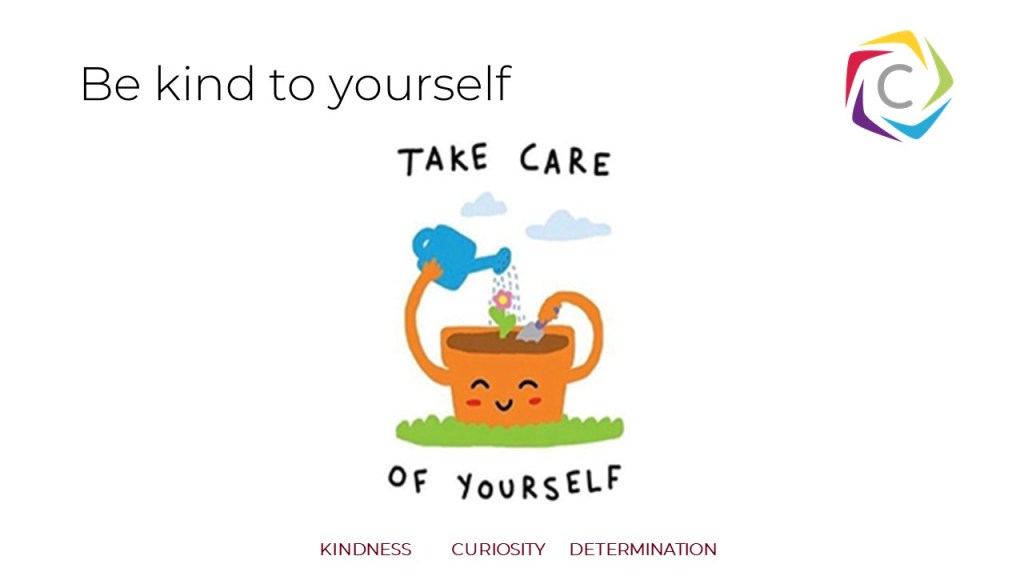
Be kind to yourself

Finally, I urged all our students to be kind to themselves. This past year has been tough on everyone, but children and young people especially have seen unprecedented disruption to education and society. They now face an uncertain future as society sets about recovering from the pandemic.

In this context, it is especially important that our students look after themselves. This does not mean lowering our expectations, our our standards – students must continue to push themselves to be the very best that they can be. But it does mean being honest with themselves, with us, and with each other about what is possible at this moment in time, and what is realistic. It means developing and maintaining healthy lifestyles in terms of diet, exercise, work and sleep. It means talking about problems when they arise, and not letting them fester.

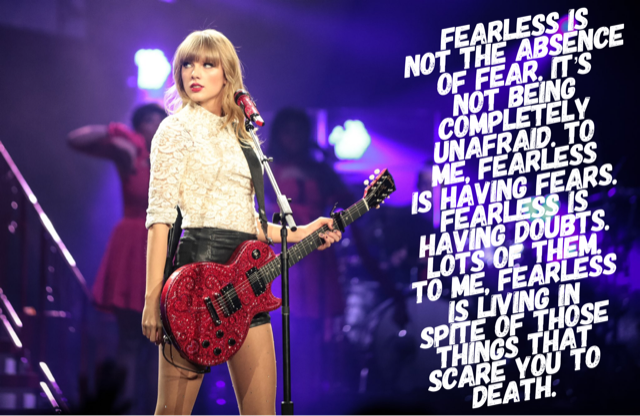
It is natural and normal to feel uncertain and frightened, especially when looking around at the world as it is today. But, as Taylor Swift herself said, living a “fearless” life does not mean that we have no fear. It means that we acknowledge what is frightening in the world around us, and we succeed in it anyway.

Happy Easter

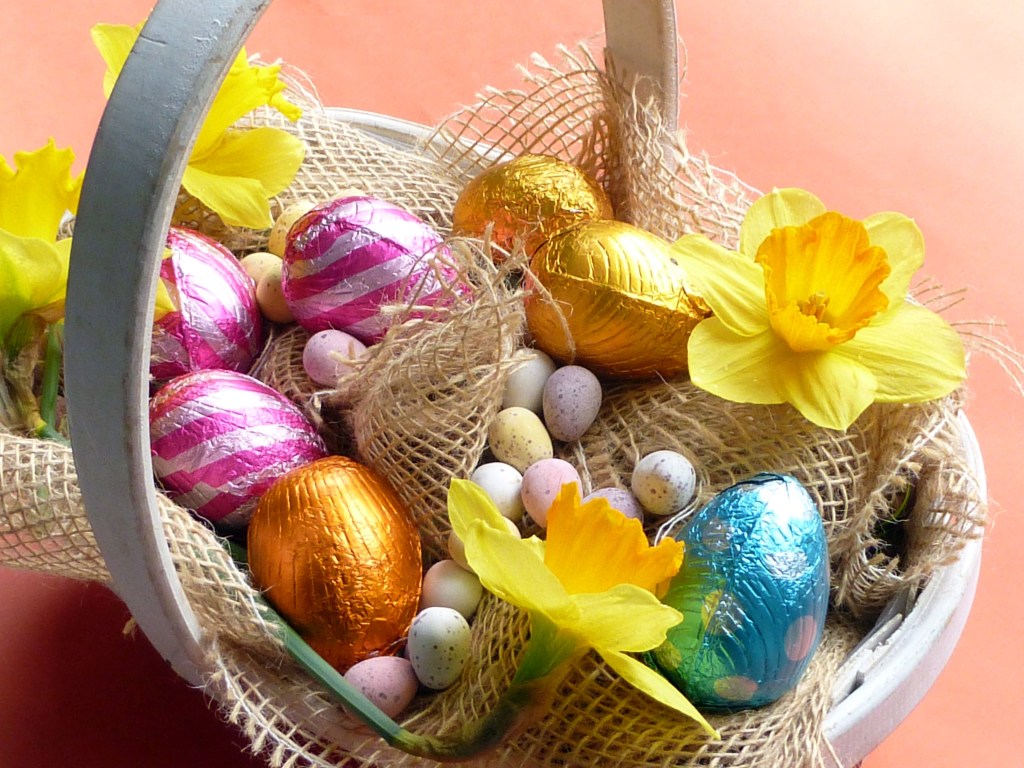
The date of Easter moves around in the calendar, according to the lunar cycle. This is because it takes place on the first Sunday after the Paschal Full Moon, which is the name give to the first full moon after the vernal equinox. The vernal equinox (when the Sun is exactly above the equator, so that day and night on Earth are of equal length) takes place on March 20th each year, but because the lunar cycle is not synchronised to the calendar year, this means that the date of Easter moves around. It can occur anywhere between March 22nd and April 25th!

We now know Easter as the Christian festival to celebrate the resurrection of Jesus from the dead, but it has its roots in earlier pre-Christian festivals to celebrate the awakening of nature from its winter slumber – a natural resurrection of its own. The very name of the festival stems from the name of an English pagan goddess – Eostre – who was celebrated at beginning of spring. The only reference to this goddess comes from the writings of the Venerable Bede, a British monk who lived in the late seventh and early eighth century AD. He was so influential on developing Christian theology, that the name of the festival stuck to the celebration of Christ’s resurrection, and spread throughout the Christian world.

This year, more than any other, the theme of resurrection and rebirth seems wholly appropriate. As we emerge – gradually – from lockdown, it does feel like an awakening. The unusually warm weather has certainly helped, alongside the daffodils and emerging blossom on the trees.

The Academy, too, has come back to life since March 8th. Classrooms, playing fields and social areas are once again full of staff and students, making real human connections rather than the stilted digital substitutes we have had to use through remote learning. It feels like a resurrection and a rebirth – and we give thanks for the progress we have made.

I wish all of you in our Academy community a happy, safe and restful Easter. We will see you back at school on 19th April – we have a lot to look forward to!