Back in November 2023 I published a post on this blog about AI: AI and ChatGPT: friend or foe?. In that post, I talked about the potential benefits, but also the risks, of using AI tools in school work.
This is a fast-moving field and, just this week, we have had updated guidance on the use of AI in assessments from the Joint Council for Qualifications (JCQ), the body that oversees examinations.
This guidance is especially relevant to students in years 10-13 who are studying for public examinations – especially those courses which include a coursework or non-exam assessment (NEA) element. However, building good habits in the correct use of AI is important for all students.
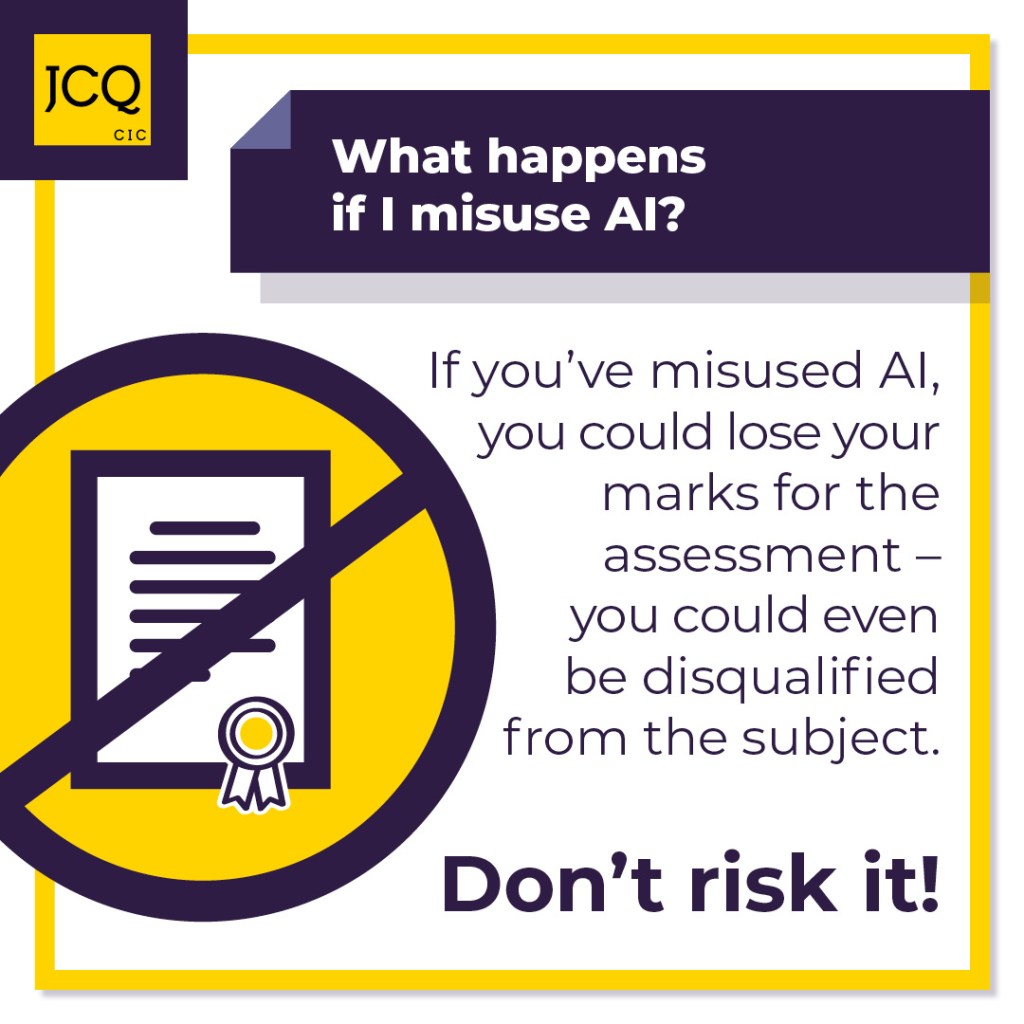
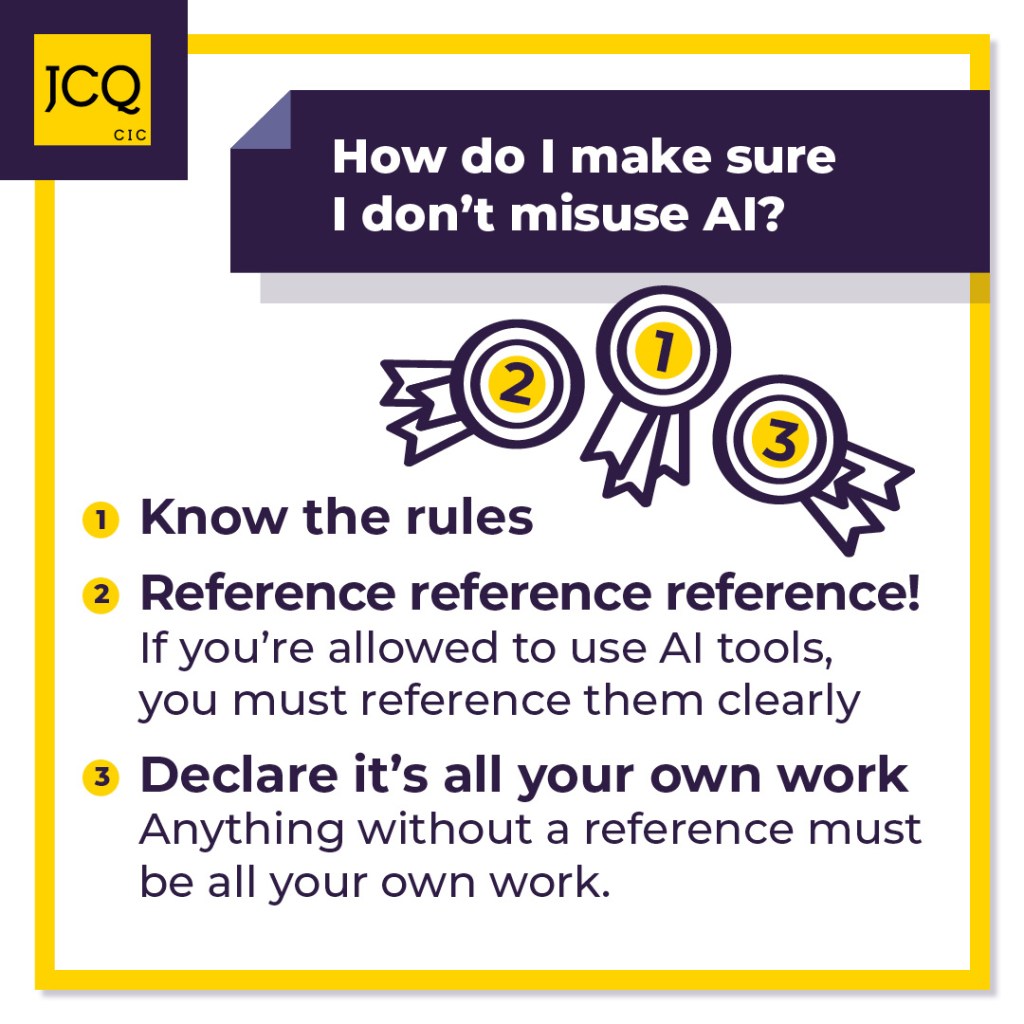
The key points in the JCQ guidance for students are as follows:
- Work submitted for assessment must be your own and reflect your knowledge, skills, and understanding.
- Misuse of AI (copying, paraphrasing, or failing to acknowledge AI-generated content) is malpractice
- AI generated content must be properly referenced and reliance on AI will not earn marks.
- AI misuse can lead to disqualification or a ban from future qualifications.
- You must sign a declaration confirming your work is your own. False declarations have serious consequences.
- Understand and follow your school’s exams policies.
- Be aware that AI detection tools may be in use, and examiners and assessors can identify AI generated content.
There is a quick guide for students on the JCQ website here, or via the image below.

AI is going to be part of all our lives as we move forward. Learning to use it correctly and properly is essential – and that means making sure we follow the guidance to ensure that the work we submit is our own, not computer generated.
That’s why I wrote this blog all by myself!
 The Headteacher's Blog