
Prime Minister Winston Churchill waves to crowds in Whitehall on the day he broadcast to the nation that the war against Germany had been won, 8 May 1945 (source)
In May 1945, fighting in the Second World War had continued for nearly six years. However, following the D-Day landings in June of 1944, the Allied armies from Britain, France, Canada and the United States were advancing on Berlin from the West, whilst Soviet forces were attacking from the East. Nazi Germany, surrounded, agreed to a complete surrender on 7th May 1945. Prime Minister Winston Churchill broadcast a speech to the nation to say that hostilities would cease at one minute after midnight on the 8th May 1945. That day would be a public holiday known as Victory in Europe Day, or VE day.

Crowds in Piccadilly on 8th May 1945 (source)
On VE Day itself, huge crowds gathered in the streets to celebrate. The Prime Minister and the royal family appeared on the balcony of Buckingham Palace. Such was the enthusiasm of the crowd that the royal family made eight appearances on the balcony that day to celebrate with the people. After dinner, the 19-year-old Princess Elizabeth – now our Queen – and her 14-year-old sister Princess Margaret left the palace and celebrated with the people, singing and dancing in the streets. Dressed in her Auxiliary Transport Service uniform, the future Queen avoided much notice. “I pulled my uniform cap well down over my eyes,” Elizabeth recalled in 1985. “I remember lines of unknown people linking arms and walking down Whitehall, and all of us were swept along by tides of happiness and relief.”
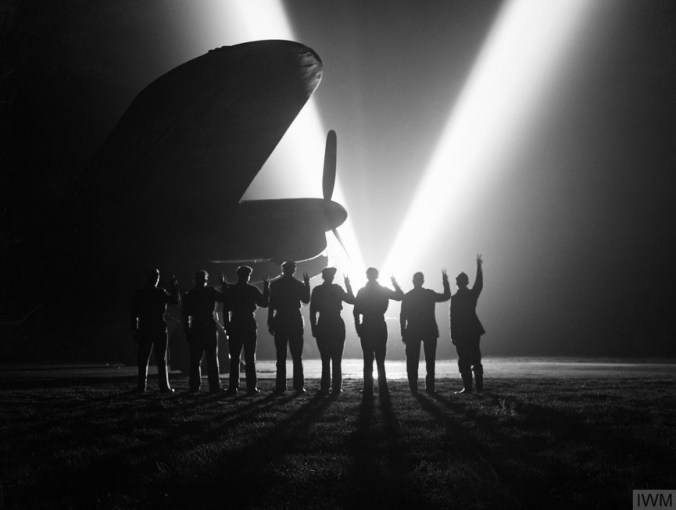
Ground crew on a RAF Bomber Command station return the ‘V for Victory’ sign to a neighbouring searchlight crew. Silhouetted is the nose of a Lancaster bomber. (source)
Despite the celebrations, the war was not over. Fighting continued in the Asia-Pacific region until the dropping of atomic bombs on the cities of Hiroshima and Nagasaki forced the Japanese to surrender on 15th August 1945 – VJ Day. By the end of the war, 18,000,000 service personnel and 45,000,000 civilians had been killed. Families had been devastated. Cities across the world were in ruins. Rationing– the control of how much food and essential commodities people could buy – continued until 1954.

Two small girls with their flags in the ruins of Battersea, London, 1945 (source)
This year, on the 75th anniversary of VE Day, we find ourselves again involved in a collective struggle. I don’t feel comfortable with some of the comparisons between the coronavirus outbreak and World War Two. Our contribution to this effort is not to leave our homes and go off to fight, but rather – for most of us – it’s to stay at home and limit the spread of the disease, to ease the pressure for those on the front line. The virus is not going to surrender: victory will be slow and gradual. But what is clear is that, if we are to win in the battle against COVID-19, it has to be a collective effort. Success in this struggle relies on all of us working together, supporting each other, ensuring that our actions protect those more vulnerable than ourselves. We must all play our part.
So, when I stand for the two minutes’ silence on Friday morning, I will be thinking of all those heroes who lost their lives to defend our freedom and our way of life, not only in the war of 1939-1945, but on the front line of the struggle against COVID-19. I am – we are – forever in their debt.
More about VE Day 75
- There are resources to support home learning about VE Day from the Royal British Legion here and from the BBC here.
- You can leave a VE Day message here.









 Keeping with the tradition of naming our houses after the houses of the British royal family, the new house will be called
 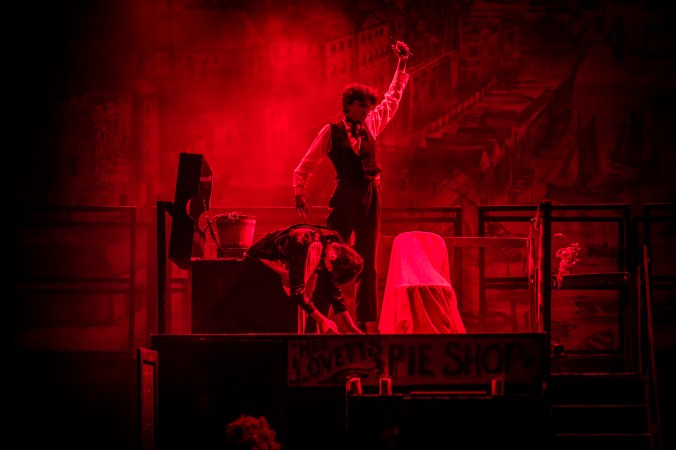 What a show! Audiences last week were treated to spectacular performances of Stephen Sondheim’s musical Sweeney Todd: The Demon Barber of Fleet Street. It’s not every school that could manage a production this complex, this musically and theatrically challenging, this dark…but Churchill’s students didn’t just manage it, they pulled it off in style. Sondheim’s complex score was performed note-perfectly by the pit orchestra. On stage, the singers delivered the overlapping, rapid-fire songs with such confidence and gusto that the audience were carried along with the story, the characters and the experience of grimy, backstreet Victorian London, brought to life by the wonderful sets, costumes and production design.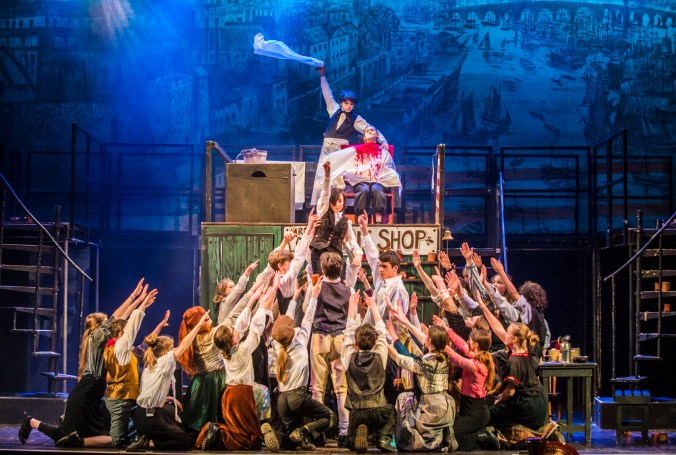


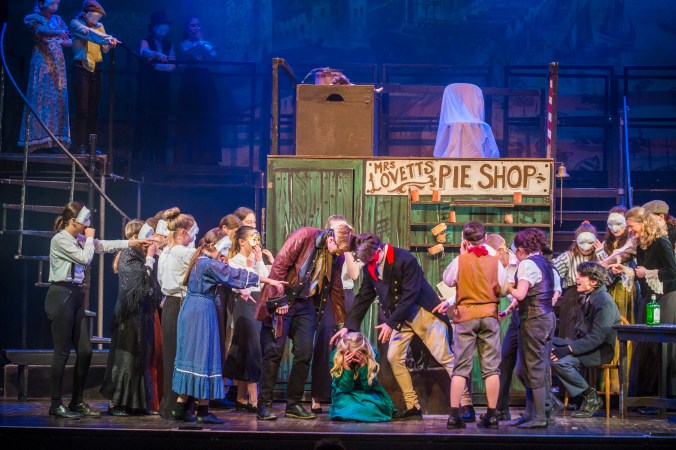 What came across to me was the tremendous team effort that goes to make a production. Sound, lighting, costume, props, stage management, choreography, musicians, staff, students, parents, families…everyone contributed to the success of the show. I know how hard everyone has worked, and the blood, sweat and tears that have gone into it. Well – it was worth it. Hearty congratulations to everyone involved – it was a spectacular show.






 The Headteacher's Blog