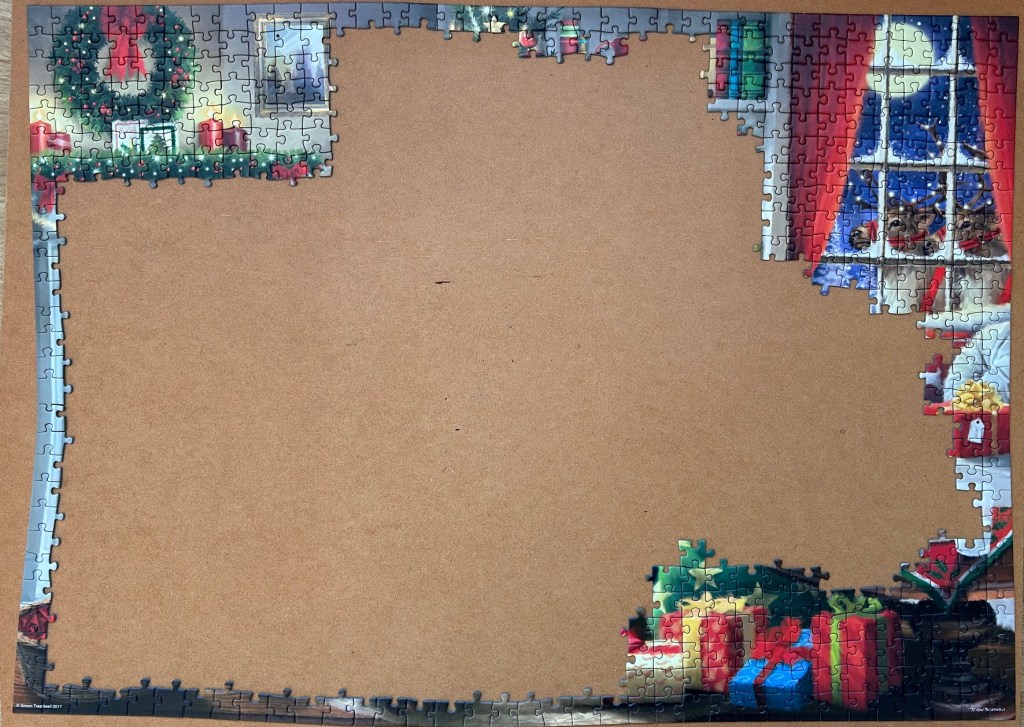
Over the Christmas holidays, my family and I always like to complete a Christmas jigsaw. We have a few 1000 piece sets that we’ve been given over the years, and it’s always a fun challenge to try and put them together to make the complete picture. You can see our progress below!
As we were putting the jigsaw together this Christmas, I was thinking about the Academy: how every piece is different and unique, but every piece needs to be in the right place, to fit, to belong, in order to make the complete picture. We work really hard every day to help ensure that students and staff are slotted in to help make the whole thing work.
But I was also thinking about how every individual is made up of thousands of tiny pieces. These micro-decisions, little things that make up our daily lives in school. I spoke to students in assembly last week about some of these component parts:
Lessons: including our favourite lessons and those that we find more challenging. Our curriculum is made up of lots of component parts which all work together to make a strong, deep and broad understanding of our world. Every single piece counts.
Social times: ensuring that the Academy is and feels safe, welcoming and friendly for everyone in it, is everyone’s responsibility.
Punctuality: we are particularly focused on this important life skill at the moment, and our students are working really hard to make sure that they are on time, every time.
Attendance: similarly, we have been really impressed by our students’ efforts to ensure that they attend school every day, every lesson that they are able to.
Extra curricular: both within school and beyond, the activities our students are involved in all add up to build their skills, knowledge, character and confidence.
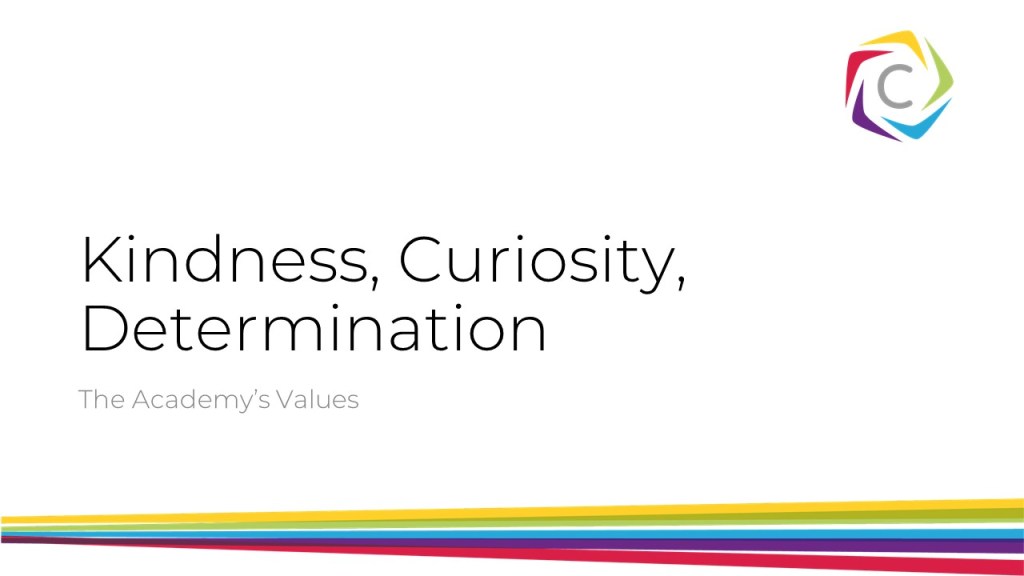
Values: our values of kindness, curiosity and determination underpin everything we do, and work together to support character development in our students
Wellbeing: linked to last week’s assembly on sleep, we know that looking after ourselves is important. Diet, exercise, sleep and a balanced approach to health and wellbeing are all important.
In our school, and in ourselves, every single piece matters.
Happy New Year! In this week’s “welcome back” assemblies I have been talking to students about the importance of getting a good night’s sleep.
Sleep is an important part of our physical, mental and social wellbeing, just like eating well and being active. A recent study showed that on average, people in the UK had six and a half hours of sleep a night. Doctors and researchers recommend between 7-9 hours of sleep for adults and it’s even more for children and young people. This shows that lack of sleep is an issue for us as nation and a society, and building good habits early can help set us up for life.
Less sleep and poor sleep quality can have a real impact on people’s health, but there is lots of information out there to help us get better rest. This information is especially important for students and young people.
Sleep facts and myths
In the assembly, students reflected on a series of sleep facts and myths:
You can still get a good night’s sleep even if you wake up: this is a sleep fact. Waking up during the night is completely normal and expected. During sleep we cycle through different sleep stages, moving from lighter sleep stages to deep sleep.
We all need 8 hours of sleep: this is a sleep myth. Although some people might find that 8 hours of sleep at night suits them, we’re all individuals and have different sleep needs.
Waking in the morning and still feeling dozy is a sign of a poor night’s sleep: this is a sleep myth. Very few of us probably wake up in the morning and immediately spring out of bed ready for the day. It’s more likely that people wake and take a few minutes to shake off sleepiness.
You can catch up on the sleep you’ve missed: this is a sleep myth. Scientific studies show that you can’t make up lost sleep by having more on the weekends or in school holidays.
Good sleep habits
We then thought about ways that we could help to build good sleep habits, with techniques that are proven to help with getting a good night’s sleep:
Follow the same daily bedtime routine: having the same bedtime and the same routine before bed helps prepare the mind and body for sleep. For example, reading a chapter or two of your current reading book every night is a good way to help settle yourself before sleep.
Avoid screens for at least an hour before bed: a phone, laptop, tablet or TV screen tricks our brain into thinking it’s still daytime, making it more difficult to get to sleep. Avoiding screens for at least an hour before bed helps the brain to realise it’s night time and prepare for sleeping. Since 2019 I have charged my mobile phone downstairs, rather than on my bedside table, and it has transformed my sleep quality! You can read about this here.
Drink a glass of warm milk before bed: I actually thought that this was a myth, but it turns out that a cup or warm milk genuinely can help your body prepare for sleep – it’s something to do with an amino acid called tryptophan, apparently!
Keep your bedroom tidy: a tidy and orderly bedroom helps you to relax and feel calm and ready for bed. So tidy your room!
Get plenty of daylight: our bodies follow a pattern called the circadian rhythm that keeps us alert and awake during the day, and allows us to fall asleep at night. The circadian rhythm is regulated by daylight during the day, and darkness at night – so getting sunlight during the day helps us to fall asleep at night.
Wind down before going to sleep: ensuring that we are as calm and relaxed as possible before bed is another great tip. That’s why reading can be a great before-sleep activity – getting lost in a good story prevents the mind from wandering and ensures that we are ready for the land of nod.
Instant impacts?
It has been great talking to students about my assemblies this week. Several students have tried out some of the top sleep tips and reported that it really helped. So, for once, I’m taking: “Mr Hildrew, your assembly sent me to sleep” as a compliment!
This year we are using a new national programme to help structure some of our assemblies and tutor times: Votes for Schools.
Votes for Schools is a weekly current affairs-based voting platform designed to engage young people in political and social issues. Through weekly discussion and voting, not only are voters learning about the world around them, but they are also becoming active citizens and preparing for participating in our democratic processes as adults.
We have already had some good discussions about cultural appreciation vs cultural appropriation, linked to Black History Month. Families can get involved too – here are some great ways for you to get involved in the conversation!
Check the website
At 4PM every Friday, the latest Vote Topic goes live! Anyone can check the Votes for Schools website – www.votesforschools.com – to see what students across the country will be debating and voting on in the coming school week.
Discuss the topic at home
Ask your child to give arguments for each side of the debate to encourage critical thinking. Votes for Schools produces a weekly Home Information Sheet that can help you with this, which you can download from their website.
Discuss the results
When the new Vote Topic is available, the national results of the previous topic will be too! Why not ask your child how they voted and why, and discuss how the rest of the country voted?
Brush up on your knowledge
You can read up on any topics your child is discussing, or has discussed, to see what your take on it is. For more sensitive topics, Votes for Schools also provide a list of useful resources and organisations where you or your child can find out more or seek support.
Share your ideas and find out more
Please talk to your child about which issues they would like to see discussed at Votes for Schools. You can let them know their thoughts, or encourage them to reach out to Votes for Schools directly. You can email them directly at secondary@votesforschools.com, or visit the website www.votesforschools.com to make suggestions or to find out more.
We began the year focusing on our value of kindness, before turning our attention to determination to see us through the dark, cold winter. Last week’s assemblies, as the days lengthen into spring, focused on our value of Curiosity.
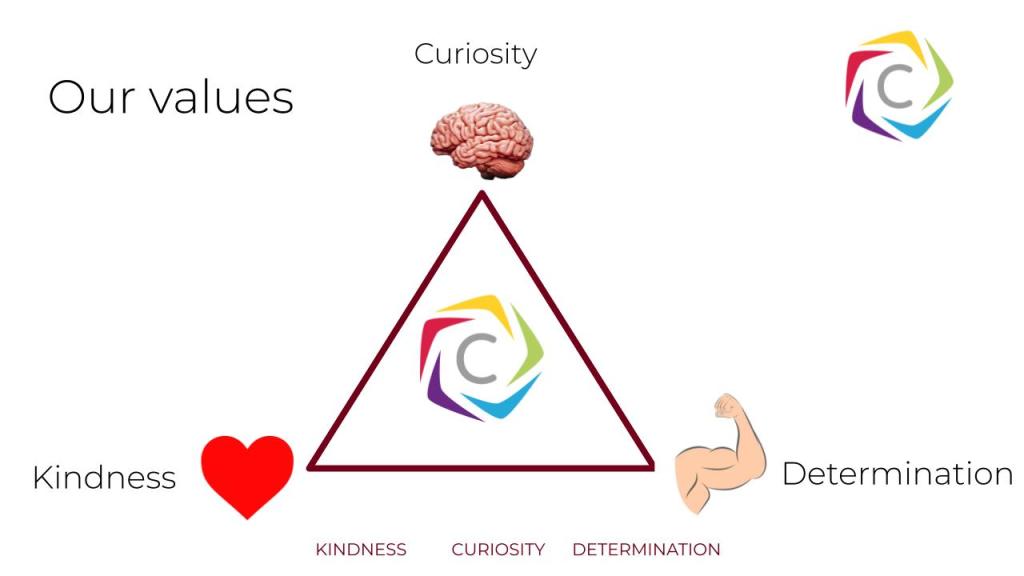
Our three values form three points on a character triangle, based on the work of CharacterLab. Kindness is a strength of the heart; curiosity a strength of the mind; determination a strength of the will. All three work together to support our students to be successful in school, and beyond, in pursuit of Martin Luther King’s maxim: “intelligence plus character – that is the goal of true education.”
Curiosity enables independent thinking and enquiry, and is the basis of human flourishing. Stone age man was driven by curiosity: what happens if I bang these two rocks together? Can I use this animal skin to store water, so I can travel further from the lake? And so on, generation after generation, we have built on the discoveries of our predecessors in a way which is unique to our species. And we are never satisfied, continuing to push the boundaries of what we know, to solve mysteries, to understand more about the world around us and the universe beyond.
It was this curiosity that led Einstein to develop his general theory of relativity – his attempt to explain how and why the universe behaves as it does. He was driven by a passionate desire to understand, to explain, to make sense of things. It is this uniquely human desire that we seek to foster in school.
This desire for discovery continues to this day, with the Curiosity Rover on Mars and recent landings on the moon. We continue to strive to know more, to understand more, to answer questions, to solve problems – and there is always more to learn.
A dopamine molecule
Curiosity has many benefits:
Good for our brains and aids memory: the more we learn, the better our brain gets at learning. This is because our broader general knowledge gives us more “anchor points” for new knowledge to hook onto, to connect with, and to secure itself in our memories.
Helps us to be empathetic: understanding people who are different to us is essential to help us collaborate and cooperate with one another, to develop our empathy, and to improve our communities.
Increases confidence: the more we understand about the world, the more confident we feel within it. We feel most insecure when we are uncertain, when we don’t know what is happening or why, or when we don’t understand things. The more we know, the more confident we feel.
Contributes to happiness: when we learn something new, solve a problem, or something slots into place in our mind – that “lightbulb” moment – we feel a little rush of satisfaction. That is the release of dopamine into our system, a chemical designed to reinforce achievements by making us feel happy. So satisfying our curiosity actually makes us happier!
In my assembly, I went through all the ways we can satisfy our curiosity and extend our learning. The first – and most important – is through reading. Reading much, and reading widely, is how humanity has broadened and extended its knowledge over millennia. Using the library to ensure that we are reading books that we are interested in, and which take us beyond what we already know, is a guaranteed way to help us learn!
We are fortunate also to live in the age of the internet, where all the world’s knowledge is at our fingertips. Satisfying our curiosity has never been easier: we can ask Siri, ask Alexa, ask Google, ask ChatGPT. But we must be careful when using these sources, and always be curious about the answers we get back. Information we get online needs to be verified, as its accuracy cannot always be trusted. And AI, whilst it is useful, is subject to similar cautions: the answers we get from AI are only as good as the questions we ask, and the sources that the AI relies on. So there is no substitute for our human curiosity – we mustn’t become lazy, and let the machines think for us.
I concluded with three ways our students can show curiosity in the classroom and beyond:
Enquire: Ask questions – “why” and “how” – and actively listen to the answers
Explore: read around the subject – find out more
Experience: Seek out new experiences, people and challenges
Keeping an open mind allows us, the inheritors of the benefits of millennia of human curiosity, to continue mankind’s constant journey to know and understand more – and to contribute to human progress. What a privilege learning is!
In this week’s assemblies, Heads of House have been talking to students about social media. We can’t avoid these apps and services – they are part of our lives and the society we live in. What we need to do is ensure we use them carefully, kindly, and appropriately. And that means we need to think about them.
Social media apps make money through advertising. Advertisers want audiences looking at their apps. So that means, for a social media service to be successful, it has to be good at grabbing our attention, and then keeping us focused on it for as long as possible. The whole business model of these apps is designed to get us hooked, and keep us hooked.
Excessive use of social media creates increased loneliness, fear of missing out (FOMO), and decreased life satisfaction. There are also strong links between excessive social media use and body image dissatisfaction, low mood, lowered self-esteem, and disrupted sleep patterns. No wonder there are age limits on these apps:
WhatsApp: 16
Facebook: 13
X (formerly Twitter): 13
Snapchat: 13
Instagram: 13
TikTok: 13
Another big risk around social media is the risk of cyberbullying. Unkindness is rife online. People hide behind keyboards and screens and say things they would never say to someone’s face – but the impact is just as severe. Only this week, an inquest has heard evidence of how online bullying was a factor in the death of a 14-year-old schoolgirl in London in 2021. UEFA have launched a campaign called Outraged to raise awareness of the impact of online abuse on footballers.
Because there are also positives in social media. It can facilitate social connections and peer support, offering the opportunity to talk about things that you may feel you can’t face to face . It can provide a space for rewarding social interactions. There is a wealth of educational and informative content which can help us learn, develop new skills, and broaden our world view. And we can find humour and feel good stories across social media which can reduce stress as well as entertaining us.
So, it’s not all bad. But if we choose to use social media, it is our responsibility to use it kindly and constructively, for our own good and for the good of those around us who are also on those platforms – and in moderation.
It has been great to welcome staff and students back for the new year this January. I have held assemblies in this first full week back, to remind students about our expectations, to provide a few updates, and to encourage students to reflect on the idea of self improvement.
I reminded students about our classroom and social time top 5 expectations, and our system for punctuality. It has been really encouraging to see so many students starting the new year so positively, with lots of Headteacher’s and Governors’ Commendations to hand out at the start of each assembly.
The Sports Centre
I also updated students on the work going on in the Sports Centre. Following a complete replacement of the roof, contractors are now hard at work inside the building. They are converting the old swimming pool into a multi-use hall, and are redecorating and refurbishing the internal spaces .Over the coming weeks, doors and windows will be replaced, to ensure that the building is ready for our use when it is handed over to us. We are very grateful to the Lighthouse Schools Partnership for their support in overseeing this work, which will greatly improve our facilities and enable PE and Performing Arts to continue to thrive – even during exam season!
Resolutions
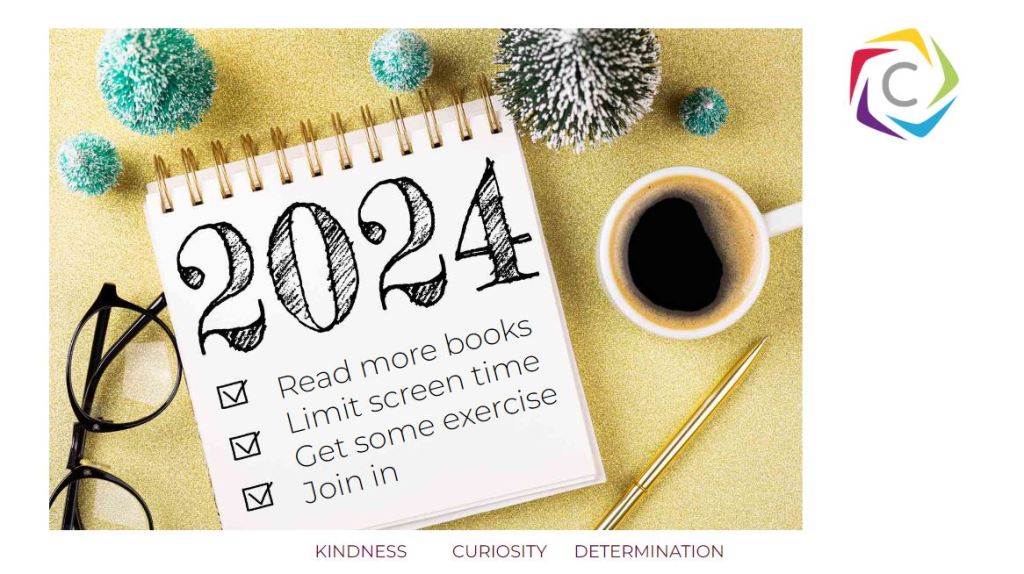
I also talked about the idea of new year’s resolutions, offering four options for students to consider as they think about improving themselves over the course of 2024.
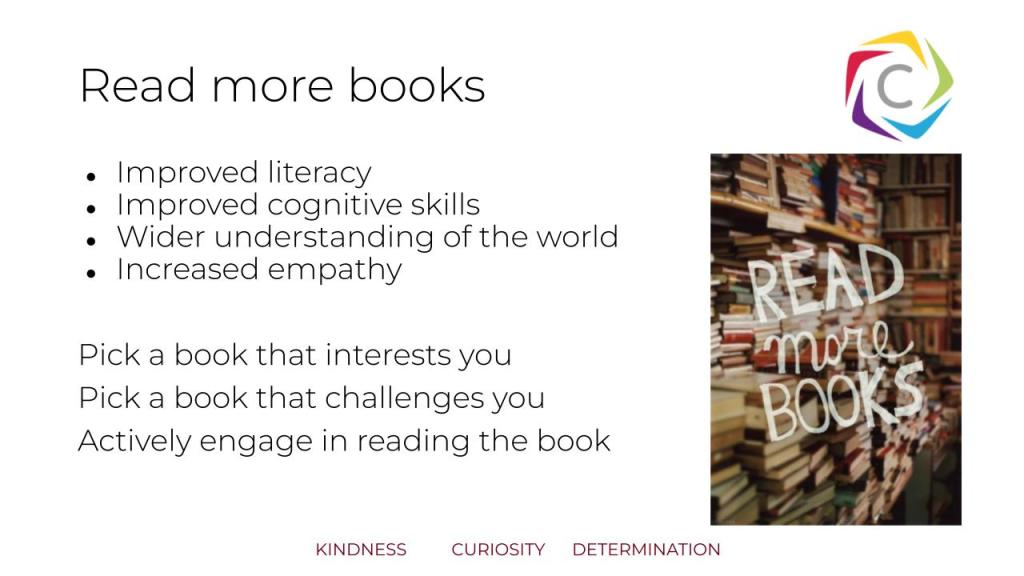
We know that regular reading not only improved literacy and cognitive skills, but helps us understand more about the world we live in, and the people who we share it with. I encouraged students to make the most of the regular reading time we provide to choose a book that interests and challenges them, and to push themselves to read more books. This is one I am constantly striving for myself!
I then spoke about the importance of a healthy relationship with technology. We know that reductions in screen time improve mental and physical health, reducing stress and anxiety and leading to better sleep patterns. I urged students to consider steps such as turning off notifications, setting time limits and down time, and ensuring that phones are charged outside of the bedroom so they don’t interfere with sleep. We ensure that students have time away from their devices during the school day – in line with government guidance – but outside of school, it’s up to them. Mobile devices are part of our lives, and will be part of our futures, so developing a healthy relationship with technology is essential for our students to be successful adults.
Thirdly, I asked students to consider monitoring their physical activity, in line with guidance from the World Health Organization. Replacing inactive “sedentary” time with physical activity has many health benefits – any activity is better than none, and more activity is better! So making sure that every move counts would be a great resolution for 2024.
Finally, I asked students to ensure that they made the most of the opportunities on offer to them in 2024. I don’t want any students to look back in twelve months’ time and think “if only…” We want our students to participate fully in their lessons and beyond, to get involved and take part, and to take control of their own self-improvement.
I concluded the assembly with the launch of the 2024 inter-house poetry competition – a great opportunity to get involved and join in straight away! All students have the opportunity to submit a poem in this year’s competition, in any form, under the theme of either “growth” or “solitude.” All entries to be handed in to the English Department by 9th February!
It’s been a great start to the year so far – I look forward to continuing to improve every day as we move through 2024.
In this week’s assemblies I have been discussing British values with our students. All schools should promote the fundamental British values of democracy, the rule of law, individual liberty, and mutual respect and tolerance of those with different faiths and beliefs – and we are no exception.
Democracy
The idea of democracy has its origins in Ancient Greece, where the concept of Δημοκρατία or dēmokratía originated from the compounding of the words and ideas dēmos (‘people’) and kratos (‘rule’). The Greeks’ idea was that power was vested in the people of a state, where the voice of the people decided the laws of the land. This idea has evolved into the representative democracy we have today, where the people of state have a say through their vote, to elect a representative who will carry their views forward into the government of the country.
In our case, our representatives sit in the Houses of Parliament in the Palace of Westminster. I spoke to students about how our representative democracy works, and how our elected representatives make the laws our country is governed by. I also discussed some of the challenges of democracy, including the difficulty of reaching consensus or agreement when people have different views.
“Democracy is the worst form of government – except for all the others that have been tried.”
Winston Churchill
We moved on with a discussion of Winston Churchill’s famous description of democracy, having lost the general election immediately after leading the nation to victory in the Second World War. Despite its flaws and challenges, democracy is still the best form of government our species has found.
We concluded this section of the assembly with a discussion of the voting age. In our country, people under the age of 18 are not permitted to vote. However, at Churchill we encourage students to engage in the principles of representative democracy through the house and school councils, which are up and running already this term. We also aim, through the education we provide, to ensure that students can make their own minds up about how to cast their vote, when they are old enough, from a position of wisdom and knowledge, based on the ability to distinguish truth and fact from lies and misinformation.
The rule of law
Our elected representatives make the laws that we have to follow. I discussed representations of justice, including the famous statue of Lady Justice on top of the central criminal court at the Old Bailey in London. Lady Justice carries a sword to symbolise that justice should be swift and final; but she also carries scales, to symbolise that justice must weigh up the rights and wrongs of each case to make a fair and balanced decision. These are helpful reminders for all of us in school.
Liberty
There is no better symbol of “liberty” than the Statue of Liberty which stands at the mouth of the harbour in New York City. The statue represents the idea that those people arriving in America were coming to the land of the free, where people were free to live their lives as they chose, and to make their own destiny. This idea of individual liberty – where citizens are free to make choices about how they live their lives, within the bounds of the laws of the land – is central to the UK’s national character. Many countries around the world do not allow their citizens the same degree of liberty that our country does so we must ensure that we do not take this for granted.
Mutual respect and tolerance of those with different faiths and beliefs
As part of our liberty, we must also be tolerant of those with different faiths and beliefs. As a nation we are welcoming to those from different cultures and backgrounds; in Britain people can love who they choose to love; they can follow a religion of their choosing, or they can have no religious faith; we respect those with different abilities or disabilities, hidden or visible, and afford everyone equal rights; in Britain people are free to choose their own identities. This is a luxury not afforded to citizens of all countries on our planet; as with our liberty, we must never take this for granted.
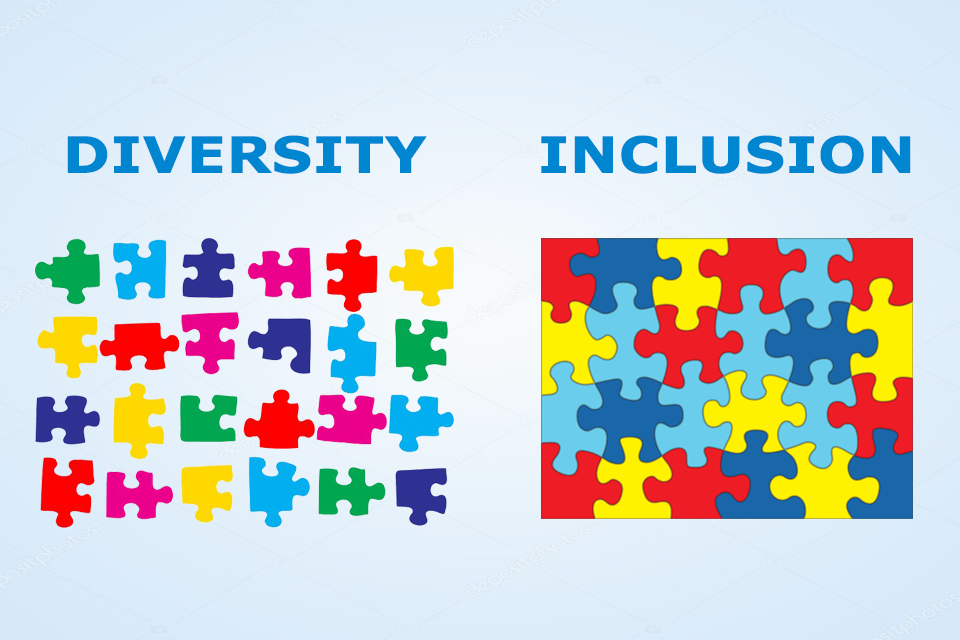
I concluded the assembly with a discussion of the difference between diversity and inclusion. We are all different, but in order to be a successful community we must work together. Individually we are all odd-shaped jigsaw pieces; through collaboration and mutual support, we can bind together in to a coherent and cohesive whole. This is a principle we hold dear in our Academy; through this, we hope to secure Britain’s future as a land which upholds those four key values of democracy, the rule of law, individual liberty, and mutual respect and tolerance of those with different faiths and beliefs – not just now, but forever.
This week Mr Davies has been taking assemblies, and helping our students reflect on the importance of marginal gains.
“The aggregation of marginal gains” was part of the success of British Cycling in the run up to the London 2012 Olympic Games and beyond. The philosophy was to look at every aspect of performance, and to look for any tiny improvements that could be made. Heat pads to warm up cyclists’ muscles to the optimum temperature; tiny savings in weight from each pedal crank; cyclists travelling with their own pillows to reduce the chance of catching a virus from hotel pillows – these were just some of the examples of marginal gains made by the cyclists.
On their own, each tweak to the programme might only make a millisecond of difference to the cyclist’s overall time around the track. But, the philosophy said, if you made lots and lots of those tiny gains, they would all add up and might give you the edge over a competitor.
Mr Davies then asked students to consider the marginal gains they could make at school to improve their educational performance. He gave three examples:
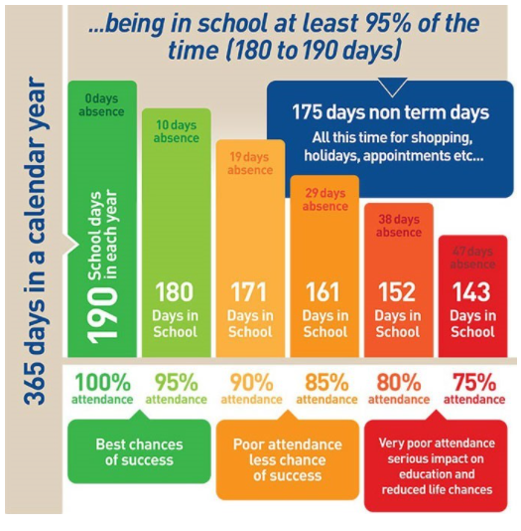
Attendance: Mr Davies explained the difference that attendance makes. He asked: is 90% attendance good enough? 90% means that you miss one day in every ten – that’s one per fortnight. If you have 90% attendance over a school year, that means you have missed four weeks of education. If you have 90% attendance over five years at school, you would have missed half a year’s worth of lessons. We know that many students struggle with health issues and can’t achieve 100% attendance. But the point Mr Davies was making was that every day of attendance is a day of education – and every little bit matters.
Punctuality: We are really insistent that students are punctual to their lessons. You might not think that being five minutes late to a lesson matters – but it does. It disrupts the learning of others. It means the teacher has to re-start and re-explain the beginning of the lesson, wasting the time of those that were punctual. Then Mr Davies did some sums: if you were five minutes late to every lesson, you would miss 25 minutes a day, which adds up to two lessons a week, or 79 lessons a year – that’s three weeks in a school year. So that five minutes matters.
Attention: when called to attention, we require our students to be silent straight away and show they are listening by tracking the speaker with their eyes. Again, this is about the aggregation of marginal gains, ensuring that transitions between tasks are swift and that as little time is wasted as possible. These tiny differences will all add up, over time, to significant gains in learning time.
Mr Davies then challenged the students to think about their own marginal gains as they went about their lessons this term. It might be that little extra effort on a classwork or homework task. It may be that final check through a piece of work before declaring it “finished.” It may be that little bit of initiative to push learning further, ask a question, or take on an extension or challenge task. It may just be sitting up straight and paying that extra bit of attention to an explanation or a demonstration. On its own, no single action is going to make the difference: added up, they will definitely help.
Finally, Mr Davies reinforced the importance of good, safe behaviour at social time. Injuries and accidents can happen at any time, and sometimes they can’t be helped. However, students need to ensure they are minimising the risk of accidents happening by playing safely; injuries, if they do happen, are painful and distressing – but they can also lead to lost learning time.
Welcome to a new school year! It has been wonderful to see our staff and students back at the Academy this week. Our inset day on Monday was focused on staff training and development to ensure that all colleagues were properly prepared. It was a packed agenda, with an exam results review followed by sessions on our strategic planning, working within the Lighthouse Schools Partnership, behaviour management, safeguarding, and SEND (special educational needs and disabilities), before faculties and houses met with their own specific agendas.
On Tuesday, we welcomed Year 7 and 12 into school – our two “new starter” year groups. Both settled immediately into the routine, with really positive feedback and some excellent learning taking place. Having the Academy to themselves for the day ensured that new students could find their way around and get properly settled, before the rest of the school returned on Wednesday and Thursday.
In my “welcome back” assembly on Wednesday, I explained all the work that had gone on over the summer. Our site team and the IT network team have been busy, as have contractors completing projects across the site including improved dining facilities in Windsor, with new flooring and additional seating; the completion of our decarbonisation project in Sixth Form, Hive, Hall & Gymnasium, which means that these areas are all now running air conditioning from a low-carbon air source heat pump. New paving was laid outside the Turing building, additional new social area furniture has been placed around the site (inside and outside), the Windsor and Hanover toilets have been refurbished, the Sports Centre has been emptied with works starting on the roof, windows, doors and the heating system, and there has been lots and lots of painting! As a result the student social areas and circulation space in Lancaster, Stuart and Turing all look fantastic as our students have returned.
As always at the start of each term, I also outlined our expectations of student behaviour, including the new approaches we are taking this academic year. It was fantastic to see such a positive response from the students – and I am very grateful to families for their support in ensuring correct uniform for school.
Although it has been very warm this week, we have got off to a very good start!
It has been great to welcome the students back to term 6. It’s always a term of transition; with our Year 11 and 13 students off on study leave, the Academy feels a bit emptier. The tutor groups are missing their year elevens, so our year tens are now the senior main school students. The applications for the new house captains are coming in, and everyone is getting ready to welcome our new Year 7 and 12 students on the induction days coming up soon.
In my “welcome back” assemblies this week, I started with a bit of housekeeping. The Site Team and our contractors have been busy over the half term break: putting in replacement fencing, repainting classrooms and toilet areas, relocating one of our food pods, replacing windows, and making sure that everything is looking great for the students’ return. I thanked the students for their much improved use of the facilities, and urged them to ensure that they continue to look after them. There was also an opportunity for reminders about our classroom and social time expectations – and I never miss an opportunity for those!
My assembly this week focused mainly on our three Academy values: kindness, curiosity and determination. As I said in my end-of-term-5 Headteacher’s Update letter, over recent weeks I have been working with our governors on a review of our strategic planning and direction. This has taken us right back to the Academy’s vision, purpose and values, as we have reaffirmed our commitment to being a school in which we inspire and enable young people to make a positive difference, and to set no limits on what we can achieve. All of this work is underpinned by our three values.
This quotation, from aviator Amelia Earhart, guides our thinking about kindness. Kindness adds value because its impact is cumulative: the kinder we are, the kinder others become. The idea of “paying it forward” to create a positive community culture is a key part of this value.
When we first introduced our values, the students articulated what they meant for our behaviour in and around the Academy. Their description of kindness, cited above, captures that key element of our Academy community. It also underlines the fact that we all have a responsibility to that community – a responsibility to keep it healthy by maintaining the values which lie at its heart.
Curiosity is a strength of the mind. The quotation from Plutarch in the slide above emphasises the importance of taking an active role in learning, in seeking out new knowledge and skills: you can’t just wait for knowledge to come to you. You have to go out and get it. We can teach you: but only you can learn.
The students captured this spirit of curiosity in their values statement, which informs our approach to learning, which expects:
Determined and consistent effort
A hunger to learn new things
Challenging ourselves to go beyond what is comfortable
Viewing setbacks and mistakes as opportunities to learn and grow
Seeking and responding to feedback
Encouraging others to succeed
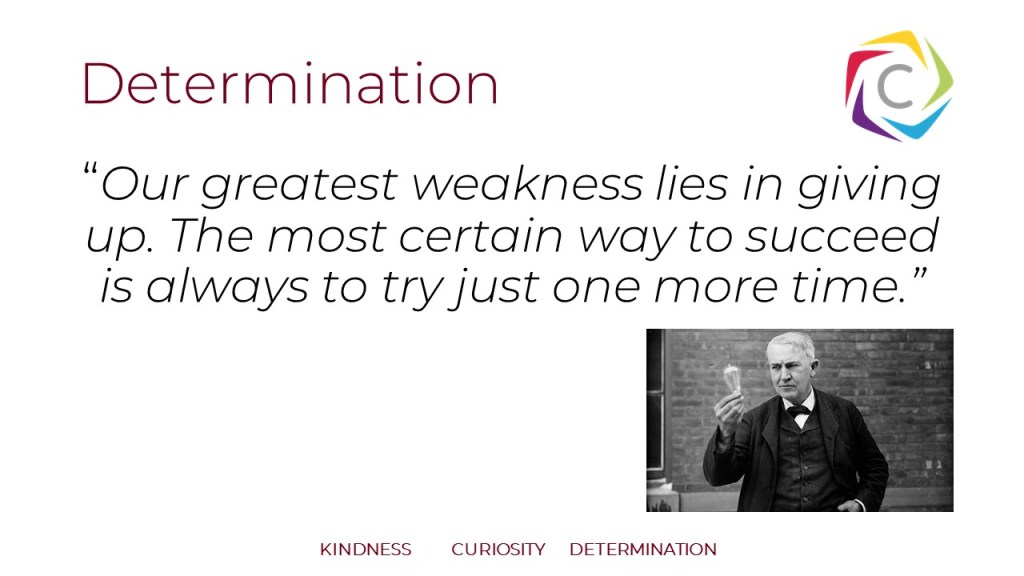
Determination is summed up in this quotation from inventor Thomas Edison, who achieved so much through constant trial and error, refinement and development, prototype after prototype. I have found Edison’s words of huge value to me in my own professional career as an adult: we all face challenges and struggles. If we give up, we are certain to fail. The only way to succeed is to keep trying.
These values form three sides of a character triangle: kindness, a strength of the heart; curiosity, a strength of the mind; determination, a strength of the will. Churchill students, who show all three values, will be well equipped to go out into the world and make a positive difference, setting no limits on what they can achieve.
I concluded the assembly with all the things we have to look forward to over the course of the rest of this term: it’s going to be a busy one!



























 The Headteacher's Blog