Assembly: Values and Behaviours

As we return for Term 5, I have taken assemblies for each of the five houses. In my assembly, I have talked about values, and how our values inform our behaviours.

To start with, I discussed the fact that our coins are changing. For the first time in my life, we will have coins with the King’s head on the back rather than the Queen’s head. Yet, despite the coronation of a new monarch, the coins still have the same value; although they look different, they are worth the same.

The same is not true of these coins. The “one pound” coin on the left is no longer legal tender – it is worth less than the one pound coin on the right. Why is this? Simply – we have all been told that this is the case, and we all accept it. The one on the left is worthless, despite it saying “one pound” on the front, because we’ve all been told it’s worthless and we all accept this.

The value of something isn’t always obvious by its appearance. I would love the guitar on the left – a brand new Fender Stratocaster. But the old Fender Stratocaster on the right has no strings, the strap is on the wrong side, and it has been damaged in a fire. The surface is badly scorched and the wood underneath is burnt. It is unplayable – but somebody paid $380,000 for it. Its value is not as a musical instrument, but as a part of rock history.
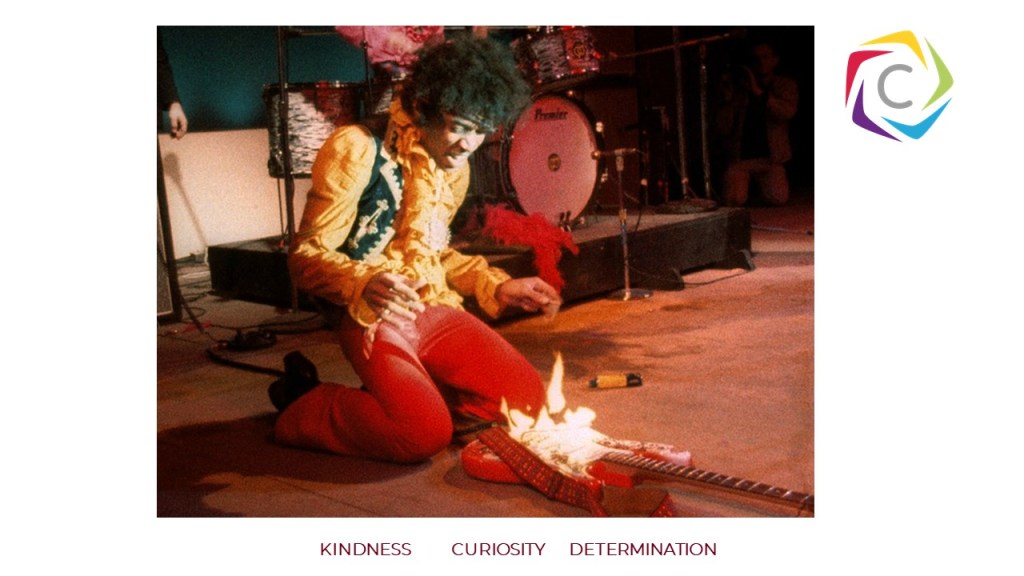
The guitar was famously doused in lighter fluid and set on fire by Jimi Hendrix at the Monterey festival in 1967. This is what gives it its value – it is an artefact, not an instrument.

Swipe to see the change in value of a Ferrari

The same is not true of a Ferrari however. A brand new Ferrari, whilst worth less than a burnt Hendrix guitar, is worth a lot more new than it is when wrapped around a lamp post. The damage to this valuable asset has not increased its value – it has diminished it. This is not a part of history or culture – it is a testament to someone who needs to drive more carefully and hope they have a good insurance policy. 

So, the value something has is not intrinsic to itself. Rather, it is a shared idea, or a common belief that something has value. At Churchill, our values of kindness, curiosity and determination govern all our actions and inform our behaviours. We work hard to inspire and enable young people to make a positive difference to themselves, to the Academy community, and to the wider world, and to set no limits on what we can achieve.

Professor Carol Dweck picks up this idea of setting no limits on what we can achieve in her work on mindsets. She explains through her research how it is the effort that we put in that ensures we achieve, not our ability. As she says: “no matter what your ability is, effort is what ignites that ability and turns it into accomplishment.”

This idea of effort is something that we think has tremendous value. It is why it is the first of our six “learning values” at Churchill Academy & Sixth Form – the research-informed principles that inform our approach to pedagogy.

The things we value inform the way that we behave. At the start of every long term, in September, January, and now after Easter, I always remind students about our classroom behaviour expectations: the Top 5. This term is no exception. The students are very familiar with these expectations now, but it is no less important that they stick to them if we are to make the most of every moment of lesson time.

We also have a set of five expectations for social time behaviour, and I used this start of term assembly to run through these in detail. In particular, I explained the ways in which we have responded to student feedback with amendments to our uniform policy this year, and changes to the toilets, following student leadership initiatives – and how it is now the students’ responsibility to uphold those standards now that they are established.
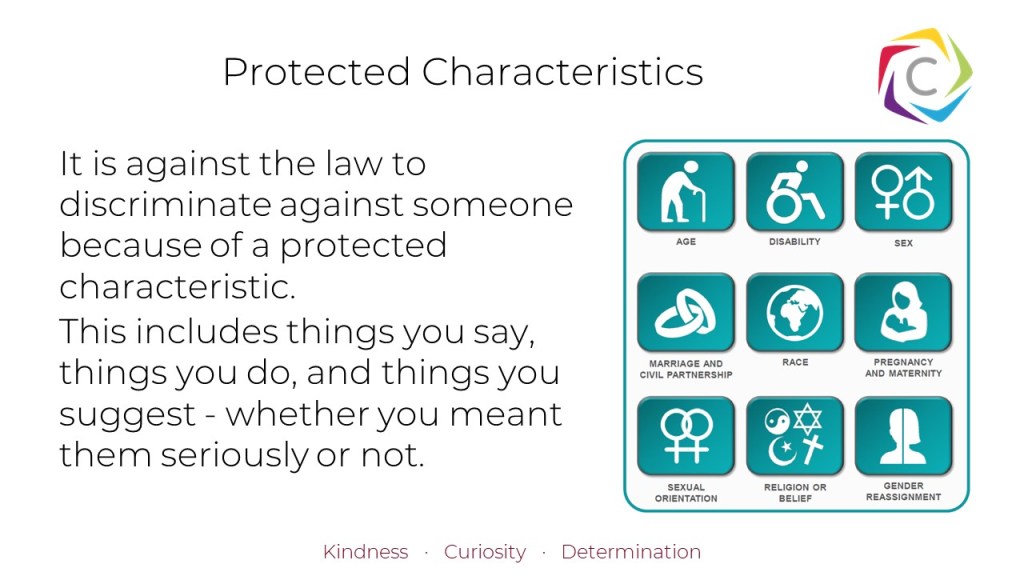
As we moved towards the conclusion of the assembly, I talked about bullying. I explained that, if you say anything that makes anyone feel uncomfortable about who they are, this is wrong and unacceptable – and may also be illegal if it references a protected characteristic. I explained that saying or doing something “as a joke” or as “banter” normalises unacceptable behaviour by making it seem okay in certain situations – but it is never okay. If we see people doing or saying unkind things again and again over time – even “as a joke” – these behaviours can become normalised. And we are all susceptible to normalisation. 

Normalisation refers to social processes through which ideas and actions come to be seen as ‘normal’ and become taken-for-granted or ‘natural’ in everyday life. There are different behavioral attitudes that humans accept as normal, such as grief for a loved one, avoiding danger, and not participating in cannibalism. Our perception of what is ‘normal’ can transform over time – and this can be a force of good and ill.

The video above gives a great example of how bizarre and unusual behaviour, that someone would never normally display, can be influenced by the behaviour of people around you and very quickly become “normal.” Although this is a light hearted example, this principle can be much more serious.

In Nazi Germany in the 1930s we saw hateful, discriminatory and abhorrent attitudes and beliefs “normalised” by society. Pastor Niemoller’s poem shows what can happen if we sit by and let things that we know to be wrong happen around us. We must stand up for what we know to be right. 
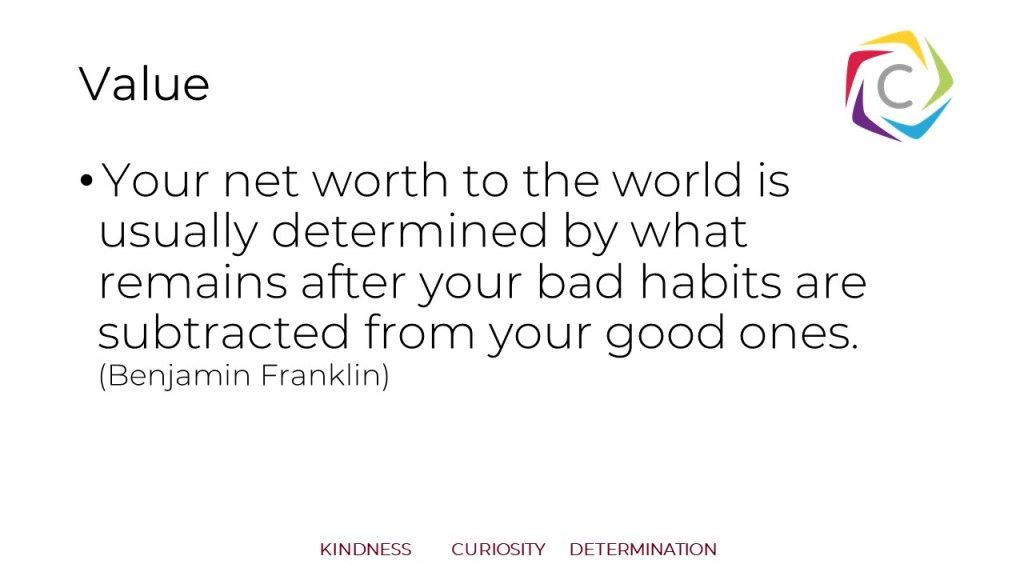
I finished the assembly – as I like to do – with a quotation. This one, from Benjamin Franklin, shows how values and behaviours are interlinked one with the other. Our values inform our behaviours, and our behaviours shape our values.

Welcome back assembly: why our words matter

In this week’s assembly, I welcomed our students back after the Christmas break. After a quick reminder of our behaviour expectations, Mrs McKay and I focused our assembly on the key topic of ensuring that our Academy community is a safe and inclusive one.

My part of the assembly focused on the way we use our words. I was inspired by talking to our Year 11 House Captains, who said that one of the things they wanted to concentrate on during their their year in post was on language used by their fellow students which can offend, upset, provoke or disturb them. This echoed the work of last year’s inclusion and diversity group, who presented to our Trustees on the impact that micro-aggressions can have on students’ feelings of belonging and inclusion.

There are occasions when students use words deliberately to be unkind, to upset others, to provoke them, or to offend. This is always wrong. But we can also use words thoughtlessly or carelessly, and we can offend, upset, exclude or alienate others through our ignorance or lack of consideration. Perhaps we didn’t fully understand the language we were using, or its implications, or perhaps we didn’t think carefully enough before opening our mouths. We need to be clear that this is just as problematic: our words can hurt, whether we intended them to or not.

I therefore asked our students to use the “THINK” acronym above – and to “THINK” before they speak. I used a little bit of audience participation to demonstrate this principle in the assembly. A willing volunteer from the audience donned the important safety equipment, before attempting to squirt all the toothpaste out of a tube as quickly as possible (Stuart were the best at this so far, with a time of just under 7 seconds). The second part of the experiment saw the volunteers try to put the toothpaste back into the tube. This proved much more difficult.

The experiment was designed to show that squeezing the toothpaste is like blurting something out without thinking about it. It’s easy to do – the work of a moment – and actually feels pretty good in that moment! But once it’s out, there’s no putting it back, and any attempt to do so actually creates a worse mess than you started with.

It’s also important to think about the way we “speak” online. Mrs McKay has already spoken to students this year about the importance of e-safety, but we often see how people “say” things online they would never say in person. I used this quote from the film The Social Network to demonstrate this principle:

Our words – or the images, videos, gifs and emojis we post, and the posts we like, re-post and share – define us online. Employers (including schools, under new safeguarding guidance) conduct checks on candidates’ online presence, and there are plenty of examples of thoughtless online behaviour landing people in trouble – including losing their jobs.

As well as the risk to ourselves of thoughtless online behaviour, the damage to others can be significant. Words can hurt just as much – if not more – delivered online than in person, and there is a lot of evidence to suggest that people will “say” things online – often to complete strangers – that they would never dream of saying to someone’s face. This means that we should all be even more careful with our behaviour online, as you never know the damage that you could be doing.

Mrs McKay concluded our assembly with a reminder of the things we all need to do to make sure our Academy stays a safe, inclusive environment, and how we can all work together to make sure that Churchill continues to be a supportive community – for everyone.

Remembrance 2022: remembering to remember

This week, Mr Slater and Mr Waller have led assemblies on the theme of remembrance, reminding us of the importance of this annual act during the two minutes’ silence at the 11th hour of the 11th day of the 11th month.

The assembly began and ended with a reading of John McCrae’s famous poem, In Flanders Fields, with its poignant plea from “the dead”:

To you from failing hands we throw
    The torch; be yours to hold it high.
    If ye break faith with us who die
We shall not sleep, though poppies grow
        In Flanders fields.

We were reminded of how Remembrance Day, and the two minutes’ silence, began in 1919 to remember those who had lost their lives in the First World War. Since then, the act of remembrance has expanded to include all those who have sacrificed in conflict, so that we may continue to live in freedom.

The poppy itself was a symbol of peace, as the bright red flowers began to grow from the churned up lifeless battlefields of France and Belgium within days of the ceasefire in 1918. Mr Slater and Mr Waller reminded us of the work of the Royal British Legion, who are supported through the purchasing of poppies for remembrance. The Legion supports former members of the Armed Forces and their families to cope with the impact of their service, which can often be life-changing. Their work, in support of those who served, and their families, is truly remarkable.

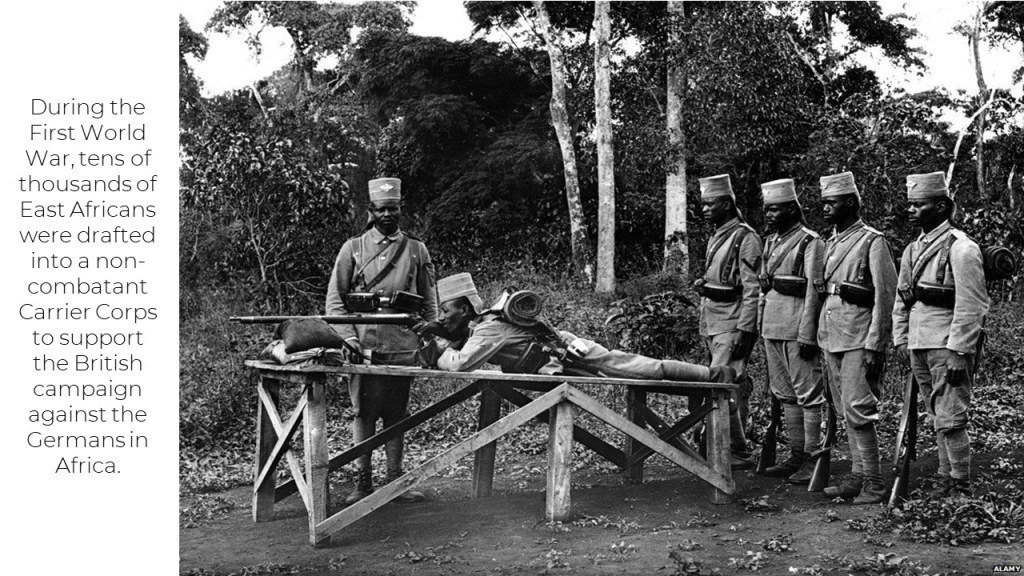
We were also reminded to remember those who are sometimes forgotten – those non-white, non-British servicemen and women who gave their lives for our country in the two World Wars. These people made sacrifices for a country they had often never been to, thousands of miles away, so that we can live in freedom today. For example:

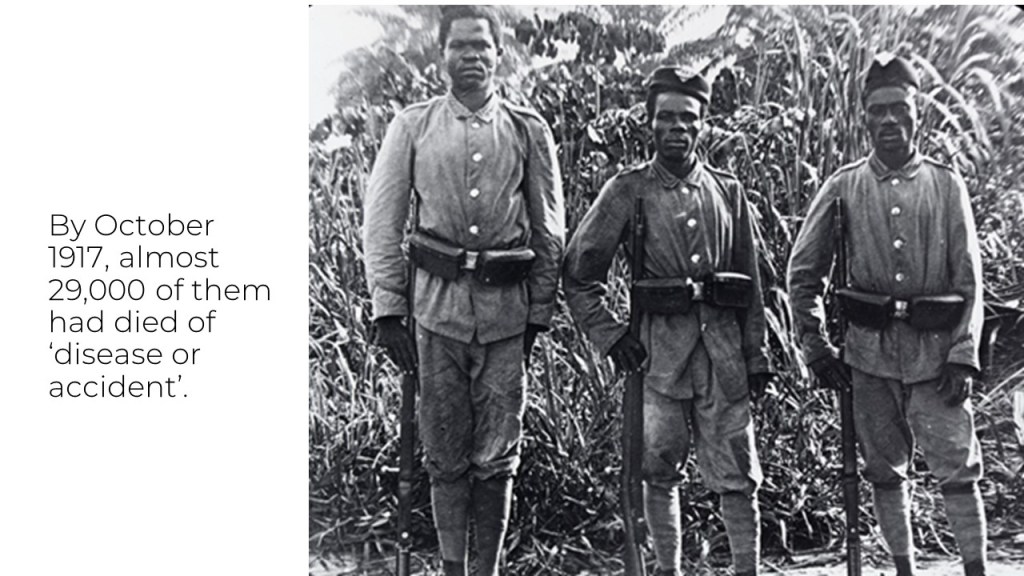
  • Tens of thousands of East Africans were drafted into a non-combatant Carrier Corps to support the British campaign against the Germans in Africa during the First World War. By October 1917, almost 29,000 of them had died.
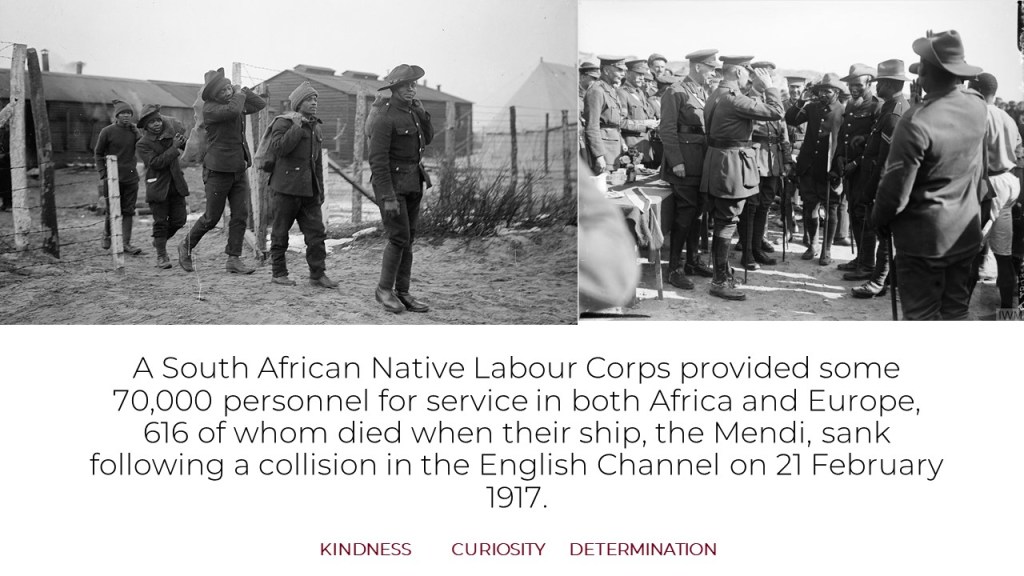
  • A South African Native Labour Corps provided some 70,000 personnel for service in both Africa and Europe, 616 of whom died when their ship, the Mendi, sank following a collision in the English Channel on 21 February 1917.
  • During the Second World War, some 90 West Indian men serving as aircrew with the RAF were decorated for bravery, including 64 DFCs and 7 DSOs
  • 90,000 West African soldiers travelled more than 6,000 miles to fight in the Burma campaign against the Japanese in WWII
  • By the end of the Second World War the Indian Army, with a strength of over 2.5 million, had become the largest volunteer army in history, and had served on three continents

W e also reflected on those who make sacrifices for us today, in peacetime. The heroic healthcare workers who saw us through the COVID-19 pandemic; the armed forces and emergency services who turn out whenever there is need; those volunteers who give their time and energy to help make our communities better places. You don’t have to give your life for your effort to be remembered.

Finally, our students were asked to think about three things as they mark the two minutes’ silence on Friday:

  • Think of something/someone who has sacrificed something for you
  • Think of something/someone who has sacrificed something for this country
  • Think of something/someone who has sacrificed something for our world

Thank you to Mr Slater and Mr Waller for a really powerful assembly. This remembrance day, who or what will you remember?

End of year assembly 2021-22

In this week’s assemblies I started with some facts and figures. I told the students: 

  • That there were 1,663 of them at the Academy
  • That we have 168 staff to teach, care for and support them 
  • 160,100 rewards points issued – an average of 92.81 per student
  • That 542 students have reached the milestone of 125 conduct points required for a Headteacher’s Commendation
  • That 220 have reached the 175 points needed for a Trustees’ Commendation 
  • 512 students ordered a maroon “clubs” hoodie in the first round of ordering, to celebrate their participation in extra-curricular activities this year
  • There were only two points between first and second place in this year’s inter-house academics competition

Of course, the facts and figures only tell part of the story. I went back through the photo archive to jog memories of some of the things our students have got up to this year:

Even these pictures don’t tell the full story. They don’t capture the daily successes and setbacks of lessons and social times, the small things that make a big difference. I spoke at the Celebration of Success events this week about how the mark of a Churchill student is how they respond to both; what they learn from both the achievements and the obstacles to their progress; how they overcome their difficulties, how they build on their accomplishments. These are truly the things that we should celebrate this year.

Priorities

I also spoke to students about the progress we have made on our priorities. I spoke to them about our sustainability initiatives, and how proud we are to have reduced our carbon footprint by just over 70% since 2015. I also congratulated students who had participated in our Seeking Sustainability competition, especially the winning teams from Tudor House with Project Paperless, and Lancaster House’s Chicken Team, who will be implementing their projects over the coming academic year.

We also reviewed our progress on our priority for inclusion and diversity, and I reinforced the importance that every single one of us has to ensure that every student feels welcome and included at school. We have made great strides forward over the course of the year, but we know that this work is never finished – and we are committed to continuing our efforts to educate and empower our students to go on making a positive difference.

The House Cup

The House Cup: who will win?

It was an unusual end-of-year assembly, because I was not able to award the House Cup. The postponement of Sports Day means that, at the time of writing, there are still enough points up for grabs that any house could still triumph in the year-long competition. Tudor are in the lead, but Windsor are only just behind them, with Lancaster, Stuart and Hanover snapping at their heels. Tudor have already won the Academics Cup this year, and Lancaster have won the Head of House Challenge Cup – but the overall competition is still wide open. I am assured that, through the wonders of modern technology, the Sports Day scores will be fed instantaneously into the supercomputer to provide us with an overall total for both competitions on Friday. So, at the end of the events, we will be able to award the Tug of War trophy, the Sports Day cup, and the overall House Cup – all in one go! Check the Academy’s newsletter for the final result…

Summer

Finally, I went through the plans we have in place to ensure all students stay safe in the coming heatwave, before wishing them all a restful and relaxing summer holiday – which is well deserved after this rollercoaster of a year!

You can only focus on one thing at a time

A lens refracts light to focus on one point (the focal point, F); our brains work in a similar way

In this week’s assemblies, I have been going through the Behaviour for Learning Top 5 we are focusing on this term:

  1. Strong start: We arrive on time, line up and enter the classroom calmly
  2. Full attention: We are immediately silent and face the speaker when called to attention 
  3. Full effort: We apply ourselves with our full effort to the learning tasks set
  4. Full focus: We focus all our attention on the learning tasks set
  5. Calm finish: At the end of the lesson we wait in silence for the member of staff to dismiss us

Part of the assembly demonstrated why it is important that we focus all our attention on the learning tasks set. The reason for this is that it’s not possible for the human brain to think about two different tasks at once.

Of course, it is possible for us to multi-task. We can walk and talk at the same time, or we can eat a snack whilst reading a book. This is possible because some of the process have become automatic in our brains: they are happening without us really thinking about then. In the examples above, the walking and eating are automatic – we can do them without thinking about them – meaning that our brain’s attention can be freed up to think about the talking or the reading.

What we can’t do, is actually think about two attention-demanding things at once.

We might think that we can – but actually what is happening is that our brain focuses on one thing, and then switches to the other thing, and then switches back to the first thing. This process is called code switching, and some people can do it faster than others – but what we can’t do is focus on two things at the same time. Like the illustration of the cats above, our focus shifts from one thing to another – but it can only be on one thing at a time.

My favourite demonstration of this is the card-sort-and-maths-questions task, as shown to students (with some helpful volunteers) in the assemblies this week.

In this demo, a willing volunteer is given a standard deck of cards and asked to sort them into suits, with each suit in number order, as shown in the illustration above. This is a simple enough task, but it requires the volunteer to think about it to make sure they identify the card, recognise it, and place it appropriately on the table in front of them. The audience watches the volunteer sorting the cards.

Then, I introduce a complication: I ask the volunteer to answer some simple mental arithmetic questions. For example:

  • What is half of 90?
  • What is 37 more than 60?
  • What is half of 8.2?
  • A television programme starts at 11:05 and ends at 12:15. How long did the programme last?
  • Three fifty pence coins have a mass of 18 grams. What is the mass of one fifty pence coin?
  • What is half of 144?
  • What is double 3.6?

Again, on their own these questions are all solvable – with a little bit of thought. So, what happens when I ask the volunteer the mental arithmetic questions, whilst they are sorting the playing cards?

Their hands stop moving.

If they try to keep sorting the cards, they can’t answer the arithmetic question. If they try to answer the arithmetic question, they can’t keep sorting the cards. It’s no reflection on your mathematical ability (or your card-sorting ability, for that matter): it’s a simple psychological fact that your brain can’t do both things at the same time.

So, why does this matter?

The reason why full focus is the fourth item on our behaviour for learning top 5, is that we need to concentrate fully on the task in hand if we are going to do it well. If something distracts us, or takes our attention away from the learning task, we simply cannot be thinking about the task – and therefore, we are not learning effectively. We are like Dug, the dog from the Pixar film “Up”, whose attention is dragged away from the conversation at hand whenever he sees a squirrel…

For our students to be successful, they need to avoid their own personal “squirrels” – the things that might distract them – to ensure that they stay focused on the learning at hand. That requires self-discipline, concentration and effort, but the impact on learning is significant.

And that is why we have made it our focus this term.

Welcome back assembly: make your effort count

My welcome back assembly this week was delivered as a YouTube video, rather than live in the Academy hall, due to the ongoing COVID-19 restrictions. And that is – inevitably – how I opened my assembly: going through the COVID protocols for the month of January with a run-through of the rules about face coverings; expectations around twice-weekly testing; an explanation of the teacher’s role in balancing the need for good ventilation with a comfortable working temperature in winter; and an update on what we know about vaccinations for 12-15 and 16-18 year olds.

Once this reminder was out of the way, I wanted to focus my assembly on the importance of effort in learning. At Churchill, we have outlined the six things we know make the biggest difference to learning.

The six things that make the biggest difference to learning

These six things are grounded in educational research, and our experience and data shows that students who show these behaviours in learning are the most successful in terms of their progress and outcomes. And there, right at the top of the list, is determined and consistent effort.

But what does effort look like? Back in pre-pandemic times, we worked hard to describe what our expectations of student effort were. The result of this work was the launch of our effort grades system in September 2020 – which you can read about on this blog here, or on the Academy website here.

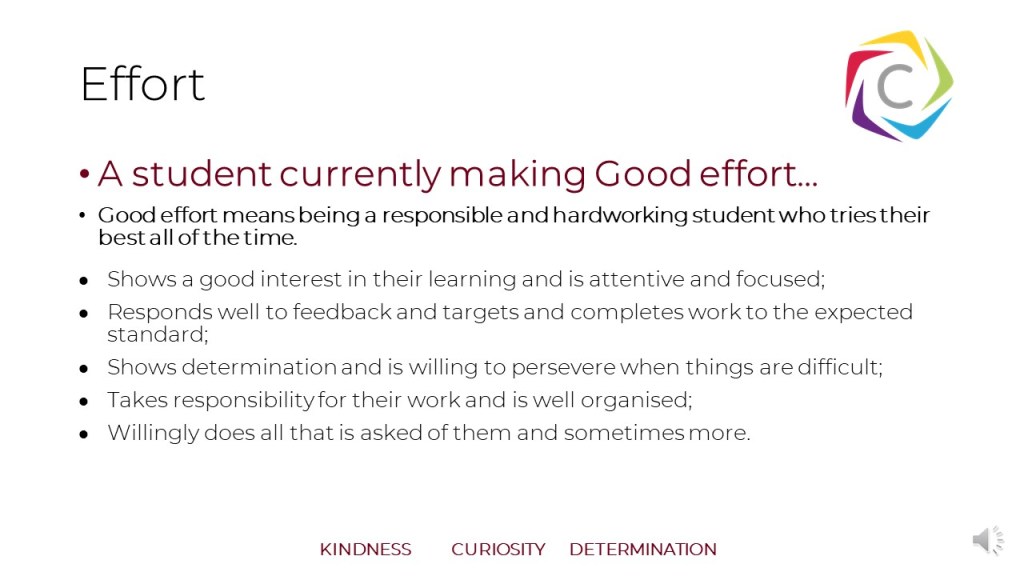
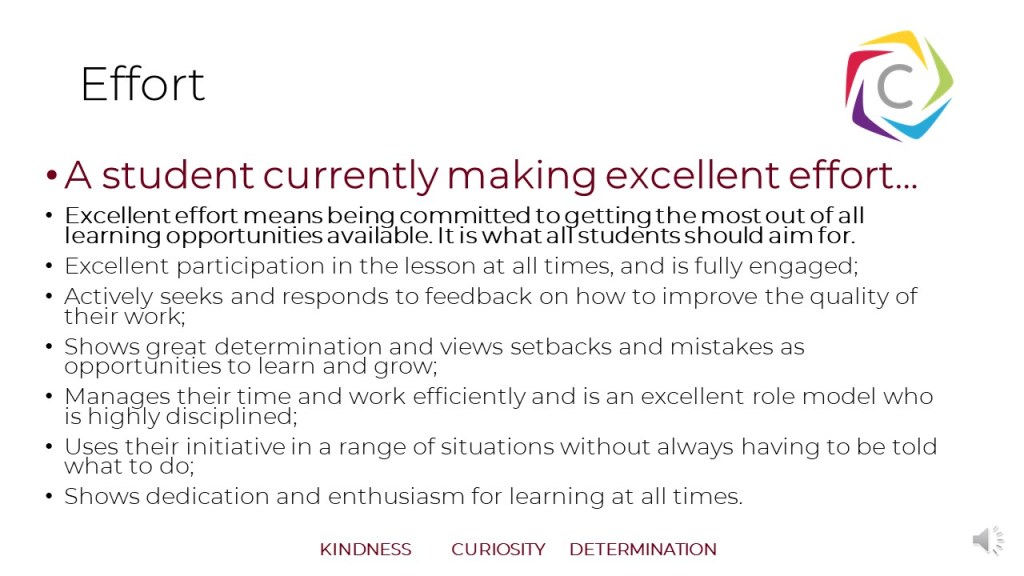
Our effort grades system sets up the expectation that all students will make at least “Good” effort. Anything less than “Good” isn’t enough – so it is graded “Insufficient” or “Poor.” It’s really important that our students know what teachers are looking for when we say we are looking for “good effort,” so we have set it out really clearly in their planners – and in my assembly!

Good effort

We have deliberately tried to write the descriptors for our effort grades as things that teachers can see the students doing in their classes, so that it makes it clear for the students how to show the teachers that they are trying their best. And those students who really push themselves can show that they are putting in excellent effort:

The effort grades that students achieve in their reports three times a year are really important to us at Churchill. We count students’ effort grades towards the House Cup: every Good and Excellent grade adds points to the House total! We also track them carefully to see how students are improving their effort, so we can congratulate them. Alternatively, if their effort is declining, we will try to understand the cause of this and offer support or challenge to them so they can bring it back up. But, vitally, the only one who can control the effort that a student puts in is the student themselves: they must take responsibility for the investment they make in their learning.

In my assembly, I talked about two students whose effort grades were tracked through Year 9, 10 and 11, and how they did in their GCSE exams (these examples were from before the pandemic, when exams still took place). The percentages shown are the students’ average effort grade score across all their subjects.

Student A started Year 9 with below average effort grades, but worked really hard to improve them. Despite a small dip in the middle of Year 11, this student got better and better over time – and this investment paid off. The student made, on average, 1.3 grades more progress than similar students nationally in their GCSEs. The difference: the effort they put in.

Student B tells a different story. They started Year 9 roughly where student A finished Year 11 in terms of effort, but gradually declined across the three years. The result of putting less and less effort in each time: the student performed, on average, one and a half grades less well across their GCSEs than similar students nationally.

We see this played out time and time again across the students we teach. In class, all students are taught the same lesson, but they don’t all learn the material equally well. There are lots of factors in the mix to explain why that is, but the single biggest differentiator is the effort that the students put in. That is why, at Churchill, we put such an emphasis on effort grades – and it is why, at the start of 2022, I used my assembly to remind students of why if matters, and what we expect.

You can see the assembly below:

Welcome back!

And, just like that, we’re back! It has been fantastic this week to have the Academy full of students again, getting back to learning. The screens are already filling up with extra curricular opportunities, including auditions for the school production. It promises to be spectacular!

As term has begun, I have met with all main school students for their “welcome back” assemblies. In those assemblies I have been through the practical arrangements for the year ahead, but also taken the opportunity to reinforce our vision, values and expectations so that everyone is clear.

Site Development

The interior of Stuart House, August 2021

Over the summer we have completed the second and begun the third and final phase of our redevelopment works in Stuart and Lancaster House, home to Humanities and Languages. The second phase has seen the completion of the middle section of the building, with further new air-conditioned classrooms, staff offices, and facilities. The third phase began with the removal of all the internal walls and classrooms around the Stuart Green Room – as you can see in the picture above, it created a massive space! Contractors are now beginning the process of building new classrooms, offices, student toilets and a social space, all with the latest materials designed to control acoustics within the building – and with air conditioning as standard. We expect this work to be completed by March 2022, when we will be able to move in!

COVID

COVID is still with us, and we are still taking precautions in line with the government guidance. This includes the testing of students on their return to school, and the re-introduction of twice-weekly home testing for COVID-19. In my assemblies, I reiterated the current COVID guidance and procedures, which are explained in detail on the website.

Why are we here?

The start of the year is the ideal time to remind us all of why we are here – why Churchill Academy & Sixth Form exists in the first place. Our purpose is simple:

To inspire and enable young people to make a positive difference

I talked to our students about the positive difference they can make to themselves, every single day they attend the Academy. At the end of each day, I asked them to reflect to themselves: what do I know now that I didn’t know yesterday? What am I better at now than I was twenty four hours ago? How have I improved?

It’s also the case that our students can make a positive difference to the Academy that they belong to. Each of them is unique; each of them brings something special to our community. Their being here – the contribution that they make – makes the Academy better.

And, finally, it is our ambition that our students can go out into the world and – as a result of all they have learned at Churchill – make a positive difference in our society. We hope that they will be able to solve problems, help others, and improve things for all of us and for generations to come. It’s a lofty ambition, but when you look at the potential of our Churchill students this year I genuinely believe that anything is possible.

Inclusion and diversity

I outlined an important focus of our work this year, on inclusion and diversity, but explaining what we mean by it. In simple terms, this priority is about:

Ensuring that everybody is welcome, and every member of the Academy feels that they belong

This is a shared responsibility for us all, and something we will be promoting and developing – with the help of our students – throughout the year. It is essential we get this right so we can continue to build the friendly, welcoming community we are all so proud to be a part of.

Sustainability

Our second area of focus for the year is on our own sustainability. We have an ambition to be a carbon-neutral school by 2030. This is no easy task in a resource-hungry institution like ours! But, again with our students’ help, we are driving down energy usage, driving down waste, and improving recycling, encouraging re-usable resources, and looking after our green spaces and facilities. Lots more to follow on this as the year progresses.

Learning

At the end of my “welcome back” assembly, I turn to our core business: learning. I take every opportunity, including this one, to remind our students of the six habits and dispositions that have been shown through research to have the biggest impact on successful learning. These are the things that we promote through our effort grades, our values, our lesson planning, and our classroom expectations.

Our learning values

These are the things that we expect from our students every minute of every hour of every day. From my visits to classrooms this week, they have taken this message to heart. I saw Year 8 students grappling with the concept of infinity in Maths and exploring the story of Edward Colston in Drama; Year 10 students learning about synecdoche in English; Year 7s exploring the Norman conquest of Britain and responding to medieval Occitan troubadour music; Year 11 learning about the nervous system’s response to stimuli; and Sixth Form students learning from alumni about successfully applying to Oxford and Cambridge University. And that’s just scratching the surface!

The year’s got off to a great start: it’s up to all of us to keep it going!

End of year assembly

In my end-of-year assemblies this week, I have tried to do three things. Firstly, I have tried to look back over the year that we’ve had. Secondly, I have celebrated the successes of our students – including awarding the House Cup! And finally, I have looked ahead to next year.

The year gone by

SARS-CoV-2 virus

The year has, of course, been dominated by the coronavirus. It is a tiny thing, ≈0.1 μm in diameter, yet it has led to more than 5m cases and 128,000 deaths in England, according to government figures. It’s worth remembering: this is not normal. This is not how we are used to living. And we hope that it will change.

It’s easy to characterise the year gone by in terms of what we’ve missed out on. From October, we’ve missed out on our vertical tutor groups, which make our House system so strong. After Christmas we were locked down, with some students joining us in school for Frontline, but most of them set up at home with laptops, tablets or mobile phones to access Google Meets and Zooms. We missed out on face to face teaching, on seeing our friends, and on seeing our families. We’ve missed out on holidays, on trips to the cinema or the theatre, on seeing live music and sporting events.

It has been a hard year. But I don’t want to focus on what we’ve missed out on. What I want to do is to be grateful for the fact that we are here. We are together at the end of this really difficult year with a lot to be grateful for. If we start with where we are as a country, we can see that many, many fewer people are now dying as a result of COVID-19. We should be grateful to the amazing National Health Service for the vaccination programme they have rolled out, as well as the incredible care they have offered during this pandemic.

As a school we are grateful that, thanks to the efforts and focus of our students during lockdown and beyond, we are seeing that the vast majority have remained on track with learning through this year. In other words, our students are not a million miles away from where we would expect them to be in if they hadn’t spend several months learning through a screen.

Celebrating success

I was really pleased that we were able to complete our Activities Week and Sports Day towards the end of term, despite the pandemic. These were great opportunities to celebrate successes, including learning beyond the classroom in different environments. Of course, Tudor House won through on Sports Day, although Lancaster led the way in Year 8, and Hanover in Years 9 and 10 – so next year it’s all up for grabs!

Over this last week of term, alongside holding the finals of our Bake Off, Poetry and Spelling Bee competitions, we have been sending home our Celebration of Success certificates to students whose attitude to learning, academic accomplishments, and personal qualities shine through day after day, week after week, month after month. It has been a great honour to review those awards and see them added to this year’s Roll of Honour. I hope that, next year, we will be able to hand them out in person.

The established end-of-year traditions have also been disrupted this year – and the House Cup competition is no exception. There have been many fewer inter-house events than we would have normally held, and we are really looking forward to coming back full throttle next year! The competition was still held however, with the following winners:

  • Academics: combination of each House’s attendance, conduct points and effort grades – winners STUART HOUSE and LANCASTER HOUSE.
  • Competitions: combined totals from all the inter-house competitions – winners TUDOR HOUSE.
  • Overall House Cup Winners: combined totals from all the inter-house activities – winners TUDOR HOUSE

Congratulations to all our students – and especially to Tudor House!

Looking ahead

The pandemic will still be with us in the year ahead. However the new guidance on contact tracing and isolation outlined in my recent update letter to parents will, we hope, reduce the disruption caused to education. We are looking forward to what we hope will be an uninterrupted year with our students, to get back to what we do best – inspiring and enabling young people to make a positive difference.

We are so grateful to our students for the positive difference they have made to our Academy community by being part of it this year. In our students I see bundles of potential, just waiting to be channelled and unleashed on the world. Even when things have been difficult, they have been a pleasure to work with. We are so proud of the positive difference they have made to themselves this year: the progress they have made in their learning; the confidence, resilience and determination they have built up as they have overcome challenges; and the kindness they have shown to themselves and others in their actions. As we step forward to next year in pursuit of the priorities laid out in our development plan, we look forward to what we can achieve together.

More immediately, of course, we are looking forward to a well-deserved summer break. After the year we’ve had, our students deserve some time to rest, recharge and recover – and our staff desperately need it too! The Headteacher’s Blog will return in September.

Churchill Academy & Sixth Form, summer 2021

Welcome back assembly: kindness

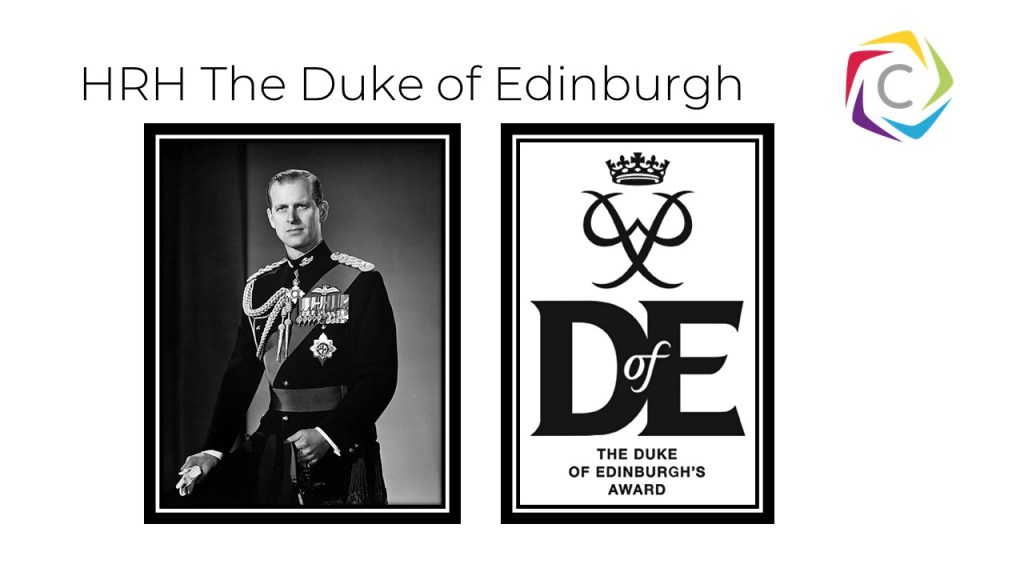
In this week’s “welcome back” assembly, I focused on one of the the Academy’s three core values – and the value for this term – kindness. Before, that I paid tribute to His Royal Highness the Duke of Edinburgh, who died over the Easter holidays.

The Duke of Edinburgh Award Scheme, started by Prince Phillip in 1956 (the same year that our school was founded), has made a significant difference to countless young people at our school and beyond. The scheme’s focus on young people improving themselves by developing a skill, and helping their communities through volunteering, is an excellent match for our own purpose – to inspire and enable young people to make a positive difference. We thank His Royal Highness for founding and promoting the Award Scheme named for him, and we commit to continuing the scheme in his name as part of his legacy.

Kindness

My assembly urged our students to think about kindness in three ways:

  1. Be kind to others
  2. Be kind to the environment
  3. Be kind to yourself

Be kind to others

Being kind to others is a foundation stone of our Academy culture. We expect everyone in our Academy community to treat one another with kindness. We recognise that nobody is perfect, and that sometimes we all make mistakes – but that when this happens, putting things right is an essential part of our learning and growth.

In the assembly, I spoke about how a single act of kindness has a ripple effect, improving life at the Academy for countless others. A kind word, helping somebody out when they are having difficulties, or noticing when somebody else is struggling, can all help make somebody else’s day better. And when they have a better day, they are more likely themselves to offer a kind word to somebody else in turn. By this method, the wave of positivity ripples out across the Academy community – and beyond.

Of course, the opposite is also true. Unkind words and deeds damage the culture of our Academy by making somebody else’s day worse. That person’s negative experience can also ripple out as they may pass the negativity on to others. This is something we are all keen to avoid, and this is why I urged all our students through the assembly to think about the impact of their words and deeds on other people – and to think before they speak or act.

Finally, I spoke about the importance of making sure that everybody felt welcome, felt included, and felt that they belonged at Churchill Academy & Sixth Form. We have seen issues in wider society over this past year with discrimination and prejudice. We are determined that Churchill will remain an inclusive, welcoming community. It is everybody’s responsibility to ensure that we go out of our way to ensure that this happens, and that everyone “belongs” – no matter their background, where they come from, the colour of their skin, their gender or sexual identity or orientation, their family or who they are. These values of tolerance and inclusion are sacred to us at Churchill.

Be kind to the environment

We are lucky at Churchill to have a wide open, rural site, with lots of green spaces. Over the past couple of years we have made a significant investment in continuing to improve this, with our rooves now covered in solar panels, beautiful planting surrounding the central Broadwalk path in the middle of our site, and new trees and saplings planted all around the entire length of the new perimeter fence. Just this week, our students were out working with the Woodland Trust to plant saplings around the site.

It is essential that we all look after the beautiful environment. This includes reducing our waste, caring for our surroundings, and putting all of our litter in the bins. I saw the news coverage of public spaces over Easter as lockdown eased, with many members of the public leaving beautiful green spaces strewn with litter and debris. We will not tolerate that at Churchill – and we hope to instil good habits in our young people so that they will look after the environment beyond our Academy, as well as within it.

Be kind to yourself

Finally, I urged all our students to be kind to themselves. This past year has been tough on everyone, but children and young people especially have seen unprecedented disruption to education and society. They now face an uncertain future as society sets about recovering from the pandemic.

In this context, it is especially important that our students look after themselves. This does not mean lowering our expectations, our our standards – students must continue to push themselves to be the very best that they can be. But it does mean being honest with themselves, with us, and with each other about what is possible at this moment in time, and what is realistic. It means developing and maintaining healthy lifestyles in terms of diet, exercise, work and sleep. It means talking about problems when they arise, and not letting them fester.

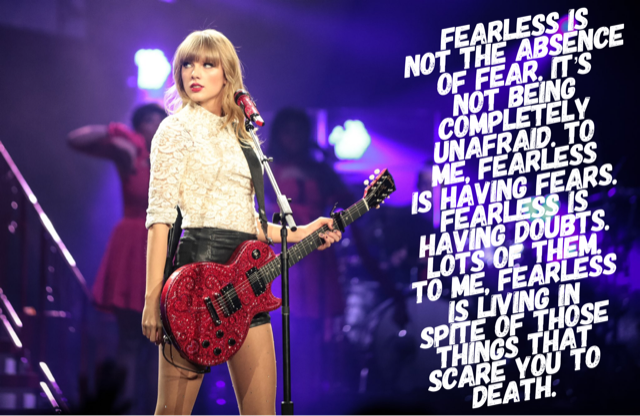
It is natural and normal to feel uncertain and frightened, especially when looking around at the world as it is today. But, as Taylor Swift herself said, living a “fearless” life does not mean that we have no fear. It means that we acknowledge what is frightening in the world around us, and we succeed in it anyway.

Year 9 Learning Groups and the Academy Values

Last week’s assembly, coordinated by Mr Davies, explained the people behind the names of this year’s Year 9 learning groups. They are all people with important links to our nearest city, Bristol – and they have all showed the Academy’s values. We hope that these figures from our local history will inspire our current students to similar endeavours of kindness, curiosity, and determination.

Brunel: curiosity and determination

Brunel learning group is named for Isambard Kingdom Brunel, the mechanical and civil engineer who designed the Great Western Railway, Clifton Suspension Bridge, SS Great Britain and numerous significant ships, tunnels and bridges. He was a prominent figure during the Industrial Revolution which began in Britain, and he revolutionised public transport and modern engineering. His endless curiosity led to him finding innovative solutions to engineering problems, and his determination ensured that he overcame the challenges in his way.

Stephenson: kindness and determination

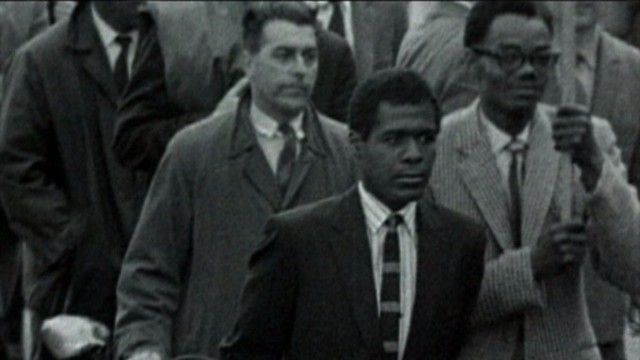
Stephenson learning group is named after the civil rights campaigner Paul Stephenson. He was born in 1937, in Essex. He joined the RAF as the only black cadet in his regiment. Many years later he became a Youth and Community Development Worker in St Pauls, Bristol. It was during this time that he campaigned for a bus boycott as he didn’t accept that the bus company wouldn’t employ black drivers. He decided he was going to do something about this! He fought for black people to be treated fairly in public places in Bristol. With Muhammed Ali, he also set up ‘Muhammed Ali Sports Development Association’ to promote sports development among ethnic minority young people to help develop self-confidence  and social interaction. In 2008 he was given the Freedom of the City of Bristol in recognition of the work he has done to bring the black and white communities together.

Fragapane: determination

Claudia Fragapane is a British artistic gymnast who grew up in Bristol. At the 2014 Commonwealth Games, she was the first English woman to win four gold medals since 1930. In 2015, Fragapane was part of the women’s gymnastics team that won Great Britain’s first-ever team medal, a bronze, at the World Artistic Gymnastics Championships. She competed at the 2016 Summer Olympics in Rio de Janeiro, alongside Churchill Academy alumnus Ruby Harrold. She also finished fourth in Strictly Come Dancing!

Park: curiosity and determination

Nick Park is the famous animator, director and writer behind Wallace and Gromit, Creature Comforts, and Shaun the Sheep. He has been nominated for an Academy Award a total of six times and won four with Creature Comforts (1989), The Wrong Trousers (1993), A Close Shave (1995) and The Curse of the Were-Rabbit (2005). He has also received five BAFTA Awards, including the BAFTA for Best Short Animation for A Matter of Loaf and Death.

He has spent most of his career working for Aardman Animations in the Bristol area. His curiosity has led him to develop a unique and appealing world of claymation animation. Meanwhile, his technique of stop-motion animation – shooting films one frame at a time, moving each model just a fraction between each shot – requires a huge amount of determination!

Blackwell: kindness, determination and curiosity

Elizabeth Blackwell was born in Bristol in 1821, although she moved with her family moved to America when she was 11 years old. She was the first woman to receive a medical degree in the USA in 1847, which required determination and curiosity. As a medical doctor, she showed great kindness when she treated wounded and injured soldiers in the American Civil War, despite strong opposition from male colleagues.

Later, she opened her own medical practices in New York (1852) and in London (1871) where she taught, trained and inspired other female doctors to follow in her footsteps. She retired from medicine in 1877 to work as a social and moral reformer, co-founding the National Health Society.

She showed determination, battled all her life and her successes had been monumental. In 1881, there were only 25 female doctors registered in England and Wales but by 1911 there were 495 registered. Her ambition and success has inspired many generations of female doctors to pursue medical careers and achieve the ‘impossible dream’.

Kenney: determination

Kenney learning group is named after Annie Kenney (1879-1953). Annie Kenney was a key figure in the suffragette movement which campaigned for women to have the vote in the early twentieth century. Kenney was one of the few working class women to rise to prominence in the Suffragette campaign. She became a leading figure in the Women’s Social and Political Union and  spent some years working as an organiser in Bristol. She hit the headlines after being imprisoned for several days for assault and obstruction, after heckling Sir Edward Grey at rally on the issue of votes for women.

Kenney was imprisoned a total of 13 times. She repeatedly went on hunger strike in prison, and underwent brutal force-feeding from the authorities. She remained determined to confront the authorities and highlight the injustice of the treatment of suffragettes by the male-dominated authorities.
When the First World War broke out, Annie Kenney accompanied Emmeline Pankhurst and other suffragettes from the WSPU in ending their activism. Instead, they took on jobs that had previously been done by men, who were now away fighting, in support of the national war effort. Her actions, and those of others in the movement, led to women gaining the vote in 1918.

Dirac: curiosity and determination

Dirac learning group is named after the physicist Paul Dirac, born in Bristol in 1902. Dirac made fundamental contributions to the early development of both quantum mechanics and quantum electrodynamics. Among other discoveries, he formulated the Dirac equation which describes the behaviour of sub-atomic particles called fermions. He also predicted the existence of antimatter. Dirac shared the 1933 Nobel Prize in Physics with Erwin Schrödinger “for the discovery of new productive forms of atomic theory”. He is widely regarded as one of the most significant physicists of the 20th Century.

Brohn: kindness and determination

Diagnosed with breast cancer in 1979, Clifton-born Penny Brohn knew she needed more than just care and treatment for her body: she recognised that she would need support for her “mind, spirit, emotions, heart and soul.” She co-founded a charity centre with her friend Pat Pilkington called the Bristol Cancer Help Centre, which offered patients complementary therapy to support them alongside medical treatment. She showed determination to overcome a great deal of controversy and scepticism to support those living with cancer. Penny Brohn died in 1999, having lived with cancer for 20 years. Her kindness lives on in the work of the charity she co-founded, which provides care to those living with cancer before, during and after treatment.

More: kindness, curiosity and determination

Last but not least, learning group More is named after Hannah More (1745-1833). Hannah More was born in Bristol, where she taught at a school founded by her father and began writing plays. She became known as a poet and playwright, as well as a writer of moral and religious texts, and moved to Wrington in 1802. She campaigned to extend education to the poor, and to girls, who otherwise had no access to schooling. Vitally, More also campaigned against the slave trade. Hannah More is buried beside her sisters at the Church of All Saints in Wrington: you can see a bust of her in the south porch to this day.