I am proud to be a member of ASCL – the Association of School and College Leaders. This is a trade union and professional association that represents over 25,000 school and college leaders across the United Kingdom. I was elected to represent the south west region on ASCL’s Council in 2019, and I am also part of ASCL’s Executive Committee as the association’s Honorary Treasurer.
This is a fascinating part of my job, as we think about how best to represent the interests of school and college leaders to those in government and other positions of authority, to influence policy and systems. In this work I have been fortunate to have met with three different Education Secretaries, including meeting with Bridget Phillipson MP, Secretary of State for Education, four times. She has always listened carefully to the representations we make, although the challenges of government are certainly limiting what can be achieved currently.
I have also met with Sir Martyn Oliver, the Chief Inspector at Ofsted, to discuss reforms to the accountability and inspection system. There is a consultation currently open as Sir Martyn is working on “Improving the way Ofsted inspects education.” I have made my views known, but the consultation is open to everyone with an interest in education, including parents and carers, and is open until 28th April.
This weekend I will be in Liverpool with ASCL for further conversations with Bridget Phillipson and Sir Martyn Oliver, and I am also looking forward to hearing from Professor Becky Francis CBE, who is Chair of the Curriculum and Assessment Review. This review is looking at curriculum and assessment in the English school system from reception to Year 13, which is a vital piece of work to refresh and renew the very busy and intensive system that is currently in place. I look forward to hearing what Professor Francis has to say!
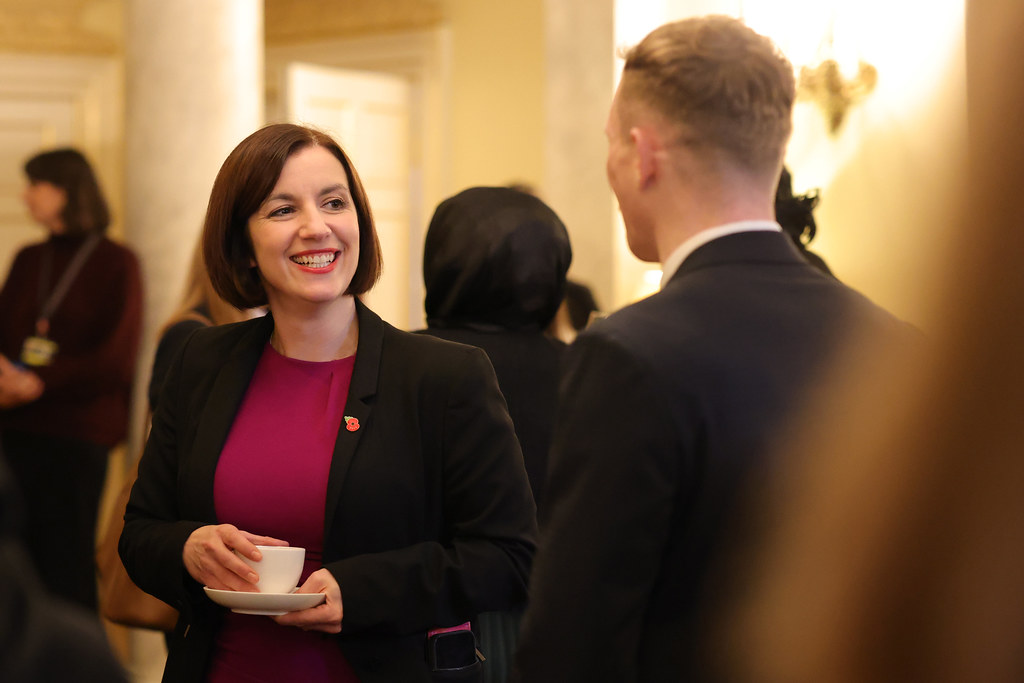
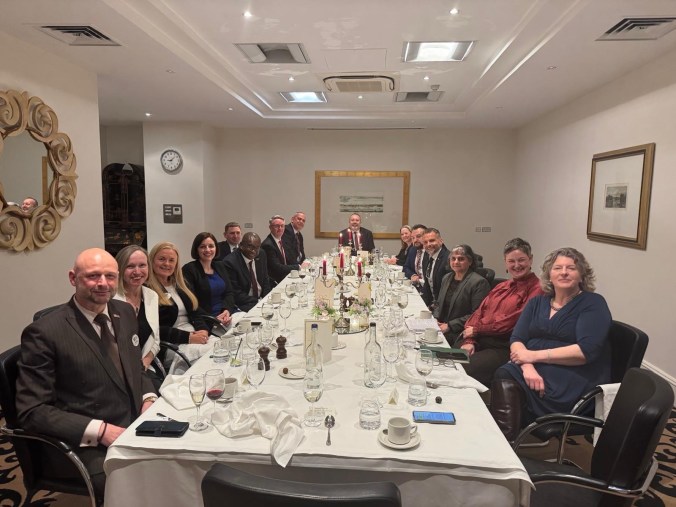
At a recent meeting with Secretary of State Bridget Phillipson and members of ASCL’s Council and policy team
A man came across three stone masons who were working at chipping chunks of granite from large blocks. The first mason seemed unhappy at his job, chipping away and frequently looking at his watch. When the man asked what it was that he was doing, the first mason responded, rather curtly, “I’m hammering this stupid rock, and I can’t wait ’til 5 when I can go home.”
A second mason, seemingly more interested in his work, was hammering diligently and when asked what it was that he was doing, answered, “Well, I’m moulding this block of rock so that it can be used with others to construct a wall. It’s not bad work, but I’ll sure be glad when it’s done.”
A third mason was hammering at his block fervently, taking time to stand back and admire his work. He chipped off small pieces until he was satisfied that it was the best he could do. When he was questioned about his work he stopped, gazed skyward and proudly proclaimed, “I…am building a cathedral!”
(parable courtesy of Bill von Achen)
The parable of the three stonemasons reminds us always to keep in mind the larger endeavour that we are engaged in. Every lesson, every new piece of knowledge, every task, is adding a new block to our own individual cathedral. The effort we put in as we shape that new knowledge, as we fit it into our wider understanding of the world, and the way that we secure that new block so it stays in place; this is the process of learning. Every quiz, practice question, homework and class discussion is another block the cathedral of our understanding. How we sculpt and finesse that block is up to us.
At Churchill our purpose is “to inspire and enable young people to make a positive difference.” The primary way our students do this is by making a positive difference to themselves through the process of self-improvement: learning new things, building their knowledge, enhancing their skills, developing their confidence and character. Every day, in every way, we all get better.
As staff working at Churchill, our goal is inspire and enable those young people to make those positive differences. Every day, I look back on the events of the day and reflect on the things that we have done which have helped students (and staff) to improve. What have we taught them? How have we helped? What problems have we been able to solve? It’s a good way to stay positive, because every day we know we have made a difference.
As the Headteacher, my role is about school improvement: making a positive difference to Churchill Academy & Sixth Form. As I look back over the time that I have worked at the school, I am really proud of the positive differences I can see. I see this in the fabric of the Academy: the Alan Turing Building, the Athene Donald Building, the rebuilt Stuart and Lancaster block, the redecorated Sports Hall, the new Pool Hall and facilities in the sports centre building, even the resurfaced coach loop! All these things make a positive difference to the daily experience at school.
I also see it in the positive differences we’ve made to our processes, policies and approaches. The improvements we’ve made in teaching and learning; the improvements we’ve made in behaviour; the improvements we’ve made in our systems. And we continue that work every day, looking to keep on getting better.
And finally, I see it in the people who work here – those who’ve been here longer than me, and those who have been appointed under my watch. We have an amazing team of staff, all of whom are dedicated to the Academy’s mission and purpose. It’s a privilege to work alongside such dedicated professionals, all of whom are striving to make children’s lives better.
Improvement is a work in progress, and it always will be: but I am proud to think that the Academy is continuing that work every day. We will never be perfect – and that is what keeps the job interesting. There is always more to learn. We can always get better. And we will.
Wikipedia tells me that the word “equals” derives from the Latin word “æqualis,” meaning “uniform”, or “identical”, which itself stems from aequus (“level”, “even”, or “just”). The equals sign – a pair of parallel lines, one above the other – apparently originated with a Welsh mathematician, Robert Recorde, in 1557. Bored of writing out “is equal to” again and again, he used a pair of parallel lines to stand instead.
Robert Recorde’s original explanation of the equals sign
Recorde wrote: “And to auoide the tediouſe repetition of theſe woordes : is equalle to : I will ſette as I doe often in woorke vſe, a paire of paralleles, or Gemowe lines of one lengthe, thus: =, bicauſe noe .2. thynges, can be moare equalle.” In modern English, this roughly translates to: “And to avoid the tedious repetition of these words: “is equal to” I will set as I do often in work use, a pair of parallels, or duplicate lines of one [the same] length, thus: =, because no 2 things can be more equal.”
The first recorded use of the equals sign in 1557. 14x + 15 = 71
Recorde called his new symbol – a much longer pair of parallel lines than we are now used to – “Gemowe lines.” The word “Gemowe” means “twin,” from the same root as the star sign “Gemini.” What Recorde has captured in his new symbol was the idea that the two lines are not the same – one is above the other, and one below – but they are of the same value. The are worth the same. They are equally valuable – equivalent.
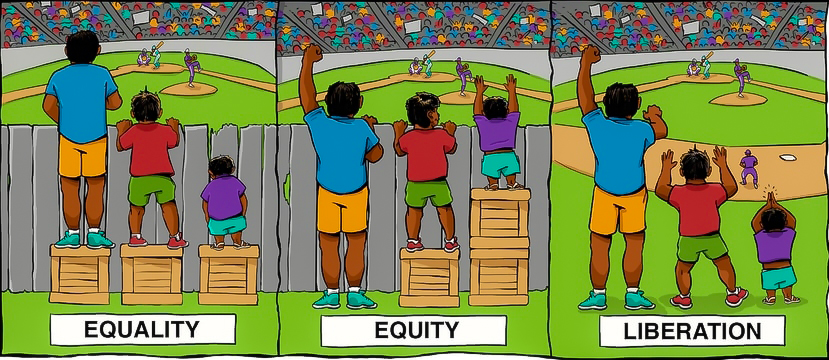
This famous illustration has been used in training to help staff think about the ideas of inclusion and diversity
We have been thinking carefully about what equality means in education. We are not all the same – each of us is unique. Achieving equality of opportunity does not mean giving everyone the same treatment – as shown in the left hand picture above. Some people need extra help or support to achieve – as shown in the middle picture – and as a school we work hard to put that in place wherever it is needed.
Our ultimate goal is to remove the barriers that stand in the way of achievement and progress, so that our students can set no limits on what they can achieve. This is illustrated in the picture on the right. We know that this is challenging, and that some of the barriers are beyond our control. We know that we can’t always achieve it on our own – but that doesn’t mean we shouldn’t try.
I recently visited a maths lesson and saw another expression of “equality.” The teacher was guiding the students through solving algebraic equations to find the value of x. Something like this:
2x2 + 12 = 44
Students volunteered to take the class through the process of solving the equation to find the value of x. The first step was to subtract 12, from both sides of the equation, to leave 2x2 = 32.
The teacher asked: “why do you need to take 12 from both sides of the equation?” The answer emerged: because both sides have to equal the same amount. If you only took 12 away from the left hand side, then they wouldn’t be equal.
The Year 8 mathematicians went on to divide both sides of the equation by 2, leaving x2= 16, before taking the square root of both sides and concluding that x=4.
After I had visited the lesson, I kept thinking about the idea of equality – in mathematics, in education, in society. 2x2 + 12 is not identical to 44 – the two sides of the equation look very different. But they have the same value. Our students are all different too, each with their own unique qualities, needs and circumstances. Their differences make them unique, and it is this uniqueness which provides the richness of our community. But every single child matters: they are all Churchill students. They are all part of the whole, all of equal value; they all belong equally.
We all know that attendance at school is really important. If attendance is low, students miss out on vital lessons. It attendance is patchy, so is learning. The impact is summarised in this table:
Whilst attendance at Churchill is above the national average, that national average is lower than it was before the pandemic. This means that, across the country – including at Churchill – too many children are missing out on their education.
The link between attendance and attainment is clear: 36% of children who were persistently absent in KS4 got 9 to 4 in their English and maths GCSEs, compared with 84% of those who attended regularly. But attendance is important for more than just attainment: regular school attendance can facilitate positive peer relationships, which is a protective factor for mental health and wellbeing.
The good news is, it’s never too late to benefit from good attendance. More than half (54%) of pupils in England who were persistently in Year 10 and then rarely absent in Year 11, passed at least 5 GCSEs, compared to 36% of pupils who were persistently absent in both years.
We know attendance really matters – and that’s why it’s so important that every single student attends school every day that it is possible for them to do so. And there is a wealth of guidance out there to help and support families with school attendance:
Is my child too ill for school? The NHS’s comprehensive guide to when you should keep your child off school (and how long for), and when it’s okay to send them in if they are feeling ill.
Members of the Attendance Action Alliance have worked with the Department for Education to develop this short guide which helps parents understand how they can work with their school and local authority to support their children to attend school and get the right support.
On Wednesday of this week, the Lighthouse Schools Partnership held its first joint secondary inset day. Inset is short for “in-service training” and is a day set aside for staff development and learning. Teaching and student-facing support staff from all four LSP secondary schools – Churchill Academy & Sixth Form, Chew Valley School, Backwell School and Gordano School – gathered together at Gordano in Portishead. This was the first time that the 400+ staff from the four schools had been together in the same place in the trust’s history.
The day began with a presentation from Chief Executive Gary Lewis, who outlined the trust’s vision under the heading “flourishing in partnership.” Being together in the same space enabled and allowed the partnership to flourish as connections were made and strengthened, common ground established, and sharing of practice enabled. There was a real buzz in the room as colleagues got together!
The rest of the morning was spent in workshops developing classroom pedagogy, with sessions on questioning, retrieval, scaffolding, checking for understanding, increasing participation ratio and modelling of example answers for colleagues to choose from. These key elements of teaching and learning are common across all our schools, and sharpening and honing our practice in them is essential for the continued success of our students.
Meanwhile, English and Maths leads were taking full advantage of the fact that the Lighthouse Schools Partnership also has 26 primary schools within the family, by spending the morning looking at key stage 2 curriculum and pedagogy in the Whiteoak Academies in Nailsea. This experience enabled leaders to get “under the skin” of the upper primary curriculum, to ensure that the transition into Year 7 is smooth and effective – and that the expectations we have of our youngest students are consistent with the expectations our primary colleagues have of their oldest.
After a lunch in which networks were formed and strengthened, subject-specific teams got together to reflect on the learning from the morning and how to implement the day’s learning back in their home schools. Subject leads were also working together to plan the next joint inset day, in February 2024, when staff will work together on subject-specific priorities at locations across the LSP’s secondary sites.
As relative newcomers to the multi-academy trust, Churchill staff are still getting used to being part of this larger organisation. Wednesday’s inset was a great opportunity to realise the benefits of collaboration across the wider trust. We look forward to continuing to flourish in partnership.
We know that reading really matters. Research suggests that reading for pleasure can influence a child’s academic success, vocabulary development, mental health, ability to empathise and to accept other cultures, and even life expectancy!
Reading is an essential life skill. The ability to read fluently and skilfully enables us to navigate street signs, fill in forms, interpret medicine labels, order from a menu, and get a job. And it also enables us to understand what is going on in the world around us, and to understand it better.
Reading also helps students to achieve across the curriculum. The Institute of Education’s research (2013) shows that children who read for pleasure are likely to do significantly better at school than children who do not. Their report highlighted a positive impact on results in spelling, vocabulary and other areas of the curriculum too, including maths. We know that wider reading improves vocabulary, and enhances critical thinking skills, problem-solving abilities, and comprehension – all essential components for success in school and beyond. A child who reads regularly is more likely to excel in exams and develop a lifelong love for learning.
Beyond the functional benefit of reading, the ability to decode squiggly lines, shapes and loops on a page unlocks a world of discovery. It can take us on journeys to far-off lands and worlds of the imagination. Through reading, we can learn about the past and imagine the future; we can learn to understand characters and experiences from the familiar to the fantastical; we can learn to empathise, sympathise and live lives other than our own.
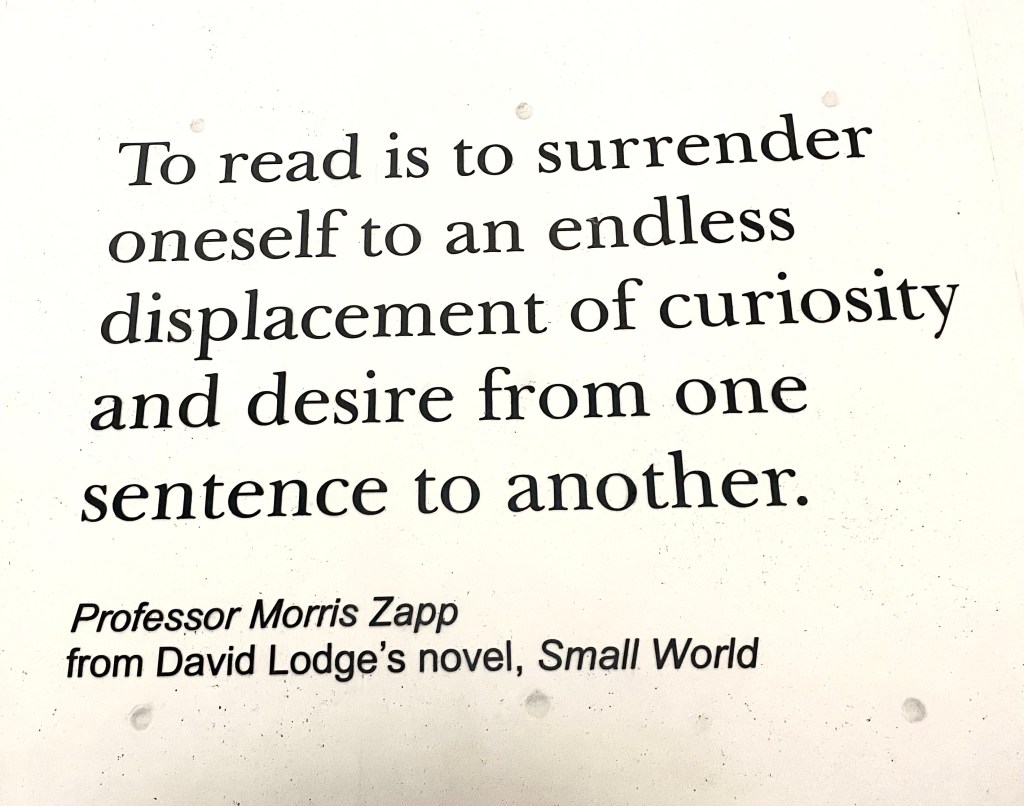
A reader lives a thousand lives before he dies
George RR Martin
Reading is also beneficial to wellbeing. The Reading Agency’s 2015 report shows that reading for pleasure links to increased empathy, social cohesion, knowledge of other cultures, cultural capital and the ability to regulate moods and relax. The report also found that reading brings about “increased empathy, improved relationships, reductions in symptoms of depression… and improved well being”. This is also reflected in the National Literacy Trust’s findings from a survey of nearly 50,000 UK school children showing those who enjoy reading and writing are significantly less likely to have mental health problems.
In summary, the importance of reading widely and often cannot be overstated. Fostering a love for reading is one of the greatest gifts we can give our children. It not only lays the groundwork for academic success but also nurtures their personal growth, empathy, creativity, and resilience. We need to do all we can to encourage our students to pick up a book, explore new worlds, and embark on a journey of lifelong learning. This is why we insist that all our students have a reading book with them at all times, and why we are beginning every school day with reading in tutor time: the benefits are boundless, and the impact is immeasurable.
The world of education is evolving at an unprecedented pace, and technology is playing a significant role in shaping the learning landscape. In recent years, the integration of artificial intelligence (AI) and ChatGPT, powered by OpenAI’s advanced language model, has become a topic of interest in English secondary schools. These innovations have the potential to greatly benefit students, but it is also essential for us to understand both their usefulness and the potential pitfalls. In this blog post, we’ll explore how AI and ChatGPT can be useful tools for students while highlighting some crucial warnings about their appropriate use, especially in terms of plagiarism.
The Advantages of AI and ChatGPT
Personalized Learning: AI-powered educational tools can adapt to students’ individual needs, offering tailored learning experiences. ChatGPT can provide instant feedback and explanations to help students grasp complex concepts, making it an excellent resource for homework and assignments. For example, if you are struggling to understand or remember a concept or idea, asking ChatGPT to explain it may help jog your memory.
Enhancing Creativity: ChatGPT can assist students in brainstorming ideas, refining their writing skills, and generating creative content. It can be a valuable companion for assignments and projects by suggesting starting points, topics for exploration, or other ideas.
Access to Information: ChatGPT provides students with a vast amount of information at their fingertips. It can help students with research, giving them access to a wide range of sources and references to enrich their understanding of various topics.
Warnings and Risks
While AI and ChatGPT offer numerous advantages, they should be used judiciously, and parents and students need to be aware of the potential pitfalls:
Plagiarism: One of the most significant concerns is the risk of plagiarism. ChatGPT can generate text quickly, but it’s essential for students to understand that simply copying and pasting the AI-generated content into their assignments is not acceptable. Parents should emphasize the importance of original work and proper citation. Work generated by AI is not the student’s own and attempting to pass it off as such could result in disqualification from examination courses.
Overreliance: While AI can be a valuable resource, students should not become overly reliant on it. They need to develop critical thinking and problem-solving skills on their own. Encourage your child to use AI as a supplementary tool rather than a crutch.
Accuracy and Credibility: Not all information available through AI is accurate or credible. Parents should teach their children to critically evaluate the sources and information provided by AI, just as they would with any other research method.
Privacy and Safety: Parents should be aware of privacy and safety concerns. It’s essential to ensure that children are using AI tools in a secure and responsible manner. Discuss online safety practices, including not sharing personal information.
Ethical Use: AI can sometimes generate content that may be inappropriate or offensive. Parents should educate their children about ethical behaviour and discourage any harmful use of AI.
Conclusion
AI and ChatGPT are valuable tools that can enhance the learning experience for students in English secondary schools. However, they must be used responsibly, with a focus on promoting creativity, critical thinking, and originality. Parents play a crucial role in guiding their children’s use of AI and helping them avoid pitfalls like plagiarism and overreliance. By understanding the advantages and limitations of AI in education, parents can support their children in harnessing the power of technology for their academic growth.
The blog post was written with help from ChatGPT3.5.
There will be times in all our lives when things get difficult. This is an inevitable part of being human. Over the past few years we have all faced huge challenges: the pandemic; political and economic turmoil; the cost of living; war in Ukraine. We all face challenges ahead: the climate crisis; the role of technology in society; overcoming social inequality.
None of these things are easy. I have often spoken to our students about taking on challenges, about pushing yourself. I have said – countless times! – “when you’re struggling, you’re learning.” It’s important that we, as adults, practise what we preach.
I often rely on the wisdom of others to illustrate these ideas. One of my favourite quotes, usually attributed to Thomas Edison, is: “our greatest weakness lies in giving up. The most certain way to succeed is to try just one more time.” And, after all, he should know – he invented the lightbulb!
Another inspirational figure is President John F. Kennedy. In 1962, announcing the intention to put a man on the moon, Kennedy spoke about taking on a difficult task precisely because it was challenging: “we choose to go to the Moon in this decade and do the other things, not because they are easy, but because they are hard.” He would not live to see the realisation of this vision, but his ambition led to Neil Armstrong setting foot on another world in July 1969.
Over this past month, I have also taken comfort in the words of the great Maya Angelou, who said: “you may not control all the events that happen to you, but you can decide not to be reduced by them.” There is great wisdom here. Whilst much that happens around us – and, in some cases, to us – is beyond our control, we are in charge of the way that we respond. We can let ourselves be ground down by the challenges, or we can rise to them. It’s up to us. And I choose to rise.
Finally, a colleague shared some new words of wisdom with me recently. Well, they are new to me, but the words themselves are old: their author, George Herbert, lived 1593-1633:
Storms make oaks take deeper root
George Herbert, 1593-1633
These are the words that I have looked to throughout the past months. When the storm rages, we will not be uprooted. The turmoil around us will make us more resilient, more determined. And, when the storm clears and the sun shines in a clear blue sky, we will be stronger for having weathered it.
The news headlines are pretty bleak in the world of education at the moment. Industrial action by members of the National Education Union is disrupting schools up and down the country. They are taking action because of the significant financial challenges facing schools – as with every sector of the economy – in the face of skyrocketing energy bills and insufficient funding to raise staff salaries in line with high inflation. A further slap in the face was the revelation of WhatsApp messages from former Secretary of State for Education, Gavin Williamson, denigrating teachers as lazy and workshy at the height of the pandemic. I remember our staff working with students throughout that time – without vaccines or PPE – and moving heaven and earth to deliver education in unprecedented circumstances, so this is particularly galling.
There have also been shocking scenes on social media of schools around the country in disorder as students stage “protests” against rules and approaches taken by staff. I’m not going to get into the rights and wrongs of individual cases elsewhere, but I am very glad that our Academy is a school with strong student leadership and voice; a school where staff listen to students and where students are able to make positive changes to the Academy in partnership with staff – as one community. We have revised uniform rules and systems as a result of this kind of feedback from students through councils and student voice, and those groups are continuing to work hard to improve many aspects of school. We will continue to listen as our students express their views through the channels designed for this purpose – and I am grateful for the good sense and maturity that they have shown, despite the trends of social media.
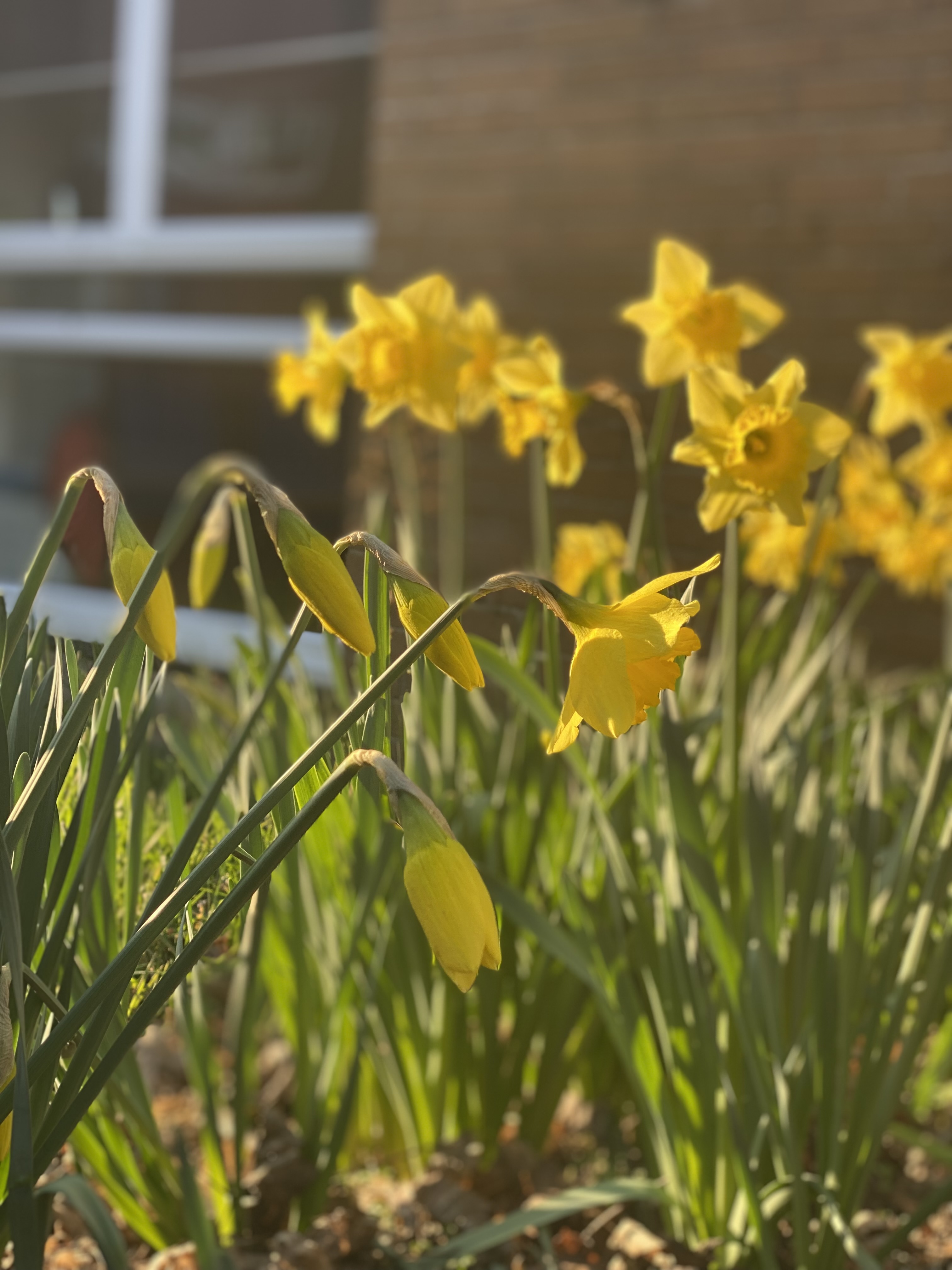
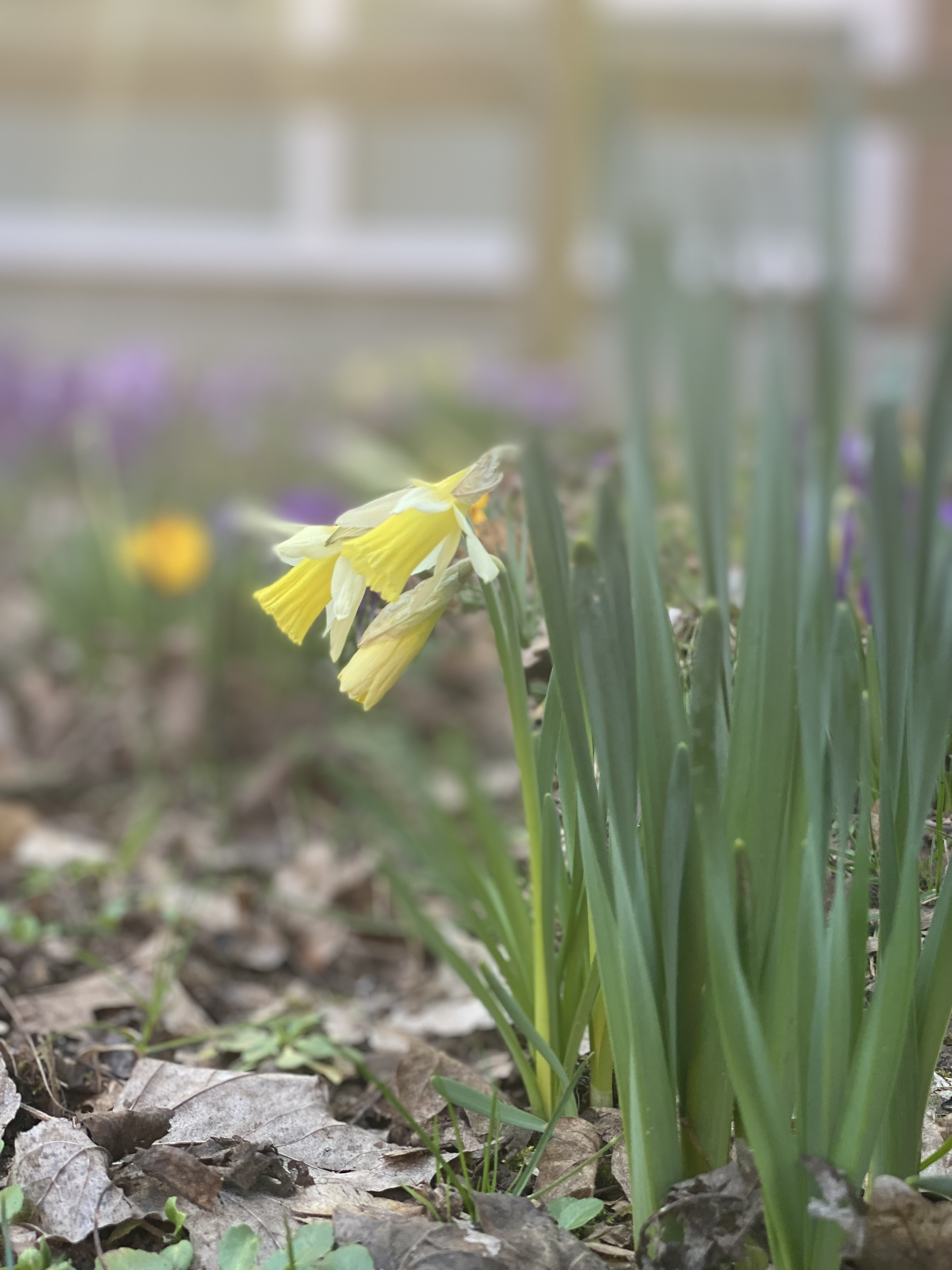
As I was leaving school at the end of the day this week, I saw the carpet of crocuses and daffodils blooming again, as they do every spring. They reminded me – as they always do – that out of the cold and dark, brightness always returns. Working in schools, we are in the business of optimism. Every day, we work with the young people who have the potential to go out and make the world better, to solve its problems, to make a positive difference. No matter how difficult things are, the positivity and potential of our students make the job worthwhile.













 The Headteacher's Blog