Manners Makyth Man

In my assemblies at the start of term 5, I spoke to our students about William of Wykeham. William was born the son of a free yeoman in around 1320, over 700 years ago. He rose up through society, the church and politics to become the Bishop of Winchester and Chancellor, responsible for the wealth of the kingdom under King Edward III and then King Richard II, the last Plantagenet monarch.
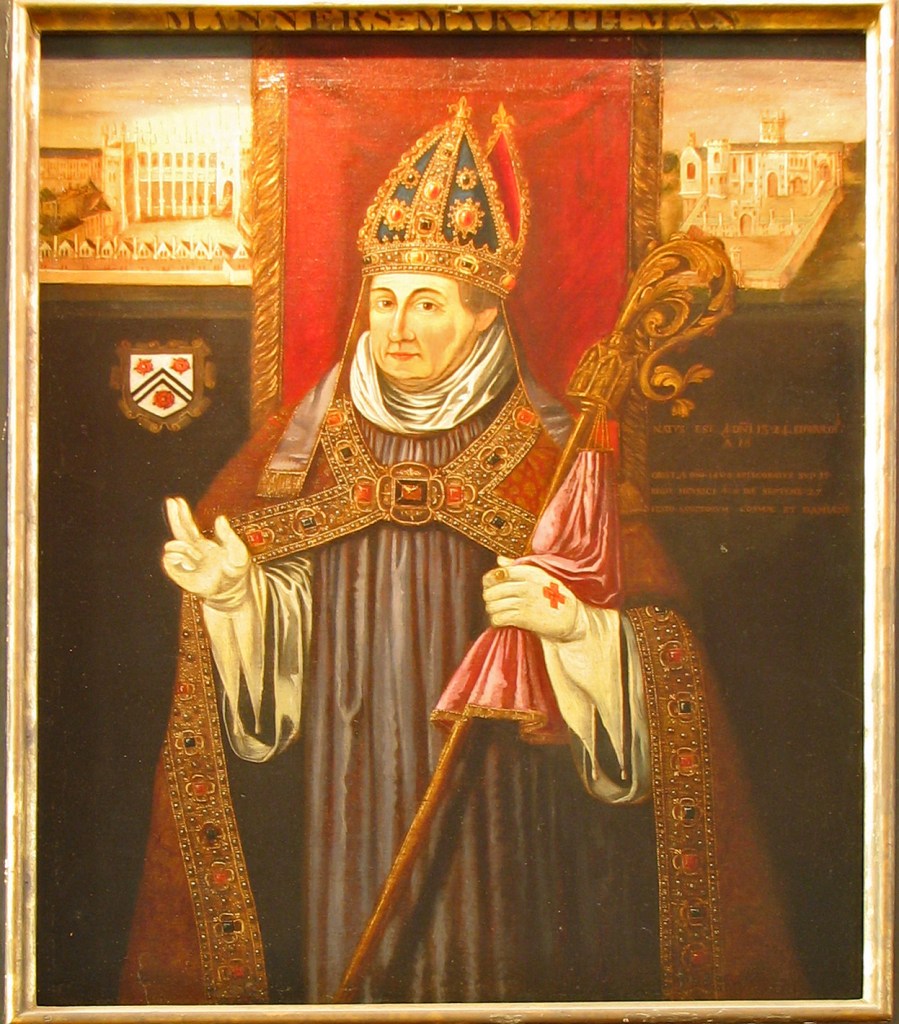
William of Wykeham (source)

As a result, William became a very wealthy man. He wanted to devote his wealth to ensuring that others could rise up from humble origins to great success, so he founded educational institutions including a school in Winchester, where he was Bishop, and a college in the developing university city of Oxford.
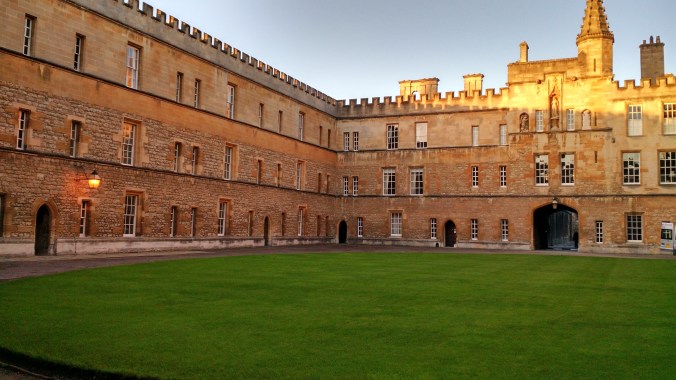
The old quad at New College, Oxford

At the time, the “Saint Mary College of Winchester in Oxenford” was a new college, and this identity stuck; the college is still called New College today, nearly 650 years after it was founded in 1379, which makes it (ironically) one of the oldest colleges in Oxford. William himself is commemorated in a statue over the gate, kneeling in worship of Saint Mary; you can see his restored statue in fresh stone in the image above.

So why are we interested in a Bishop who lived over 600 years ago? The reason is that William’s personal motto, emblazoned across the top of the frame of his portrait, the motto that remains the slogan of New College centuries later, still has resonance today.
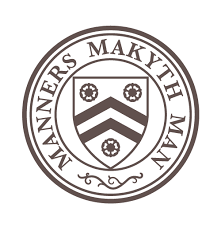
The emblem and motto of William of Wykeham and New College, Oxford: Manners Makyth Man

William’s motto, Manners Makyth Man, were words he lived by. Our manners are “a way of conducting oneself toward others” and “a person’s habitual behaviour or conduct.” That is, the way we treat other people, but also the way we behave by force of habit. Therefore, William’s motto can be translated as:

Manners Makyth Man: The way we behave towards other people makes us who we are

So what do good manners look like? I think there are some basics that are as true today as they have always been, and I went through these with our students in assembly:

  • Polite language
    • Greetings: good morning, good afternoon
    • Gratitude: please and thank you
    • Generosity: is there anything I can help you with?
  • Active listening
    • Show interest
    • Make eye contact
    • Give your full attention
  • Respect
    • Respecting personal space
    • Respecting visitors
    • Offering assistance (e.g. holding doors open)

We spent some time talking about how we can show respect in particular when we are meeting with visitors to our Academy – for example with our amazing student ambassadors who regularly give tours to families, candidates, visiting staff and others when they visit Churchill, and never fail to do a wonderful job!

I first encountered William’s motto when I was a student at New College, studying English Language and Literature in the 1990s. That simple creed – Manners Makyth Man – the way we behave towards other people makes us who we are – has stuck with me ever since, and informs my actions to this day. William’s legacy lives on, not just in the educational institutions he founded, but also in the words and ideas he left behind. Let’s all try to make sure that the way we behave towards others leaves a similarly positive, lasting impression.

Exams: the finishing line

Term 5 is a pressurised term – this year especially. It’s just five weeks from Easter to the May half term, with formal GCSE and A-level exams starting on May 6th. The exams suddenly go from seeming a long way off, to being…well, next week!

The final stretch of exam preparation is about finishing touches. Courses have been finished. Students have the knowledge and skills they need now to tackle the exams ahead of them. This final few days are all about honing exam technique to a sharp point: what exactly do the examiners want to see in an answer to this particular type of question? How can you manipulate what you know to squeeze as many marks as possible out of each part of the paper? How should you manage your time to ensure you leave enough to cover everything fully?

Our teachers are well versed in the art of exam technique. Exam preparation classes across the Academy are full of last-minute reminders about what to include, where, and how. In a exam situation, this is almost as important as the knowledge itself! This year, with our GCSE students, we will also be running subject-specific masterclasses in the days and hours before exams to give our students the final boost into their assessments, and these will continue online when students are on study leave in Term 6.

You can put yourself at an advantage by preparing well. Revision is essential, of course – you can find revision tips in the Revision category on this blog. But just as important is a good night’s sleep, and a healthy meal before an exam. An all-night revision session honestly won’t help as much as you wish it would – the brain works best when well rested and fuelled. Get to bed, sleep well, and have a good breakfast.

Once you’re in the exam itself, there are some general tips that I always swear by:

  • Be sure to answer all the questions – turn every page. Including the back page…yes, every year someone comes out ashen-faced when they realise there were eight questions, not seven.
  • Jot down your key ideas – don’t be afraid to do some rough work, or write down some key notes as soon as the invigilator says “you may begin.” Getting key ideas down will ensure that you remember them!
  • Write something for every question – if you’re not sure, make your best educated guess at the question. If you’ve written something, you’re in with a shout of some marks. If you write nothing – you’re definitely going to score zero.
  • Keep an eye on the time – you know how many questions are on the paper. You know how long you’ve got. Make sure you leave enough time to answer them all.
  • Check – use every minute of the exam. Check for silly mistakes. Check that you’ve written what you think you’ve written. Check for accuracy of spelling, punctuation, and grammar. Give yourself time to add in that extra bit that you forgot the first time through. It could make all the difference.

Exams bring stress and pressure with them – that’s an inevitable part of the process. Managing that pressure is an essential part of succeeding. Being well-prepared is the best way to ensure that the pressure works in your favour, rather than against you.

I hope these last minute tips have been helpful. Above all, I wish all our exam candidates the very best of luck. You deserve it.

World Book Day 2025

I love reading, and this World Book Day I have been thinking about this quotation from publisher Helen Exley, about how books can change your life. In truth, everything I’ve ever read has woven itself somewhere into the fabric of “me,” shaping my understanding of the world and its people. But a few stand out as having certainly changed my life.

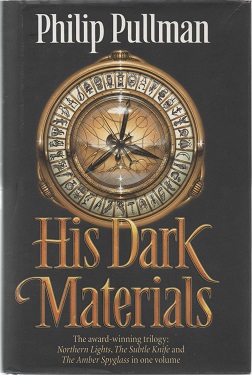
His Dark Materials by Phillip Pullman

When I was studying for a Masters in Children’s Literature at Nottingham University, these books blew my mind. The story of Lyra and Will, young people from two different worlds, brought together to save the universe, is unlike anything I’ve ever read. Passionate, clever, gripping, exciting and thrilling, this is a trilogy I could return to again and again and never get bored. It’s the book that reminds me that children and young people are the hope for us all.

The Bell Jar by Sylvia Plath

I first read The Bell Jar when I was in the Sixth Form, and it changed everything for me. Sylvia Plath’s astonishing semi-autobiographical tale of her struggles with her mental health, her breakdown and subsequent recovery, was a revelation. Not only was the subject matter revolutionary – not least the barbaric treatment of mental health difficulties in the 1950s – but Plath’s writing fizzes off the page in images and phrases that has stuck with me forever.

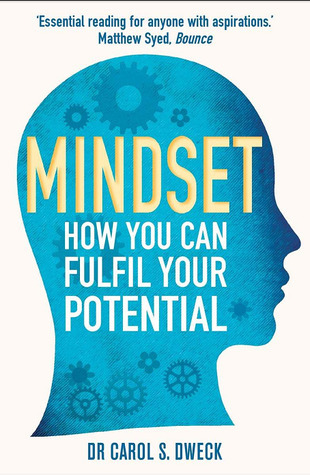
Mindset by Carol Dweck

This book changed the path of my teaching career. Dr Carol Dweck outlines the research that is her life’s work, into how what we think about our own abilities determines the outcomes that we achieve. It has informed my teaching and leadership ever since, and continues to resonate with me today.

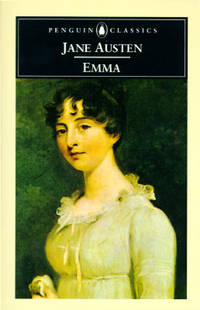
Emma by Jane Austen

“Emma Woodhouse, handsome, clever, and rich, with a comfortable home and happy disposition, seemed to unite some of the best blessings of existence; and had lived nearly twenty-one years in the world with very little to distress or vex her.” So begins Jane Austen’s tale of a spoilt girl who learns that she is not quite as brilliant as she thinks she is – and is so much the better for it. I love Jane Austen’s writing so much: she works with infinite delicacy on “the little bit (two inches wide) of Ivory on which I work with so fine a Brush, as produces little effect after much Labour.” My favourite novel of hers is actually Mansfield Park, but even I must admit that Emma shows her at the height of her powers.

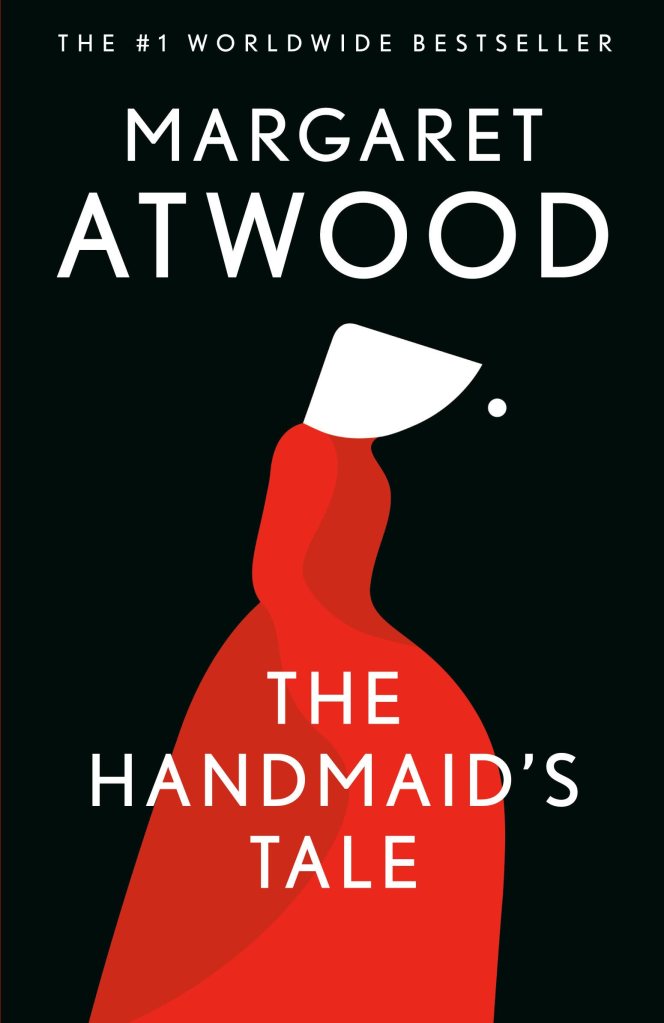
The Handmaid’s Tale by Margaret Atwood

Margaret Atwood’s dystopian novel pushed the boundaries of what a novel could be, and could do. Told in fragments, apparently “discovered” after the collapse of a dystopian civilisation, it pieces together the story of Offred, a “handmaid” in the land of Gilead, where patriarchal ideology has run to extremes. It is an absolutely gripping and terrifying book, and a valuable lesson in how fragile our society is – and how vulnerable to those who seek to divide and rule.

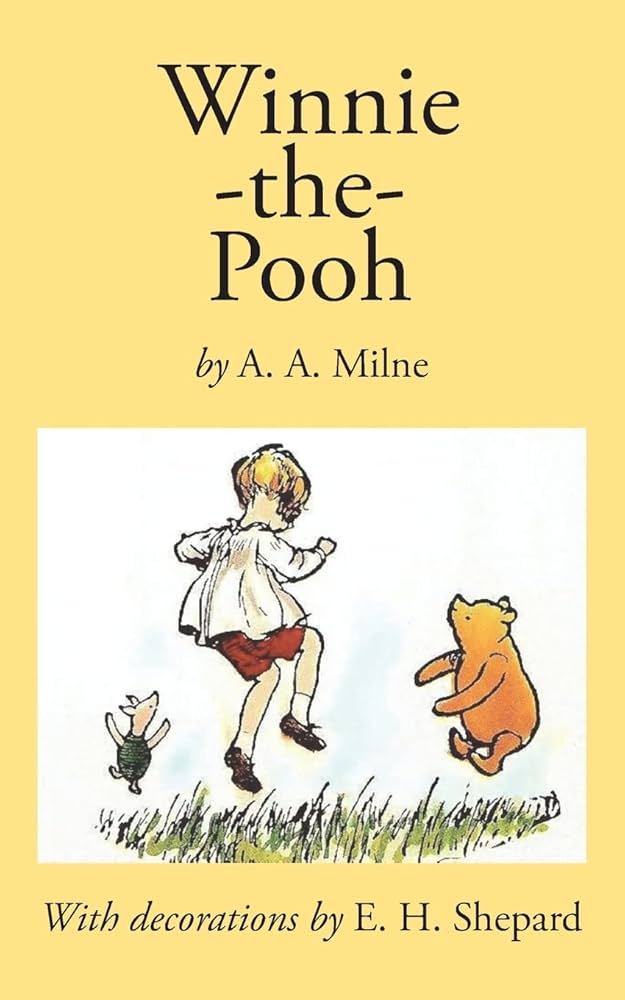
Winnie-the-Pooh by A.A. Milne

The tales of Christopher Robin and his collection of stuffed animals were favourites of mine as a small child, and have stayed with me throughout my life. Sweet, funny, and occasionally profound, I enjoyed reading them to my own children just as much as I enjoyed them myself as a child.

No matter what books you enjoy, reading is a rare and exciting pleasure. And a good book will stay with you for the rest of your life.

Building your cathedral

The Parable of the Three Stonemasons

A man came across three stone masons who were working at chipping chunks of granite from large blocks. The first mason seemed unhappy at his job, chipping away and frequently looking at his watch. When the man asked what it was that he was doing, the first mason responded, rather curtly, “I’m hammering this stupid rock, and I can’t wait ’til 5 when I can go home.”

A second mason, seemingly more interested in his work, was hammering diligently and when asked what it was that he was doing, answered, “Well, I’m moulding this block of rock so that it can be used with others to construct a wall. It’s not bad work, but I’ll sure be glad when it’s done.”

A third mason was hammering at his block fervently, taking time to stand back and admire his work. He chipped off small pieces until he was satisfied that it was the best he could do. When he was questioned about his work he stopped, gazed skyward and proudly proclaimed, “I…am building a cathedral!”

(parable courtesy of Bill von Achen)

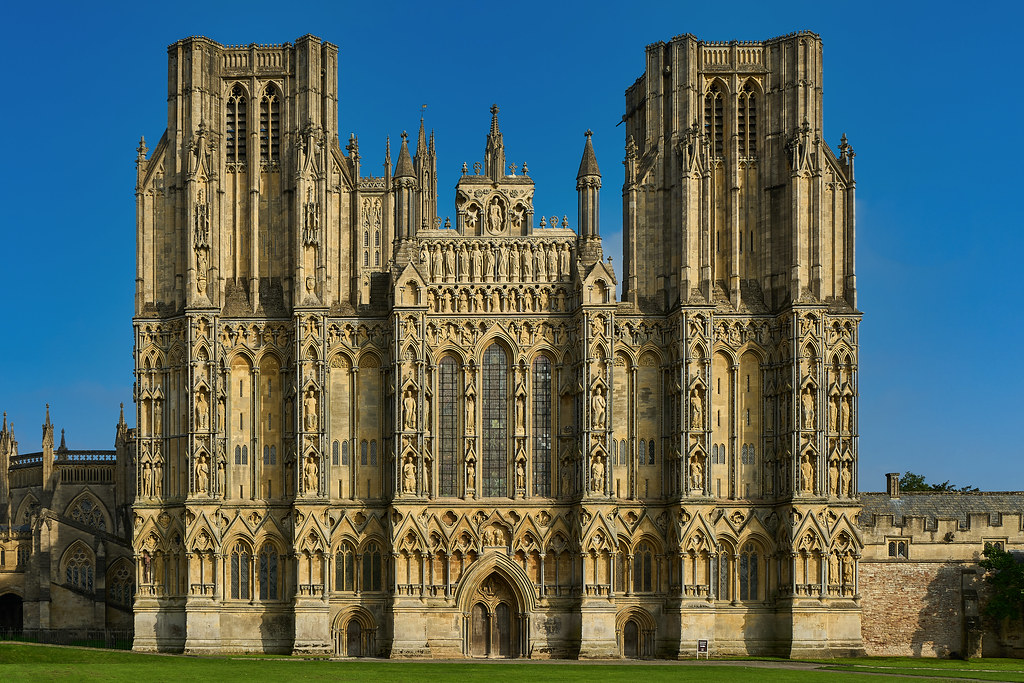
The parable of the three stonemasons reminds us always to keep in mind the larger endeavour that we are engaged in. Every lesson, every new piece of knowledge, every task, is adding a new block to our own individual cathedral. The effort we put in as we shape that new knowledge, as we fit it into our wider understanding of the world, and the way that we secure that new block so it stays in place; this is the process of learning. Every quiz, practice question, homework and class discussion is another block the cathedral of our understanding. How we sculpt and finesse that block is up to us.

How getting it wrong helps us do better

We all make mistakes. We get things wrong all the time!

It’s natural to feel frustrated after making a mistake, whether it’s in class or beyond. But the truth is, mistakes are often the best way to learn.

It’s a common belief that success means getting everything right the first time, but that’s simply not true. The most successful people in the world – from scientists and inventors to athletes and musicians – have all made countless mistakes. The difference is that they didn’t let those mistakes stop them. Instead, they learned from them and improved.

This is known as having a growth mindset. A growth mindset is the belief that your abilities can develop with effort, practice, and persistence. People with a growth mindset don’t see mistakes as failures; they see them as opportunities to grow.

How Mistakes Help Us Learn

  • They Show Us What We Need to Improve: When you get a question wrong in class, it highlights an area you don’t fully understand yet. Take it as a chance to focus on that topic and get better.
  • They Build Resilience: Mistakes can be frustrating, but they also teach you how to keep going despite setbacks. If you give up every time something goes wrong, you won’t make progress. But if you push through, you’ll develop resilience – a key skill for success in life.
  • They Encourage Creativity: Some of the world’s greatest discoveries came from mistakes: penicillin, microwave ovens, and even crisps were all created by accident. Mistakes can lead to new ideas and perspectives that you wouldn’t have considered otherwise.
  • They Help You Develop Problem-Solving Skills: When you make a mistake, you have to figure out what went wrong and how to fix it. This kind of problem-solving is an essential skill in school and in life.

Changing How You Think About Mistakes

Next time you make a mistake, don’t panic or feel discouraged. Instead, ask yourself:

  • What can I learn from this?
  • How can I improve next time?
  • What steps can I take to get better?

By embracing mistakes and adopting a growth mindset, you’ll become a stronger, more confident learner. So go ahead – make mistakes, learn from them, and keep getting better.

Books I have read in 2024

I love to read! Every December I look back at the books I have read over the course of the year, and do a run-down of my favourites. If you’ve read any of these, let me know what you thought – and if you like the sound of any of them, please give them a go. I also love getting book recommendations from students – so please let me know if there’s a book you think I’d enjoy!

Babel by R F Kuang

This was an incredible book. Set in a fictionalised past, the novel explores the legacy of colonialism through the imaginative idea that the gap in meaning between translated words in different languages generates powerful magic. Those that control words, control the world. It’s hard to explain – you have to read it to believe it – but I was totally gripped by the whole thing. It was stunning.

Recommended for KS4 and 5 or adults.

The Goldfinch by Donna Tartt

This book has been on my “to read” list for ages – and in 2024 I finally managed it! It didn’t disappoint. It tells the compelling story of Theodore Decker, who is caught up in a terrorist attack at the age of 13 with life-changing consequences. His life spirals out from this event, as his fate becomes intertwined with a famous painting – the Goldfinch of the title – with unexpected, funny, and tragic consequences. It’s a love story, a coming-of-age story, a thriller, a mystery, and a novel about the far-reaching impact of grief. A tour de force of brilliant writing.

Recommended for KS4 and 5 or adults.

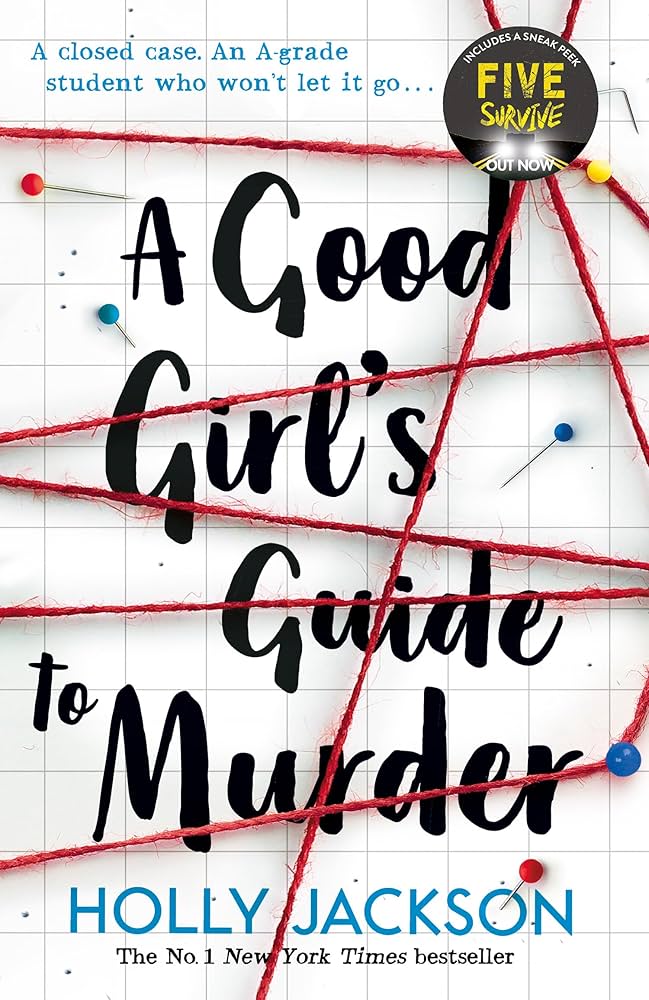
A Good Girls’ Guide to Murder by Holly Jackson

I really enjoyed the BBC adaptation of Holly Jackson’s novel this year, starring Emma Myers (from Wednesday), so I picked up the book – which was even better than the series! It was so good, I read the two sequels (Good Girl, Bad Blood and As Good As Dead) immediately afterwards. It tells the story of Pip Fitz-Amobi, the “good girl” of the title, who sets out to investigate the disappearance of a girl from her school five years earlier. Everyone thinks they know what happened – but Pip’s investigations reveal that things aren’t always as they seem.

Recommended for KS3 and above.

Grace by Cody Keenan

Cody Keenan was President Barack Obama’s chief speech writer. In this incredible memoir, he tells the story of ten crucial days with the President in June 2015, as the United States tried to come to terms with a mass shooting in a church and huge votes on marriage equality and healthcare reform. Between them, Keenan and Obama have to write the words to celebrate America’s progress and capture the nation’s grief and divisions. But nobody expected that, as he delivered the eulogy for Reverend Clementa Pinckney, the President would start to sing.

This unforgettable book gives a peek inside Obama’s White House, and made me cry!

Recommended for anyone interested in politics or writing or history.

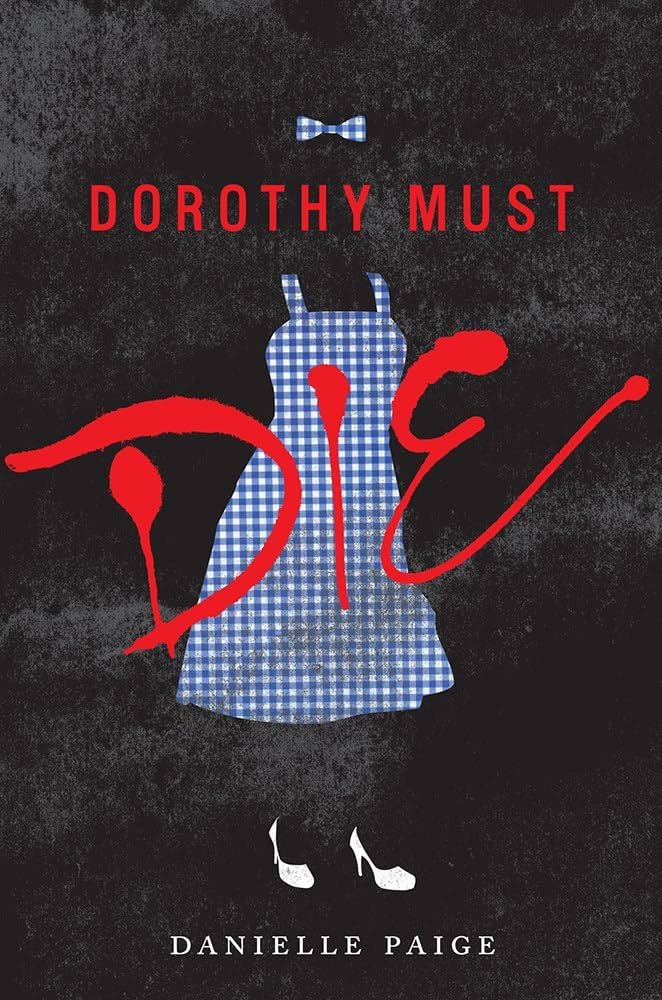
Dorothy Must Die by Danielle Paige

I was gripped by Wicked fever this winter, and in preparation for the movie of my favourite musical I picked up another re-imagining of the events of the Wizard of Oz. Danielle Paige’s book, the first of a trilogy, tells the story of Kansas teenager Amy Gumm, who is caught in a tornado and whisked off to Oz. She’s seen the Judy Garland film, but the land she finds herself in, and the Dorothy she meets, are not at all what she was expecting. Before long, she is in training to harness the magic of Oz to accomplish a terrible mission: to assassinate Dorothy Gale.

This was a fun read – not as good as Wicked, but Amy Gumm is a great narrator.

Recommended for KS3 and above.

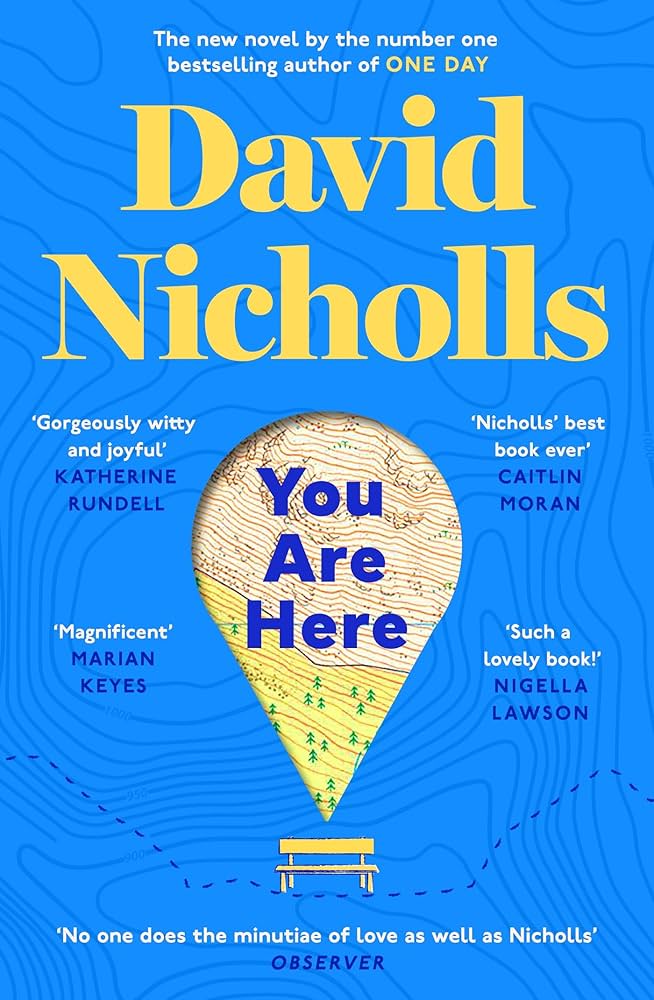
You Are Here by David Nicholls

David Nicholls writes brilliant love stories. I really enjoyed his previous books, especially One Day and Sweet Sorrow, and his latest didn’t disappoint. It follows Marnie and Michael as they set out with a group of mutual friends on a coast-to-coast walk across the north of England. The story is funny, sad, beautiful, poignant and utterly believable – his characters and their journey is absorbing and just wonderful to read. Another triumph!

Recommended for KS4 and above

The Buried Giant by Kazuo Ishiguro

This was a really unusual book! Set in a version of ancient Britain, it follows the journey of married couple Axl and Beatrice as they set off to see their son. But their memories, and those of everyone around them, are patchy and fragmented. Why can they not remember their past? What have they forgotten? Part fable, part allegory, part folk tale, this is a haunting and puzzling story which hints at huge, universal ideas through veil of enigma. For a book about amnesia, it was oddly memorable!

Recommended for KS4 and above

What happens on an inset day? November 2024

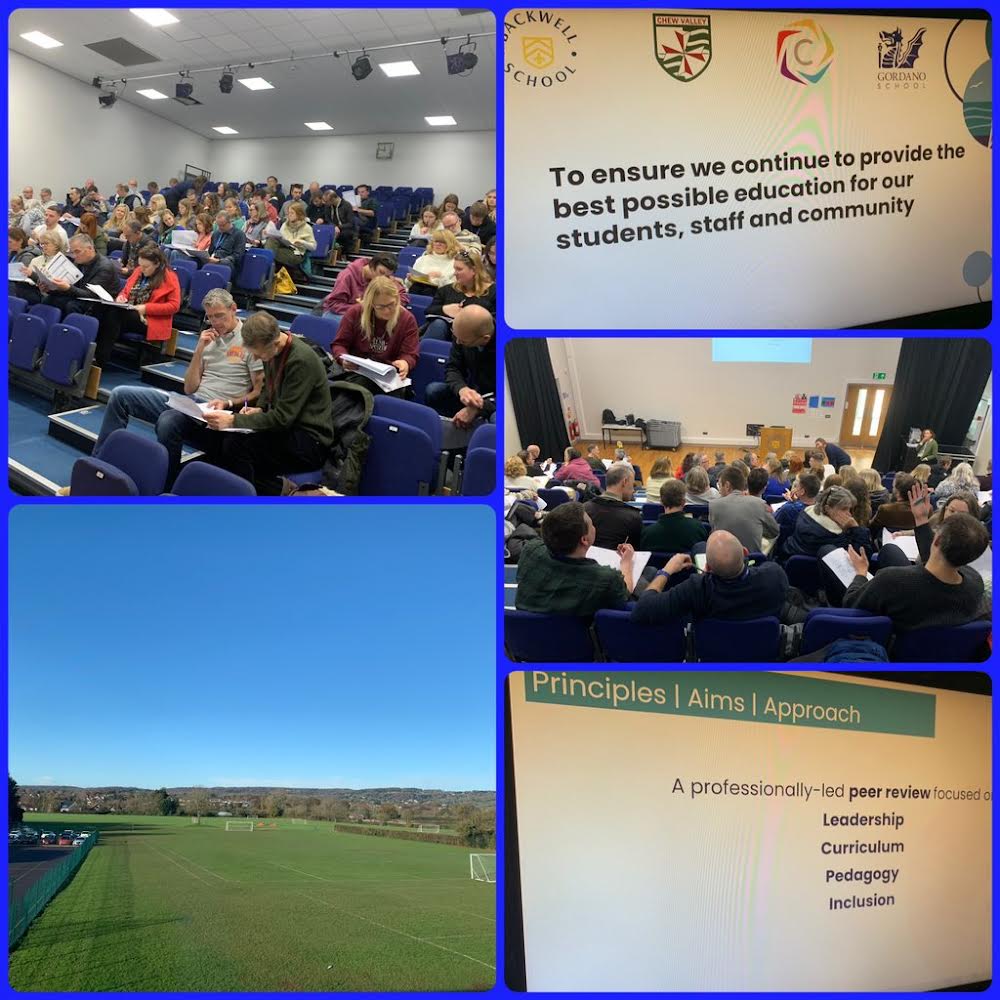
On Wednesday of this week, the four secondary schools in the Lighthouse Schools Partnership shared an inset day. Inset, which stands for “in-service training,” is a valuable opportunity for staff to refine their practice, collaborate, and develop their craft to ensure we provide the best possible education to our students. With staff from Gordano, Backwell, Chew Valley and Churchill all taking part, the day was a great success.

Subject and faculty leaders from across the trust all met at Backwell School. They met in subject groups to share lessons from analysing the summer’s GCSE, A-level and vocational exams results, to share strategies and techniques for ensuring the best possible outcomes for this year’s cohorts. This sharing of subject-specific expertise is invaluable, and all the schools in the trust benefit from these opportunities.

Later in the day, the subject and faculty leaders all came together for training in carrying out middle leadership reviews. This process sees subject experts from across the trust visiting one another’s schools to offer constructive critique, help identify areas of strength and development, and share practice to the benefit of all concerned. It is in these collaborations that the benefit of being part of a bigger trust are really apparent.

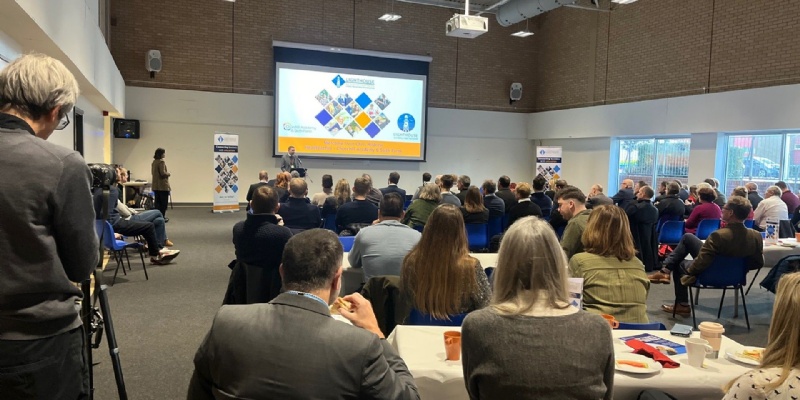
Meanwhile, back at Churchill, the day began early as we hosted the LSP’s business breakfast in the Pool Hall. Over 100 Business Partners and education colleagues attended to network, make connections, and collaborate. The main speaker at the event – Simon Lawrence OBE, General Manager of the National Trust Bristol Portfolio – provided an interesting and insightful reflection on the principles and values of ‘Servant Leadership’ that he has learnt throughout his military and diplomatic career.

Visitors also heard from Chew Valley School Headteacher, Gareth Beynon, who spoke about the importance of the outdoors when it comes to educating our children and young people. The event was closed by Sofia and Toby, from our own Churchill Sixth Form, sharing details of their upcoming trip to Madagascar.

Meanwhile, teaching staff were working on developing their questioning skills using resources from the Lighthouse Schools Partnership’s Pedagogy Framework. Questioning is fundamental teaching strategy, so getting the details right can be really significant in helping students to develop their thinking, practice key skills, and to help check for understanding. This was followed by a series of workshops on different aspects of SEND, to help us work more effectively with students with additional needs.

It was a packed day, with the importance of learning for staff at its heart: a great opportunity to refine and develop our practice across the trust to the benefit of our students. The next trust day – in February 2025 – will bring together all teaching staff from 33 primary and secondary schools in another day of collaborative learning. We can’t wait!

Anti-bullying week 2024: choose respect

The theme of this year’s anti-bullying week is Choose Respect. We have been working with our students on this theme using assemblies and our tutor programme, using the Votes For Schools resources I outlined last term.

In 2018, 98% of young people told the Anti-Bullying Alliance that showing respect to each other is important and that it is possible to be respectful even if you disagree with someone else. Students have been working together to think about how to resolve conflict respectfully.

We have been teaching our students that respectful behaviour is accepting, recognising or admiring another person’s behaviour, achievements or values. It is important to show respectful behaviour to everyone in our world. Displaying respectful behaviour can feel easy when everyone agrees and has the same plans. But when there is conflict, it can be much more challenging.

Facing and dealing with conflict in our lives is part of growing up. But if we don’t resolve issues, they can affect our relationships with other people. Without resolution, behaviours can quickly become toxic or unhealthy. Learning how to handle disagreements respectfully can help you to have more positive relationships. It can also improve your mental health and wellbeing.

Sometimes, when we experience conflict, it can lead to us acting or speaking in a disrespectful way towards someone else. This is often because we feel strongly about something or someone. his can cause further conflict. In the most extreme cases, it could even lead to bullying. While we might not behave this way on purpose, it is important that we recognise when we haven’t chosen to be respectful.

We have been working with our students on the importance of learning to agree to disagree. This is a way of showing respect for someone’s values or ideas, even if you do not agree with them yourself. We have been thinking about different scenarios, and how to approach them respectfully.

Even though conflict might make us feel uncomfortable, it’s a normal part of life. The main thing we need to know is how to respond to conflicts or disagreements and make sure we feel confident we can resolve them. We’ve then encouraged our students to vote in the weekly Votes for Schools poll: “do you know how to resolve conflict respectfully?”

What our students say: the student statement form

We continue to promote kindness to everyone in our community. However, part of growing up is learning how to manage relationships with peers and how best to handle conflicts. Our stance of bullying is clear (see our Anti-Bullying Policy), and we encourage students to let us know when they have worries and concerns.

We introduced our online “Student Statement Form” in 2023 so that students could share their concerns discreetly either in school or from home. This year we have also introduced a system for making sure that all students making a statement receive an email to confirm that their concern has been followed up and appropriate action taken.

In Term 1 this year there were 118 statements submitted about 57 different concerns. This was a mixture of statements from students with a concern and those who had witnessed an incident and wished to support their peers.

All of these reports were followed up by staff and have resulted in a range of follow up work including further monitoring, conversations with the students and their parents , supported mediation, completion of materials to teach about wider issues such as managing friendships, inappropriate language, racism, or homophobia. We have also issued Time Out detentions, Refocus Room sanctions, and Internal or External Suspensions in more serious cases.

Our most recent “Our School” Student Survey showed that students have a good awareness of the Student Statement Form and are confident to use it. We want to make sure that parents and families also know about this system, and how well it is working. If you have a child at Churchill, please can you check that your child knows about the Student Statement Form and encourage them to report any concerns? This will help us to ensure that all our students continue to feel confident and safe in school. Thank you!

Top Tips for Exam Technique

The final stretch of exam preparation is about finishing touches. Courses are finished. Students have the knowledge and skills they need now to tackle the exams ahead of them. There is revision to do still, to make sure that the knowledge has stuck and can be pulled to mind accurately when needed. But This final few days is all about honing exam technique to a sharp point: what exactly do the examiners want to see in an answer to this particular type of question? How can you manipulate what you know to squeeze as many marks as possible out of each part of the paper? How should you manage your time to ensure you leave enough to cover everything fully?

You can put yourself at an advantage by preparing well. Revision is essential, of course – you can find revision tips in the Revision category on this blog. But just as important is a good night’s sleep, and a healthy meal before an exam. An all-night revision session honestly won’t help as much as you wish it would – the brain works best when well rested and fuelled. Get to bed, sleep well, and have a good breakfast.

Once you’re in the exam itself, there are some general tips that I always swear by:

  • Be sure to answer all the questions – turn every page. Including the back page…yes, every year someone comes out ashen-faced when they realise there were eight questions, not seven.
  • Jot down your key ideas – don’t be afraid to do some rough work, or write down some key notes as soon as the invigilator says “you may begin.” Getting key ideas down will ensure that you remember them!
  • Write something for every question – if you’re not sure, make your best educated guess at the question. If you’ve written something, you’re in with a shout of some marks. If you write nothing – you’re definitely going to score zero.
  • Keep an eye on the time – you know how many questions are on the paper. You know how long you’ve got. Make sure you leave enough time to answer them all.
  • Check – use every minute of the exam. Check for silly mistakes. Check that you’ve written what you think you’ve written. Check for accuracy of spelling, punctuation, and grammar. Give yourself time to add in that extra bit that you forgot the first time through. It could make all the difference.

Exams bring stress and pressure with them – that’s an inevitable part of the process. Managing that pressure is an essential part of succeeding. Being well-prepared is the best way to ensure that the pressure works in your favour, rather than against you.

I hope these last minute tips have been helpful. Above all, I wish all our exam candidates the very best of luck this year. You deserve it.

Neurodiversity

This week students have been learning about neurodiversity through their assemblies with Miss O’Malley. These assemblies have encouraged us to explore the variations and differences in our brains that help to make up our rich community.

neurodiversity-week-hiding-in-plain-sight-e1557241946320-1024x836

Neurodiversity is a term adopted by sociologist Judy Singer in the late 1990s. She was frustrated that differences in the make-up of our brains were too often being seen as problems or challenges to be overcome, rather than part of the natural variations in our human makeup. She proposed that neurological differences – differences in our brains – should be recognised and respected as much as any other human variation.

It’s a well-accepted fact that everyone’s brain is different. We are all unique. We recognise that our individual brain is “wired up” differently to anybody else’s. My brain, for example is wired up so that I am left handed. As a small child, I reached for objects with my left hand, and instinctively kicked a ball with my left foot. Despite the fact that everyone else in my family was right handed, it’s just the way my brain was made!

There are many other differences in the ways our brains work. Some people are naturally more organised than others; some have better hand-eye coordination; some see colours differently; others have superb memories for names and faces. What Judy Singer recognised was that some differences in the ways our brains work were characterised with negative stereotypes. Labels such as dyspraxia, dyslexia, ADHD, dyscalculia, autistic spectrum disorder, Tourette’s Syndrome and others were seen as problems to be “fixed” or “cured;” Singer argued instead that they were differences that should be respected and recognised.

Neurodivergent individuals may have many strengths that those without the differences lack: perseverance, creativity, problem solving, oral communication, resourcefulness, visualisation, and practical skills being just some examples. This may be why there are so many highly successful individuals who have neurodivergent qualities:

This slideshow requires JavaScript.

This week students have been learning about neurodiversity and how we all need to value our differences, and not to see people who differ from us as “other.” How boring would life be if we were all identical? What can we learn from each other? And how can we celebrate our strengths?

Above all, whilst we are all born with different strengths and weaknesses, what we also know is that our abilities and intelligence are not fixed. Through hard work, careful practice and determination, we can improve on all aspects of our natural ability – and that this process continues throughout our life, not just at school.