Manners Makyth Man

In my assemblies at the start of term 5, I spoke to our students about William of Wykeham. William was born the son of a free yeoman in around 1320, over 700 years ago. He rose up through society, the church and politics to become the Bishop of Winchester and Chancellor, responsible for the wealth of the kingdom under King Edward III and then King Richard II, the last Plantagenet monarch.
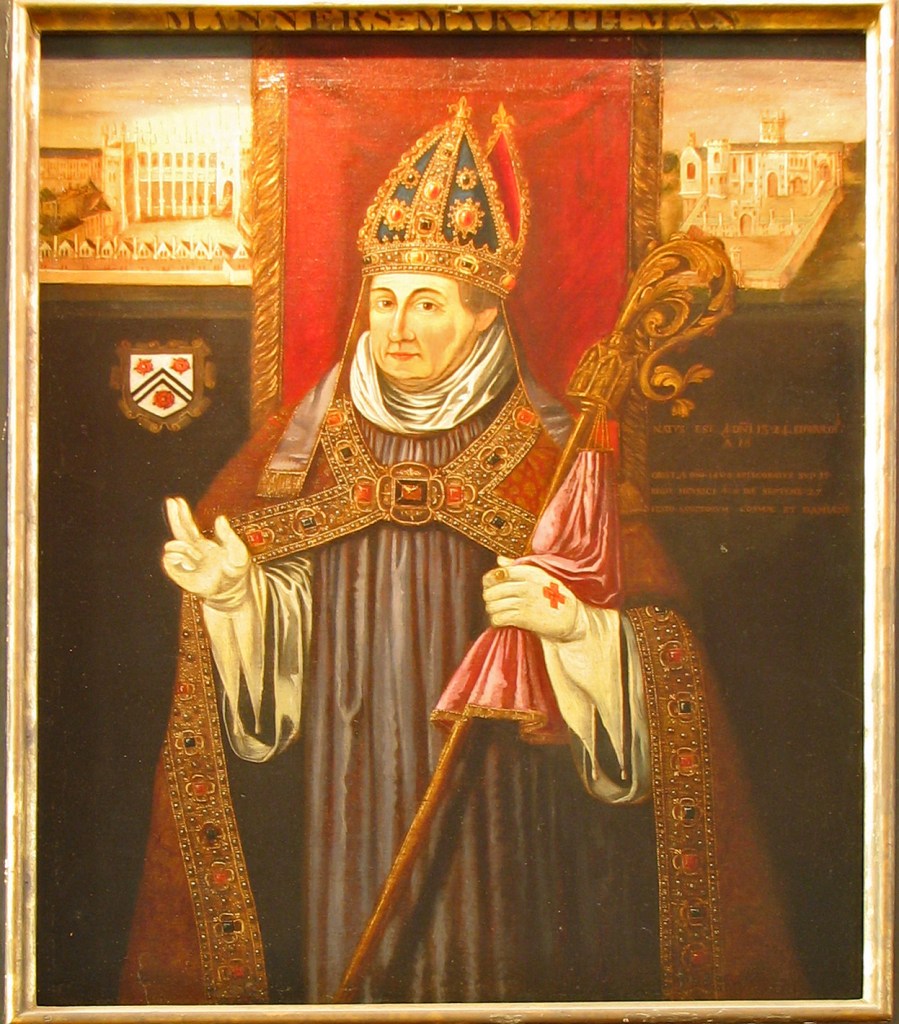
William of Wykeham (source)

As a result, William became a very wealthy man. He wanted to devote his wealth to ensuring that others could rise up from humble origins to great success, so he founded educational institutions including a school in Winchester, where he was Bishop, and a college in the developing university city of Oxford.
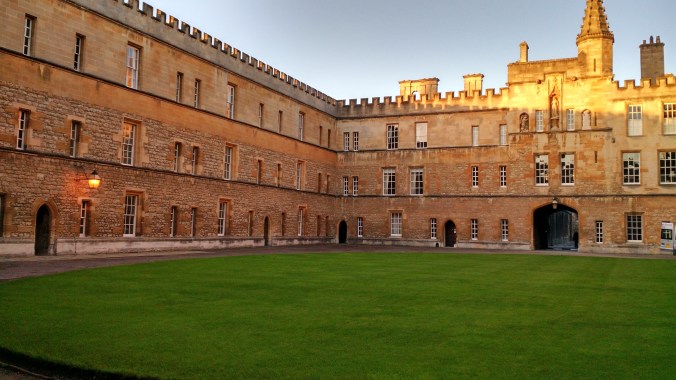
The old quad at New College, Oxford

At the time, the “Saint Mary College of Winchester in Oxenford” was a new college, and this identity stuck; the college is still called New College today, nearly 650 years after it was founded in 1379, which makes it (ironically) one of the oldest colleges in Oxford. William himself is commemorated in a statue over the gate, kneeling in worship of Saint Mary; you can see his restored statue in fresh stone in the image above.

So why are we interested in a Bishop who lived over 600 years ago? The reason is that William’s personal motto, emblazoned across the top of the frame of his portrait, the motto that remains the slogan of New College centuries later, still has resonance today.
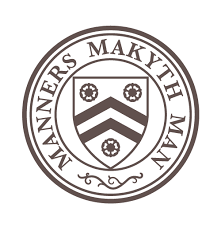
The emblem and motto of William of Wykeham and New College, Oxford: Manners Makyth Man

William’s motto, Manners Makyth Man, were words he lived by. Our manners are “a way of conducting oneself toward others” and “a person’s habitual behaviour or conduct.” That is, the way we treat other people, but also the way we behave by force of habit. Therefore, William’s motto can be translated as:

Manners Makyth Man: The way we behave towards other people makes us who we are

So what do good manners look like? I think there are some basics that are as true today as they have always been, and I went through these with our students in assembly:

  • Polite language
    • Greetings: good morning, good afternoon
    • Gratitude: please and thank you
    • Generosity: is there anything I can help you with?
  • Active listening
    • Show interest
    • Make eye contact
    • Give your full attention
  • Respect
    • Respecting personal space
    • Respecting visitors
    • Offering assistance (e.g. holding doors open)

We spent some time talking about how we can show respect in particular when we are meeting with visitors to our Academy – for example with our amazing student ambassadors who regularly give tours to families, candidates, visiting staff and others when they visit Churchill, and never fail to do a wonderful job!

I first encountered William’s motto when I was a student at New College, studying English Language and Literature in the 1990s. That simple creed – Manners Makyth Man – the way we behave towards other people makes us who we are – has stuck with me ever since, and informs my actions to this day. William’s legacy lives on, not just in the educational institutions he founded, but also in the words and ideas he left behind. Let’s all try to make sure that the way we behave towards others leaves a similarly positive, lasting impression.

Putting it all together

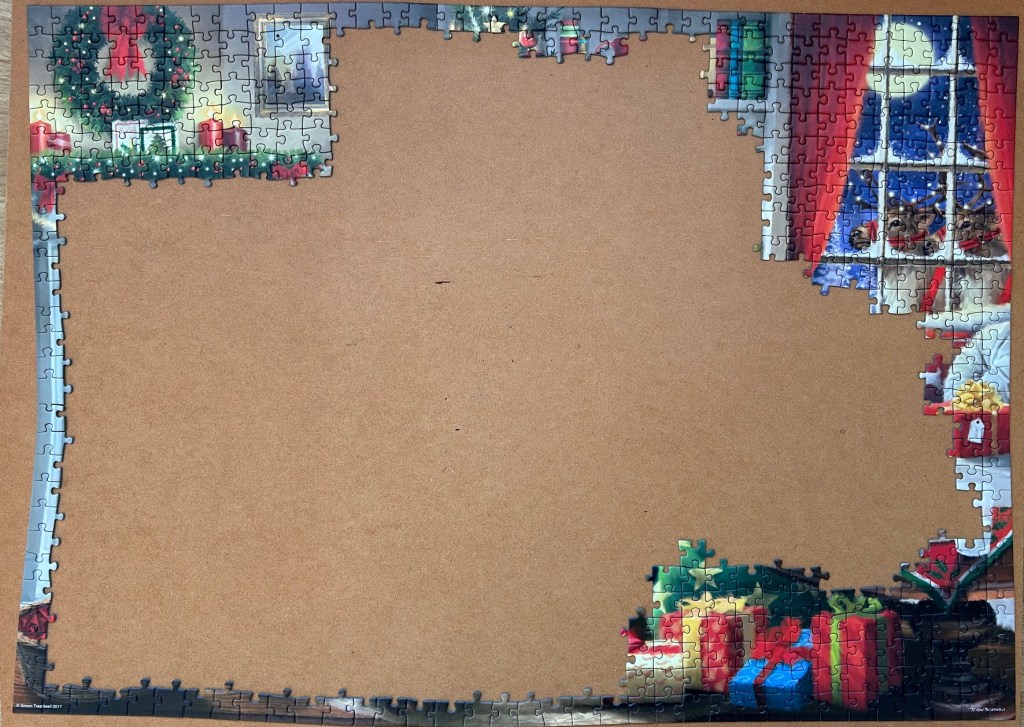
Over the Christmas holidays, my family and I always like to complete a Christmas jigsaw. We have a few 1000 piece sets that we’ve been given over the years, and it’s always a fun challenge to try and put them together to make the complete picture. You can see our progress below!

As we were putting the jigsaw together this Christmas, I was thinking about the Academy: how every piece is different and unique, but every piece needs to be in the right place, to fit, to belong, in order to make the complete picture. We work really hard every day to help ensure that students and staff are slotted in to help make the whole thing work.

But I was also thinking about how every individual is made up of thousands of tiny pieces. These micro-decisions, little things that make up our daily lives in school. I spoke to students in assembly last week about some of these component parts:

  • Lessons: including our favourite lessons and those that we find more challenging. Our curriculum is made up of lots of component parts which all work together to make a strong, deep and broad understanding of our world. Every single piece counts.
  • Social times: ensuring that the Academy is and feels safe, welcoming and friendly for everyone in it, is everyone’s responsibility.
  • Punctuality: we are particularly focused on this important life skill at the moment, and our students are working really hard to make sure that they are on time, every time.
  • Attendance: similarly, we have been really impressed by our students’ efforts to ensure that they attend school every day, every lesson that they are able to.
  • Extra curricular: both within school and beyond, the activities our students are involved in all add up to build their skills, knowledge, character and confidence.
  • Values: our values of kindness, curiosity and determination underpin everything we do, and work together to support character development in our students
  • Wellbeing: linked to last week’s assembly on sleep, we know that looking after ourselves is important. Diet, exercise, sleep and a balanced approach to health and wellbeing are all important.

In our school, and in ourselves, every single piece matters.

Assembly: Curiosity

We began the year focusing on our value of kindness, before turning our attention to determination to see us through the dark, cold winter. Last week’s assemblies, as the days lengthen into spring, focused on our value of Curiosity.

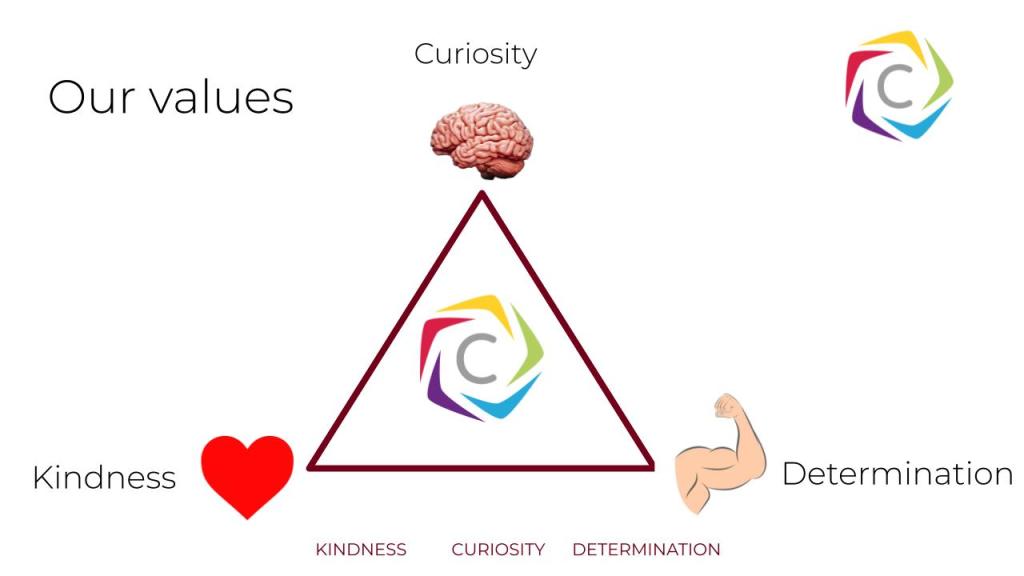
Our three values form three points on a character triangle, based on the work of CharacterLab. Kindness is a strength of the heart; curiosity a strength of the mind; determination a strength of the will. All three work together to support our students to be successful in school, and beyond, in pursuit of Martin Luther King’s maxim: “intelligence plus character – that is the goal of true education.”

Curiosity enables independent thinking and enquiry, and is the basis of human flourishing. Stone age man was driven by curiosity: what happens if I bang these two rocks together? Can I use this animal skin to store water, so I can travel further from the lake? And so on, generation after generation, we have built on the discoveries of our predecessors in a way which is unique to our species. And we are never satisfied, continuing to push the boundaries of what we know, to solve mysteries, to understand more about the world around us and the universe beyond.

It was this curiosity that led Einstein to develop his general theory of relativity – his attempt to explain how and why the universe behaves as it does. He was driven by a passionate desire to understand, to explain, to make sense of things. It is this uniquely human desire that we seek to foster in school.

This desire for discovery continues to this day, with the Curiosity Rover on Mars and recent landings on the moon. We continue to strive to know more, to understand more, to answer questions, to solve problems – and there is always more to learn.

A dopamine molecule

Curiosity has many benefits:

  • Good for our brains and aids memory: the more we learn, the better our brain gets at learning. This is because our broader general knowledge gives us more “anchor points” for new knowledge to hook onto, to connect with, and to secure itself in our memories.
  • Helps us to be empathetic: understanding people who are different to us is essential to help us collaborate and cooperate with one another, to develop our empathy, and to improve our communities.
  • Increases confidence: the more we understand about the world, the more confident we feel within it. We feel most insecure when we are uncertain, when we don’t know what is happening or why, or when we don’t understand things. The more we know, the more confident we feel.
  • Contributes to happiness: when we learn something new, solve a problem, or something slots into place in our mind – that “lightbulb” moment – we feel a little rush of satisfaction. That is the release of dopamine into our system, a chemical designed to reinforce achievements by making us feel happy. So satisfying our curiosity actually makes us happier!
In my assembly, I went through all the ways we can satisfy our curiosity and extend our learning. The first – and most important – is through reading. Reading much, and reading widely, is how humanity has broadened and extended its knowledge over millennia. Using the library to ensure that we are reading books that we are interested in, and which take us beyond what we already know, is a guaranteed way to help us learn!

We are fortunate also to live in the age of the internet, where all the world’s knowledge is at our fingertips. Satisfying our curiosity has never been easier: we can ask Siri, ask Alexa, ask Google, ask ChatGPT. But we must be careful when using these sources, and always be curious about the answers we get back. Information we get online needs to be verified, as its accuracy cannot always be trusted. And AI, whilst it is useful, is subject to similar cautions: the answers we get from AI are only as good as the questions we ask, and the sources that the AI relies on. So there is no substitute for our human curiosity – we mustn’t become lazy, and let the machines think for us.

I concluded with three ways our students can show curiosity in the classroom and beyond:

  • Enquire: Ask questions – “why” and “how” – and actively listen to the answers
  • Explore: read around the subject – find out more
  • Experience: Seek out new experiences, people and challenges

Keeping an open mind allows us, the inheritors of the benefits of millennia of human curiosity, to continue mankind’s constant journey to know and understand more – and to contribute to human progress. What a privilege learning is!

Kindness, Curiosity and Determination

It has been great to welcome the students back to term 6. It’s always a term of transition; with our Year 11 and 13 students off on study leave, the Academy feels a bit emptier. The tutor groups are missing their year elevens, so our year tens are now the senior main school students. The applications for the new house captains are coming in, and everyone is getting ready to welcome our new Year 7 and 12 students on the induction days coming up soon.
In my “welcome back” assemblies this week, I started with a bit of housekeeping. The Site Team and our contractors have been busy over the half term break: putting in replacement fencing, repainting classrooms and toilet areas, relocating one of our food pods, replacing windows, and making sure that everything is looking great for the students’ return. I thanked the students for their much improved use of the facilities, and urged them to ensure that they continue to look after them. There was also an opportunity for reminders about our classroom and social time expectations – and I never miss an opportunity for those!
My assembly this week focused mainly on our three Academy values: kindness, curiosity and determination. As I said in my end-of-term-5 Headteacher’s Update letter, over recent weeks I have been working with our governors on a review of our strategic planning and direction. This has taken us right back to the Academy’s vision, purpose and values, as we have reaffirmed our commitment to being a school in which we inspire and enable young people to make a positive difference, and to set no limits on what we can achieve. All of this work is underpinned by our three values.

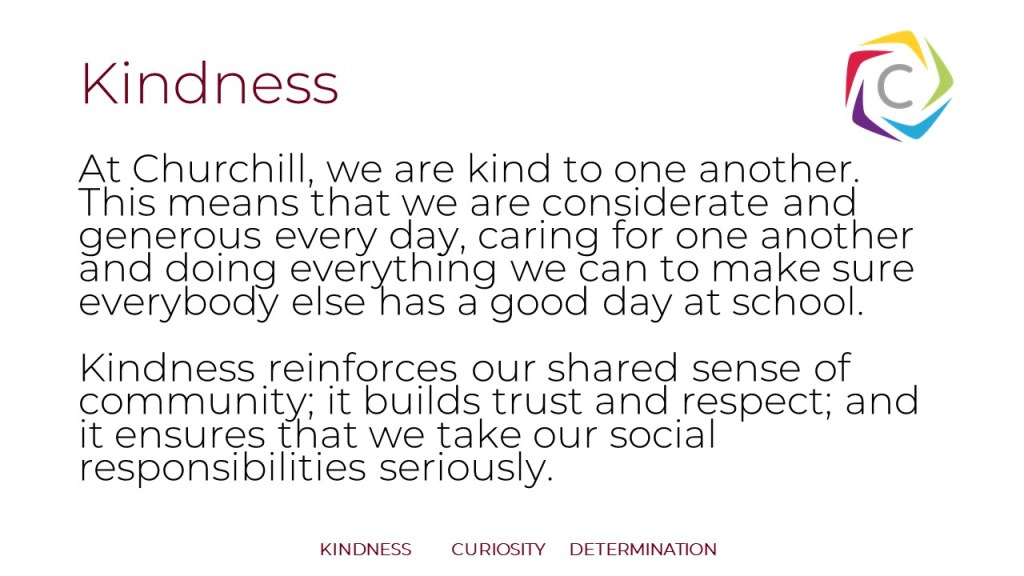
This quotation, from aviator Amelia Earhart, guides our thinking about kindness. Kindness adds value because its impact is cumulative: the kinder we are, the kinder others become. The idea of “paying it forward” to create a positive community culture is a key part of this value.

When we first introduced our values, the students articulated what they meant for our behaviour in and around the Academy. Their description of kindness, cited above, captures that key element of our Academy community. It also underlines the fact that we all have a responsibility to that community – a responsibility to keep it healthy by maintaining the values which lie at its heart.

Curiosity is a strength of the mind. The quotation from Plutarch in the slide above emphasises the importance of taking an active role in learning, in seeking out new knowledge and skills: you can’t just wait for knowledge to come to you. You have to go out and get it. We can teach you: but only you can learn.

The students captured this spirit of curiosity in their values statement, which informs our approach to learning, which expects:

  • Determined and consistent effort
  • A hunger to learn new things
  • Challenging ourselves to go beyond what is comfortable
  • Viewing setbacks and mistakes as opportunities to learn and grow
  • Seeking and responding to feedback
  • Encouraging others to succeed

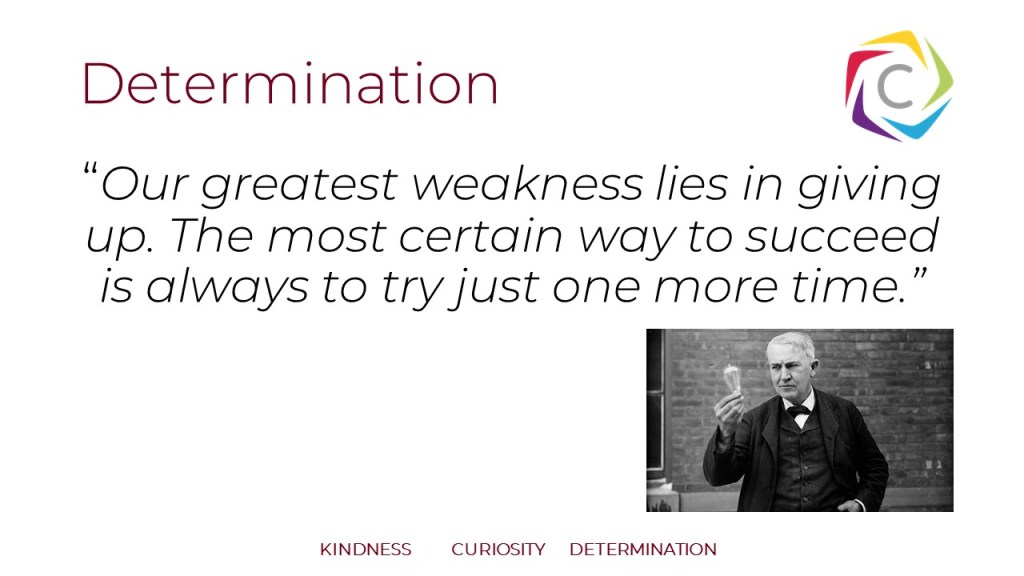
Determination is summed up in this quotation from inventor Thomas Edison, who achieved so much through constant trial and error, refinement and development, prototype after prototype. I have found Edison’s words of huge value to me in my own professional career as an adult: we all face challenges and struggles. If we give up, we are certain to fail. The only way to succeed is to keep trying.

These values form three sides of a character triangle: kindness, a strength of the heart; curiosity, a strength of the mind; determination, a strength of the will. Churchill students, who show all three values, will be well equipped to go out into the world and make a positive difference, setting no limits on what they can achieve.

I concluded the assembly with all the things we have to look forward to over the course of the rest of this term: it’s going to be a busy one!

“Storms make oaks take deeper root”

There will be times in all our lives when things get difficult. This is an inevitable part of being human. Over the past few years we have all faced huge challenges: the pandemic; political and economic turmoil; the cost of living; war in Ukraine. We all face challenges ahead: the climate crisis; the role of technology in society; overcoming social inequality.

None of these things are easy. I have often spoken to our students about taking on challenges, about pushing yourself. I have said – countless times! – “when you’re struggling, you’re learning.” It’s important that we, as adults, practise what we preach.

I often rely on the wisdom of others to illustrate these ideas. One of my favourite quotes, usually attributed to Thomas Edison, is: “our greatest weakness lies in giving up. The most certain way to succeed is to try just one more time.” And, after all, he should know – he invented the lightbulb!

Another inspirational figure is President John F. Kennedy. In 1962, announcing the intention to put a man on the moon, Kennedy spoke about taking on a difficult task precisely because it was challenging: “we choose to go to the Moon in this decade and do the other things, not because they are easy, but because they are hard.” He would not live to see the realisation of this vision, but his ambition led to Neil Armstrong setting foot on another world in July 1969.

Over this past month, I have also taken comfort in the words of the great Maya Angelou, who said: “you may not control all the events that happen to you, but you can decide not to be reduced by them.” There is great wisdom here. Whilst much that happens around us – and, in some cases, to us – is beyond our control, we are in charge of the way that we respond. We can let ourselves be ground down by the challenges, or we can rise to them. It’s up to us. And I choose to rise.

Finally, a colleague shared some new words of wisdom with me recently. Well, they are new to me, but the words themselves are old: their author, George Herbert, lived 1593-1633:

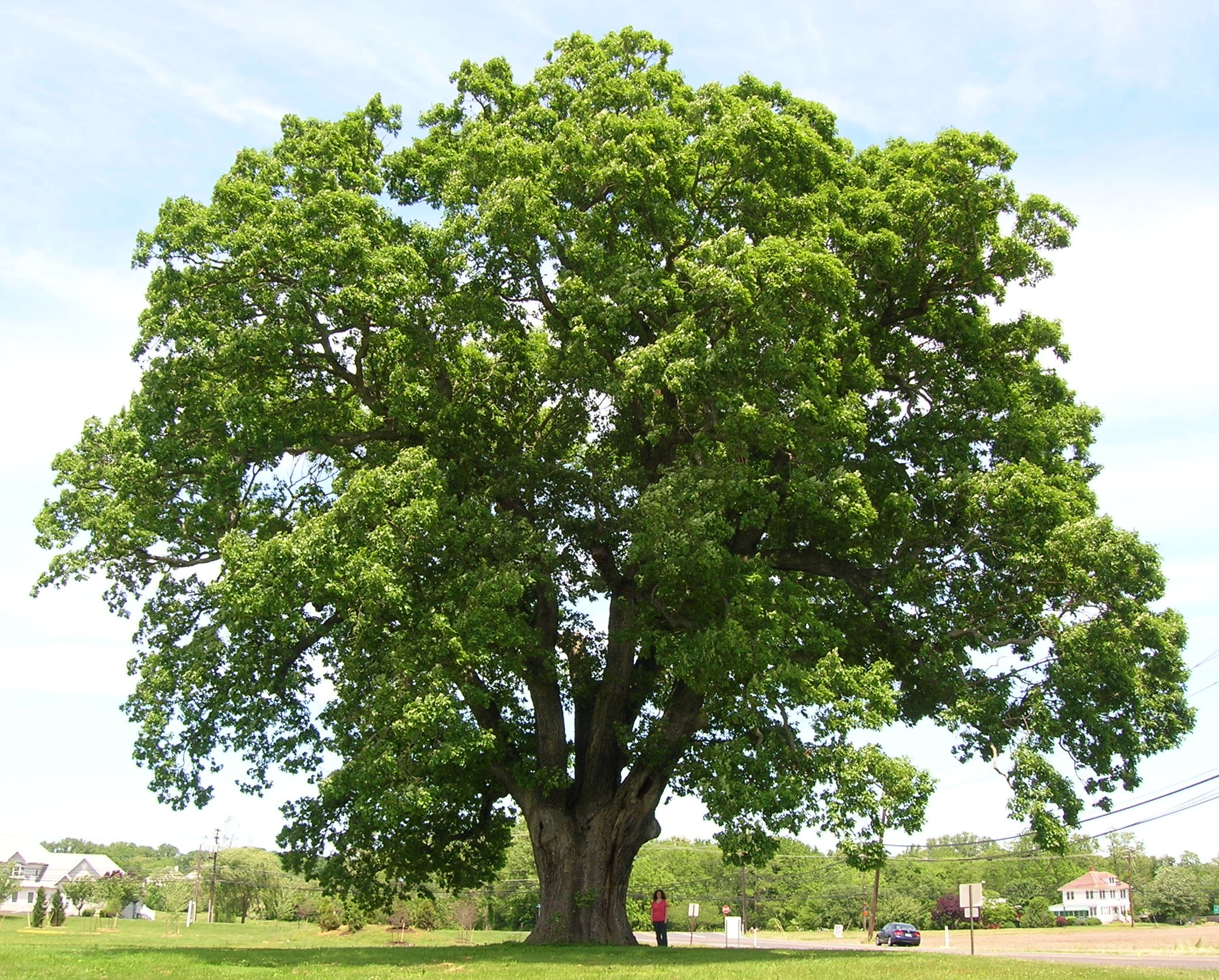
Storms make oaks take deeper root

George Herbert, 1593-1633

These are the words that I have looked to throughout the past months. When the storm rages, we will not be uprooted. The turmoil around us will make us more resilient, more determined. And, when the storm clears and the sun shines in a clear blue sky, we will be stronger for having weathered it.

Self-expression: finding your voice

I have been really proud this week to see our Academy’s vision – “to inspire and enable young people to make a positive difference” – manifesting in our students’ achievements.

We often talk about the education we provide at Churchill helping our students to make a positive difference to themselves, to our Academy community, and to the wider world around them. This week, I have seen this in three wonderful examples of our students building their confidence, pushing themselves out of their comfort zone, and finding a way to express themselves – finding their voice – through the opportunities offered at Churchill.

Dance Live!

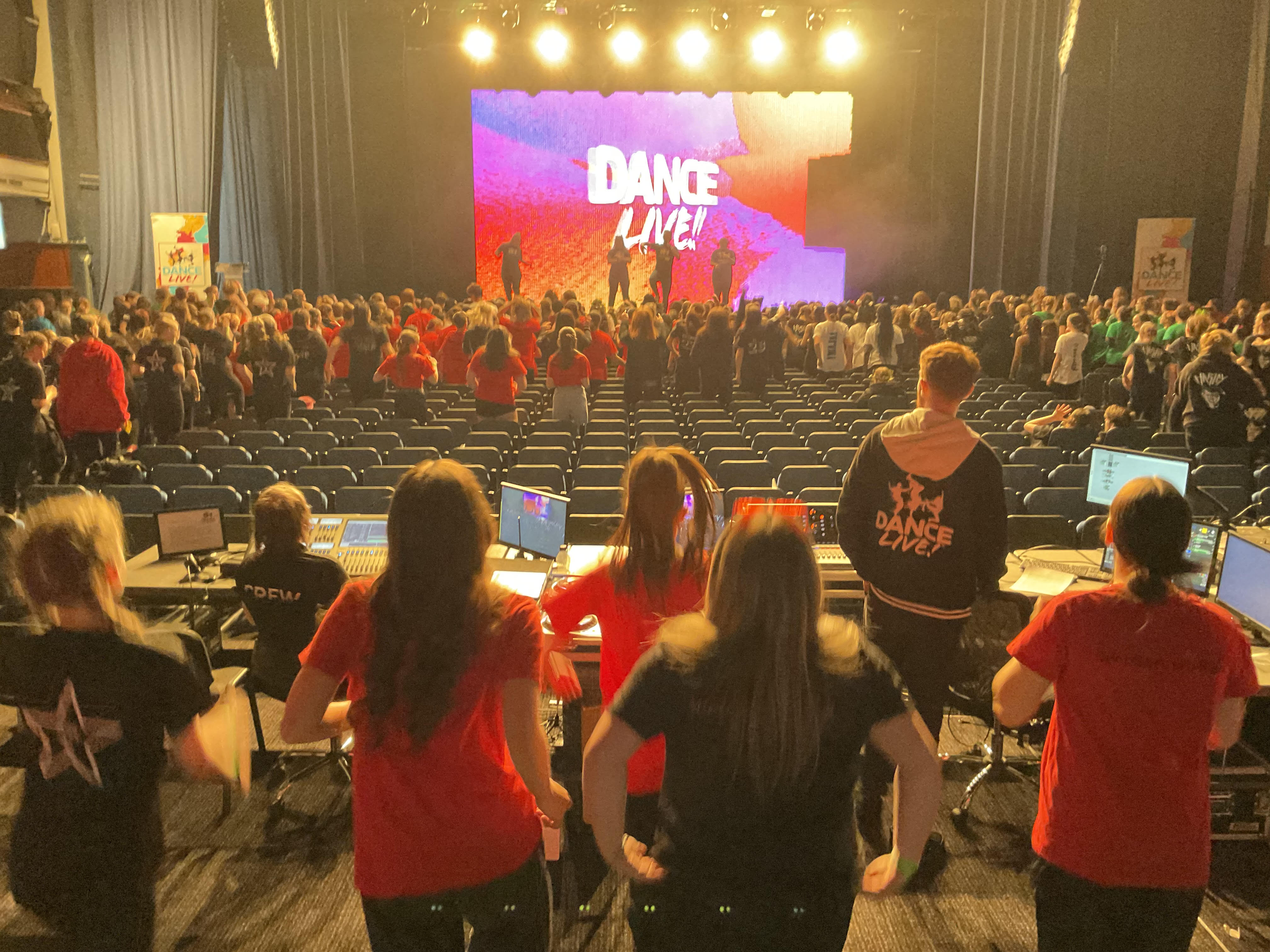
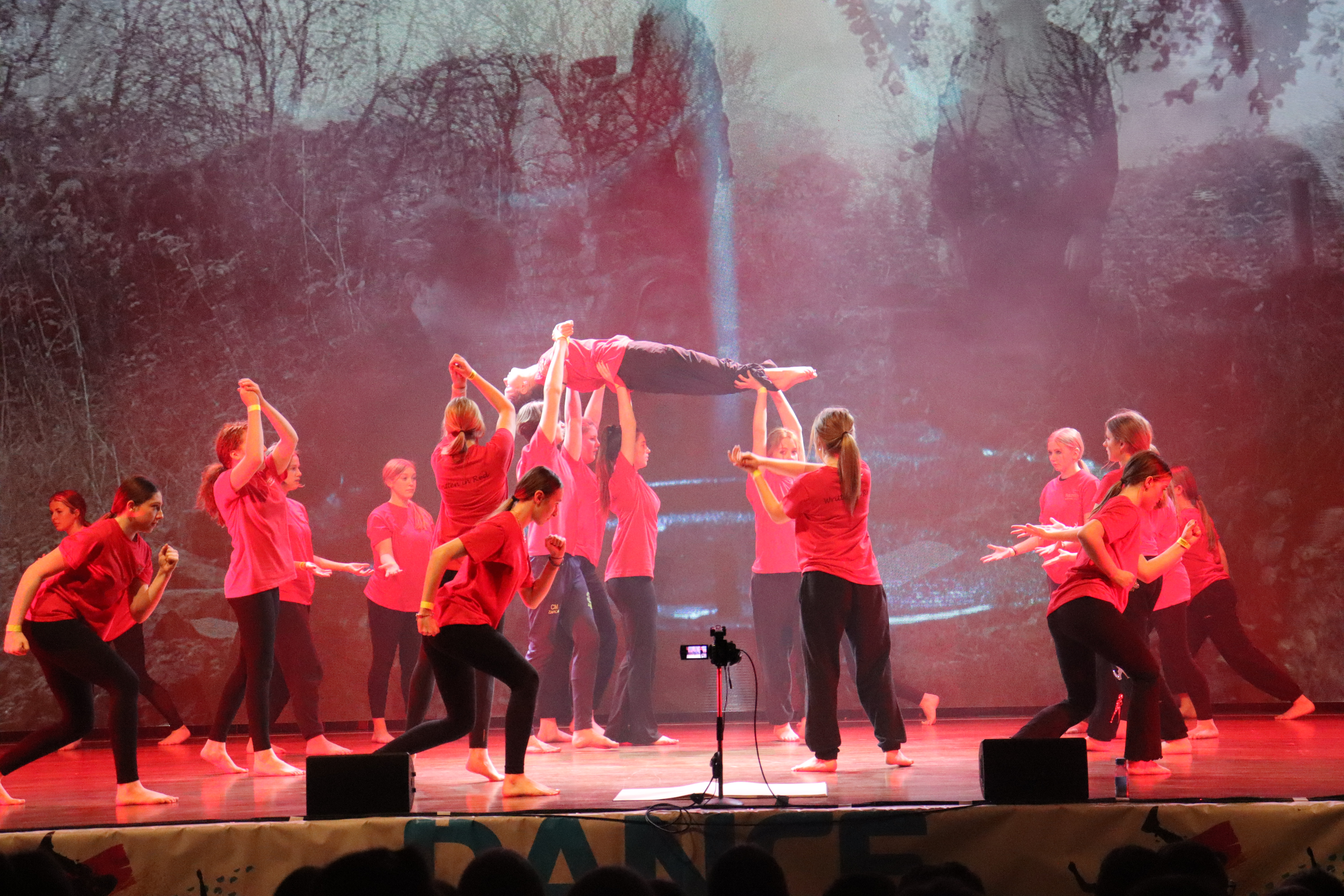
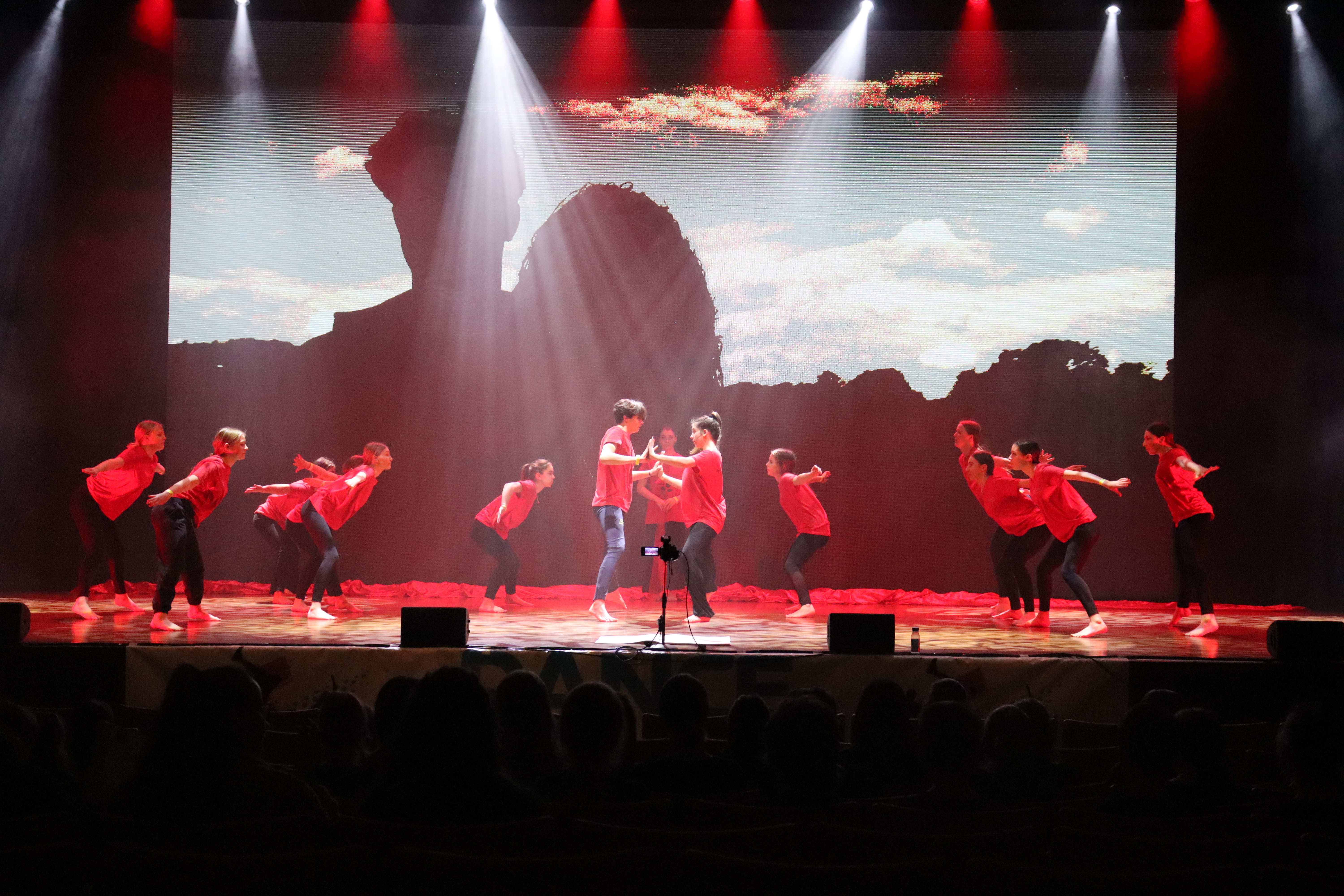
On Wednesday night, our dancers and their support crew were in Portsmouth for the national finals of Dance Live! Having won the semi-finals, we knew our ensemble would now be up against the very best in the country. Since that triumph, they had listened carefully to the feedback and honed their performance to perfection, synchronising their movement to the huge video display screen behind them. I was following – along with hundreds of others – the Instagram Story updates as they rehearsed and prepared in the prestigious Guildhall auditorium. And then…it all went quiet. Until an email from Mr Buckley confirmed that their incredible performance had won them second place – and top state school in the finals! This amazing achievement was accompanied by a healthy £500 prize for Team Performing Arts.

Video of the semi-final performance

We know, from long experience, that the arts are essential for enabling students to find a way to express themselves. Whether it be through dance, or drama, or music, or painting, or sculpture, or installations, or film, we do all we can to help our students give expression to their ideas. To see that come together, in such a triumphant way as this, is breath-taking. I am so proud of the students, and the staff, who helped put this together.

Poetry Competition

Also this week was the final of the inter-house poetry competition. In this event, our students found their voices through the language and layout of poetic forms, expressing themselves using the rhythms, rhymes and interplay of words. The themes of this year’s competition were social media, and Churchill Academy & Sixth Form, and our students found new and unusual angles on both subjects. You can read more on our website, but here is the winning poem:

You Only Get One Life
By Melissa Otero-Zambrzycka

Open the app, shut the door,
Time after time, coming back for more,
Another swipe, another scroll,
Another notification on the phone,
A nagging need to know every hit,
Every detail, every bit,
“What are they saying?”
“What do they think?”


The need to feel that acceptance,
From a group of strangers, you don’t even know,
The feeling when that comment,
Makes you hit an all time low,
The toxicity of the fact,
“They don’t care how you feel,”
Putting your heart out there is a gamble,
Yet you chose to spin that wheel.


And so you isolate, compensate,
For people you’ll never meet again,
When in reality, waiting outside that door,
Is only the truest friends,
But your eyes cannot leave that screen,
It’s a vortex you cannot reverse,
You cannot leave, even if you plead,
And every hateful comment hurts,


But you’re stuck in this matrix,
And “Who cares, you’re all alone,”
But it only takes one move to escape it all,
Go on, turn off your phone.


Get out into the real world,
Write your own story in colourful ink,
You’ve only got one life,
“Who cares what people think?”

I just love what Melissa has done with her poem here. The use of the “who cares what people think” refrain at the beginning and the end, with the twist in meaning from the changed context, helps to reinforce the message of the poem: that it’s all about perception. Your own attitude towards things is what really matters – not what other people think. I think it’s fantastic that our students have these opportunities to hone their craft and get their words out into the world in this way.

The Gabblers Club

On Monday, I returned to the Bristol Hotel for the finals of the Gabblers Club competition for the first time since the COVID pandemic. Gabblers is a long-standing tradition across Bristol schools, where Sixth Form students meet together to practise the art of after-dinner speaking. There were twenty competitors from state and independent schools, with our entrant – Gemma Partridge – dazzling the audience with her witty and thought-provoking speech on the topic of “Soaps.” Gemma – who won the Raymond Hayter Song Prize in the Churchill Young Musician of the Year competition in January, and was part of the crew for Dance Live! – is a shining example of a student who has made the most of the opportunities offered to her, and thrived as a result.

It makes me so proud to see our students achieving such highs across this range of disciplines – with the confidence to express themselves. This is exactly the positive difference our vision statement talks about.

Spring

The news headlines are pretty bleak in the world of education at the moment. Industrial action by members of the National Education Union is disrupting schools up and down the country. They are taking action because of the significant financial challenges facing schools – as with every sector of the economy – in the face of skyrocketing energy bills and insufficient funding to raise staff salaries in line with high inflation. A further slap in the face was the revelation of WhatsApp messages from former Secretary of State for Education, Gavin Williamson, denigrating teachers as lazy and workshy at the height of the pandemic. I remember our staff working with students throughout that time – without vaccines or PPE – and moving heaven and earth to deliver education in unprecedented circumstances, so this is particularly galling.

There have also been shocking scenes on social media of schools around the country in disorder as students stage “protests” against rules and approaches taken by staff. I’m not going to get into the rights and wrongs of individual cases elsewhere, but I am very glad that our Academy is a school with strong student leadership and voice; a school where staff listen to students and where students are able to make positive changes to the Academy in partnership with staff – as one community. We have revised uniform rules and systems as a result of this kind of feedback from students through councils and student voice, and those groups are continuing to work hard to improve many aspects of school. We will continue to listen as our students express their views through the channels designed for this purpose – and I am grateful for the good sense and maturity that they have shown, despite the trends of social media.

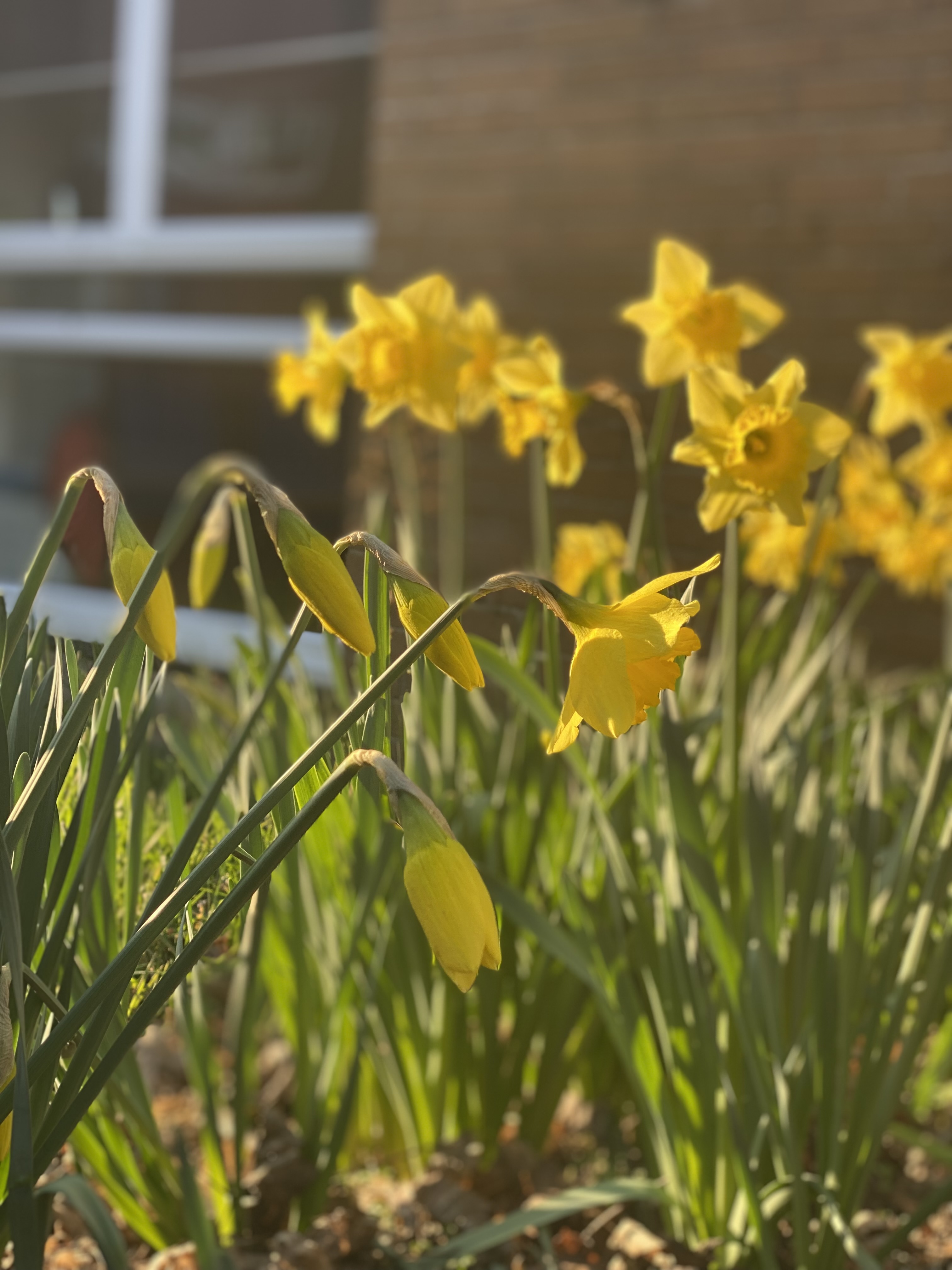
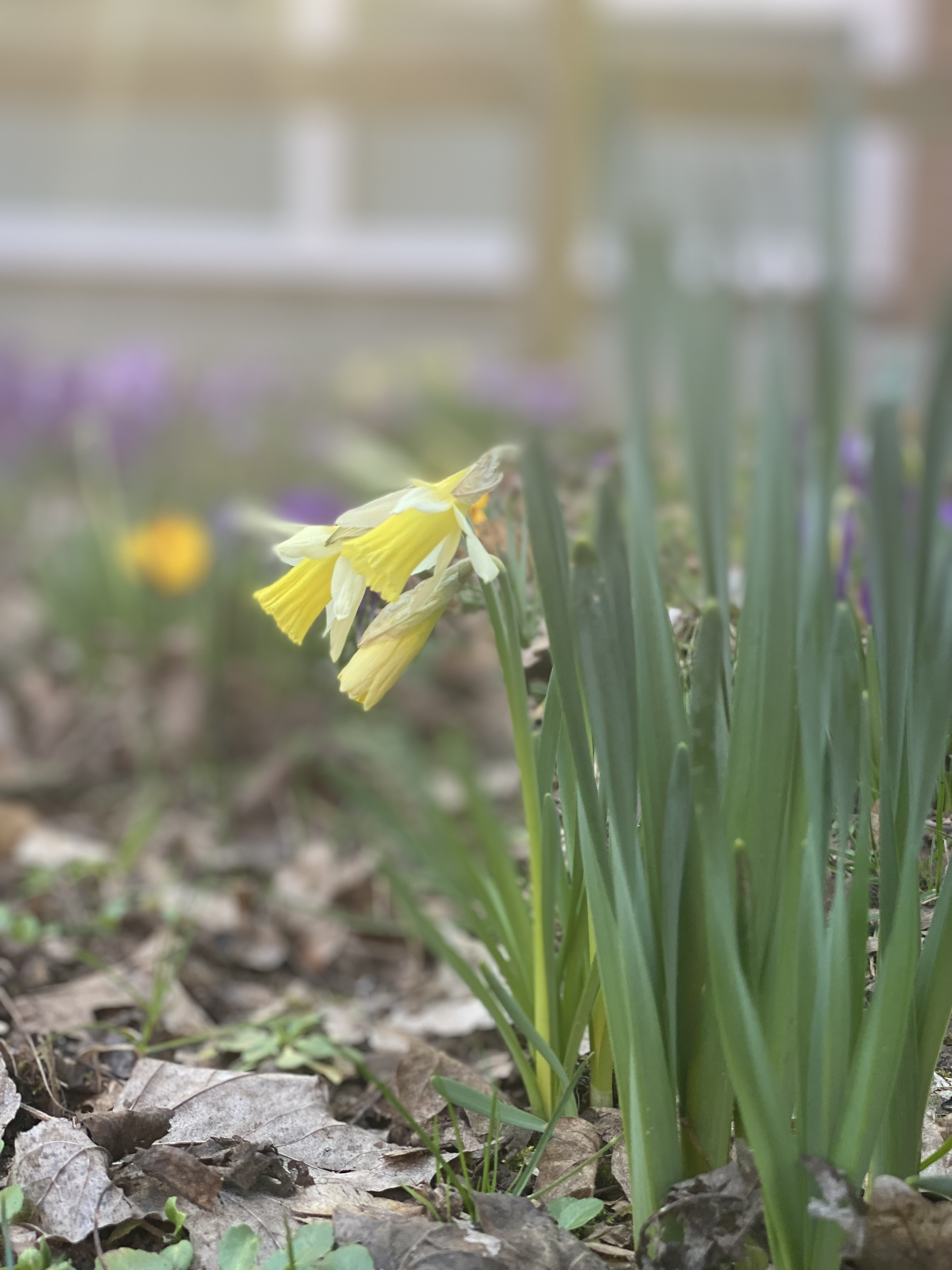
As I was leaving school at the end of the day this week, I saw the carpet of crocuses and daffodils blooming again, as they do every spring. They reminded me – as they always do – that out of the cold and dark, brightness always returns. Working in schools, we are in the business of optimism. Every day, we work with the young people who have the potential to go out and make the world better, to solve its problems, to make a positive difference. No matter how difficult things are, the positivity and potential of our students make the job worthwhile.

Presentation Evening 2022

Churchill’s Annual Presentation Evening took place on Wednesday 14th September 2022 – three years since our last in-person event. The evening celebrated the successes of the Academy community over the previous year, with awards focused on the exam results from Years 11 and 13 complemented by prizes for service to the community, for progress and improvement, compassion, resilience, and attitudes to learning. 

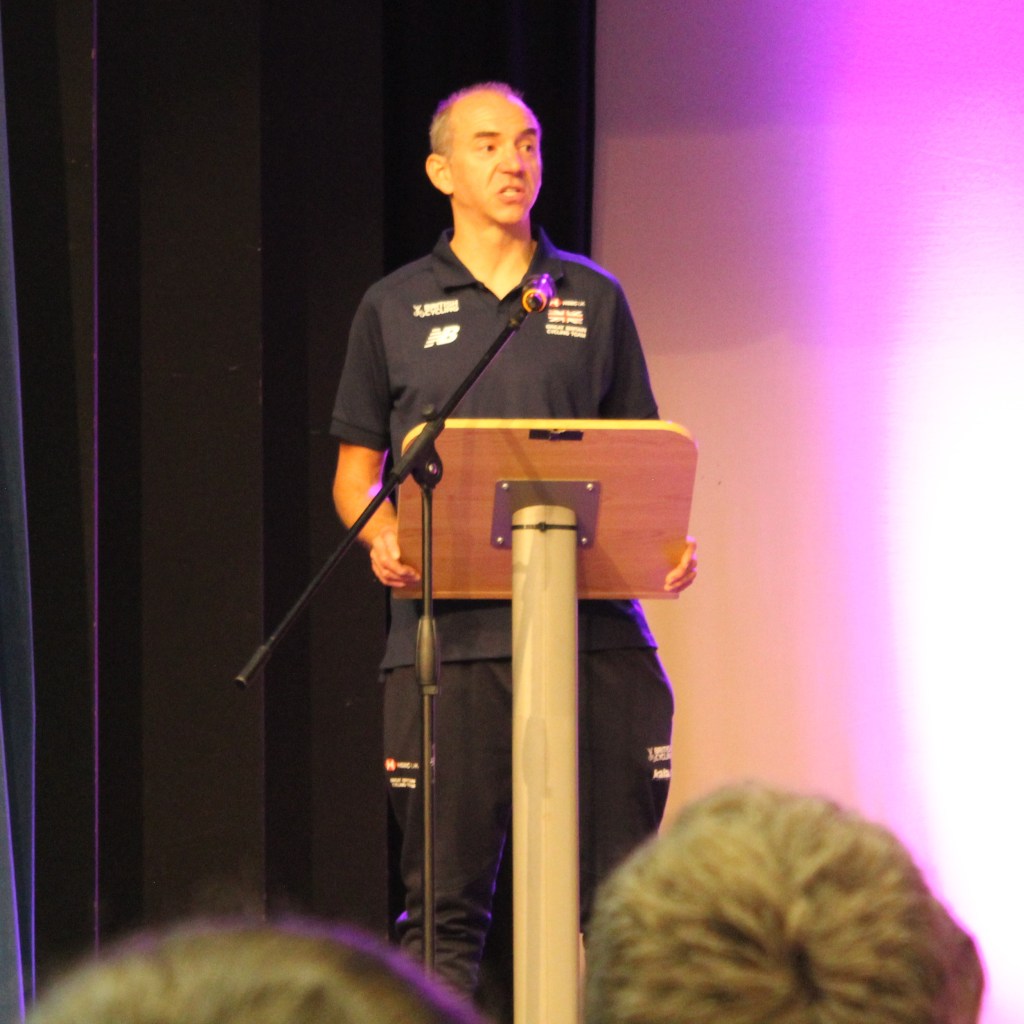
I was joined on stage by the Chair of Trustees, Mrs Anne Oakley, who introduced the evening. Our guest of honour was William Bjergfelt, cyclist with Team GB and competitor in the Tour of Britain. As a (very amateur!) cyclist myself, I have always enjoyed cycling at the Olympics, the Commonwealth Games, the Tour de France and Tour of Britain – those athletes are idols to me, so meeting William was a real honour. He gave a great speech about his own experiences in competitive sport, and how his own career has been defined by our Academy value of determination. As an elite mountain bike rider and aspiring road racer, William was involved in a head-on collision with a car in 2015 which left him with a bleed on the brain and his right leg shattered into 25 pieces. His leg was reconstructed with three titanium plates but he was told at the time he would never ride a bike again, let alone race one. William spoke to the audience of prize winners and their families about how his mental attitude was every bit as important as his physical recovery, as he defied the odds to return to elite cycling. He qualified as a para-cyclist for Team GB and returned to racing alongside able-bodied athletes in the Tour of Britain in 2021.

William’s inspiring message capped off a wonderful evening of awards – the full roll of honour can be seen on the Prize Winners page of our website. The Headteachers’ award for achievement at GCSE went to Maddie Pole, and the Captain G. J. Picton-Davies Cup for Best Overall Performance at A-level, was handed to Sarah Browne, who, with 3 A* and 1 A and will be going on to study Chemistry at New College, Oxford.

We were also delighted to award the Barry Wratten Prize for Resilience, for the second time, to Jamie Campbell. Jamie received the award for the first time in 2019, when he received it from the wheelchair he needed to move around the Academy at the time. Now in the Sixth Form, and following many years of surgery and hard work, Jamie walked up the steps unaided to collect the award from the stage. His example of determination was warmly applauded by everyone present.

The Kindness Test

I am a keen listener to All In The Mind, the Radio 4 programme about psychology, so I was delighted when the presenter, Claudia Hammond, devoted a whole episode to the theme of kindness just before we returned to school. Kindness is one of the Academy’s three core values. A strength of the heart, it is a cornerstone of our Academy culture and central to our approach to education. I was therefore fascinated to hear what the psychological research has to tell us about the subject.

The episode was devoted to the Kindness Test, a mass research project from the University of Sussex. The project seeks to explore how kindness is viewed within society at large and will add to the growing research base on the importance of kindness, exploring issues such as: 

  • What are the most common kind acts people carry out?
  • Where do people most often experience kindness?  
  • What are the barriers to behaving more kindly? 
  • How is kindness valued in the workplace? 
  • Is kindness viewed as a weakness?  
  • What prevents people from being kinder? 
  • How does kindness relate to factors such as well-being, mental health, geographical location, gender and personality? 
  • How is kindness connected with compassion and empathy? 
  • How does kindness relate to our value systems?  

The questionnaire for the research project is only open to participants who are 18 years of age or older, so unfortunately our students cannot participate – although I think they would have a lot to say about the topic and plenty of examples to share! But the radio programme which accompanied it was a fascinating exploration of ideas around kindness, and what we already know. Here are some of my key takeaways:

Kindness is instinctive

Chief researcher Professor Robert Banerjee explained the theory that the “warm glow” we get from helping others activates the same part of our brain as eating delicious food, or receiving a treat for ourselves. Studies have shown that young children at the age of two will help others, or comfort those in distress, even when no reward is expected for themselves. All of this suggests that kindness to others is something instinctive that gives our species an evolutionary advantage. Perhaps kindness strengthened our stone age or Neanderthal communities, building trust and mutual support between individuals so that they would function more effectively as one unit? This evolutionary advantage now manifests in our modern society as the “warm glow” of doing something kind for someone else.

Kindness is selfless

Even though we receive a wellbeing boost when we’re kind to others, psychologists don’t think this is the reason why we are kind. In fact, if we are kind to others only because we know we’ll get rewarded for it – either with praise, recognition, or a physical reward – we don’t get the same “warm glow” as when we’re kind just because we want to help somebody else out. That selfless kindness, when we help someone out without any thought for recognition or reward for ourselves, feels better than doing the right thing because we know we’ll get something out of it. It sounds like a contradiction – but it makes sense!

Kindness builds a strong culture

Jürgen Klopp is cited as a “leading light” in kind leadership

Pinky Lilani, one of the guests on the programme, discussed research undertaken with the Saïd Business School at the University of Oxford into kindness and leadership. Using “leading lights” including Liverpool Manager Jürgen Klopp, the researchers found that kindness has the ability to build trust, confidence and loyalty in business, sport, and industry. It is becoming an increasingly influential leadership style, characterised by empathy and respect – and it gets results.

Kindness isn’t soft

One of the criticisms of kindness is that it’s soft, or that is can be perceived as a weakness if you’re too kind. But actually, providing honest critique and feedback to somebody is kind, as it helps them to improve – but it is neither soft, weak or easy. It’s actually really hard to do. But, when someone can do better, the kindest thing we can do it to help them to get there.

Honest, constructive feedback can be hard to give – and to receive!

At Churchill we work really hard to build a culture where we can provide that honest, helpful feedback to help one another improve. We talk about being “hard on the content, supportive of the person.” This means approaching feedback with the highest expectations, but with empathy about how the critique will be received. On the other side, we expect those receiving the feedback to focus on the improvements they can make to continue to make a positive difference to themselves, understanding that the feedback comes with kind intentions.

Kindness helps us understand diversity

Robin Banerjee gave a really helpful explanation of how empathy and kindness help us understand difference. He puts his case so perfectly that I quote it here rather than attempting to summarise:

The fact of the matter is that there is always going to be differences of opinion, different perspectives, different points of view. Part of the challenge for all of us as we grow up…is navigating difference, working out how to respond when other people have different perspectives from you. And that’s the cornerstone of empathy – to walk in someone else’s shoes, to see the world from their perspective. So I think one of the things that we need to recognise is that it isn’t about standardising everything so that everyone thinks in exactly the same way. The beauty of our world comes from difference, comes from diversity. So kindness is all about the stance that we take in navigating that diversity.

Robin Banerjee, Professor of Psychology at the University of Sussex and principal investigator for the Kindness Test

It was a fascinating programme, full of insights into a quality that is so important to us at Churchill. I have filled in the questionnaire; I look forward to hearing what the research discovers about kindness in our world today when it is published in 2022.

Welcome back!

And, just like that, we’re back! It has been fantastic this week to have the Academy full of students again, getting back to learning. The screens are already filling up with extra curricular opportunities, including auditions for the school production. It promises to be spectacular!

As term has begun, I have met with all main school students for their “welcome back” assemblies. In those assemblies I have been through the practical arrangements for the year ahead, but also taken the opportunity to reinforce our vision, values and expectations so that everyone is clear.

Site Development

The interior of Stuart House, August 2021

Over the summer we have completed the second and begun the third and final phase of our redevelopment works in Stuart and Lancaster House, home to Humanities and Languages. The second phase has seen the completion of the middle section of the building, with further new air-conditioned classrooms, staff offices, and facilities. The third phase began with the removal of all the internal walls and classrooms around the Stuart Green Room – as you can see in the picture above, it created a massive space! Contractors are now beginning the process of building new classrooms, offices, student toilets and a social space, all with the latest materials designed to control acoustics within the building – and with air conditioning as standard. We expect this work to be completed by March 2022, when we will be able to move in!

COVID

COVID is still with us, and we are still taking precautions in line with the government guidance. This includes the testing of students on their return to school, and the re-introduction of twice-weekly home testing for COVID-19. In my assemblies, I reiterated the current COVID guidance and procedures, which are explained in detail on the website.

Why are we here?

The start of the year is the ideal time to remind us all of why we are here – why Churchill Academy & Sixth Form exists in the first place. Our purpose is simple:

To inspire and enable young people to make a positive difference

I talked to our students about the positive difference they can make to themselves, every single day they attend the Academy. At the end of each day, I asked them to reflect to themselves: what do I know now that I didn’t know yesterday? What am I better at now than I was twenty four hours ago? How have I improved?

It’s also the case that our students can make a positive difference to the Academy that they belong to. Each of them is unique; each of them brings something special to our community. Their being here – the contribution that they make – makes the Academy better.

And, finally, it is our ambition that our students can go out into the world and – as a result of all they have learned at Churchill – make a positive difference in our society. We hope that they will be able to solve problems, help others, and improve things for all of us and for generations to come. It’s a lofty ambition, but when you look at the potential of our Churchill students this year I genuinely believe that anything is possible.

Inclusion and diversity

I outlined an important focus of our work this year, on inclusion and diversity, but explaining what we mean by it. In simple terms, this priority is about:

Ensuring that everybody is welcome, and every member of the Academy feels that they belong

This is a shared responsibility for us all, and something we will be promoting and developing – with the help of our students – throughout the year. It is essential we get this right so we can continue to build the friendly, welcoming community we are all so proud to be a part of.

Sustainability

Our second area of focus for the year is on our own sustainability. We have an ambition to be a carbon-neutral school by 2030. This is no easy task in a resource-hungry institution like ours! But, again with our students’ help, we are driving down energy usage, driving down waste, and improving recycling, encouraging re-usable resources, and looking after our green spaces and facilities. Lots more to follow on this as the year progresses.

Learning

At the end of my “welcome back” assembly, I turn to our core business: learning. I take every opportunity, including this one, to remind our students of the six habits and dispositions that have been shown through research to have the biggest impact on successful learning. These are the things that we promote through our effort grades, our values, our lesson planning, and our classroom expectations.

Our learning values

These are the things that we expect from our students every minute of every hour of every day. From my visits to classrooms this week, they have taken this message to heart. I saw Year 8 students grappling with the concept of infinity in Maths and exploring the story of Edward Colston in Drama; Year 10 students learning about synecdoche in English; Year 7s exploring the Norman conquest of Britain and responding to medieval Occitan troubadour music; Year 11 learning about the nervous system’s response to stimuli; and Sixth Form students learning from alumni about successfully applying to Oxford and Cambridge University. And that’s just scratching the surface!

The year’s got off to a great start: it’s up to all of us to keep it going!