Last week’s assembly, coordinated by Mr Davies, explained the people behind the names of this year’s Year 9 learning groups. They are all people with important links to our nearest city, Bristol – and they have all showed the Academy’s values. We hope that these figures from our local history will inspire our current students to similar endeavours of kindness, curiosity, and determination.
Brunel: curiosity and determination

Brunel learning group is named for Isambard Kingdom Brunel, the mechanical and civil engineer who designed the Great Western Railway, Clifton Suspension Bridge, SS Great Britain and numerous significant ships, tunnels and bridges. He was a prominent figure during the Industrial Revolution which began in Britain, and he revolutionised public transport and modern engineering. His endless curiosity led to him finding innovative solutions to engineering problems, and his determination ensured that he overcame the challenges in his way.
Stephenson: kindness and determination
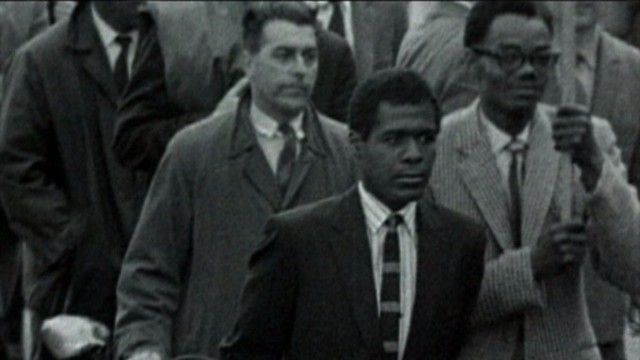
Stephenson learning group is named after the civil rights campaigner Paul Stephenson. He was born in 1937, in Essex. He joined the RAF as the only black cadet in his regiment. Many years later he became a Youth and Community Development Worker in St Pauls, Bristol. It was during this time that he campaigned for a bus boycott as he didn’t accept that the bus company wouldn’t employ black drivers. He decided he was going to do something about this! He fought for black people to be treated fairly in public places in Bristol. With Muhammed Ali, he also set up ‘Muhammed Ali Sports Development Association’ to promote sports development among ethnic minority young people to help develop self-confidence and social interaction. In 2008 he was given the Freedom of the City of Bristol in recognition of the work he has done to bring the black and white communities together.
Fragapane: determination

Claudia Fragapane is a British artistic gymnast who grew up in Bristol. At the 2014 Commonwealth Games, she was the first English woman to win four gold medals since 1930. In 2015, Fragapane was part of the women’s gymnastics team that won Great Britain’s first-ever team medal, a bronze, at the World Artistic Gymnastics Championships. She competed at the 2016 Summer Olympics in Rio de Janeiro, alongside Churchill Academy alumnus Ruby Harrold. She also finished fourth in Strictly Come Dancing!
Park: curiosity and determination

Nick Park is the famous animator, director and writer behind Wallace and Gromit, Creature Comforts, and Shaun the Sheep. He has been nominated for an Academy Award a total of six times and won four with Creature Comforts (1989), The Wrong Trousers (1993), A Close Shave (1995) and The Curse of the Were-Rabbit (2005). He has also received five BAFTA Awards, including the BAFTA for Best Short Animation for A Matter of Loaf and Death.
He has spent most of his career working for Aardman Animations in the Bristol area. His curiosity has led him to develop a unique and appealing world of claymation animation. Meanwhile, his technique of stop-motion animation – shooting films one frame at a time, moving each model just a fraction between each shot – requires a huge amount of determination!
Blackwell: kindness, determination and curiosity

Elizabeth Blackwell was born in Bristol in 1821, although she moved with her family moved to America when she was 11 years old. She was the first woman to receive a medical degree in the USA in 1847, which required determination and curiosity. As a medical doctor, she showed great kindness when she treated wounded and injured soldiers in the American Civil War, despite strong opposition from male colleagues.
Later, she opened her own medical practices in New York (1852) and in London (1871) where she taught, trained and inspired other female doctors to follow in her footsteps. She retired from medicine in 1877 to work as a social and moral reformer, co-founding the National Health Society.
She showed determination, battled all her life and her successes had been monumental. In 1881, there were only 25 female doctors registered in England and Wales but by 1911 there were 495 registered. Her ambition and success has inspired many generations of female doctors to pursue medical careers and achieve the ‘impossible dream’.
Kenney: determination

Kenney learning group is named after Annie Kenney (1879-1953). Annie Kenney was a key figure in the suffragette movement which campaigned for women to have the vote in the early twentieth century. Kenney was one of the few working class women to rise to prominence in the Suffragette campaign. She became a leading figure in the Women’s Social and Political Union and spent some years working as an organiser in Bristol. She hit the headlines after being imprisoned for several days for assault and obstruction, after heckling Sir Edward Grey at rally on the issue of votes for women.
Kenney was imprisoned a total of 13 times. She repeatedly went on hunger strike in prison, and underwent brutal force-feeding from the authorities. She remained determined to confront the authorities and highlight the injustice of the treatment of suffragettes by the male-dominated authorities.
When the First World War broke out, Annie Kenney accompanied Emmeline Pankhurst and other suffragettes from the WSPU in ending their activism. Instead, they took on jobs that had previously been done by men, who were now away fighting, in support of the national war effort. Her actions, and those of others in the movement, led to women gaining the vote in 1918.
Dirac: curiosity and determination

Dirac learning group is named after the physicist Paul Dirac, born in Bristol in 1902. Dirac made fundamental contributions to the early development of both quantum mechanics and quantum electrodynamics. Among other discoveries, he formulated the Dirac equation which describes the behaviour of sub-atomic particles called fermions. He also predicted the existence of antimatter. Dirac shared the 1933 Nobel Prize in Physics with Erwin Schrödinger “for the discovery of new productive forms of atomic theory”. He is widely regarded as one of the most significant physicists of the 20th Century.
Brohn: kindness and determination

Diagnosed with breast cancer in 1979, Clifton-born Penny Brohn knew she needed more than just care and treatment for her body: she recognised that she would need support for her “mind, spirit, emotions, heart and soul.” She co-founded a charity centre with her friend Pat Pilkington called the Bristol Cancer Help Centre, which offered patients complementary therapy to support them alongside medical treatment. She showed determination to overcome a great deal of controversy and scepticism to support those living with cancer. Penny Brohn died in 1999, having lived with cancer for 20 years. Her kindness lives on in the work of the charity she co-founded, which provides care to those living with cancer before, during and after treatment.
More: kindness, curiosity and determination

Last but not least, learning group More is named after Hannah More (1745-1833). Hannah More was born in Bristol, where she taught at a school founded by her father and began writing plays. She became known as a poet and playwright, as well as a writer of moral and religious texts, and moved to Wrington in 1802. She campaigned to extend education to the poor, and to girls, who otherwise had no access to schooling. Vitally, More also campaigned against the slave trade. Hannah More is buried beside her sisters at the Church of All Saints in Wrington: you can see a bust of her in the south porch to this day.


 The Headteacher's Blog