This year we are using a new national programme to help structure some of our assemblies and tutor times: Votes for Schools.
Votes for Schools is a weekly current affairs-based voting platform designed to engage young people in political and social issues. Through weekly discussion and voting, not only are voters learning about the world around them, but they are also becoming active citizens and preparing for participating in our democratic processes as adults.
We have already had some good discussions about cultural appreciation vs cultural appropriation, linked to Black History Month. Families can get involved too – here are some great ways for you to get involved in the conversation!
Check the website
At 4PM every Friday, the latest Vote Topic goes live! Anyone can check the Votes for Schools website – www.votesforschools.com – to see what students across the country will be debating and voting on in the coming school week.
Discuss the topic at home
Ask your child to give arguments for each side of the debate to encourage critical thinking. Votes for Schools produces a weekly Home Information Sheet that can help you with this, which you can download from their website.
Discuss the results
When the new Vote Topic is available, the national results of the previous topic will be too! Why not ask your child how they voted and why, and discuss how the rest of the country voted?
Brush up on your knowledge
You can read up on any topics your child is discussing, or has discussed, to see what your take on it is. For more sensitive topics, Votes for Schools also provide a list of useful resources and organisations where you or your child can find out more or seek support.
Share your ideas and find out more
Please talk to your child about which issues they would like to see discussed at Votes for Schools. You can let them know their thoughts, or encourage them to reach out to Votes for Schools directly. You can email them directly at secondary@votesforschools.com, or visit the website www.votesforschools.com to make suggestions or to find out more.
In this week’s assemblies I have been discussing British values with our students. All schools should promote the fundamental British values of democracy, the rule of law, individual liberty, and mutual respect and tolerance of those with different faiths and beliefs – and we are no exception.
Democracy
The idea of democracy has its origins in Ancient Greece, where the concept of Δημοκρατία or dēmokratía originated from the compounding of the words and ideas dēmos (‘people’) and kratos (‘rule’). The Greeks’ idea was that power was vested in the people of a state, where the voice of the people decided the laws of the land. This idea has evolved into the representative democracy we have today, where the people of state have a say through their vote, to elect a representative who will carry their views forward into the government of the country.
In our case, our representatives sit in the Houses of Parliament in the Palace of Westminster. I spoke to students about how our representative democracy works, and how our elected representatives make the laws our country is governed by. I also discussed some of the challenges of democracy, including the difficulty of reaching consensus or agreement when people have different views.
“Democracy is the worst form of government – except for all the others that have been tried.”
Winston Churchill
We moved on with a discussion of Winston Churchill’s famous description of democracy, having lost the general election immediately after leading the nation to victory in the Second World War. Despite its flaws and challenges, democracy is still the best form of government our species has found.
We concluded this section of the assembly with a discussion of the voting age. In our country, people under the age of 18 are not permitted to vote. However, at Churchill we encourage students to engage in the principles of representative democracy through the house and school councils, which are up and running already this term. We also aim, through the education we provide, to ensure that students can make their own minds up about how to cast their vote, when they are old enough, from a position of wisdom and knowledge, based on the ability to distinguish truth and fact from lies and misinformation.
The rule of law
Our elected representatives make the laws that we have to follow. I discussed representations of justice, including the famous statue of Lady Justice on top of the central criminal court at the Old Bailey in London. Lady Justice carries a sword to symbolise that justice should be swift and final; but she also carries scales, to symbolise that justice must weigh up the rights and wrongs of each case to make a fair and balanced decision. These are helpful reminders for all of us in school.
Liberty
There is no better symbol of “liberty” than the Statue of Liberty which stands at the mouth of the harbour in New York City. The statue represents the idea that those people arriving in America were coming to the land of the free, where people were free to live their lives as they chose, and to make their own destiny. This idea of individual liberty – where citizens are free to make choices about how they live their lives, within the bounds of the laws of the land – is central to the UK’s national character. Many countries around the world do not allow their citizens the same degree of liberty that our country does so we must ensure that we do not take this for granted.
Mutual respect and tolerance of those with different faiths and beliefs
As part of our liberty, we must also be tolerant of those with different faiths and beliefs. As a nation we are welcoming to those from different cultures and backgrounds; in Britain people can love who they choose to love; they can follow a religion of their choosing, or they can have no religious faith; we respect those with different abilities or disabilities, hidden or visible, and afford everyone equal rights; in Britain people are free to choose their own identities. This is a luxury not afforded to citizens of all countries on our planet; as with our liberty, we must never take this for granted.
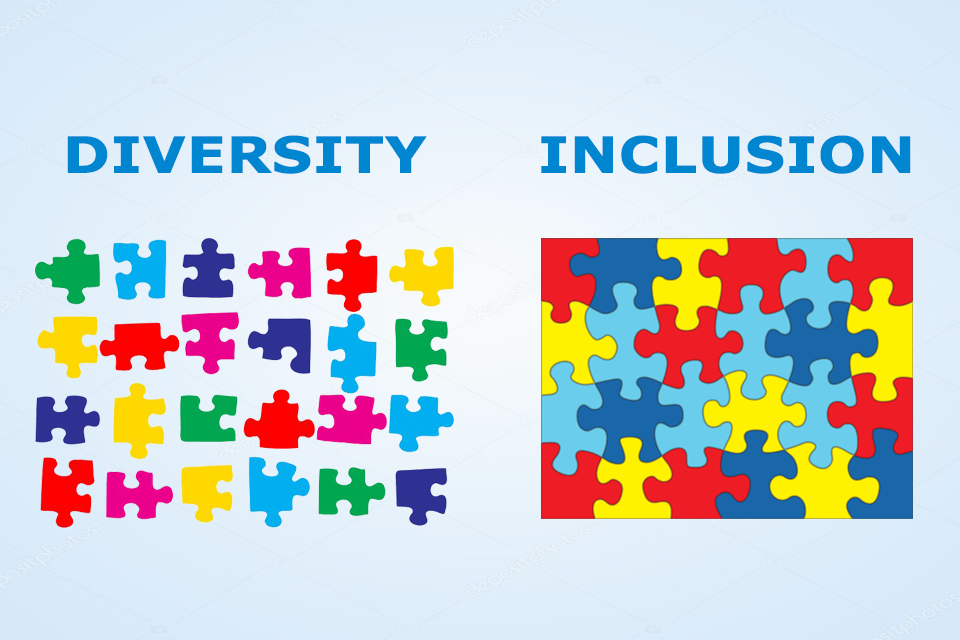
I concluded the assembly with a discussion of the difference between diversity and inclusion. We are all different, but in order to be a successful community we must work together. Individually we are all odd-shaped jigsaw pieces; through collaboration and mutual support, we can bind together in to a coherent and cohesive whole. This is a principle we hold dear in our Academy; through this, we hope to secure Britain’s future as a land which upholds those four key values of democracy, the rule of law, individual liberty, and mutual respect and tolerance of those with different faiths and beliefs – not just now, but forever.



 The Headteacher's Blog