D-Day: 80th Anniversary

Today is the 80th anniversary of the D-Day landings, which took place on 6th June 1944. D-Day was a pivotal Allied invasion during World War Two, marking the start of the liberation of Western Europe from Nazi occupation. Over 150,000 troops from the United States, Britain, Canada, and other nations landed on five beaches in Normandy, France, facing intense German resistance.

D-Day was the first day of Operation Neptune, a naval assault on the Normandy beaches,
and was part of the larger Operation Overlord – the largest sea and airborne invasion in history. Operation Overlord involved extensive planning, deception tactics (the Germans were misled into thinking the Allies would attack further east, near Calais), and airborne assaults. Despite heavy casualties, D-Day was a crucial success, leading to the eventual defeat of Nazi Germany.

Map of the D-Day landings

Alongside the naval assault, paratroopers landed behind the enemy lines to seize key roads and bridges to support the operation. In total, the operation included 11,000 aircraft as well as thousands of ships.

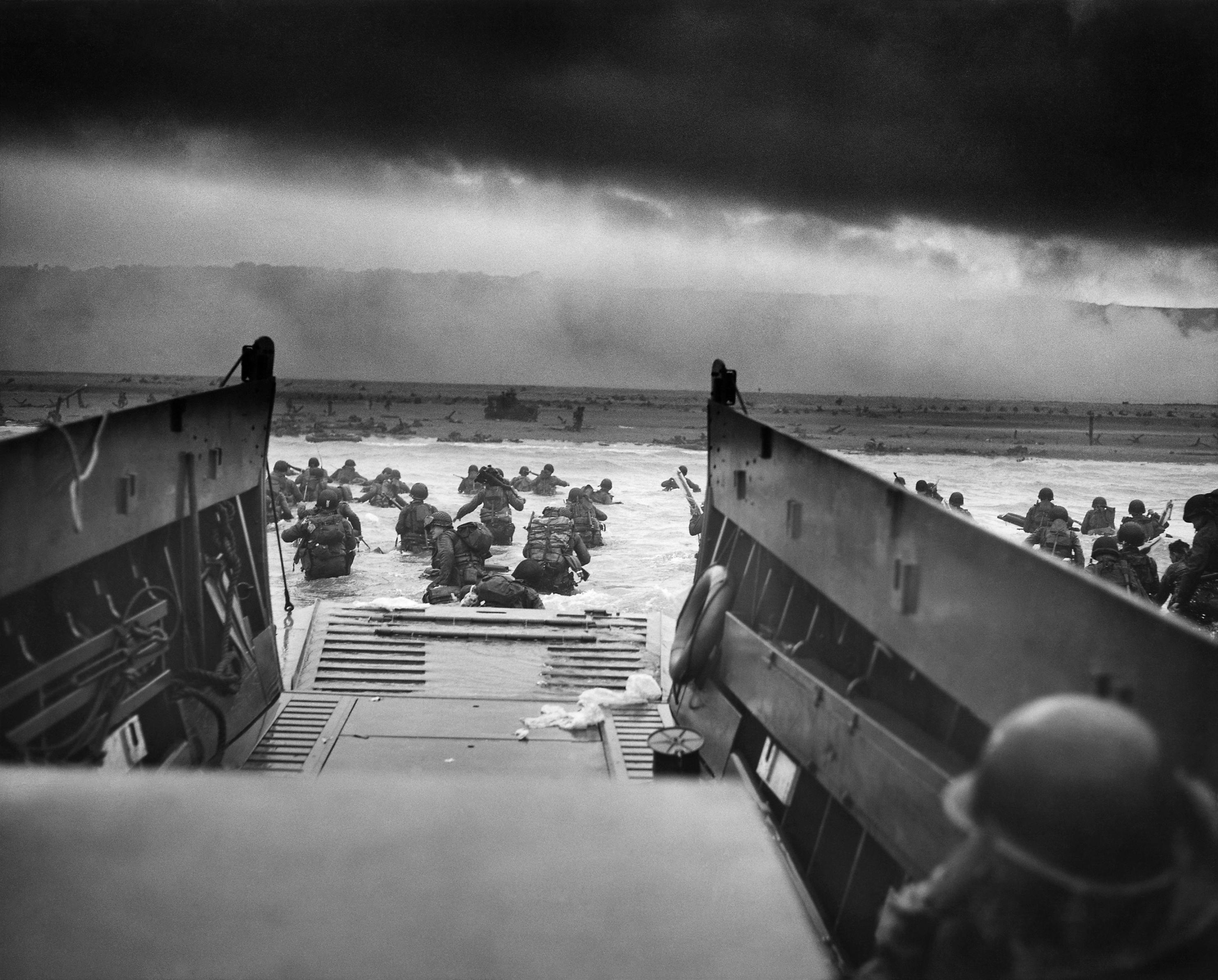
Into the jaws of death: allied troops landing on Omaha Beach on 6th June 1944

By the end of the day on 6th June 1944, the Allies had landed 156,000 troops ashore, but historians estimate that around 2,500 Allied troops had been killed.

Lieutenant James William Rollo Hildrew

I have a personal connection to D-Day, as my grandfather, James (Jim) Hildrew supported D-Day as part of the Royal Navy. He was involved in Operation Pluto, which stood for “pipe line under the ocean,” an operation to build submarine oil pipelines under the English Channel to support Operation Overlord. These pipelines supplied fuel from the south coast of England to the tanks, trucks and transports landed in France – an incredible engineering operation.

Every year I remember his contribution to the war effort and the freedom we now enjoy. He – amongst the thousands of others involved on the beaches, in the air, at sea and behind the scenes – helped to turn the tide of the war and bring an end to hostilities. When peace was eventually declared, my grandfather returned to his job as a teacher and, ultimately, headteacher – a family tradition I am proud to uphold.
D-Day 75

75 years ago today, on 6th June 1944, Allied forces landed on five beaches in Normandy, Northern France. Overnight, gliders and paratroopers had landed further inland. The landings represented the first phase of Operation Overlord – the invasion of Nazi-occupied Europe – with the aim of bringing World War Two to an end.

Landscape

Men of the 16th Infantry Regiment, US 1st Infantry Division wade ashore on Omaha Beach on the morning of 6 June 1944

The Allied forces of US, British and Canadian troops also included Australian, Belgian, Czech, Dutch, French, Greek, New Zealand, Norwegian, Rhodesian [present-day Zimbabwe] and Polish naval, air and ground support. Up to 7,000 ships and landing craft were involved, delivering a total of 156,000 men and 10,000 vehicles to the shore. By the end of the day, 4,400 troops died from the combined allied forces. Some 9,000 were wounded or missing. Total German casualties on the day are estimated as being between 4,000 and 9,000 men. Thousands of French civilians also died.

800px-Map_of_the_D-Day_landings.svg

Map of the Normandy landings

But, by midnight of 6th June, the Allies had secured their beachheads (codenamed Gold, Juno, Sword, Omaha and Utah) and begun to push further inland. Within eleven months, Nazi Germany was defeated and the war was over. 

D-Day marked the turning point in the Second World War. It was a remarkable military, technical, logistical and physical achievement, made possible by international cooperation, driven by a shared belief in the importance of defeating the oppression and horror of the Nazi regime.

img_0825

Lt. Jim Hildrew, Royal Navy, c. 1941

The anniversary of D-Day is always a special one to me. My grandfather, Jim Hildrew, was in the Royal Navy during the Second World  War. He supported the Allied invasion of France from the English Channel, working on Operation PLUTO (Pipe-Line Under The Ocean) which was designed to supply fuel from England to the Allied armies in France by laying flexible pipes all the way across the seabed. I am proud to think that he made his contribution to the freedom that we all enjoy – and perhaps take for granted – today.

NormandySupply_edit

Supply landings at Omaha Beach, mid-June 1944

He was one of the lucky ones who came back alive after the war, returning to teaching as the Headmaster of Grasmere School in the Lake District. Many were not so lucky: by the time Paris was liberated in August 1944, 200,000 of the Allied troops who had landed in France were dead, wounded or missing. On the anniversary of this important day in history, we should all take time to remember those who gave their lives so that we could live ours in liberty.