Equals and equality

The equals sign

Wikipedia tells me that the word “equals” derives from the Latin word “æqualis,” meaning “uniform”, or “identical”, which itself stems from aequus (“level”, “even”, or “just”). The equals sign – a pair of parallel lines, one above the other – apparently originated with a Welsh mathematician, Robert Recorde, in 1557. Bored of writing out “is equal to” again and again, he used a pair of parallel lines to stand instead.
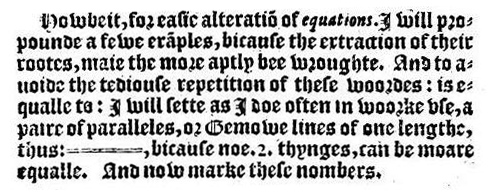
Robert Recorde’s original explanation of the equals sign

Recorde wrote: “And to auoide the tediouſe repetition of theſe woordes : is equalle to : I will ſette as I doe often in woorke vſe, a paire of paralleles, or Gemowe lines of one lengthe, thus: =, bicauſe noe .2. thynges, can be moare equalle.” In modern English, this roughly translates to: “And to avoid the tedious repetition of these words: “is equal to” I will set as I do often in work use, a pair of parallels, or duplicate lines of one [the same] length, thus: =, because no 2 things can be more equal.”

The first recorded use of the equals sign in 1557. 14x + 15 = 71

Recorde called his new symbol – a much longer pair of parallel lines than we are now used to – “Gemowe lines.” The word “Gemowe” means “twin,” from the same root as the star sign “Gemini.” What Recorde has captured in his new symbol was the idea that the two lines are not the same – one is above the other, and one below – but they are of the same value. The are worth the same. They are equally valuable – equivalent.
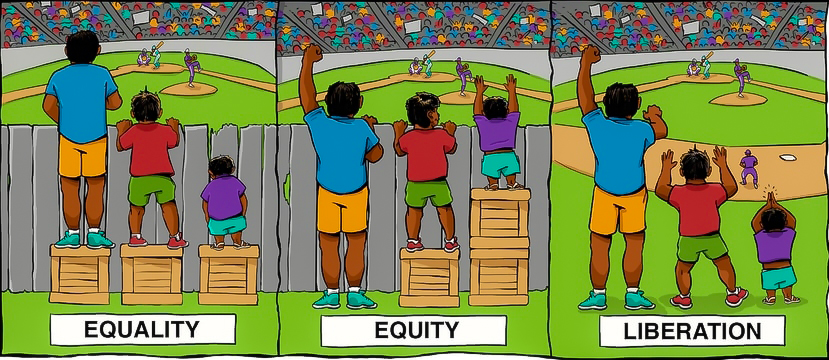
This famous illustration has been used in training to help staff think about the ideas of inclusion and diversity

We have been thinking carefully about what equality means in education. We are not all the same – each of us is unique. Achieving equality of opportunity does not mean giving everyone the same treatment – as shown in the left hand picture above. Some people need extra help or support to achieve – as shown in the middle picture – and as a school we work hard to put that in place wherever it is needed.

Our ultimate goal is to remove the barriers that stand in the way of achievement and progress, so that our students can set no limits on what they can achieve. This is illustrated in the picture on the right. We know that this is challenging, and that some of the barriers are beyond our control. We know that we can’t always achieve it on our own – but that doesn’t mean we shouldn’t try.

I recently visited a maths lesson and saw another expression of “equality.” The teacher was guiding the students through solving algebraic equations to find the value of x. Something like this:

2x2 + 12 = 44

Students volunteered to take the class through the process of solving the equation to find the value of x. The first step was to subtract 12, from both sides of the equation, to leave 2x2 = 32.

The teacher asked: “why do you need to take 12 from both sides of the equation?” The answer emerged: because both sides have to equal the same amount. If you only took 12 away from the left hand side, then they wouldn’t be equal.

The Year 8 mathematicians went on to divide both sides of the equation by 2, leaving x2= 16, before taking the square root of both sides and concluding that x=4.

After I had visited the lesson, I kept thinking about the idea of equality – in mathematics, in education, in society. 2x2 + 12 is not identical to 44 – the two sides of the equation look very different. But they have the same value. Our students are all different too, each with their own unique qualities, needs and circumstances. Their differences make them unique, and it is this uniqueness which provides the richness of our community. But every single child matters: they are all Churchill students. They are all part of the whole, all of equal value; they all belong equally.
Assembly: Different

My assembly this week explores the idea that our school is a rich, diverse community, full of unique individuals. We are all different – but our shared values and aims bring us all together. To do this I’ve attempted an acrostic assembly using the word “DIFFERENT” but I’ve played fast and loose with spelling and pronunciation to make it work. Bear with me!

D is for DNA

dna

What makes us different from one another? We all have our own uniqueness coded into our DNA. Our 46 chromosomes in 23 pairs govern our physical appearance, our predispositions to certain conditions, and our raw abilities. These tiny strands packed into the nuclei of every cell in our body make us different.

I is for Eye colour (sort of!)


Change-your-Eye-Color

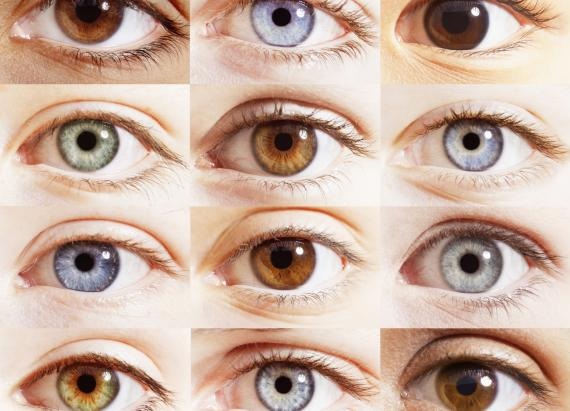
Our eye colour is one of the features coded into our DNA. Retinal patterns at the back of our eyes are as unique as fingerprints, and on the surface our irises are also unique. Some have brown eyes, some have blue.

FF and E are for a FFamous Experiment

browneyesblueeyes

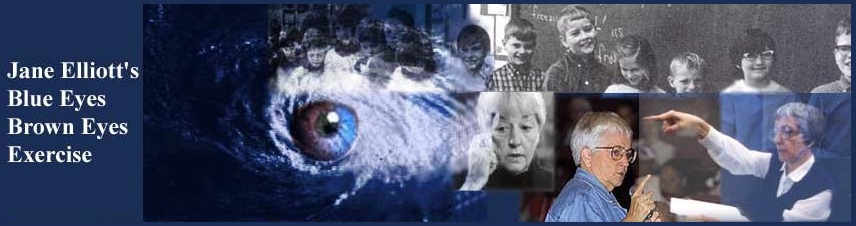
Jane Elliott, a famous educational researcher and teacher from the USA, conducted the Brown Eyes Blue Eyes experiment . She told a class of primary aged children that research had shown that brown-eyed children were cognitively superior and that they would have extra free time, self-directed learning and more privileges than the other children. Blue-eyed children, she told them, had been found to be inferior and would have no play-time; they would have intensive tuition to catch them up. Elliott’s aim was to simulate the prejudices that had endured in the United States around skin colour; she was prompted to conduct the exercise following the assassination of Martin Luther King. The exercise saw the children react in a variety of ways, and showed that it is not difficult to create division and prejudice if you focus attention on our differences.

R is for civil Rights and anti-Racism

segregation

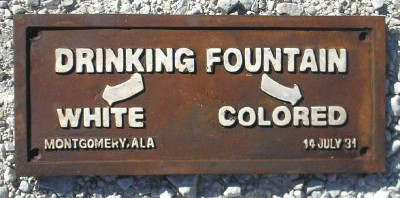
Segregation by arbitrary differences is a very real part of our history, and we must learn the lessons of past mistakes

Of course, Elliott’s model in simulating this kind of division based on arbitrary physical characteristics was very real. Elliott herself had been inspired by the assassination of Dr Martin Luther King in his struggle against the oppression of black Americans in the Civil Rights movement, and by the oppression of the Jews in Nazi Germany through the Holocaust. Being told that, because someone was different, they were somehow less than you, led to extreme prejudice, hatred and violence which took generations to overcome. Our purpose in working with young people is to  learn to work together with others, no matter how diverse our backgrounds, and to reaffirm the human truth that we are all of equal value.

E is for Equality

equals

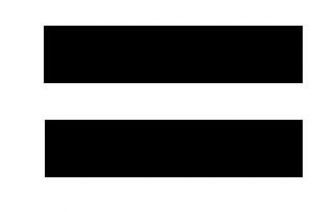
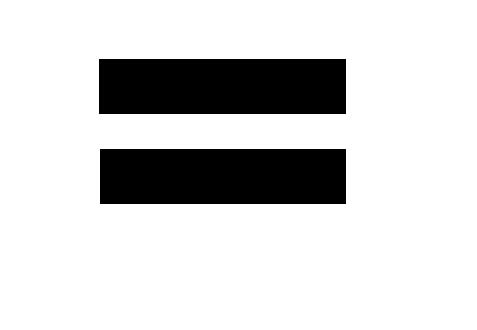
Let’s look carefully at the equals sign. Why was this sign chosen to represent “equality” – the notion that what comes before is of the same value as what comes afterwards? Both the bars are the same shape and length, but they are not identical. One is higher than the other. The are similar, but different – they are equal. Equality is not about being the same as everyone else, it is about having the same opportunities and being treated fairly by others.

N is for Now the science bit…

In this Physics experiment, the scientist sets off five metronomes at different tempos and at different times. They tick along in cacophonous chaos, independent of one another. But, when he lifts the plank onto two drinks cans, their momentum is transferred through the base and they synchronise. This shows that we don’t all have to be the same. We can tick along in our own rhythms but, if the circumstances and conditions are right, we can all beat as one. In my assembly I may have used the phrase “if we can balance the plank of our school on the coke cans of equality, we can all tick along together”. It’s important that we work together to make our community inclusive. We don’t want to make everybody the same – we value the differences between us – but we want to make sure that the conditions are right at Churchill so that difference is respected, accepted, and celebrated.

T is for To conclude…

Sophia Bailey-Klugh wrote a beautifully touching letter to President Barack Obama in November 2012 as he stood for re-election.  As the daughter of a gay couple, she thanked him for supporting same-sex marriage. She then asked for advice on how to respond to those who saw such a thing as “gross and weird.”

This slideshow requires JavaScript.

Obama’s tear-jerkingly brilliant reply is worth reproducing here:

Dear Sophia,

Thank you for writing me such a thoughtful letter about your family. Reading it made me proud to be your president and even more hopeful about the future of our nation.

In America, no two families look the same. We celebrate this diversity. And we recognize that whether you have two dads or one mom what matters above all is the love we show one another. You are very fortunate to have two parents who care deeply for you. They are lucky to have such an exceptional daughter in you.

Our differences unite us. You and I are blessed to live in a country where we are born equal no matter what we look like on the outside, where we grow up, or who our parents are. A good rule is to treat others the way you hope they will treat you. Remind your friends at school about this rule if they say something that hurts your feelings.

Thanks again for taking the time to write to me. I’m honored to have your support and inspired by your compassion. I’m sorry I couldn’t make it to dinner, but I’ll be sure to tell Sasha and Malia you say hello.

You can get the text of both letters from the fabulous Letters of Note blog.

I finish on Obama’s wonderful phrase: “even though we are all different, we all have the right to be treated equally. Far from separating us, our differences unite us.”

Get the Prezi here.