Back in November 2023 I published a post on this blog about AI: AI and ChatGPT: friend or foe?. In that post, I talked about the potential benefits, but also the risks, of using AI tools in school work.
This is a fast-moving field and, just this week, we have had updated guidance on the use of AI in assessments from the Joint Council for Qualifications (JCQ), the body that oversees examinations.
This guidance is especially relevant to students in years 10-13 who are studying for public examinations – especially those courses which include a coursework or non-exam assessment (NEA) element. However, building good habits in the correct use of AI is important for all students.
The key points in the JCQ guidance for students are as follows:
Work submitted for assessment must be your own and reflect your knowledge, skills, and understanding.
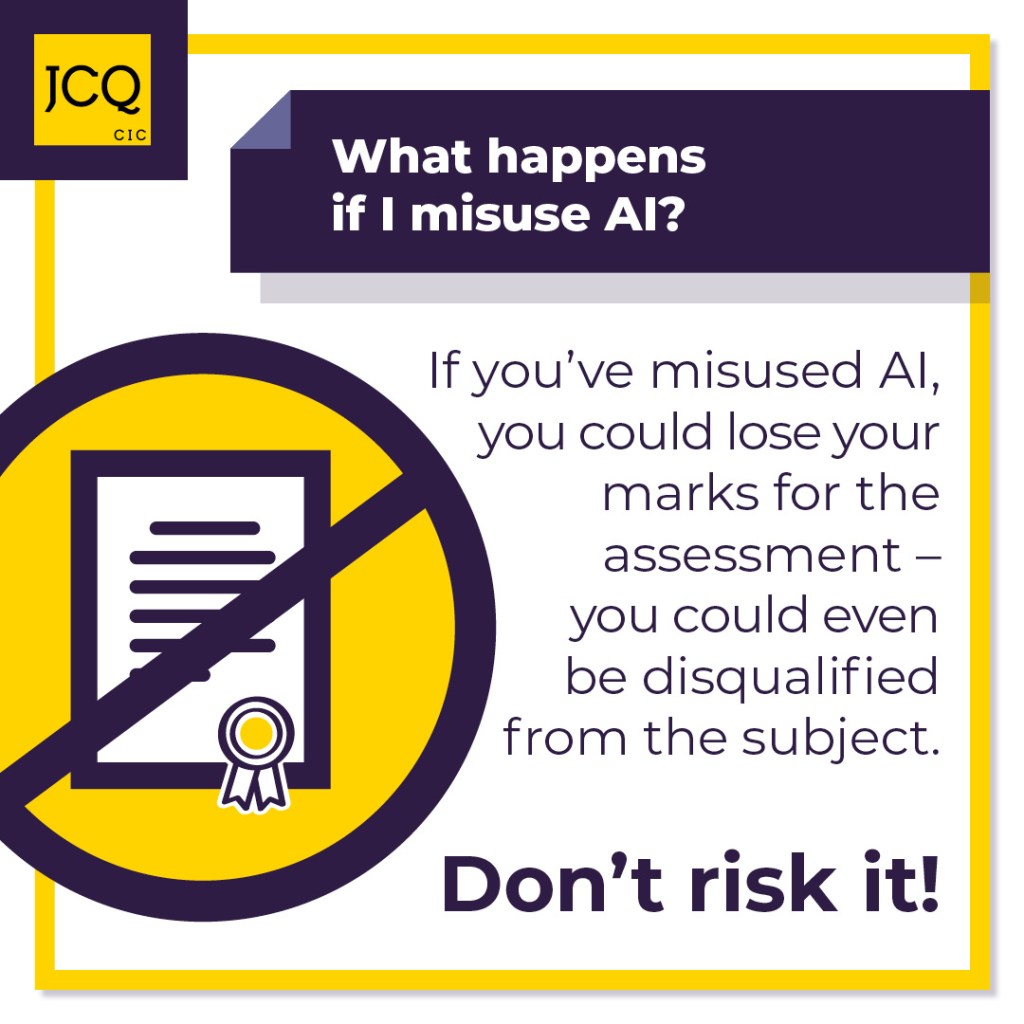
Misuse of AI (copying, paraphrasing, or failing to acknowledge AI-generated content) is malpractice
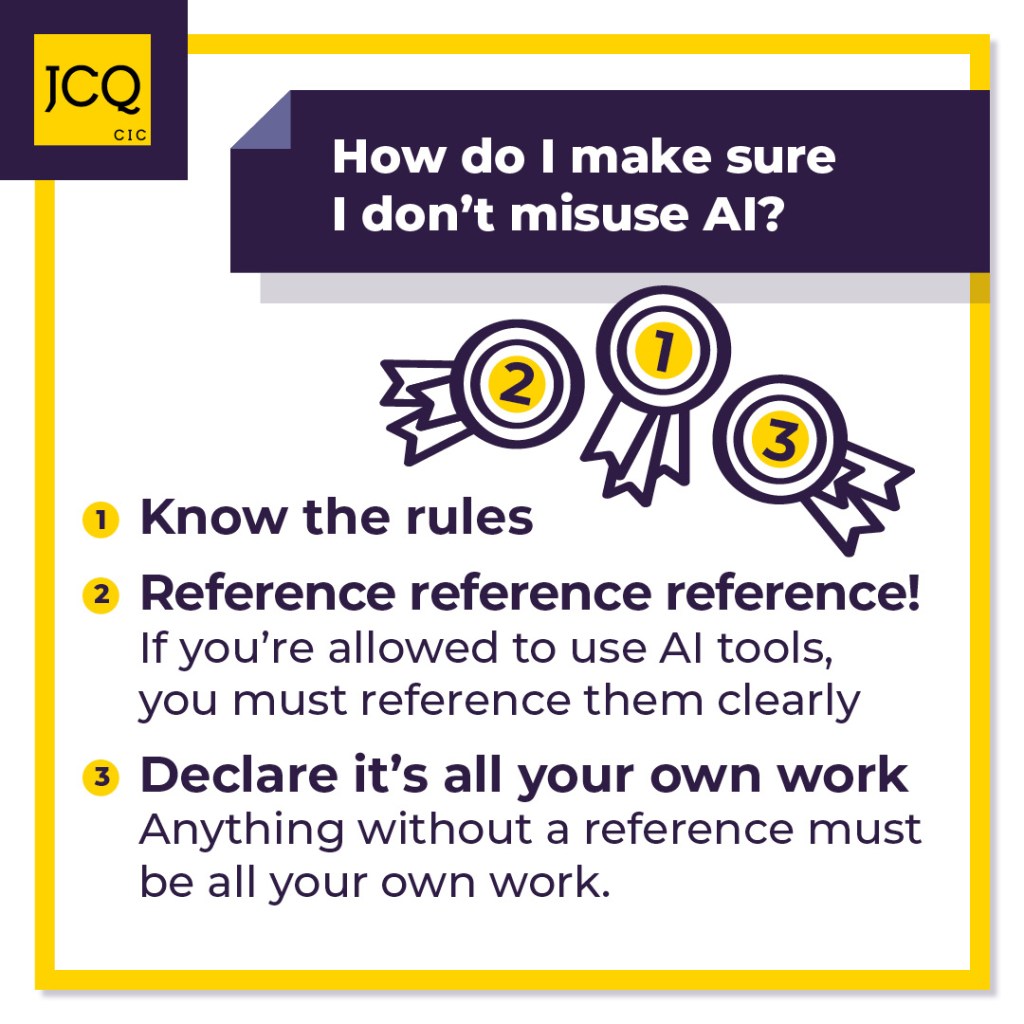
AI generated content must be properly referenced and reliance on AI will not earn marks.
AI misuse can lead to disqualification or a ban from future qualifications.
You must sign a declaration confirming your work is your own. False declarations have serious consequences.
AI is going to be part of all our lives as we move forward. Learning to use it correctly and properly is essential – and that means making sure we follow the guidance to ensure that the work we submit is our own, not computer generated.
Term 5 is a pressurised term – this year especially. It’s just five weeks from Easter to the May half term, with formal GCSE and A-level exams starting on May 6th. The exams suddenly go from seeming a long way off, to being…well, next week!
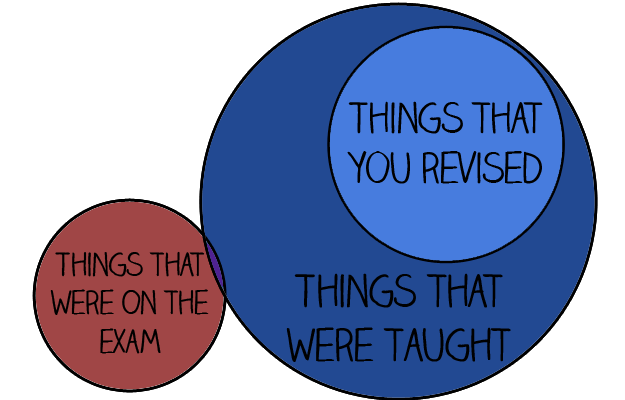
The final stretch of exam preparation is about finishing touches. Courses have been finished. Students have the knowledge and skills they need now to tackle the exams ahead of them. This final few days are all about honing exam technique to a sharp point: what exactly do the examiners want to see in an answer to this particular type of question? How can you manipulate what you know to squeeze as many marks as possible out of each part of the paper? How should you manage your time to ensure you leave enough to cover everything fully?
Our teachers are well versed in the art of exam technique. Exam preparation classes across the Academy are full of last-minute reminders about what to include, where, and how. In a exam situation, this is almost as important as the knowledge itself! This year, with our GCSE students, we will also be running subject-specific masterclasses in the days and hours before exams to give our students the final boost into their assessments, and these will continue online when students are on study leave in Term 6.
You can put yourself at an advantage by preparing well. Revision is essential, of course – you can find revision tips in the Revision category on this blog. But just as important is a good night’s sleep, and a healthy meal before an exam. An all-night revision session honestly won’t help as much as you wish it would – the brain works best when well rested and fuelled. Get to bed, sleep well, and have a good breakfast.
Once you’re in the exam itself, there are some general tips that I always swear by:
Be sure to answer all the questions – turn every page. Including the back page…yes, every year someone comes out ashen-faced when they realise there were eight questions, not seven.
Jot down your key ideas – don’t be afraid to do some rough work, or write down some key notes as soon as the invigilator says “you may begin.” Getting key ideas down will ensure that you remember them!
Write something for every question – if you’re not sure, make your best educated guess at the question. If you’ve written something, you’re in with a shout of some marks. If you write nothing – you’re definitely going to score zero.
Keep an eye on the time – you know how many questions are on the paper. You know how long you’ve got. Make sure you leave enough time to answer them all.
Check – use every minute of the exam. Check for silly mistakes. Check that you’ve written what you think you’ve written. Check for accuracy of spelling, punctuation, and grammar. Give yourself time to add in that extra bit that you forgot the first time through. It could make all the difference.
Exams bring stress and pressure with them – that’s an inevitable part of the process. Managing that pressure is an essential part of succeeding. Being well-prepared is the best way to ensure that the pressure works in your favour, rather than against you.
I hope these last minute tips have been helpful. Above all, I wish all our exam candidates the very best of luck. You deserve it.
Welcome back to a new academic year at Churchill! It has been great to see our staff and students as they have returned this week. Our new Year 7 and 12 students have settled really well, and our returning students have come back with a really positive attitude. It’s been a really calm start to the term – long may it continue!
Looking back over the summer, we have much to celebrate and be proud of. Our site team, IT network team, cleaners and a range of contractors have been hard at work upgrading and developing the Academy’s infrastructure.
The Sports Hall has been completely repainted and refurbished, including the changing rooms; our coach loop has been resurfaced; new site security features have been enabled; and every room in the Academy has been cleaned, refreshed, and prepared for the new term. Lots of work has also gone on behind the scenes in IT, improving WiFi, refreshing our systems, and making sure we are ready to go with the best possible hardware and software for our students.
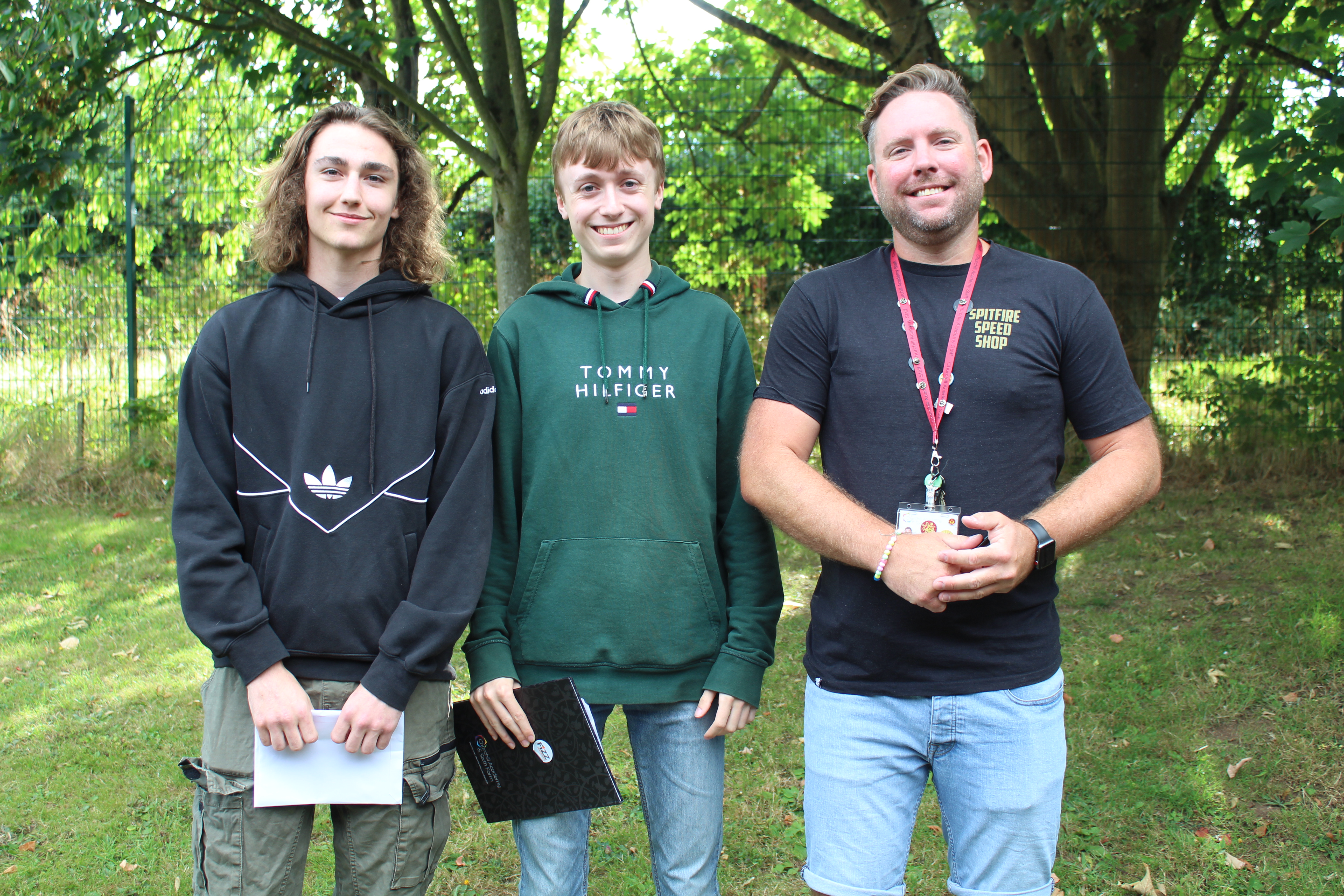
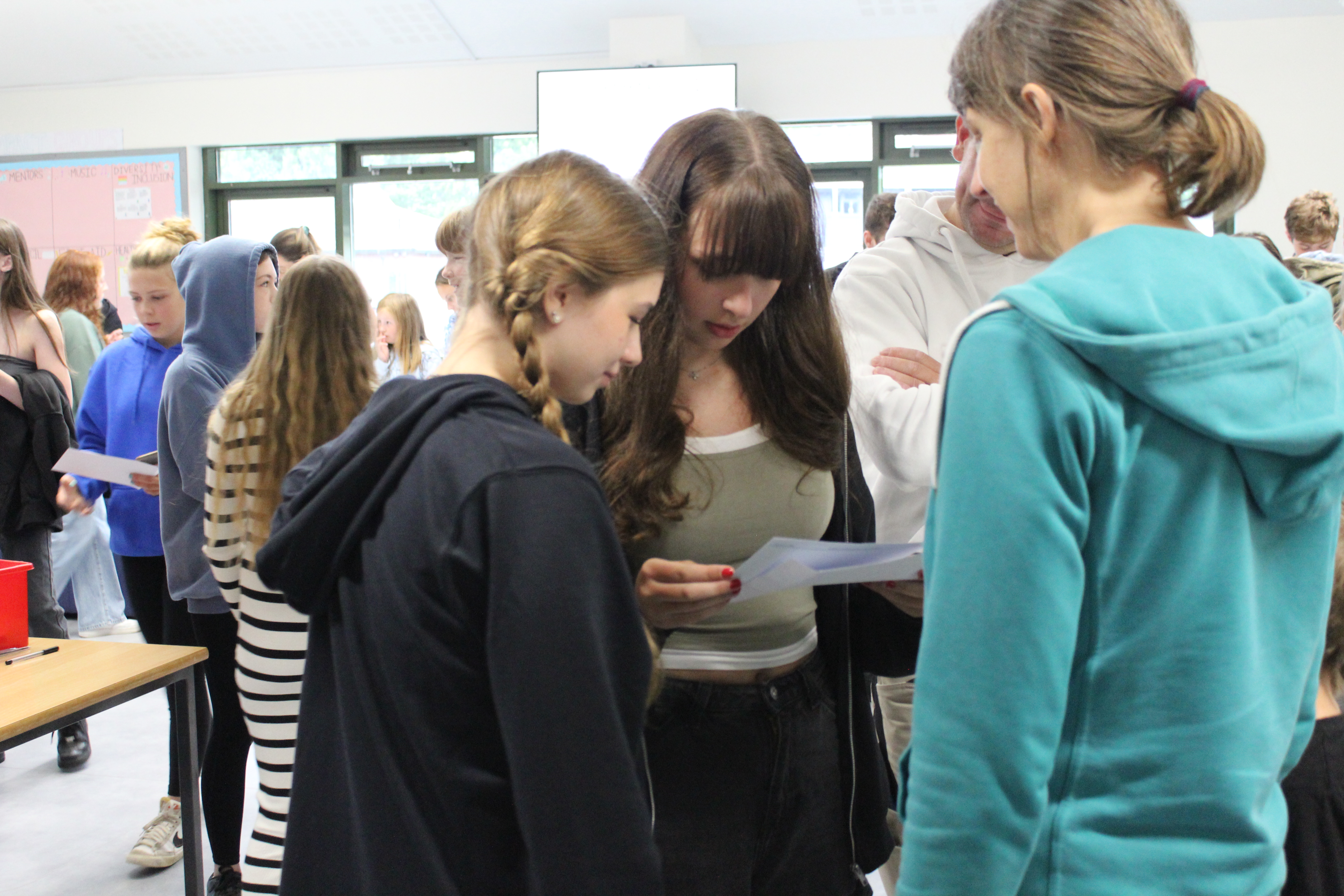
We also celebrated some excellent exam results over the summer, with A-level and GCSE students reaping the rewards of their hard work and dedication with proud smiles – as you can see below. You can read more about the results days on the website: GCSE results and Sixth Form results.
As I write this blog, the summer holiday is already vanishing in the rear-view mirror as we are up and running for the new academic year. Over the next few weeks we have our parent information evenings for each year group as follows:
The final stretch of exam preparation is about finishing touches. Courses are finished. Students have the knowledge and skills they need now to tackle the exams ahead of them. There is revision to do still, to make sure that the knowledge has stuck and can be pulled to mind accurately when needed. But This final few days is all about honing exam technique to a sharp point: what exactly do the examiners want to see in an answer to this particular type of question? How can you manipulate what you know to squeeze as many marks as possible out of each part of the paper? How should you manage your time to ensure you leave enough to cover everything fully?
You can put yourself at an advantage by preparing well. Revision is essential, of course – you can find revision tips in the Revision category on this blog. But just as important is a good night’s sleep, and a healthy meal before an exam. An all-night revision session honestly won’t help as much as you wish it would – the brain works best when well rested and fuelled. Get to bed, sleep well, and have a good breakfast.
Once you’re in the exam itself, there are some general tips that I always swear by:
Be sure to answer all the questions – turn every page. Including the back page…yes, every year someone comes out ashen-faced when they realise there were eight questions, not seven.
Jot down your key ideas – don’t be afraid to do some rough work, or write down some key notes as soon as the invigilator says “you may begin.” Getting key ideas down will ensure that you remember them!
Write something for every question – if you’re not sure, make your best educated guess at the question. If you’ve written something, you’re in with a shout of some marks. If you write nothing – you’re definitely going to score zero.
Keep an eye on the time – you know how many questions are on the paper. You know how long you’ve got. Make sure you leave enough time to answer them all.
Check – use every minute of the exam. Check for silly mistakes. Check that you’ve written what you think you’ve written. Check for accuracy of spelling, punctuation, and grammar. Give yourself time to add in that extra bit that you forgot the first time through. It could make all the difference.
Exams bring stress and pressure with them – that’s an inevitable part of the process. Managing that pressure is an essential part of succeeding. Being well-prepared is the best way to ensure that the pressure works in your favour, rather than against you.
I hope these last minute tips have been helpful. Above all, I wish all our exam candidates the very best of luck this year. You deserve it.
When we returned to school on Monday, there were 50 school days left until the first public examinations in the summer. Our Year 11 and 13 students are now on the final run-in towards their exams.
All our Year 11 students have been issued with a pre-exams booklet to guide them through the revision process. The booklet includes guidance on effective revision strategies, as well as helpful tools to enable them to plan their revision and monitor its effectiveness. Students will also find the exam dates, links to revision materials, exam specifications and practice papers in the electronic version of the booklet, which is available to all students in Google Classroom.
We expect all students to be completing independent revision. To help support this process, all students are receiving weekly supervisions from their tutors, Heads of House, key workers or members of the Academy’s leadership team. These supervision sessions are designed to support students with their revision, discussing the techniques from the booklet, helping structure revision planning, and reviewing the effectiveness of revision completed in the previous week. Conversations with tutors this week have been positive and productive, and our Year 11 students are focused and determined to do well.
Meanwhile, our Year 13 students are receiving their mock results from the practice exams taken just before half term. The feedback from these mocks is the key to identifying where to focus work over the coming critical weeks, as those with non-examined assessments (NEA) put the finishing touches to their submissions.
There is naturally a degree of anxiety in our students as they approach their exams. This is entirely normal and understandable: the stakes are high, and the results matter. This is why we will also be talking to students about managing their emotions, wellbeing, and ensuring that they stay healthy during this vital period of time. We know that students who don’t revise enough will underperform, but we also know that students who overwork themselves into a panic are also at risk of underperforming. A balance is essential: work hard, but stay healthy.
Whenever you get results back from a test, an assessment, or a piece of work, there are two competing priorities at work in your mind. On the one hand, you want to feel good. You want to feel proud of what you have achieved. You want your teacher, or whoever has assessed the work, to have recognised the effort you have put in and what you have achieved.
On the other hand, you want to learn. You want to know how to improve so that you can get even better next time. Your eye is instantly drawn to the questions you got wrong, to the notes in the margin, which tell you that you’re not quite there…yet.
It would be great to turn in the perfect piece of work, to get it back 100% correct, with full marks and a shiny gold star on it. That would feel amazing. But, as I tell students and their families when they join the Academy in Year 7, if you’re getting everything right then you’re not learning anything. The chances are the work wasn’t challenging enough: it just gave you an opportunity to show things that you already knew, or to practise skills you had already mastered. That has its place – but the real learning happens when you’re grappling with material you haven’t quite nailed down yet, or attempting a really difficult problem that you haven’t quite grasped…yet.
Researcher Dylan Wiliam calls these two types of response to feedback “ego-involved” and “task-involved.” When you get your work back, or receive some feedback, your ego is always involved. This is the part of your brain that wants to preserve your wellbeing. It wants you to feel good about yourself. It wants you to think you’re brilliant. The problem with this is that it gets in the way of learning. It means you will be afraid to try difficult and challenging tasks, in case you fail: it protects you from the damage to your self-esteem that failure can dish out.
In the other side, a “task-involved” response means that your first reaction when getting your work back is not to react emotionally, not to act to preserve your wellbeing, but instead to think. A task-involved approach means that you are analytical in response to your feedback, and focused overwhelmingly on the learning you can gain from it. Of course, you are interested in what you did well: it’s important to recognise the progress you have made, the hard work that’s paid off, and the knowledge and skills that you have secured. But you are also focused on the room for improvement: the silly mistakes you’ve made, the ideas you hadn’t quite grasped yet, the bits of knowledge you had misunderstood or not expressed clearly enough. And – crucially – you are focused on what you are going to do about it. How you are going to avoid the same mistakes next time. The bits of the course you are going to go back over. How you are going to improve.
It’s impossible to divorce the emotional “ego-involved” response altogether. It’s natural to feel disappointed if a mark isn’t as high as you wanted, or if you made a silly mistake that dropped you from one grade to the next. That’s normal! But, at Churchill, we work really hard to help our students to manage their emotional responses to feedback, and focus as rapidly as possible on the learning that comes from it. Because the only point in doing school work at all is to learn from it!
Over the coming days, our Year 11 students are getting their mock exam results back. There is a lot of emotion tied up in these results for our students, especially with the additional pressure that the pandemic has placed on mocks after two years of cancelled public exams. But the most important thing for our Year 11 students – and for any students, at any stage, getting a piece of work or an assessment back – is to focus on the learning. What did I do well, and how can I improve? What does this assessment tell me about where I am in my progress in this subject? And what do I need to do to make sure that I continue to get better?
The grade or mark you get on an assessment only matters twice in school: in your actual GCSE exams in Year 11, and in your actual A-level exams in the Sixth Form. At every other point in school, the grade or mark is not the most important thing: it’s what you learn from it.
In 2016, Luke Aikins became the first person to complete a planned jump from an aeroplane without a parachute or a wingsuit. Jumping from 25,000 feet, he sped earthwards before eventually landing in a net just 30m square.
Such behaviour might seem like complete madness to most people. The nerve required to take that leap of faith is unimaginable. But the experienced skydiver had been preparing for this moment for 18 months, as had the team around him. He had practised the movements he would need to make to adjust his freefall to hit the target precisely, and he had worked with gymnasts to rehearse the flip he would need to perform to ensure he landed safely on his back (you can see him practising the “flip” move at about 1:30 into the video above).
Meanwhile, the net was precision engineered to cushion his impact. Civil Engineer John Cruikshank had worked out the maths and physics required to slow the plummeting man from 193km/h to zero safely. The net was suspended high in the air from four cranes, supported by air pistons which would compress on impact. It took eight months of testing to be sure that the mechanism would work safely.
The landing site
I use Luke Aikins’ story when I am talking to students about preparing for their exams. Aikins has his team around him, supporting him, for the first part of his fall. These are teachers, friends, family. But there is a moment of truth – about 1:40 into the video for Luke Aikins -when you are on your own and you have to rely on all the preparation you have done to deliver the result you want. It’s just you and the task in hand. The better your preparation, the higher the chance of a good outcome. Of course, it’s never guaranteed: even with the best preparation in the world, things can sometimes go wrong. That’s why it’s never possible to take the stress out of such situations completely. But, if you know that you’ve practised, you know what you need to do, and you know how to do it, you will have the confidence to make the leap and land safely.
We all need to take a deep breath before we make our leap. But, if we know we’ve prepared as well as possible, it gives us the confidence to take that step and – as far as we can – to enjoy the ride.
Last week, the exams regulator (Ofqual) and the Department for Education published information about how exams will work in 2022. This included information about adaptations to exams to accommodate the impact of the COVID-19 pandemic on education, the standards which will be used to grade examinations in 2022, results days, and contingency plans in case the pandemic further disrupts education this year. In this week’s blog, I have summarised the key announcements which affect Churchill students taking GCSE, A-level, Cambridge National, BTEC, Cambridge Technical and other qualifications for assessment in summer 2022. I have also recorded a short presentation for students, which you can view below.
Adaptations to exams
Ofqual and the Department for Education have recognised that the pandemic has significantly impacted the educational experience of students over the past two years. To take account of this, the following adaptations will be made to examinations in 2022:
GCSE English literature, history, and geography: there will be optional topic and content for these qualifications. This means that certain topics, normally on the specification for assessment, will not be required for the exams in 2022. At Churchill, this means:
GCSE English literature: the poetry anthology will not be assessed
GCSE history: Elizabethan England 1558-1588 will not be assessed
GCSE geography: paper 1, topic 3: challenges of an urbanising world will not be assessed
GCSE sciences: if necessary, centres will be allowed to deliver practical work in GCSE sciences by demonstration. We will not be using this adaptation at Churchill as we believe it is essential that students taking GCSE sciences experience practical work themselves, rather than simply seeing it demonstrated.
A level sciences: centres will be allowed to assess the Common Practical Assessment Criteria (CPAC) across the minimum number of practical activities required to enable students to demonstrate their competence in A-level biology, chemistry, and physics. We will not be using this adaptation as we believe it is important for our A-level scientists to experience the full range of practical work available to them with our state-of-the-art equipment and facilities in the Athene Donald Building. We believe that this will support their progress and lead to better examination outcomes.
GCSE and A-level art and design and textiles: students taking GCSE, AS and A level art and design (including textiles) will be assessed on their portfolio only, with no final examination.
Advance notice for all other GCSE, AS and A-level subjects: exam boards will provide advanced information about the focus of the content of exams for all GCSE, AS and A-level subjects except GCSE English literature, history, and geography by 7 February 2022 at the latest. This is normally the time by which the majority of courses of study have been completed, and teaching turns to exam preparation and revision. This adaptation means that teachers and candidates will know which topics will and won’t come up in the exams in the summer, enabling revision to focus just on those aspects which will be assessed.
Formula sheets: students will be given a formula sheet for GCSE mathematics and a revised equation sheet for GCSE physics and combined science. This means that they will not need to memorise so many formulae and equations in preparation for the exams – although they will still need to know how and when to use them correctly.
We think that this is a reasonable and fair set of adaptations to take account of pandemic disruption. It will relieve pressure on the intensive revision period through the spring, enabling students and their teachers to focus on the content they will need for their exams in the summer.
Grading standards
There has been much discussion about what standard will be used to assess examinations in 2022. The “standard” essentially means deciding how many candidates should receive each grade in each subject – how many “A” grades, “B” grades and so on there should be (or the equivalent numerical grades at GCSE). A significantly higher number of candidates achieved the top grades nationally in 2020 and 2021 under the Centre Assessed Grades and Teacher Assessed Grades systems used in place of exams, than achieved top grades the last time exams were sat (in 2019).
Ofqual has announced that it intends to get back quickly to how grading was before the pandemic. However, to recognise the disruption from the pandemic, they won’t do it in one jump. Instead, 2022 will be a transition year to reflect that we are in a pandemic recovery period. The standard set by Ofqual for 2022 will reflect a point midway between 2021 and 2019 when it comes to grading, before returning in 2023 to results that are in line with those before the pandemic began. Jo Saxton, the Chief Regulator, explains the rationale for this decision in a blog on Ofqual’s website, which you can read here.
We feel this is a reasonable compromise, with a return to normal exam standards preceded by a transition year which recognises the disruption caused by COVID-19. It means that more top grades will be available to students in 2022 than was the case in 2019, or than will be the case in 2023. All students, across England, will be competing across the same exam papers to achieve those grades.
We do not yet know what this midway point between 2021 and 2019 will look like on a subject-by-subject basis. Exam boards will use data as a starting point, to align their standards in a subject. But the grade boundaries for each subject will be set by the senior examiners after they have reviewed the work produced by students in their exams – these boundaries will not be available to teachers or to candidates in advance.
UCAS predicted grades
For Year 13 students applying to university or other courses through UCAS, teachers have been advised to use the 2019 standards to determine predicted grades. This is because 2019 was the last time clear grade boundaries in each subject were published, so it is the only consistent standard it is possible to use. Here at Churchill we will use existing Year 12 assessments and the 2019 grading standards to generate UCAS predicted grades, although we will follow the regulator’s guidance to give any borderline students the benefit of any doubt in this process. Please remember, however, that UCAS predictions are made by teachers using their professional judgment and experience; they cannot be negotiated upwards by students or their families.
Results Days
Results days will be on:
Thursday 18th August 2022: AS, A-level and other level 3 qualifications
Thursday 25th August 2022: GCSE and other level 2 qualifications
Further details about the format of these days will be released nearer the time.
Contingency Plans
Having learned the lesson of the past two years, I am pleased to confirm that the government is drawing up contingency plans in case the pandemic takes an unexpected turn and exams cannot proceed in summer 2022 as planned. The current proposals are that Teacher Assessed Grades would again be used, but with much clearer guidance on the kinds of evidence that could be used to support the teacher assessment. This is likely to be based around mock exams in the majority of subjects.
At Churchill, we hope and expect that exams will go ahead as planned in 2022. However, all examination candidates, especially those in Year 11 and 13, should prepare for their mock exams as though they were the real thing. Not only will this provide a good evidence base in case of further disruption, but it will put students at a significant advantage in terms of revision and preparation for the summer.
The announcements last week confirm the plan for exams to go ahead in 2022, with some additional support to recognise the disruption to education that students have experienced. We believe these measures are as fair as could be expected in the circumstances.
Our message to students is this: your exams are going ahead. You know what you need to revise, and you will be able to focus this even more as you approach the summer. Listen to the feedback you get from your teachers, and use the revision techniques that you have been given and that will continue to be provided throughout the year. Don’t leave it all until the last minute: you should be revising consistently, a little and often, throughout this year.
Above all, keep a sense of balance and proportion: these exams are important, and we know they really matter, but you also need to look after yourselves. Make sure you are taking regular breaks, maintaining your leisure activities, and talking to someone you trust if you are struggling. We want you to get the best possible results, whilst staying healthy: keeping things in balance and proportion is your top priority. We will do everything we can to support you with this.
This year’s A-level results have been the most controversial ever, by a long way. But what exactly has happened? And what can we do about it?
How were the grades calculated?
When the Secretary of State announced on 18th March that schools would close, he also announced that exams were cancelled, but that “we will work with the sector and Ofqual [the exams regulator] to ensure that children get the qualifications that they need.” Detailed guidance followed.
Teachers were asked to provide a “centre assessed grade.” In the Ofqual guidance it says: “we asked schools and colleges to use their professional experience to make a fair and objective judgement of the grade they believed a student would have achieved had they sat their exams this year.” These grades were then moderated by the exam boards, using an algorithm designed by Ofqual, to ensure that grades in 2020 were similar (or “comparable”) to previous years.
Why were teacher recommendations so high?
Some parts of the media have accused teachers of assessing too generously, or trying to unfairly boost their own schools’ results. All of this is wrong. Firstly, no data on schools’ overall results is being collected or published this year. There are no performance tables – a welcome move, which has allowed teachers to focus on what really matters: the students and their results.
But, if teachers’ recommended grades had been accepted without moderation, nationally results would have risen: there would have been a 13% rise in A-levels awarded grade A*-B, which is an “implausibly high” increase. Why has this happened?
Put simply, teachers were asked to assess what they believed students to be capable of. Real exams assess how students actually perform on the day. If a teacher believed a student was capable of achieving an A in the summer, then they assessed that student at an A. If that student had sat the real exam, they may have achieved that A. But, if there was a particularly tricky question, or they managed their time badly, or they had a mental blank in the exam, they might not have done. They might have ended up with a B. So the teacher recommended grades were always going to be higher – that was baked into the system, and it is why some form of moderation was needed.
So how did the algorithm work?
The standardisation and moderation process is explained in Ofqual’s interim technical report, published on A-level results day. The report is 319 pages long, which gives you some idea of how complex the process is. It is called the Direct Centre Performance model (DCP). In Ofqual’s own words, it “works by predicting the distribution of grades for each individual school or college. That prediction is based on the historical performance of the school or college in that subject taking into account any changes in the prior attainment of candidates entering this year compared to previous years.”
What does this mean? If we take A-level Maths as an example, the exam board would look at what distribution of grades students from Churchill Academy & Sixth Form had achieved in A-level Maths over recent years. It adjusts that distribution based on the prior attainment (GCSE and other results) of the students taking A-level Maths at Churchill in 2020, and then makes a prediction of what grades it expects to see from Churchill based on that information. The algorithm then adjusts the teacher recommended grades from Churchill to fit the “expected” or predicted distribution of grades.
This is where one of the major problems has arisen. Whilst the algorithm is actually very sensible at a whole cohort level, it forgets that individual candidates are human beings and don’t necessarily fit the statistical prediction. They can surprise us – and, as a teacher, I know that they do, every single day. The algorithm doesn’t account for which students are really revising hard, which students have really pushed themselves, which students have suddenly found a new passion and understanding for a subject…it cannot possibly do this. So, instead, it irons out the students into the distribution that the algorithm suggests, almost completely ignoring the teacher recommended grades. The consequences are explained really well by Alex Weatherall in this thread on Twitter.
I was going to wait till tomorrow but I can't.
The U grades (and other large drops) appear to be the result of a rounding issue when assigning ranked students to their grades. It'll be hard to explain via tweet but I'll try.
Please bear with me as I use a simplified example.
It also means that schools which have historically performed well at A-level are at an advantage over those which have not. So students that were recommended A* can end up with a C. And, even more cruelly, students that were recommended to pass an A-level can end up with a U grade – failing an exam they hadn’t even sat. Unfairness and injustice is baked into the system.
What about small groups?
An additional unfairness in the system is that statistical models can’t be applied fairly to small groups. In Ofqual’s own words:
“Where schools and colleges had a relatively small cohort for a subject – fewer than 15 students when looking across the current entry and the historical data – the standardisation model put more weight on the CAGs…there is no statistical model that can reliably predict grades for particularly small groups of students. We have therefore used the most reliable evidence available, which is the CAGs.”
From Ofqual’s Interim Report Executive Summary here.
If you happen to have taken a popular A-level which more than 15 students took at your school, you will have been subject to the algorithm. If your A-level choices were less popular, and fewer than 15 students took that subject at your school, greater emphasis was placed on the teacher recommended grades. Still more unfairness and injustice.
A particular example here is Maths (which a lot of people take) and Further Maths (which many fewer people take). This has resulted in many students nationally getting A-level Maths grades adjusted down, whilst their Further Maths grades go through as recommended, creating nonsensical combinations like a C grade for Maths and an A* for Further Maths.
A further inequality here is that in smaller sixth forms, you are more likely to have smaller cohorts of under fifteen taking subjects. Whereas in larger sixth forms – and especially in large sixth form colleges – cohorts are always larger than 15. Therefore the smaller the sixth form, the fewer adjustments have been made to the grades. So it isn’t even necessarily about which subjects you have chosen, but which school or college you happened to be studying them at.
What about appeals?
If you are unhappy with your grade, you have the option of mounting an appeal. This can be done if:
There is an administrative error and the wrong grade has been put into the system. [We haven’t found a single example of this at Churchill].
If your mock exam result shows that you are capable of achieving a higher grade than your final result.
At the moment, that’s it – there are no other grounds for challenging your result, unless you feel you were discriminated against. Mock exams are not the same from subject to subject, much less from school to school – they don’t always assess the full A-level content, they are much more about finding out what candidates need to focus their revision on in the run-up to the real exams than providing a solid grade. We expect mock results to be lower than final results – of course. In some cases, this route will help – but by no means in all.
The only other option open is to sit the full A-level exam in a special Autumn exam series. But who, honestly, could get a higher grade in October or November, without having been in a classroom since March? This is the longest of long shots.
So what can be done?
Currently, the government is saying nothing will change – but surely this can’t stand. The injustices are too great. I think the options are as follows:
Look again at the algorithm and improve the level of “tolerance” around the grade boundaries so that it prioritises the teacher recommendation when a student is being downgraded, especially if they are being downgraded by more than one grade, or moved down from a passing grade to a U.
Just scrap the whole thing and go back to the teacher recommended grades, like Scotland did. Although this would solve the human cost of all the disappointments, it would devalue the 2020 grades compared to previous and following years. An A grade from 2020 would simply not be worth the same as an A grade from another year. As Ofqual said themselves, the teacher recommendations on their own are “implausibly high” for all the reasons outlined above. It would solve the immediate problem – but create another one for the future.
Open up an additional appeals route for candidates who feel an injustice has been done, but whose mocks don’t help them. Again, a tempting route, but what evidence could be used to support such an appeal? In the end, it comes back to the teacher recommendation, and this route very quickly ends up the same as option 2.
My feeling is that Ofqual need to go back and look again at the algorithm, and account for the human cost of squeezing individual candidates into a statistical model that does not account for their unpredictability, their uniqueness, and their actual performance to date. They might have time to do this ahead of GCSE results next week. But, for some A-level candidates, it is already too late – their university places have gone on the basis of results from exams they didn’t even sit.
Who is to blame?
Fundamentally, this is a government decision. As Laura McInerney said in her column for the Guardian today:
“Ultimately, young people have been caught in a farce presided over by an education secretary who let an obviously problematic results day go ahead with no clear plan and no appeals process. How did that happen? Civil servants busy on Brexit? On holiday? Did the exams watchdog not have the bottle to flag problems? I can’t fathom it.
But none of these questions help the Lilys, Matts, or Aatiyahs, or any one of thousands of young people, to understand how a baffling set of grades tanked their future and they weren’t given a clear way to challenge it.”
I feel deeply aggrieved for those individuals whose futures have been decided not by their own work ethic, revision, effort and learning, but by an algorithm. We will continue to make the case that what has happened is wrong, unfair, and unjust – and hope that the government listens.
Last April I wrote “How do the new GCSE grades work” to explain about the introduction of 9-1 grades for GCSE Maths and English. This year, 9-1 grades will be used in awarding a much wider range of GCSEs, with only a few remaining on the A*-G system. This blog provides an update on the new grading system for the class of 2018.
To help people understand the grading system, Ofqual (the exams regulator) have published this video:
The new 9-1 grades equate to the old A*-G grades as follows:
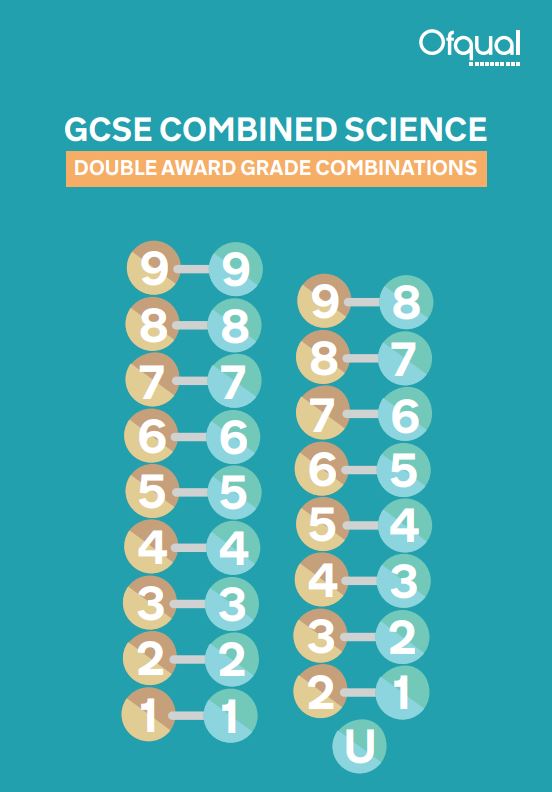
In combined Science GCSE (Double Science), candidates will get two number grades in a variety of combinations as shown below:
GCSE Double Award Science grades from 2018
In other words, double Science students will get results like 7-7, 7-6, 6-6, 6-5 and so on.
How are the grades awarded?
GCSE grades are awarded after all the exam marking has taken place.
Exams and coursework are marked according to the mark schemes issued by the examination boards. These only have numerical marks on – exams and coursework aren’t graded by markers. When all the marks for everyone who has taken the subject in the country are in, then the grade boundaries are decided according to a formula, so that roughly similar proportions of students nationally get each grade in each subject each year.
In other words, your grade at GCSE in the new system doesn’t just depend on how well you have done – it depends on how well you have done relative to all the other candidates in the country taking the same GCSE as you. If you are the top 20% of candidates in the grade 7 and above group, you will be awarded a grade 9. If you are outside that, you won’t. This will not be the same each year, and will change with each new group of students taking the exams every year.
This is significant because it means that if, nationally, lots of children do very well in the exam, the grade boundaries will move up. If it is a hard exam, and students nationally do not do as well, the boundaries will move down. This makes it difficult for teachers to predict grades accurately; we have to make our best professional judgment on the information available to us.
What does this mean for students?
The changes mean that it is impossible for teachers to say “if you do this you will definitely get a grade 5 or above,” because getting a grade 5 depends on how well everyone else in the country does relative to how well you have done. We can’t possibly know how well everyone else in the country has done or is going to do, so all we can do is teach you to get better and better at your own Maths, English, Science, History, Geography and all your other subjects, until you sit the GCSE exam. You have to keep working and pushing yourself to achieve more because what was good enough for a grade 7 last year won’t necessarily be good enough for a grade 7 this year. Don’t settle! You need to keep improving so that you go into the exam at the end of Year 11 fully prepared and confident that you are the best at each subject that you can possibly be – and then you will get the grade that you deserve.

















 The Headteacher's Blog