Manners Makyth Man

In my assemblies at the start of term 5, I spoke to our students about William of Wykeham. William was born the son of a free yeoman in around 1320, over 700 years ago. He rose up through society, the church and politics to become the Bishop of Winchester and Chancellor, responsible for the wealth of the kingdom under King Edward III and then King Richard II, the last Plantagenet monarch.
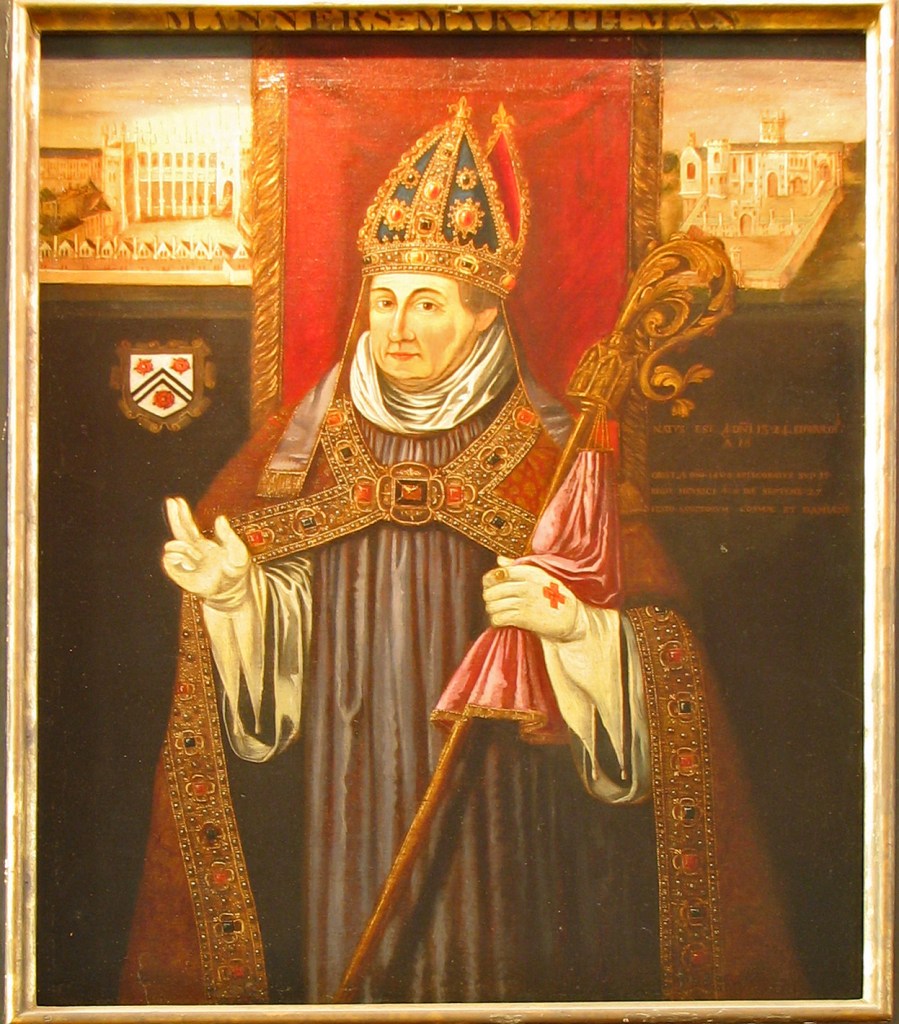
William of Wykeham (source)

As a result, William became a very wealthy man. He wanted to devote his wealth to ensuring that others could rise up from humble origins to great success, so he founded educational institutions including a school in Winchester, where he was Bishop, and a college in the developing university city of Oxford.
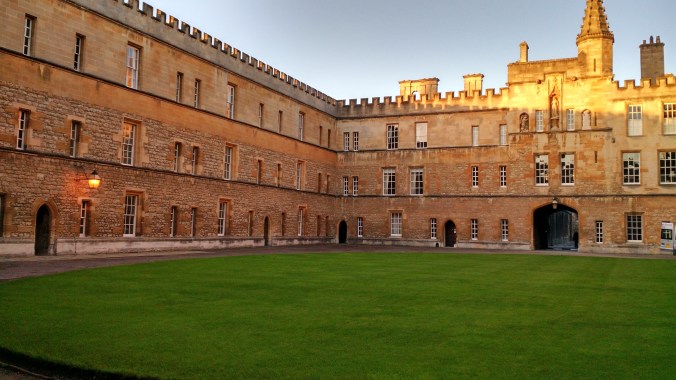
The old quad at New College, Oxford

At the time, the “Saint Mary College of Winchester in Oxenford” was a new college, and this identity stuck; the college is still called New College today, nearly 650 years after it was founded in 1379, which makes it (ironically) one of the oldest colleges in Oxford. William himself is commemorated in a statue over the gate, kneeling in worship of Saint Mary; you can see his restored statue in fresh stone in the image above.

So why are we interested in a Bishop who lived over 600 years ago? The reason is that William’s personal motto, emblazoned across the top of the frame of his portrait, the motto that remains the slogan of New College centuries later, still has resonance today.
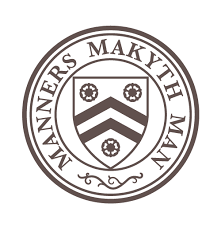
The emblem and motto of William of Wykeham and New College, Oxford: Manners Makyth Man

William’s motto, Manners Makyth Man, were words he lived by. Our manners are “a way of conducting oneself toward others” and “a person’s habitual behaviour or conduct.” That is, the way we treat other people, but also the way we behave by force of habit. Therefore, William’s motto can be translated as:

Manners Makyth Man: The way we behave towards other people makes us who we are

So what do good manners look like? I think there are some basics that are as true today as they have always been, and I went through these with our students in assembly:

  • Polite language
    • Greetings: good morning, good afternoon
    • Gratitude: please and thank you
    • Generosity: is there anything I can help you with?
  • Active listening
    • Show interest
    • Make eye contact
    • Give your full attention
  • Respect
    • Respecting personal space
    • Respecting visitors
    • Offering assistance (e.g. holding doors open)

We spent some time talking about how we can show respect in particular when we are meeting with visitors to our Academy – for example with our amazing student ambassadors who regularly give tours to families, candidates, visiting staff and others when they visit Churchill, and never fail to do a wonderful job!

I first encountered William’s motto when I was a student at New College, studying English Language and Literature in the 1990s. That simple creed – Manners Makyth Man – the way we behave towards other people makes us who we are – has stuck with me ever since, and informs my actions to this day. William’s legacy lives on, not just in the educational institutions he founded, but also in the words and ideas he left behind. Let’s all try to make sure that the way we behave towards others leaves a similarly positive, lasting impression.

Continuity through change

There has been a school on our site since 1956. Churchill Secondary Modern School opened on Friday, 20 September 1957. In 1969, the school became a comprehensive. In 1996, it became Churchill Community School, before adopting foundation status in 2007 as Churchill Community Foundation School and Sixth Form Centre. The school became an academy on 1 August 2011 as Churchill Academy & Sixth Form, the name it retains to this day.

This aerial shot from 1970 shows the original Tudor block in the right of the picture.

And it’s not only the name that has changed. The buildings have evolved, with old ones being demolished and new ones built to replace them; other buildings have been gutted and rebuilt from the inside out. We have embraced new technology, new developments in teaching and learning, and new approaches for our students.

The people in the school constantly change. Every year we bid farewell to one group of students, and welcome in the new. They grow through the school, joining us a children in Year 7 and leaving us as young adults from Year 13. It’s a constant cycle of growth and renewal which is one of the real joys of teaching. And, of course, the staff also change. I am the ninth Headteacher of the school on this site, with the longest-serving being Desmond Foster who was Head here from 1964 to 1983!

Aerial view of the Academy site from 2022

What doesn’t change is the commitment of the people who work here to the education of the young people who attend. Their dedication to do the very best they can for the students who are with us today is something that marks out the staff at Churchill from 1957 to 2024. So, although the buildings, the name, the people and the world around us might change, our school stays true to its purpose: to inspire and enable young people to make a positive difference, and to set no limits on what we can achieve.

D-Day: 80th Anniversary

Today is the 80th anniversary of the D-Day landings, which took place on 6th June 1944. D-Day was a pivotal Allied invasion during World War Two, marking the start of the liberation of Western Europe from Nazi occupation. Over 150,000 troops from the United States, Britain, Canada, and other nations landed on five beaches in Normandy, France, facing intense German resistance.

D-Day was the first day of Operation Neptune, a naval assault on the Normandy beaches,
and was part of the larger Operation Overlord – the largest sea and airborne invasion in history. Operation Overlord involved extensive planning, deception tactics (the Germans were misled into thinking the Allies would attack further east, near Calais), and airborne assaults. Despite heavy casualties, D-Day was a crucial success, leading to the eventual defeat of Nazi Germany.

Map of the D-Day landings

Alongside the naval assault, paratroopers landed behind the enemy lines to seize key roads and bridges to support the operation. In total, the operation included 11,000 aircraft as well as thousands of ships.

Into the jaws of death: allied troops landing on Omaha Beach on 6th June 1944

By the end of the day on 6th June 1944, the Allies had landed 156,000 troops ashore, but historians estimate that around 2,500 Allied troops had been killed.

Lieutenant James William Rollo Hildrew

I have a personal connection to D-Day, as my grandfather, James (Jim) Hildrew supported D-Day as part of the Royal Navy. He was involved in Operation Pluto, which stood for “pipe line under the ocean,” an operation to build submarine oil pipelines under the English Channel to support Operation Overlord. These pipelines supplied fuel from the south coast of England to the tanks, trucks and transports landed in France – an incredible engineering operation.

Every year I remember his contribution to the war effort and the freedom we now enjoy. He – amongst the thousands of others involved on the beaches, in the air, at sea and behind the scenes – helped to turn the tide of the war and bring an end to hostilities. When peace was eventually declared, my grandfather returned to his job as a teacher and, ultimately, headteacher – a family tradition I am proud to uphold.