Putting it all together

Over the Christmas holidays, my family and I always like to complete a Christmas jigsaw. We have a few 1000 piece sets that we’ve been given over the years, and it’s always a fun challenge to try and put them together to make the complete picture. You can see our progress below!

As we were putting the jigsaw together this Christmas, I was thinking about the Academy: how every piece is different and unique, but every piece needs to be in the right place, to fit, to belong, in order to make the complete picture. We work really hard every day to help ensure that students and staff are slotted in to help make the whole thing work.

But I was also thinking about how every individual is made up of thousands of tiny pieces. These micro-decisions, little things that make up our daily lives in school. I spoke to students in assembly last week about some of these component parts:

  • Lessons: including our favourite lessons and those that we find more challenging. Our curriculum is made up of lots of component parts which all work together to make a strong, deep and broad understanding of our world. Every single piece counts.
  • Social times: ensuring that the Academy is and feels safe, welcoming and friendly for everyone in it, is everyone’s responsibility.
  • Punctuality: we are particularly focused on this important life skill at the moment, and our students are working really hard to make sure that they are on time, every time.
  • Attendance: similarly, we have been really impressed by our students’ efforts to ensure that they attend school every day, every lesson that they are able to.
  • Extra curricular: both within school and beyond, the activities our students are involved in all add up to build their skills, knowledge, character and confidence.
  • Values: our values of kindness, curiosity and determination underpin everything we do, and work together to support character development in our students
  • Wellbeing: linked to last week’s assembly on sleep, we know that looking after ourselves is important. Diet, exercise, sleep and a balanced approach to health and wellbeing are all important.

In our school, and in ourselves, every single piece matters.

What happens on an inset day? November 2024

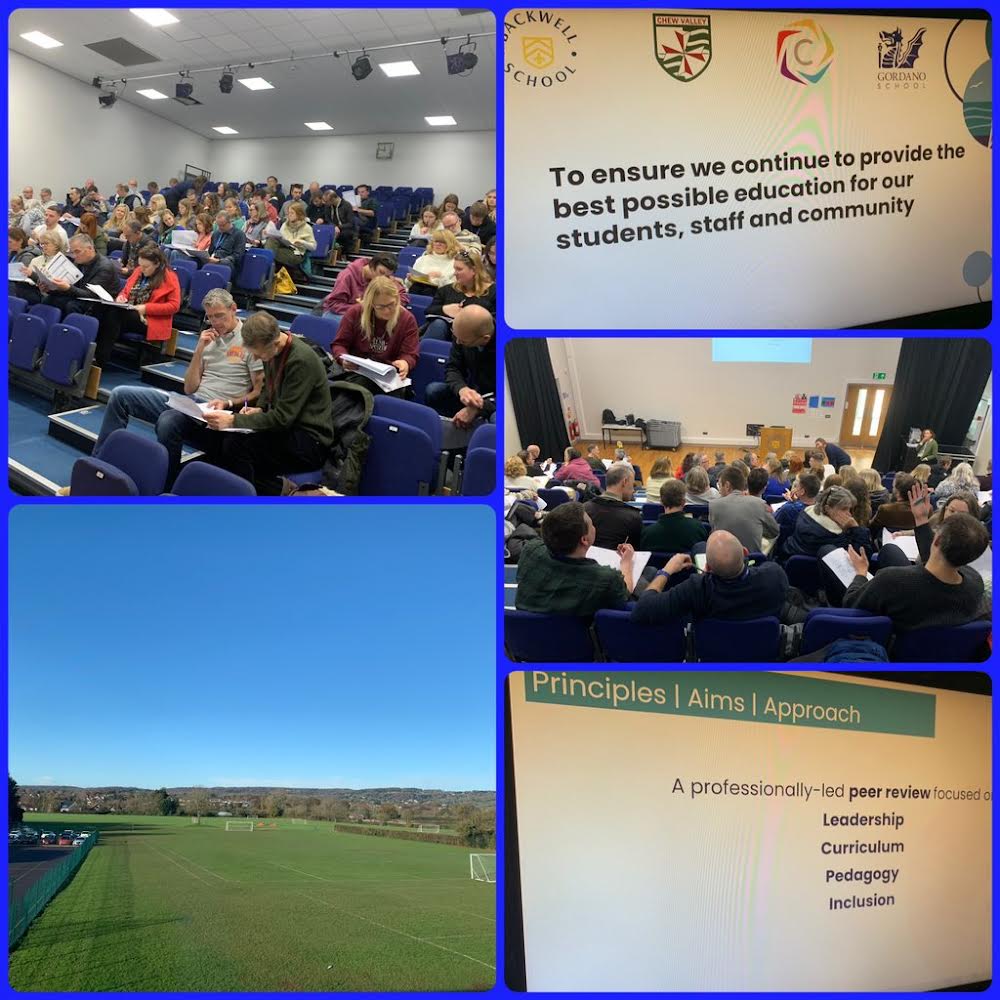
On Wednesday of this week, the four secondary schools in the Lighthouse Schools Partnership shared an inset day. Inset, which stands for “in-service training,” is a valuable opportunity for staff to refine their practice, collaborate, and develop their craft to ensure we provide the best possible education to our students. With staff from Gordano, Backwell, Chew Valley and Churchill all taking part, the day was a great success.

Subject and faculty leaders from across the trust all met at Backwell School. They met in subject groups to share lessons from analysing the summer’s GCSE, A-level and vocational exams results, to share strategies and techniques for ensuring the best possible outcomes for this year’s cohorts. This sharing of subject-specific expertise is invaluable, and all the schools in the trust benefit from these opportunities.

Later in the day, the subject and faculty leaders all came together for training in carrying out middle leadership reviews. This process sees subject experts from across the trust visiting one another’s schools to offer constructive critique, help identify areas of strength and development, and share practice to the benefit of all concerned. It is in these collaborations that the benefit of being part of a bigger trust are really apparent.

Meanwhile, back at Churchill, the day began early as we hosted the LSP’s business breakfast in the Pool Hall. Over 100 Business Partners and education colleagues attended to network, make connections, and collaborate. The main speaker at the event – Simon Lawrence OBE, General Manager of the National Trust Bristol Portfolio – provided an interesting and insightful reflection on the principles and values of ‘Servant Leadership’ that he has learnt throughout his military and diplomatic career.

Visitors also heard from Chew Valley School Headteacher, Gareth Beynon, who spoke about the importance of the outdoors when it comes to educating our children and young people. The event was closed by Sofia and Toby, from our own Churchill Sixth Form, sharing details of their upcoming trip to Madagascar.

Meanwhile, teaching staff were working on developing their questioning skills using resources from the Lighthouse Schools Partnership’s Pedagogy Framework. Questioning is fundamental teaching strategy, so getting the details right can be really significant in helping students to develop their thinking, practice key skills, and to help check for understanding. This was followed by a series of workshops on different aspects of SEND, to help us work more effectively with students with additional needs.

It was a packed day, with the importance of learning for staff at its heart: a great opportunity to refine and develop our practice across the trust to the benefit of our students. The next trust day – in February 2025 – will bring together all teaching staff from 33 primary and secondary schools in another day of collaborative learning. We can’t wait!

Training to teach

Trainees 2017

Churchill Academy’s cohort of trainee teachers 2017

This week I’ve had the privilege of working with our newest cohort of trainee teachers, who have started their teaching practice placements with us. Training the next generation of teachers is a vital part of the work of the Academy, and our school community is enriched by the new ideas and energy that our trainees bring to us each year.

I always wanted to be a teacher. My Grandad, both parents, my cousin and my uncle are teachers; it’s our family trade! As a teenager I did summer jobs teaching music and drama on performing arts and activity camps, and I did work experience in local schools. I went straight into a PGCE (postgraduate certificate of education) from University. I promised myself that, if I didn’t enjoy it, I’d stop – but I loved it, and I’ve never looked back.

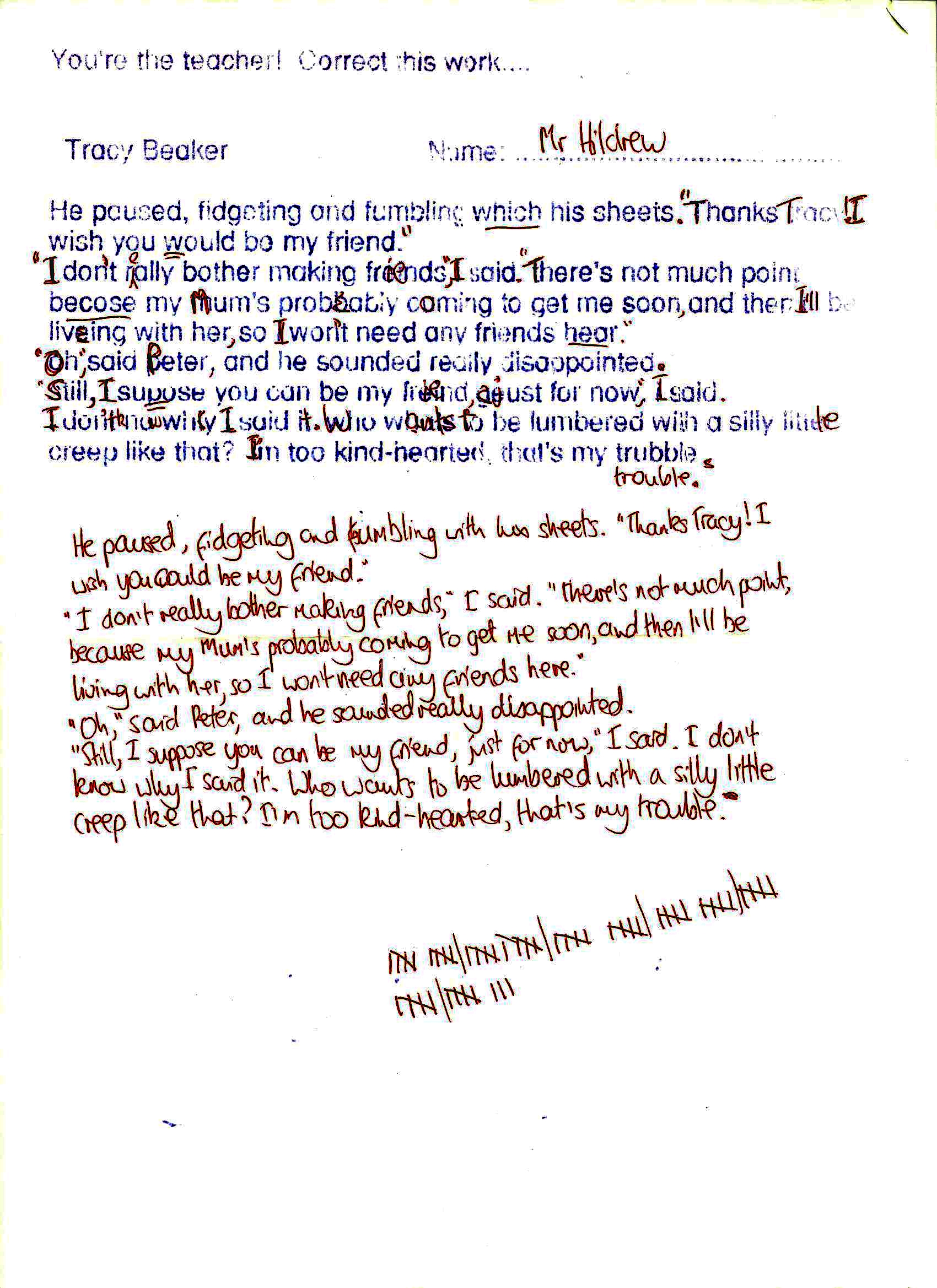
Even though I trained as a secondary English teacher, my course began with a two-week primary school experience. Where better to start than right at the beginning? I went to a primary school on the outskirts of Nottingham and worked with a mixed Year 5/6 class. I started with some small group work. I remember helping the class teacher hand-crank the Banda machine to get my worksheets off to do some technical accuracy work with a group of six hand-picked students. Here’s my crib sheet from my very first try at “proper teaching”:

pgce-0021

Hand-cranked Banda-machine worksheet from pre-photocopier days, in purple ink with red pen notes from my younger self!

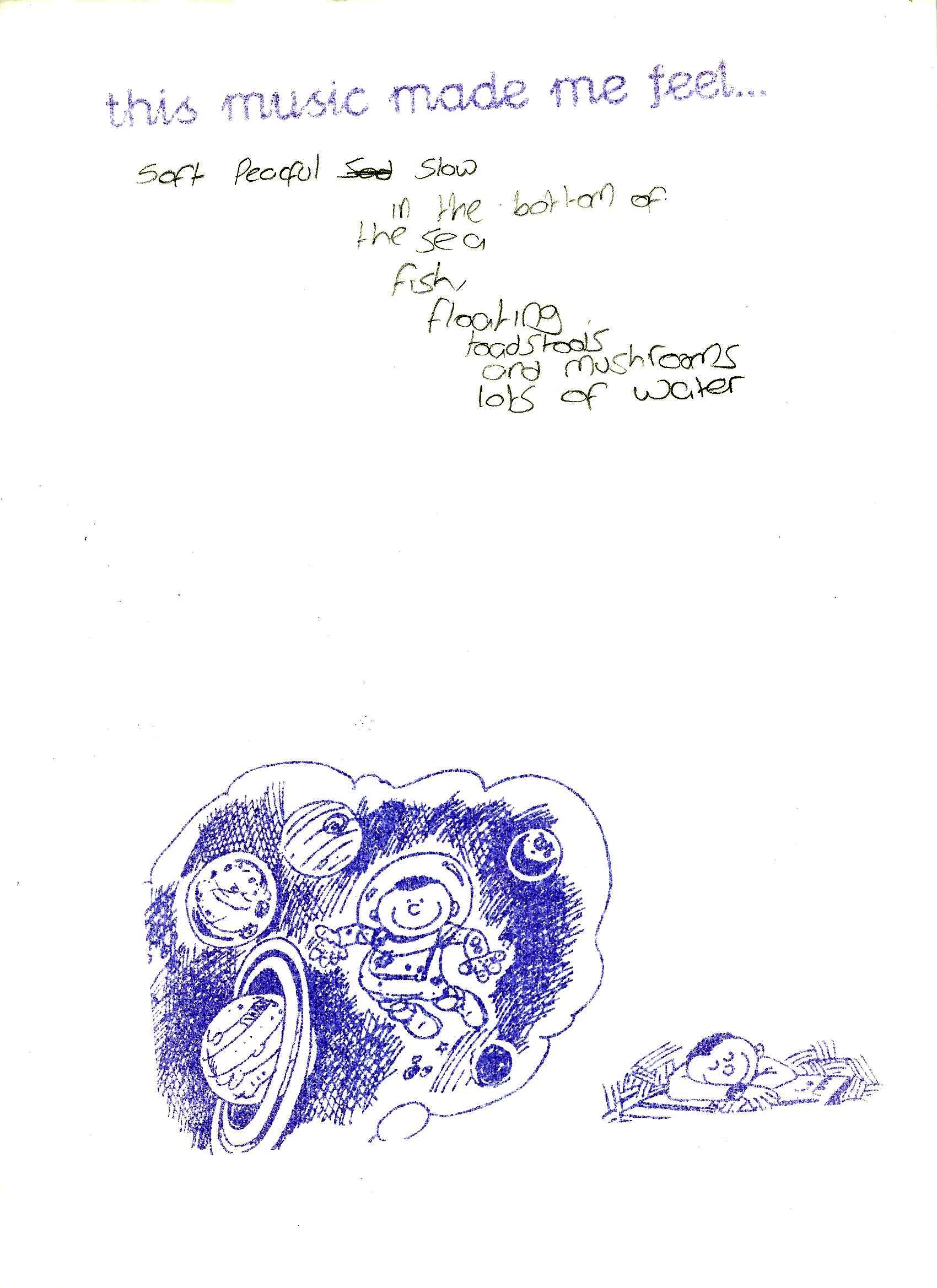
And then, in the last days of the fortnight, it was time to take the whole class. I was going to get them to do some creative writing based on a piece of music. I cranked the Banda machine, I planned my lesson with the class teacher, I psyched myself up. Then, the class teacher stepped out. It was over to me.

pgce-003

Worksheet from my first ever full-class lesson

I don’t remember much about the lesson, if I’m honest. What I do remember – what I’ll never forget – was the debrief with the teacher afterwards. “How do you think it went?” she asked, kindly. “It was okay…” I said, hesitantly. “And were you comfortable with the noise level?” she asked. A sure sign of a skilful teacher: giving me the opportunity to learn from failure and improve. Here’s what I wrote in my evaluation:

lessoneval

Evaluation of my first lesson

“I learned that success does not come from rushing into things, but from taking things slowly.” The first lesson wasn’t brilliant, but the second was better. I learned, very early on, that it’s okay not to get something perfectly right first time, provided you learn from it and do better the next time. This has stayed with me to this day.

My primary school experience journal ended with a series of reflection tasks. The final question was: “How do you now see yourself as a beginning teacher?” Here’s what I wrote:

future1

How I saw myself, as a beginning teacher, in 1996

“Ahead of me now I see a lot of hard work; an almost infeasible amount. However, my work with LF has given me a set of goals, and another role model to emulate, and my enjoyment of the experience has proved that no matter how high the mountains of work, the reward of a child proud of his or her success or achievement makes it all worthwhile.”

Nothing has really changed since then: there is still nothing better than seeing a student proud of what they’ve achieved. I’m quite envious of our new trainees: they have so much to look forward to.

*****

If you’re thinking of a career in teaching, there a lots of ways to get into the profession. We run School Experience Days at Churchill where you can find out what it’s like to be in the classroom, and learn more about routes into teaching. For more details, see the “Train with us” page on the Academy website.

Alternatively, the Get Into Teaching website gives all the information you need about training to teach. There is a free Get into Teaching event in Bath on Saturday 11th November 2017, where colleagues from Churchill and a range of local providers will be on hand to answer any questions about teaching or teacher training. Click here to register.

https://youtu.be/OhWWeNhkOcE

New Faces

We’re into the swing of the new school year now – the summer holidays seem like a long time ago! – and the new faces of our Year 7 students are already familiar as they approach their lessons with confidence and enthusiasm. But our Year 7s aren’t the only new faces at Churchill this September: we also welcome a fantastic group of new staff!

When I was training to be a Headteacher, I was given a lot of advice about how to improve and maintain high standards in schools. In one particularly memorable document, the following piece of advice was number one:

“The most important thing the Headteacher does is to find, recruit, develop and retain great teachers. You can’t play like Barcelona if you’ve got players from Brentwood.”

I’m sure that no disrespect was meant to Brentwood in that Headteacher’s advice, but it stuck with me! For Churchill to continue to be a great school, and to continue to go from strength to strength, the quality of the teaching needs to be the best it can be in every classroom, every day. That teaching needs to be underpinned by exceptional support staff in every role across the Academy. I am very fortunate to have inherited a school already packed with dedicated, highly skilled professionals doing a fantastic job with the students, and I am thrilled that this year’s new recruits have added to that strength.

new-staff-2016

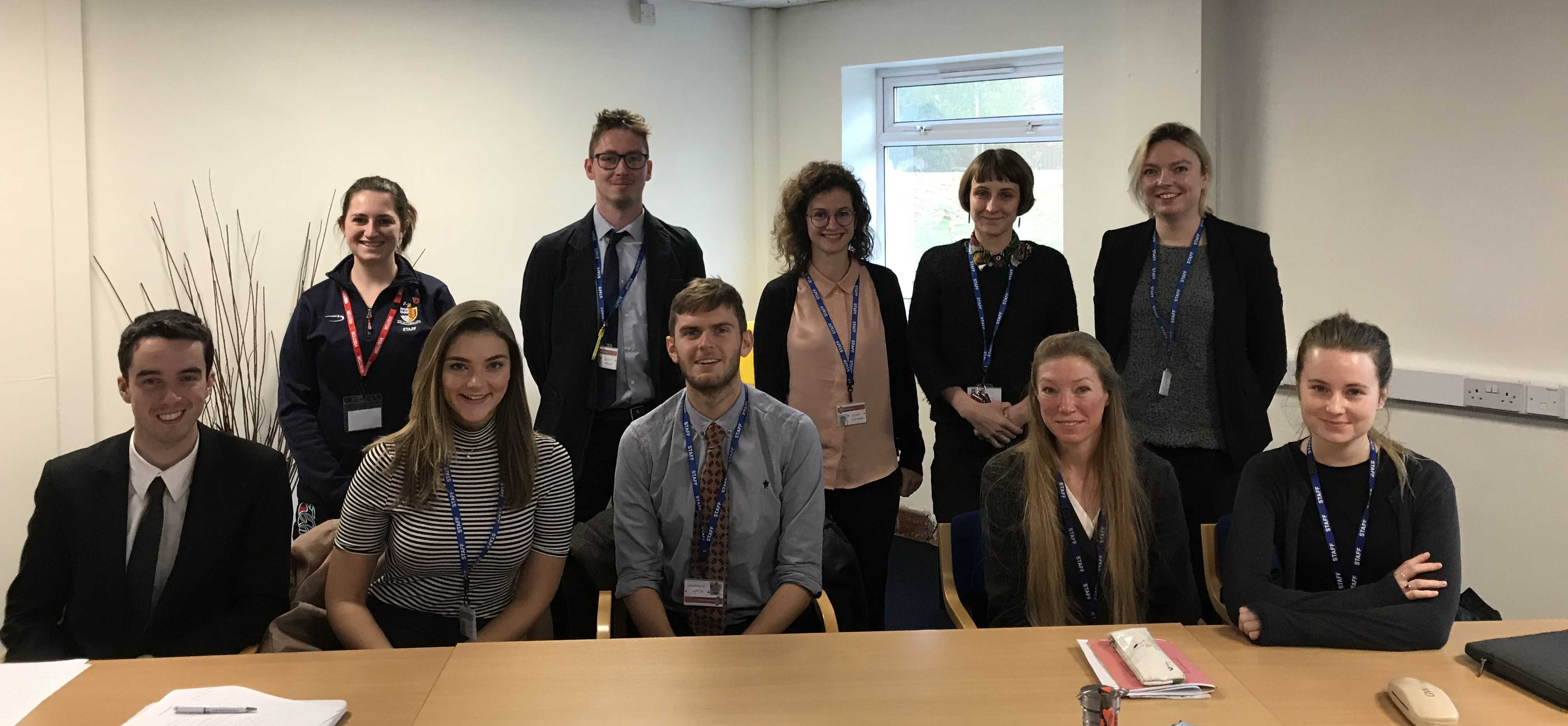
Some of our new staff at the “meet the Governors” event this week

It is especially gratifying to have such fantastic staff joining us at a time when teacher recruitment around the country is very challenging. I know of many schools – including some locally – with unfilled vacancies in key teaching posts being covered by non-specialists or temporary staff. Our reputation and the quality of our offer here at Churchill has meant that we have filled every teaching post with subject specialists, experts in their field, and fantastic teachers to boot! And our support staff has been strengthened by the recruitment of experienced, dedicated staff who have added to our capacity to ensure our students are able to learn to the best of their ability.

This year we are joined by:

  • Jon Bevan (Teacher of Geography)
  • Harry Church (Teacher of History and Politics)
  • Owen Davis (Teacher of Psychology and Sociology)
  • Joanne Dignum (Teaching Assistant)
  • Eric Evans (Teacher of Physics)
  • Chloe Harvey (Teacher of PE)
  • Lizzie Hudson (School Administrator)
  • Alison Innalls (Head of RE)
  • Maire McNeil (Stuart House Mentor)
  • James McWilliam Woods (Teacher of Maths)
  • Victoria Piper (Head of Maths)
  • Jacqueline Sims (Teacher of Modern Languages)
  • Jeff Spencer (Teacher of Music)
  • Adam Taylor (Teaching Assistant)
  • James White (Performance Technician)

After the Governors met with the new staff this week, the chair of our Finance Committee sought me out to tell me how impressed he was by their energy, positivity and enthusiasm, and he remarked on how lucky our students were to have these people working with them. I couldn’t agree more! So welcome to all the new staff joining us this September. We’re thrilled to have you here, and we’re very excited about all that you have to offer the students. I hope you enjoy your time at Churchill as much as me!