
Getting to grips with Google Classroom

Since the start of this academic year, we have moved all our homework and online learning on to Google Classroom. This is a hugely powerful platform for teachers and for students.

For students

Mr Hart helpfully prepared this “student guide to Google Classroom” earlier in the year to help our students get to grips with the system:

As well as Google Classroom, all students have access to a Google Drive with the full suite of apps: Docs for word processing, Sheets for spreadsheets, Slides for presentations, and a wealth of other apps integrated into the Google Suite.

Google Classroom also has a superb app, available for both iOS and Android for smartphones and tablet devices. This means that students don’t need to have a laptop (although Classroom works well on those too!) Work can be accessed online, completed on paper, and a photograph uploaded if necessary, all from a single device like a mobile phone.

For teachers

Google Classroom is fantastic for teachers. It enables teachers to set work, mark it online, and return it, all within the online Classroom. Alternatively, work can be set for completion and physically handing in. Behind the scenes, Google Classroom also enables teacher to keep track of marks, and communicate with students about their work.

Teachers can create assignments and add in all the necessary resources for students to work on. This can include a Google Meet if students are self-isolating. Students receive a notification when there is a new assignment and are able to “hand in” the assignment in on Classroom. Classroom sends a notification out to students once the homework is graded, so students can review grades and feedback.

Teachers can also share learning resources, reading materials, videos, links, and handouts. This allows students to refer to them at any time, or collaborate with their classmates on learning. Resources and assignments are saved in date order in the Classroom Stream, so students can always go back to revise what’s been covered.

Teachers can also send announcements to the whole class, which students receive via email. They also see these announcements when they log in to Classroom, through a web browser or Classroom’s mobile app, available on iOS and Android.

Students can message teachers directly with questions and/or comments on assignments and announcements in the classroom stream. Students can also collaborate with each other for team assignments by working on shared projects in Docs, Sheets, and Slides at the same time as each other.

For parents and families

Parents and families cannot log in to Google Classroom. Instead, you can opt in to get an email summary of your child’s work in Classroom, which includes information about upcoming assignments, missing work, class activities and projects.

We have found the best way to use the Guardian Summaries is to go through them with your children. It can be especially helpful if your child has the Classroom app with them on their phone, tablet or other device, so you can see what’s happening.

Ask them about the work they’ve completed: what did they find interesting about it? Ask them to explain some of it to you: if you understand their explanation, that’s a good indication that they’ve learned it well!

Discuss work with deadlines coming up with them too. Have they got a clear plan for the week ahead? When are they going to complete each piece of homework? Encourage them to ask questions if they aren’t sure, using the Classroom Stream, email or messaging aspect of the Classroom. This builds their independence and encourages students to take responsibility for their own learning. At the same time, make sure their messages and emails to staff have the appropriate tone: “Dear Mr / Mrs / Miss…” is a good way to start, and a “thank you” is always welcome!
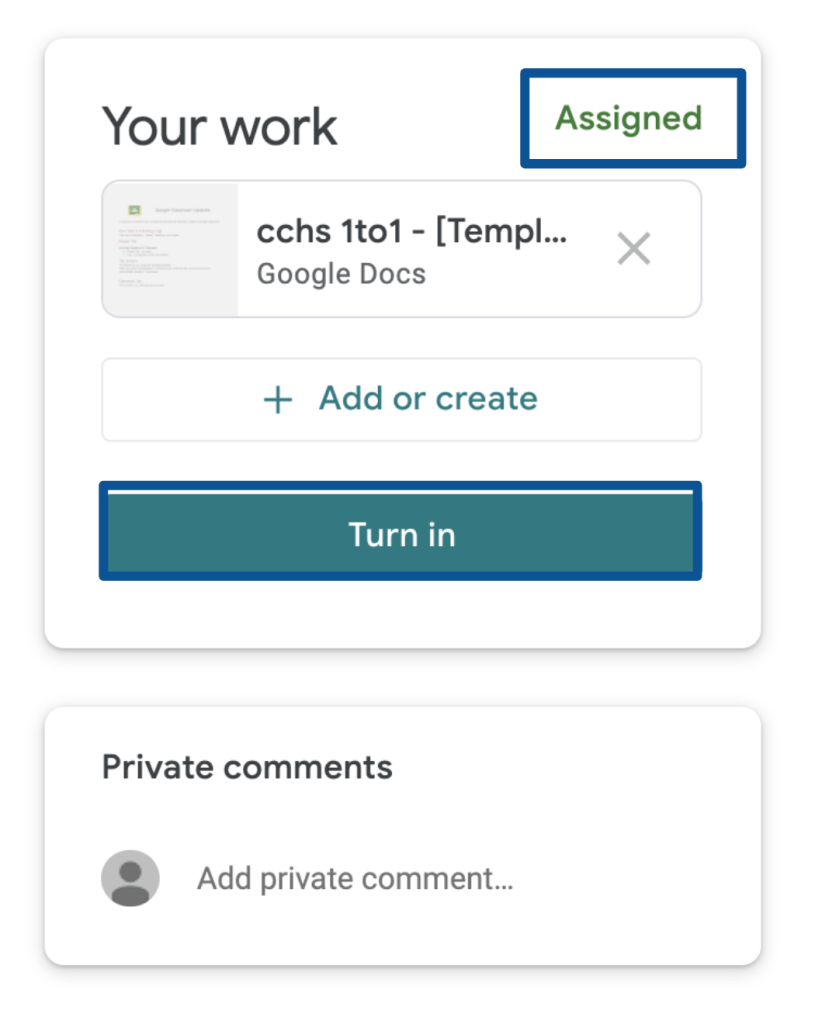
For work that is flagged as “missing” or “overdue” in your Guardian Summary, it’s worth checking that your children have clicked the “hand in” button for all their tasks. It’s easy to forget to click the “hand in” button on Google Classroom when students are handing in work on paper in the classroom! If work has not been completed, encourage your children to catch up, and to discuss any missing work with their teachers. We understand that, in these difficult times, sometimes deadline extensions are necessary – but we do expect all work to be completed.

As ever with any new system, we are learning all the time. All staff have had additional training this term, and we are all exploring the many features that Google Classroom has to offer. We’re sure we’re only just getting started!
When the pandemic hits

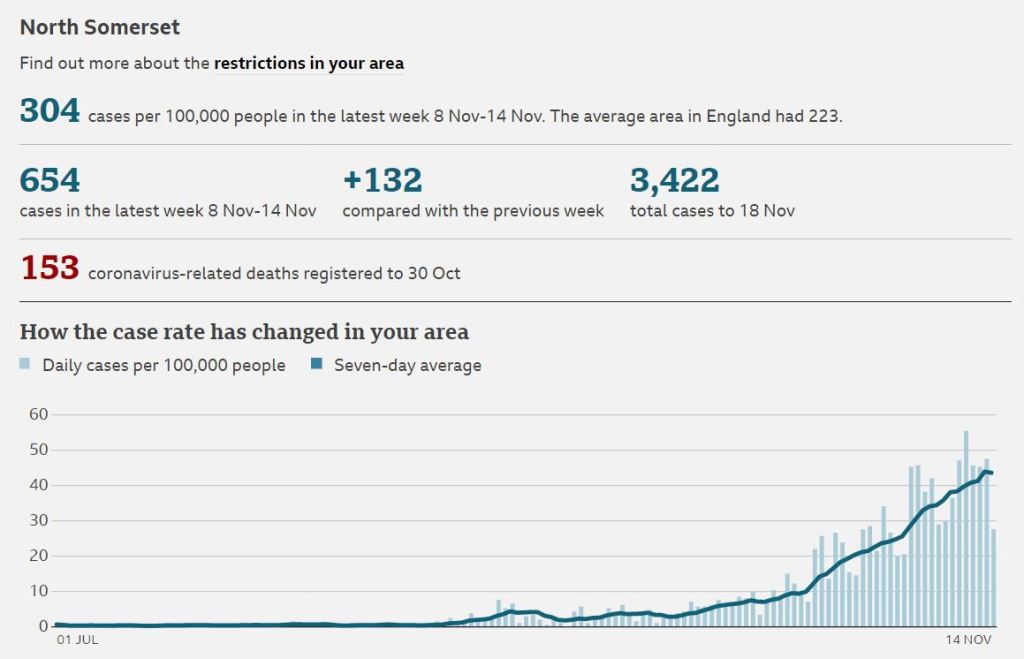
Nationally and locally, the impact of the pandemic has really ramped up since half term. From September, we have seen isolated cases, in both staff and students, resulting in self-isolations for contained “bubbles” of students across the first term. Since we have been back, the situation has felt very different.

Latest case figures for North Somerset from the BBC tracker (source)

Cases in November in Years 8, 9 and 10 have meant over 600 students from Churchill self-isolating at home as potential contacts. This picture is reflected in the national school attendance figures release this week:

  • Attendance in state-funded schools steadily increased from 87% in early September, to a period of stability of between 89 to 90% from 1 October to 15 October.  After half-term attendance was at 89% on 5 November but decreased to 86% on 12 November.
  • On 12 November, attendance in state-funded secondary schools is 83%, down from 87%. The drop in attendance is mainly due to the increased number of pupils self-isolating due to potential contact with a case of coronavirus. (source)

Everyone has been disrupted. Two of my three children have been sent home from their school this month to self-isolate due to positive cases in their year group bubbles. I really do understand it from both sides, as a parent and a Headteacher. I understand the frustrations. I understand the inconvenience. I understand the upset. I understand the anxiety.

None of us want to be in this position: we all wish it was different. But wishing won’t change the reality of education in the middle of a pandemic.

What happens when a case is notified?

In school, notification of a positive case launches a very clear but complex process:

  1. Contact the family: make sure we have all the correct information about dates, symptoms, test results, transport arrangements, attendance, and any social contacts.
  2. Run the contact tracing: we have a report in our Management Information System that pulls out all the students that are “contacts” with a named individual. We cross-refer this report with the student timetable and, if necessary, seating plans to identify students that need to self isolate. We also identify any staff contacts of the confirmed case to check social distancing, ventilation in the rooms, and any other issues.
  3. Seek advice: having run through the written guidance, I always check with the Health Protection Team that my interpretation is correct. They have been brilliant – always available with a prompt response and clear, helpful advice, including confirmation of dates and self-isolation durations.
  4. Prepare letters for the confirmed case, the identified contacts, and the wider Academy
  5. Contact parents and families of identified contacts: all other operations stop in the Academy office as every available colleague takes to the phones. If the notification comes out of hours, all available senior leaders work through the contacts from home.
  6. Organise collection: staff supervising the students use walkie-talkies to communicate with reception when individuals are ready to be collected
  7. Formal notifications: it’s my responsibility to notify the South West Health Protection Team, Department for Education, the local authority, school transport (if applicable), the Trust Board and the wider staff. These notifications never include personal details of the case – only that we have a confirmed case, the year group, the date of the test, and the number of contacts required to self-isolate.
  8. Follow up: often students who have not come up on our contact tracing self-identify that they have spent time with a confirmed case at lunch or break time. We check the circumstances of these contacts, and provide advice accordingly. At other times, the Health Protection Team want a follow-up discussion to check responses and offer support. There are sometimes further details to clarify, or further contacts to identify.
  9. Implement remote or blended learning: staff need to re-plan their teaching to accommodate full or part-classes learning remotely at home. Webcams, visualisers and other tools are used to provide live or recorded video content; Google Classrooms need to be updated with lesson content or learning tasks. We need to check staff absences or isolations, and ensure that any cover work is adapted to work remotely.
  10. Welfare checks: tutors begin the process of “touching base” with self-isolating students, addressing any issues with remote learning, health or wellbeing. These checks take place by phone or email, at least once a week during self-isolation.

This is our new reality. At any time, with one positive test, the whole process kicks into action. The ramifications spread far beyond the Academy, to all those families who have to drop everything to come and collect their children, reorganising schedules and arrangements at a moment’s notice.

It has to be this way. If we are going to protect the vulnerable, relieve the pressure on the NHS, and slow the spread of this virus, we have to take immediate action to isolate any potential contacts of a confirmed case. But the disruption is massive – and it’s not just happening at Churchill. Every single secondary school in our area has isolated large groups of students this term. And the South West – although cases are rising – is not the worst-hit region. In Hull last week, one in four children was at home self-isolating.

What can we do?

There has been much talk about implementing rota systems in schools, so that year groups only attend for two weeks at a time with two weeks off. This was proposed by the government back in August, and at Churchill we have a contingency plan for this eventuality if it is called for. But I can’t see that this will fix things: if a positive case is confirmed in a year group bubble that is on the rota to be in school, they will have to go home to self-isolate anyway. What then?

Year 7 under the canopy this week

To my mind, schools should stay open. For this to be sustainable, we have to protect ourselves as much as we can. We must rigorously stick to the covid-safe protocols in school, and the protective measures and restrictions in wider society. And, when a positive case is confirmed, we have to isolate the case and any possible contacts to prevent further spread. Until a vaccine is in wider circulation, this is our new reality.

Open during lockdown

I am writing this post on 5th November 2020, the first day of the new national restrictions imposed by the government to control the spread of coronavirus, protect the NHS, and save lives. This is the second wave, so we’ve been here before: except, this time, schools are staying open.

Year 7 in a group of 6 under the canopy

I will never forget March 2020, and the first lockdown. COVID-19 was new to all of us then. In the week ahead of closure of schools, student attendance dropped away. Significant numbers of staff were unable to come in, and we had to close – first to Year 12, and then to all students.

This time, some things are the same – but some are very different. The anxiety is still there, of course: but student attendance this week has been 95.7%. We are used to the routines of wiping down desks, hand sanitising, face coverings, and year group bubbles. And, as everything else closes down and society begins another month of “stay at home,” school carries on.

We are pleased that schools are staying open. We firmly believe that our students are better off in school: no matter how good remote learning is, there is no substitute for being in a classroom with an expert teacher. We know that it is there that our students will get the best educational experience, and make the best progress.

We also believe that the “normality” and structure of the school day is good for mental health and wellbeing. Of course, it’s not quite as “normal” as any of us would like: our extra curricular programme is severely limited; the cross-year-group work that is a hallmark of the Churchill experience has had to be suspended; we cannot hold in-person assemblies or run our programme of trips and visits; and the big events, concerts, presentations and performances that we look forward to are all on hold. But even so, the routines of a five-lesson day, seeing friends and continuing to learn in person is stable, reliable, and welcome.

The bottom field in autumn

This lunchtime, it was a crisp and clear autumn day. As I did my normal circuit of the Academy on duty, I saw Year 10 tearing round the 3G after a football, and throwing and catching, kicking up the autumn leaves, and booting a rugby ball into the bright blue sky above the top field. Year 8 were enjoying the wide open space of the bottom field. Year 9 were on the tennis courts, in small groups, excitedly discussing the sex and relationships education sessions they had had that morning. Year 7 were under the canopy, and up on the grassed area behind the library, their chatter filling the air as they prepared to deliver the speeches they’d been working on in the morning. And Year 11 were being Sixth Formers for the day, making the most of having the run of the Sixth Form Centre and trying out courses as they consider their post-16 options. It felt…well, it felt like a normal day at school.

The top field in autumn

Against the backdrop of strangeness and uncertainty, the familiarity was welcome. We have implemented multiple measures to minimise risk – but nothing we do can eliminate that risk entirely. Despite the uncertainties, despite the challenges, we are so glad the flag is still flying, and our Academy is still full of staff and students learning and working together. That’s how we like it: we will do everything we can to keep it that way.