Working with ASCL Council

Since 2019 I have been one of four school leaders representing the south west region on ASCL Council. This has been – and continues to be – a privilege and an honour. In this week’s blog I hope to give you an insight into what it means to work as part of ASCL, especially through the upheaval of the pandemic.

What is ASCL?

ASCL is the Association of School and College Leaders. It is a trade union and a professional association, representing more than 21,500 leaders of primary, secondary and post-16 education from across the UK. ASCL members are responsible for the education of more than four million children and young people and children.

As an organisation, ASCL speaks on behalf of its members, but acts on behalf of children and young people. This has been most clearly seen in the role of ASCL’s General Secretary, Geoff Barton, who is often seen and heard on the news putting the view of schools when an education story hits the headlines.

ASCL’s General Secretary, Geoff Barton

As well as being a trade union which provides advice and support, ASCL works on behalf of it members to shape national education policy- and this is where ASCL Council comes in.

What is ASCL Council?

Council is the policy making body of ASCL. It is made up of elected members, representing all the regions of the UK and all sectors of education, from early years and primary through to further education. The Council meets three times during the academic year to debate ‘hot’ topics, and agree the position that ASCL should take on behalf of it members. These positions are then used to lobby government to try and promote policies that are in the interests of schools and colleges, and point out practical difficulties in policy proposals coming out of government.

The main committees are:

  • Conditions and Employment which includes pay, conditions, recruitment, retention, workload, employer engagement, pensions
  • Funding 
  • Inclusion and Equalities which covers inclusion, equalities, closing the gap for pupils and staff, and performance of groups
  • Leadership and Governance which includes leader and teacher development, governance, inspections, and accountability
  • Curriculum and Assessment which covers curriculum, teaching and learning, assessment, and qualifications – this is the committee that I am a part of.

The work of the elected members of Council is supported by policy specialists. These are people who work specifically for ASCL, to take the views and positions of Council to government ministers and officials, Ofsted, Ofqual, exam boards and anyone else involved in education decision making, to try and influence those decisions for the good of the system.

I stood for election for Council in 2019. My aim was to make sure that the perspective of rural school was represented in policy discussions, which are often made in big cities and don’t always take account of schools in the countryside! I also wanted to play my part in representing my colleagues in the south west at a national level.

What have we done?

Since I have been part of Council, we have discussed such matters as:

  • The role of multi-academy trusts in the future education system
  • What role – if any – artificial intelligence could or should play in assessment and exams
  • The replacements for exams during the pandemic in 2020 and 2021
  • The Department for Education’s guidance on reading
  • The curriculum under the new Ofsted framework
  • How students could and should apply for university places
  • The role of BTECs and T-levels in the post-16 curriculum
  • The balance between central government control and school autonomy through the pandemic and beyond
  • How to ensure that education gives students from disadvantaged backgrounds the opportunity to achieve as well as their non-disadvantaged peers
  • The funding and provision for students with special educational needs and disabilities
  • The fairness of exam grading, where each year a third of students do not achieve a “pass” grade in English and Maths due to the way the system works

And so much more!

I have also been privileged this year to join the ASCL Executive Committee as the organisation’s Assistant Honorary Treasurer. This has given me a seat around the ASCL “top table” and provided me with an even greater insight into the engagement between the education sector and the politicians and officials responsible for the system.
Central to the work of the past few years has been the development and publication of ASCL’s Blueprint for a fairer education system. This key document sets out how we, as school and college leaders, would like to see the education system develop over the coming years

What have I got out of it?

I have had the opportunity to meet the previous Secretary of State for Education, Gavin Williamson, and his successor, Nadhim Zahawi, to discuss policy positions and provide feedback from the “front line” of education. I have also met with Baroness Barran MBE, the Minister for the School System, and Bridget Phillipson, Labour’s Shadow Secretary of State for Education. Often these are “Chatham House Rules” meetings so the discussions can be free and open. What has struck me about all these meetings is how willing the politicians are to listen. Although they don’t always agree with the position we are putting forward, I do see the impact of hearing things from people actually doing the job, day in, day out. So, whilst not all government education policies are received with rapturous applause by the profession or the general public, some of them are considerably better than they would have been due to ASCL’s intervention!

It has been fascinating to be involved in these high-level discussions about policy at a national system level. Thinking about the implications for all schools, not just my own, has made me think about how the education system works as a whole – and how that filters down to the staff, students and families of Churchill Academy & Sixth Form. Being part of this conversation also means that I am well-informed about policy decisions coming down the track, as well as the thinking, aims and intentions behind those decisions.

Council has also enabled me to make connections with school leaders across the country, including in Scotland, Wales, Northern Ireland, to understand how different schools are responding to the pressures and challenges of leading and managing schools today. I have learned a great deal from their approaches – and shared some of Churchill’s excellent practice with them in return. It is a genuine collaboration, and it means that we are able to support one another towards greater success in the future.
Welcome to the new Stuart House block

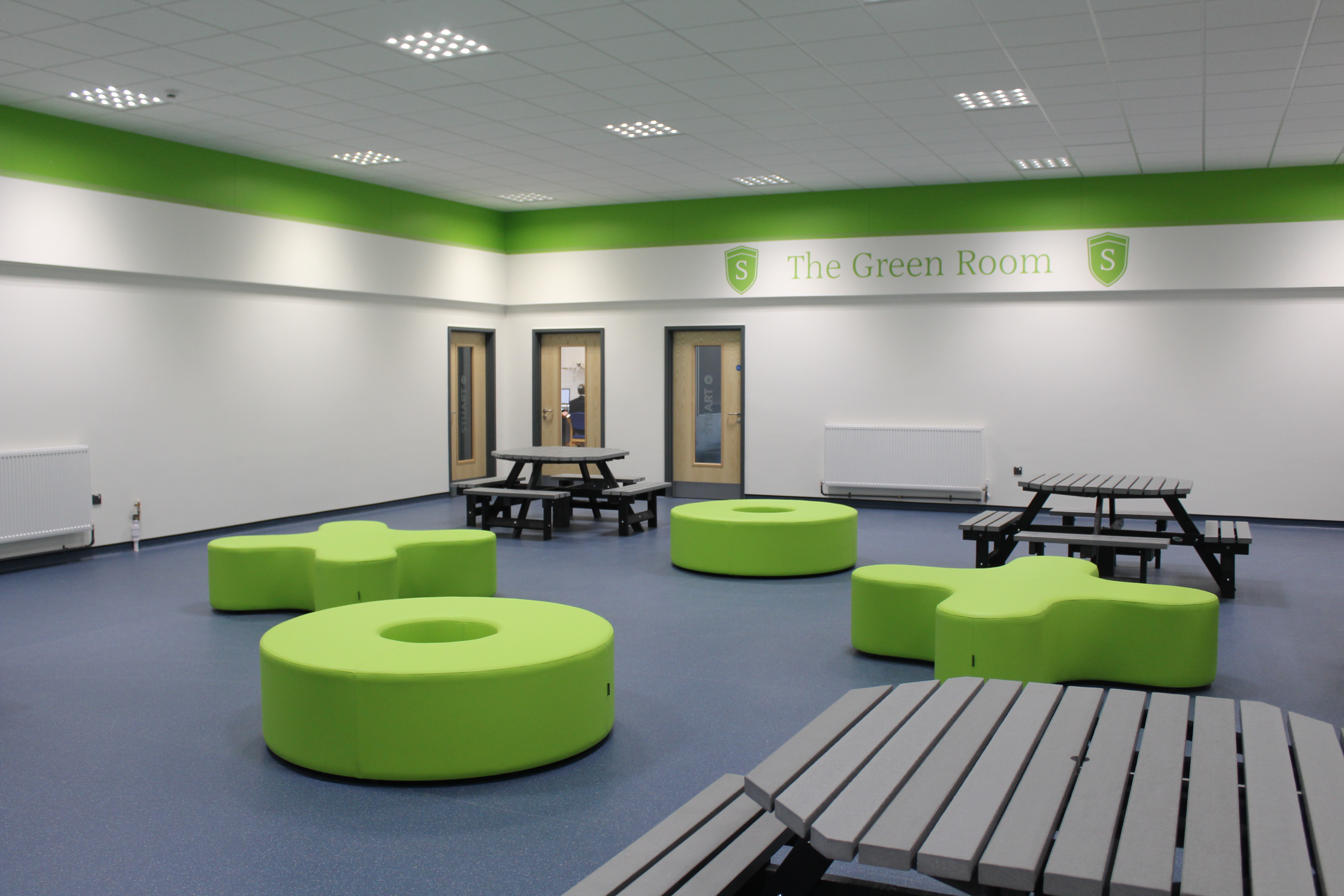
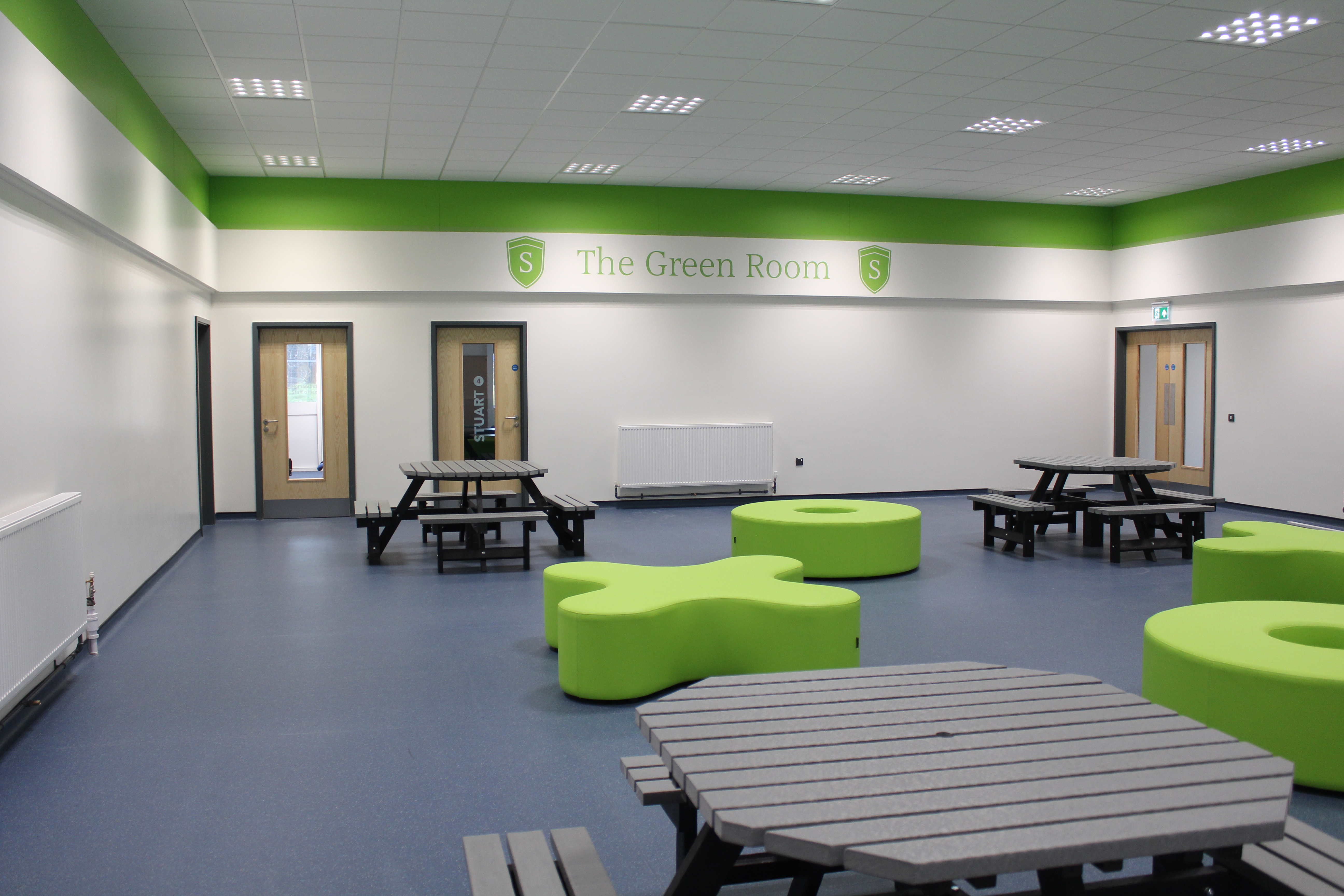
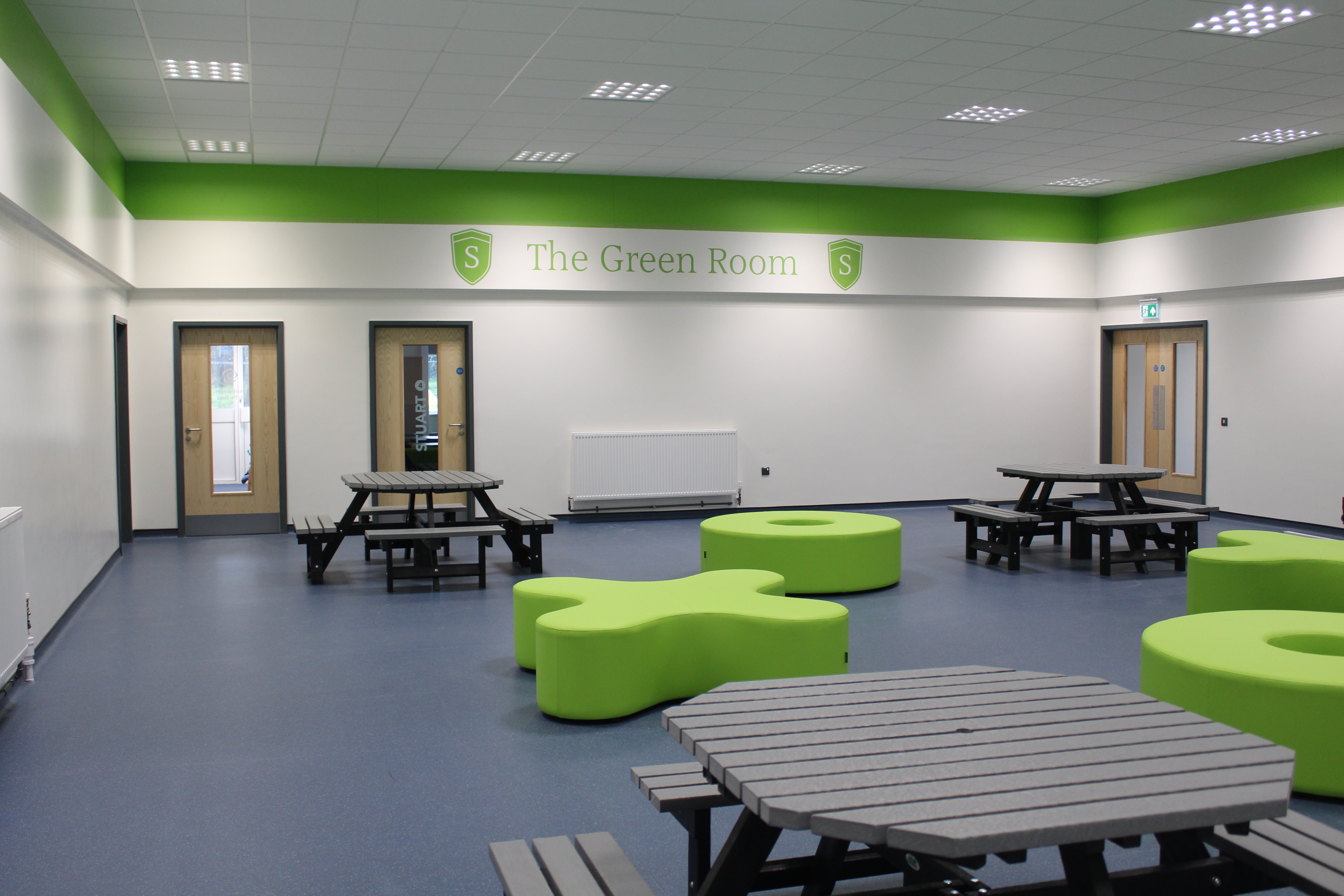
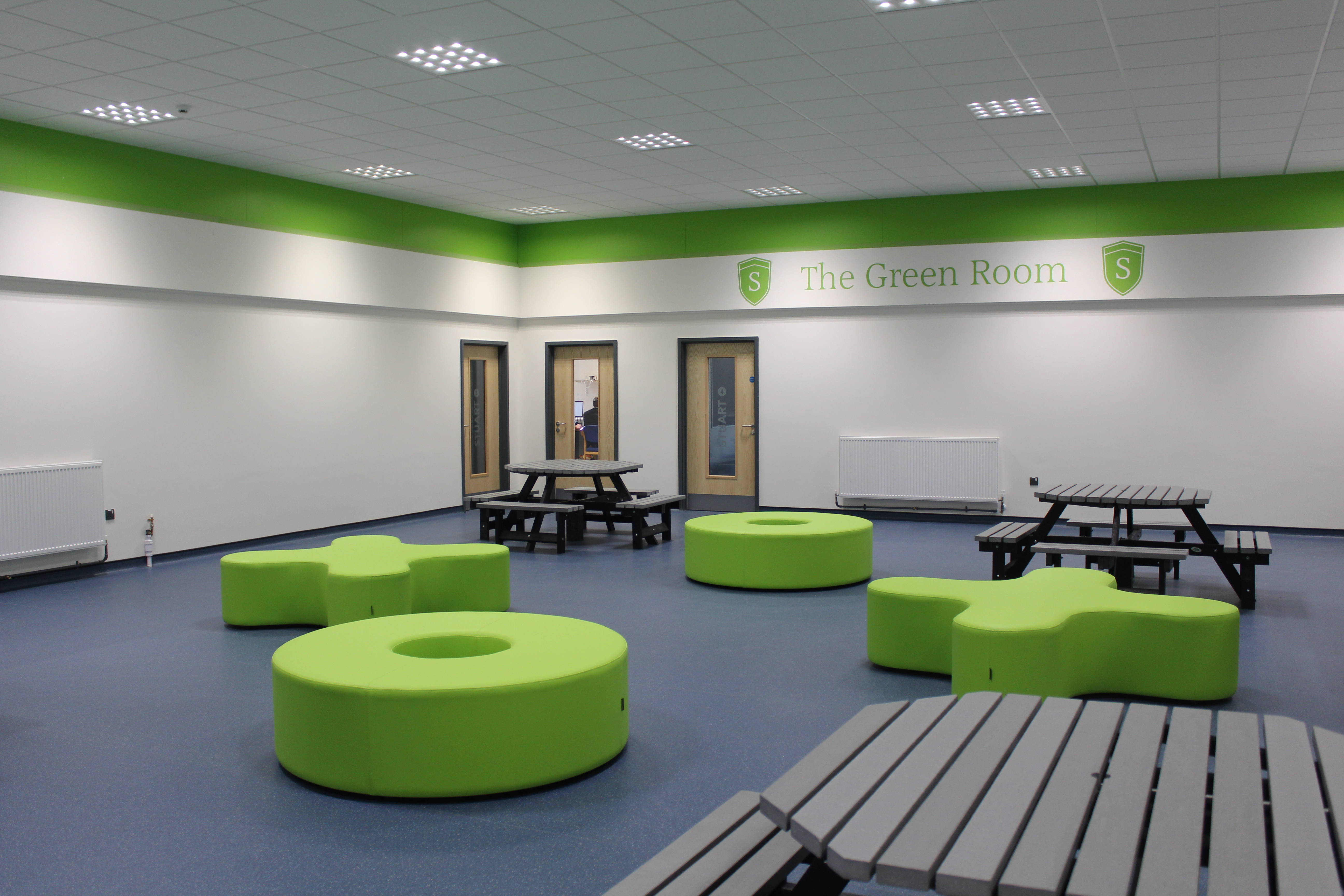
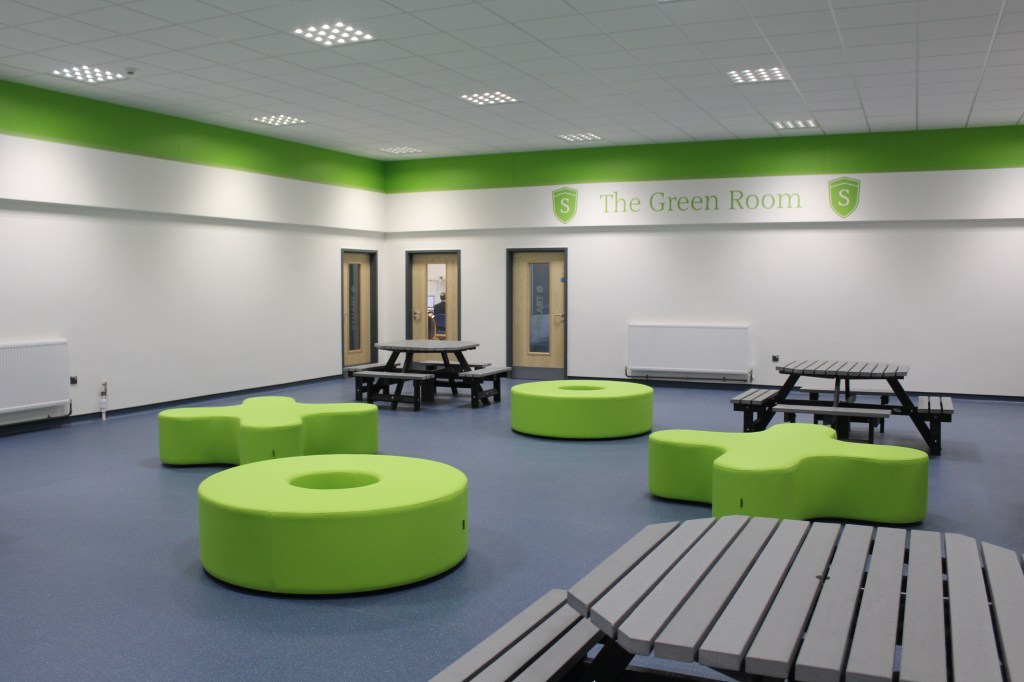
The Green Room in Stuart House, March 2022

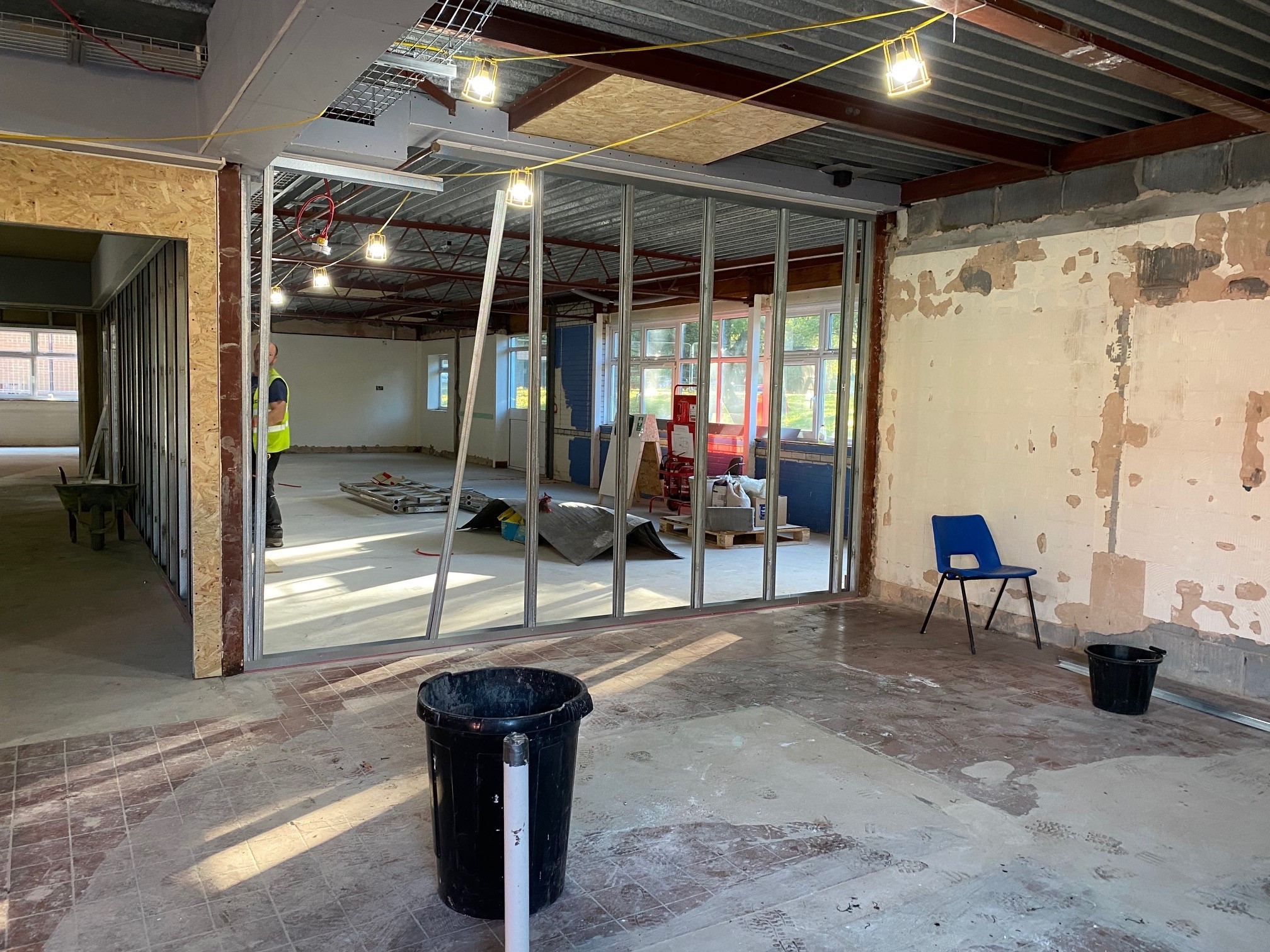
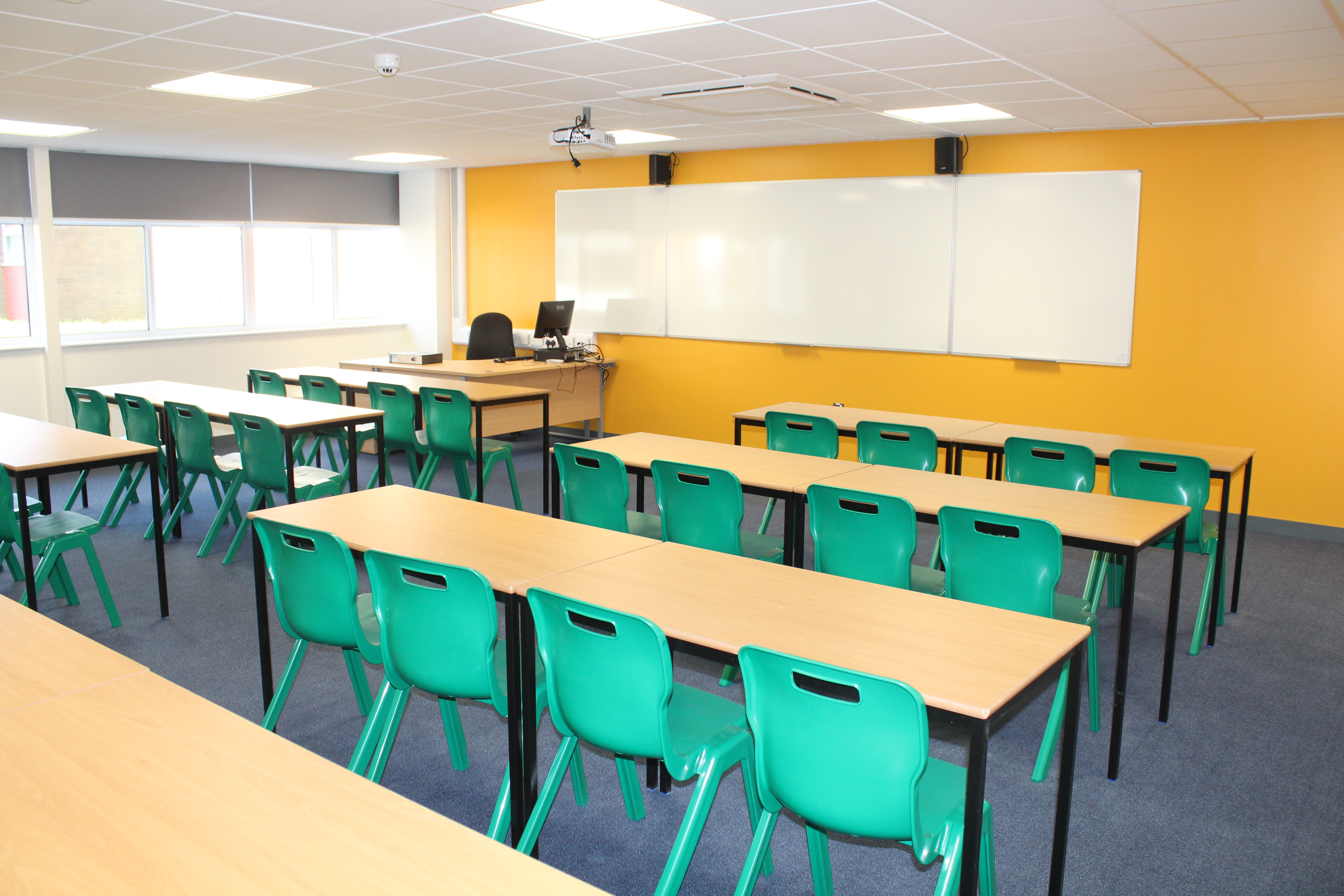
This week we have reopened the Stuart House block after a complete internal rebuild of the facility. The Stuart House tutors, and the Humanities teachers and their classes, have been spread across the school since September – but now they have a shiny new home!

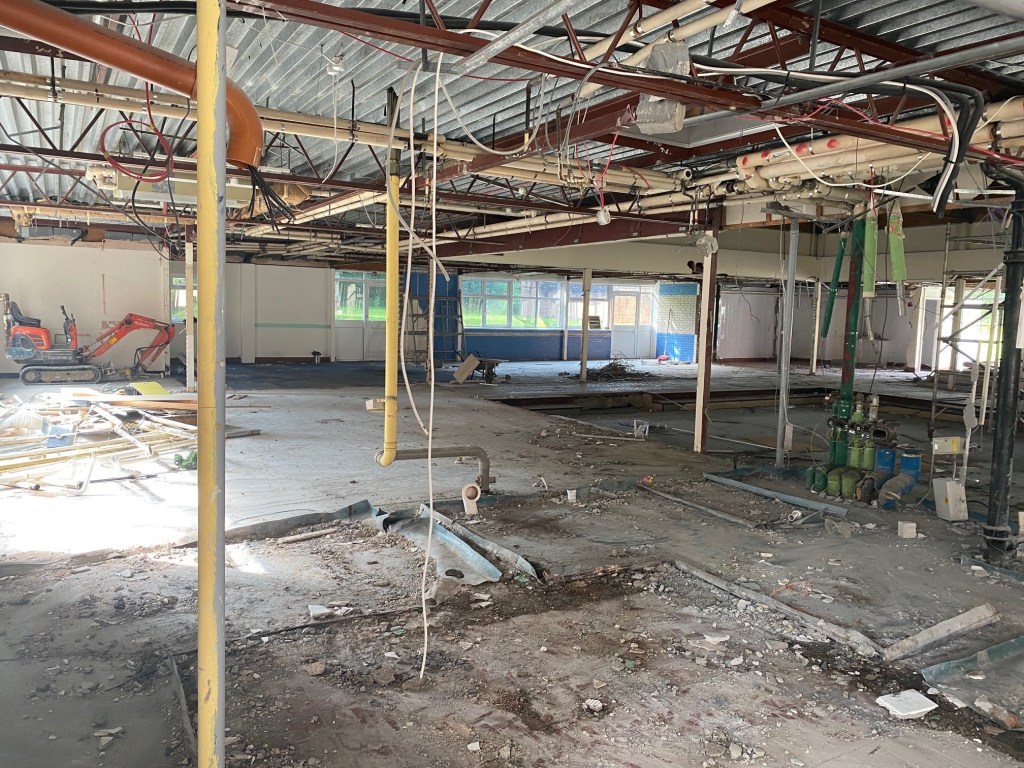
The interior of Stuart, August 2021

Works began last summer, with the removal of all internal walls and disconnection of services, to give our contractors the “blank slate” to work from. It was quite something to see everything ripped out of the building and the cavernous space left behind! From there, the building contractors began putting the new walls, ceilings and floors back in.

Over the past few years, we have learned a lot about “what works” in classroom design, and this is a further opportunity to put that into practice. Sound-deadening panels in the wall construction, and acoustic “pillows” above the classroom roof tiles, mean that students can concentrate on their learning without being disturbed by sound from next door. Climate control units in each room will mean that they will be warm in winter, cool in summer, and the air will be filtered and exchanged constantly.

We have also improved classroom size and layout so students are able to be seated with a good view of the coloured “teaching wall” which is a standard feature of our classroom design. Where possible, we have also equipped all rooms with new classroom chairs, designed to aid good posture and focus, as well as desks. And, of course, motion-activated LED lighting is standard to keep energy usage down, in line with our sustainability priority.

The new Green Room social space has been designed with chunky “noughts and crosses” style seating, and indoor picnic benches for students to use at break and lunchtime. The Green Room is a dedicated Year 8 social space, and they can’t wait to get in and make use of it!

The project is the latest phase of our ongoing redevelopment of the learning environment, which has included:

And we’re not done yet. We have another bid in to replace the temporary buildings which currently house S18, S19 and S20 – we should hear back about that next month.

The “behind the scenes” effort to make this happen has been immense. All of these projects have been funded with help from the government’s Condition Improvement Fund, and the astute use of Academy resources. The Academy Trust Board has supported the Academy’s vision to transform the learning environment for the the staff and students of Churchill, and that transformation over recent years has been significant, with the investment of over £10 million in the Academy site since 2016. From the writing and preparation of bids, through managing the projects and working with contractors to ensure the works were completed safely, on time and to a high standard, countless hours of staff time have gone in to the project. The results are definitely worth it!

The Maths Challenge

Guest post by Mr Thomas, Maths teacher

One of the most rewarding parts of my job as a maths teacher is watching students prepare for and participate in the various Maths Challenges that take place throughout the academic year.

At Churchill Academy & Sixth Form, there is a proud and long-standing tradition of entering students to sit these extra-curricular mathematics competitions, and participation numbers are on the up!

Having coordinated the Maths Challenge competitions at Churchill for the last two years, I felt it was time to write this blog. Why? Mainly – to celebrate the successes of our fantastic mathematicians, but also to share the Maths Challenge experience with students who may not have competed in one (yet), as well as parents, carers, grandparents and other members of the Academy community…. there’s even a chance for you to put your maths skills to the test with some questions from the latest Maths Challenges.

So, what is a Maths Challenge?

Each year, we enter students to sit the UKMT Mathematics Challenges. The UKMT (United Kingdom Mathematics Trust) is a national charitable organisation that was founded in 1996. Their headline aim is to “to advance the education of young people in mathematics” by organising and promoting enrichment events involving problem solving and team work. Papers are completed with no calculator, no measuring equipment – just a pencil, some paper and 5 possible answers to choose from.

There is no doubt that the Maths Challenges are aimed at high-attaining mathematicians – the competitions are designed to stretch the most able mathematicians across the country. But in our opinion – a good work ethic, willingness to take on a challenge and a positive bond with mathematics are equally important attributes.

There are 3 main Maths Challenges throughout an academic year are:

  • Senior Maths Challenge (SMC) – aimed at Sixth Formers and selected high attaining students in Years 10 and 11.
  • Intermediate Maths Challenge (IMC) – aimed at students in Years 9, 10 and 11.
  • Junior Maths Challenge (JMC) – aimed at students in Years 7 and 8.


As I have already mentioned, one of the most satisfying parts of my jobs is seeing the sheer number of students putting themselves forward to take part in these optional competitions, which are designed to challenge them on problem solving mathematics that is often far beyond the scope of their studies within lessons in school.

So far this year, students have taken part in the senior and intermediate challenges in November and February, respectively. I am proud to say that we have had more participants in these two competitions than ever before, with 178 entries across both challenges. This is purely down to our current cohort of students showing huge levels of determination and perseverance, and these stats are a credit to them!

The Junior Maths Challenge takes place later this year on 27th and 28th of April.

How do the results work?

In each Maths Challenge, students are competing to obtain a Gold, Silver or Bronze certificate.

It is worth stressing that at Churchill, we are not solely focussed on ‘who did the best’ – it is an achievement in itself to take part. In our eyes, a successful challenge is one where a group of determined and enthusiastic students push themselves with some challenging mathematics. We were thrilled this year when students outside of our top sets put themselves forward to take part in the IMC. Two-thirds of the students who took part from Miss Morris and Miss Piper’s set 2 classes went on to achieve a certificate – a fantastic feat, and proof that maths challenges at Churchill Academy are not solely for our top set students.

In our eyes, a successful challenge is one where a group of determined and enthusiastic students push themselves with some challenging mathematics.

In the most recent competition (the Intermediate Maths Challenge) 74% of students that participated scored high enough to receive a gold, silver or bronze certificate – another record-breaking figure for Churchill students in this event! When you consider that the national ‘certificate rate’ is 50%, you can see why we as a Maths Department are so impressed with our students and so keen to celebrate their outstanding results.

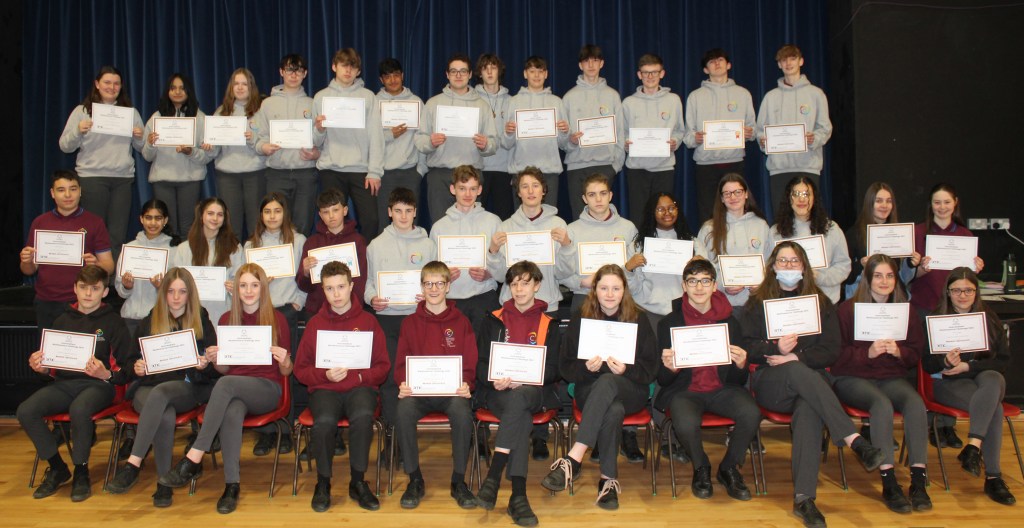
On Tuesday 15th March, students met for an assembly where I was able to share some of these statistics with them. Students received their gold, silver and bronze certificates from Mr Hildrew and had their photos taken, as you can see.

What happens after a Maths Challenge?

For students that perform exceptionally well, follow-on rounds await. Several thousand students across the UK are invited by the UKMT to sit the ‘Kangaroo’ paper, following each of the three challenges during the year. Invitations and the paper sat depends on each students’ year group.

At Churchill, 11 pupils qualified for this year’s Kangaroo paper following the IMC. You guessed it – another Churchill record!

Going one better is Bruce Butson, a Year 11 student who has qualified for an Olympiad follow-on round – the UKMT’s most prestigious challenge. Bruce is one of only around 600 pupils across the country to have qualified this year, based on his outstanding score in the IMC.

Bruce has agreed to share his thoughts and experiences of sitting various maths challenges during his five years at Churchill:

I have really enjoyed participating in the maths challenge each year. The challenge gives you the opportunity to push yourself and build upon your classroom learning, in a different style to traditional exams. The problem solving aspect means you have to apply yourself to each question and really focus when you get to the later questions. Having done this each year and competed in all of the different challenges (junior, intermediate and senior), I have always been able to find some interest and entertainment whether that be through the added difficulty or new understanding to answer tough questions I couldn’t answer before. In addition to this, I was able to see how I did against the rest of the country which was really motivating.

How would you get on?

Each Maths Challenge consists of 25 questions. Multiply that by 3 and that means 75 different questions across the Senior, Intermediate and Junior competitions in one academic year (no surprise that the maths involved in each competition is slightly trickier!). I have chosen 5 of them.  

Take a look at the questions below and see if you can work out the correct answer (remember – pen and pencil only!). Just a reminder that the JMC is aimed at 11-13 year olds, the IMC aimed at 13-16 year olds and SMC sat by students aged 15-18.

Maths challenge try-at-home questions

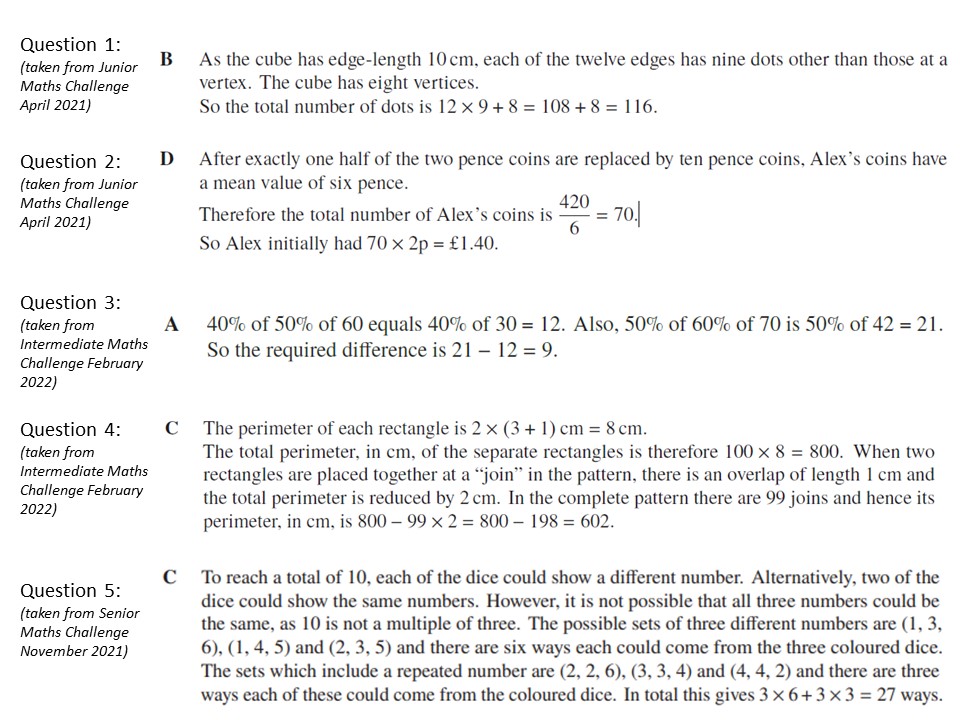
At the bottom of the blog, you will find the solutions, along with an explanation as to why each particular answer is correct. No peeking!

If you’ve got this far, hopefully you now know a little more about the Maths Challenges at Churchill than you did at the beginning of this post. You have seen our fantastic gold, silver and bronze mathematicians, you have heard from one of our best also had a little taste as to what it is like to sit a Maths Challenge yourself.

This is completely optional, but we would love to know how you did on the five questions above. If you’re happy to tell us how many you got correct, please fill in an extremely short questionnaire by clicking here (you can do this anonymously if you like!).

If you ever have any queries about the Maths Challenges sat here at Churchill Academy & Sixth Form, please feel free to get in touch. We hope these upward trends continue over the months and years to come!

Mr Thomas (DAT@churchill-academy.org)

Maths Challenge try-at-home solutions

When students lead

One of the central planks of our long term plan at Churchill is to “develop leadership which helps create the leaders of the future.” We know that students benefit from developing their leadership skills, both in terms of their confidence and character, their success in learning, and their long-term prospects. This is why we have been working hard since 2020 to improve and enhance our student leadership programme, to give students the opportunity to lead within and beyond the classroom.

This past week it has been evident just how successful these innovations have become. Since half term, I have seen:

  • Students leading house assemblies to launch the whole-school sustainability competition
  • The student-led inclusion and diversity group making a presentation to the Academy Trust Board on their priorities for tackling micro-aggressions by improving education and understanding of diversity and the power of language
  • Student ambassadors giving tours of the Academy to candidates for jobs at Churchill, and students applying from other schools to join our Sixth Form
  • A student panel from Years 7 to 11 interviewing candidates for Deputy Headteacher at the Academy, and providing insightful and perceptive feedback which helped the selection committee make a decision about the successful candidate
  • Sixth Form leaders assisting with the setup and organisation of Wednesday’s Careers Convention
  • The Green Team offering Duke of Edinburgh volunteering placements as part of their environmental initiatives
  • The Student Receptionist programme offering Year 8 students the opportunity to build responsibility, initiative and confidence during their day’s experience
  • Students leading learning through presentations and peer assessment and feedback
  • Performing Arts Captains leading rehearsals and performances in music, dance and drama
  • Students showing leadership on the sports fields and courts, as captains and competitors
  • The Sixth Form Council proposing an integrated fundraising programme to support the whole-school non-uniform day on 18th March

And this is just what I have seen, and just in the past two weeks!

We know that every student can demonstrate leadership skills, and It feels like the programme has taken root and is flourishing. They are also logging their evidence on the Unifrog system, so that they can track their skills over time and use them when preparing CVs and working towards careers over the coming years. The leaders of the future are right here in our student community – and the future is bright.

Thinking about Ukraine

Before we returned to school on Monday after the half term break, we planned and wrote the following statement:

Academy Statement on the war in Ukraine

We are all horrified by the suffering of innocent people in Ukraine. The invasion of Ukraine was ordered by Vladimir Putin, and is his responsibility – it is not the responsibility of the Russian people. The situation is incredibly serious; it is a time for compassion and togetherness in support of peace and our shared humanity. We expect all our students to listen, learn and do their best to understand what is happening in Ukraine, and to be sensitive to members of our Academy community who may be affected by events there. Above all things: be kind.

This statement was in our student Daily Notices on Monday morning and has remained in place throughout this week. We also provided all staff with video and text “explainers” so they could answer students’ questions about the conflict. Our intention is to support all students in our Academy community to understand the conflict and draw sensible, mature conclusions based on factual information. Staff at Churchill worked hard with our students to emphasise our shared humanity and the will for peace.

Our Academy includes students from all over the world. Some of our students have family members in Ukraine, trying to find safety; others have family members in neighbouring countries such as Hungary, Romania, or Poland, which are welcoming refugees. Several have families in Russia. All of our students need the support, understanding and kindness of the Academy community at this time, and beyond, as we all look on in horror at the suffering of innocent people in the face of violence and destruction.

We will continue to provide that support, and to work with our students to try to understand what is happening in Ukraine, and why, in the hope that the world that they live in as adults will be a world of peace.

Newsround links: