The Lighthouse Schools Partnership

The end of this term marks an end and a new beginning for Churchill Academy & Sixth Form. March 31st is our last day as a Single Academy Trust (SAT); at one minute past midnight on 1st April 2023 the Academy will officially become part of the Lighthouse Schools Partnership Multi-Academy Trust.

A multi-academy trust is a charity that has responsibility for running a number of academies. They cannot be run for financial profit and any surplus must be reinvested in the trust. By working in partnership with each other, the schools within a trust can share staff, curriculum expertise and effective teaching practices, and work together to deliver the best outcomes for students. All schools within the trust support each other and the trust is accountable for them all.

Churchill has been an academy since August 2011, when it changed from Churchill Community Foundation School and Sixth Form Centre to Churchill Academy & Sixth Form. That change saw a wholesale shift in the school’s identity: a new logo, a new name, and a new uniform followed. This next chapter in the school’s history does not involve a change of name or identity: there will be very little visible difference on the surface. We will still be called Churchill Academy & Sixth Form; the Academy’s values and ethos will not change; we will keep the same uniform; we will have the same staff.

Behind the scenes, however, we see a great many advantages for our children, families and staff in joining a multi-academy trust. We will be able to share resources and expertise across the Lighthouse Schools Partnership. The central focus of our collaboration will be on the professional development for our staff so that we continually improve in our teaching and learning for the benefit of all our students. There will also be financial benefits in the economies of scale available to us as part of a larger organisation, as well as the opportunity for our students and staff to collaborate on projects across the trust – such as the Student Leadership Conference we attended at Gordano in February.

There will be changes to governance, as our existing Trust Board changes its status to a Local Governing Body reporting to the Lighthouse Schools Partnership Trustees. The Governors will still be responsible for school specific policies, the budget, and standards within Churchill Academy & Sixth Form, but we will be adopting many policies that are common across the Trust.

We were delighted that our local primary schools, Burrington and Wrington, joined Lighthouse in January of this year, followed by Churchill Primary in February; Blagdon Primary and St Andrew’s in Congresbury are already members. Together, we are forming the Churchill Hub of the Lighthouse Schools Partnership, sharing resources and expertise to manage our schools collaboratively. The Churchill Hub is the fourth hub of the trust, joining the Portishead, Backwell and Chew Valley hubs across North Somerset.

Since the decision to join the Lighthouse Schools Partnership was taken in the summer of 2022, we have been working closely with colleagues from across the 29 other schools in the trust. We have worked together on plans for closing the attainment and progress gap for disadvantaged students, improving assessment, provision for students with special educational needs and disabilities, curriculum development and more. We have worked across secondary schools to evaluate and learn from one another in subject-specific visits, and senior leaders from the four secondaries have also begun to develop our plans to move our collaboration forward over the coming years. The staff we have met from across the trust have been open, welcoming and exciting to work with: we look forward to our shared journey together in the future.

Air source heat pumps: the next steps towards net zero

Air source heat pump and air conditioning unit: the unglamorous side of our journey towards net zero

We seek to inspire and enable young people to make a positive difference – this is our purpose as a school. This means that they can make a positive difference to themselves, through the improvements in their learning, behaviour and attitude that they make every day. They can make a positive difference to our Academy, through their presence in our community and the contribution that they make. And they can go on to make a positive difference to the world, as a result of the education they have had at Churchill.

Making a positive difference is also something that we seek to do in the Academy’s environment, and our environmental impact. I have previously written about our net zero target and the steps we have already taken on that journey. More recently, we have completely replaced the heating system in the Performing Arts block (which also houses three art classrooms) to be run entirely off an air source heat pump, which was installed over the winter.

How a heat pump works (diagram from EDF)

An air source heat pump absorbs heat from the air around us and transfers that heat to the inside of the building. Outside air is drawn in over a network of tubes filled with refrigerant gas, which circulates at -28°c to extract heat energy from the air outside. This low temperature refrigerant means that the systems pulls heat from the air, even when the outside temperature is below freezing. The gas passes through a compressor which increases the pressure and temperature, causing it to change from a cold gas to a hot liquid. The compressed hot liquid passes into a heat exchanger, which provides heat to the system. The refrigerant then turns back into a cold gas and starts the cycle all over again.

We are using an air-to-air system, which means that it will also double as a cooling system in hot weather in the summer. This means that the rooms will be kept at a good working temperature all year round – all using low carbon technology.

Net Zero Grant: we’re not finished yet!

I’m also delighted to say that we have been successful in securing a grant from the Department for Net Zero and Energy Security – the Public Sector Decarbonisation Scheme. The grant, totalling £222,430, will allow us to replace gas boilers with air source heat pumps in the Sixth Form and around the Hive and Hall building. It will also pay for other improvements, such as double glazing and external wall insulation.

The work is all scheduled to be completed before September, which will mean that when we return for the new academic year there will be yet another building completely run from renewable energy sources – a further step towards our net zero target.

The project signifies the latest in a long line of energy efficiency and decarbonisation projects that we’ve been working on since 2015. Investments in point of use hot water heating, solar pv, boiler controls and LED lighting have supported a 70% reduction in CO2 emissions across our activity, and we remain committed to our ambition to be net zero carbon by 2030.

Of course, we welcome the grant funding to enable the next stage of our decarbonisation work to continue and look forward to taking another step forward on our sustainability journey. Our students are passionate about a greener future, and we’re striving to lead and deliver on this.

However, we know we have been fortunate with having funding allocated, as many other projects will not have been successful. And, without this grant, we simply couldn’t have afforded to do the work ourselves. As we’ve highlighted in the past, the ambition of school leaders is not always matched by the funding available for capital works or initiatives around decarbonisation. And with the increasing pressure on school budgets from many directions, including rising fuel costs, the question shifts from decarbonising for the good of the planet, to one of simple affordability. Because, the truth is, installing low carbon alternative technology is expensive! If the government is serious about a national move to net zero, it needs to be funded properly for all, and not just those fortunate few who are able to secure the grants.

To Lancaster and back…

It’s been quite a week! Last Friday, myself and three colleagues had made the journey to Birmingham for the ASCL (Association of School and College Leaders) Annual Conference. We were looking forward to two days of professional development and discussions with colleagues. I was especially excited, as I had been asked to do a question and answer session on the main stage with Jay Blades, presenter of The Repair Shop and all round hero of mine! All this was cut short mid-morning by a phone call from Ofsted, announcing they would be inspecting our Academy on Monday and Tuesday.

This was a unique circumstance. Normally, Ofsted phone the day before and turn up to inspect the very next morning. This means they normally phone on a Monday to inspect on Tuesday and Wednesday, or on a Tuesday to inspect on Wednesday and Thursday, and occasionally on a Wednesday to inspect on Thursday and Friday. However, due to the NEU industrial action this week, none of those were possible. So, for one week only, they called on a Friday.

Thanks to the wonders of technology (and the incredibly helpful people from ASCL) we were able to plan the inspection between Churchill and Birmingham, with the senior team separated by 100 miles. We then had the unusual experience of a weekend in between the notification and the inspection, before returning on Monday to meet the inspection team and get started.

There are very strict rules in place which mean that that inspection itself can’t be discussed before the report is published – so I won’t be discussing it here until that time. Suffice to say it was a thorough, testing and very rigorous experience, and no stone was left unturned.

After the intensity of those two days, we were then faced with the peculiar half-life of the school mostly closed due to industrial action by teacher members of the NEU. Our Sixth Formers, and Year 11 students who booked places, made the most of the limited provision we were able to offer, but the quiet lull across the Academy site was in stark contrast to the buzz of the previous days.

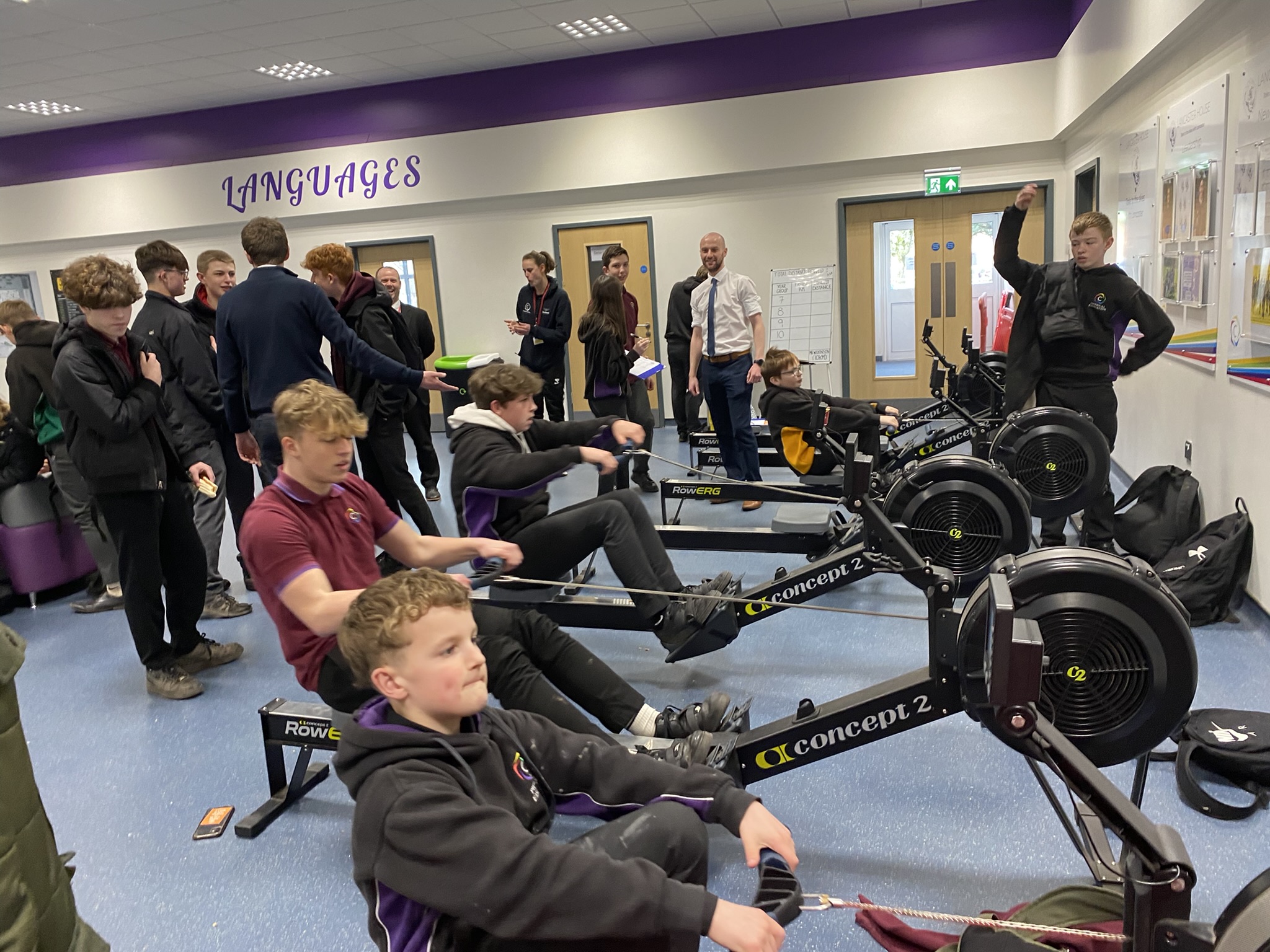
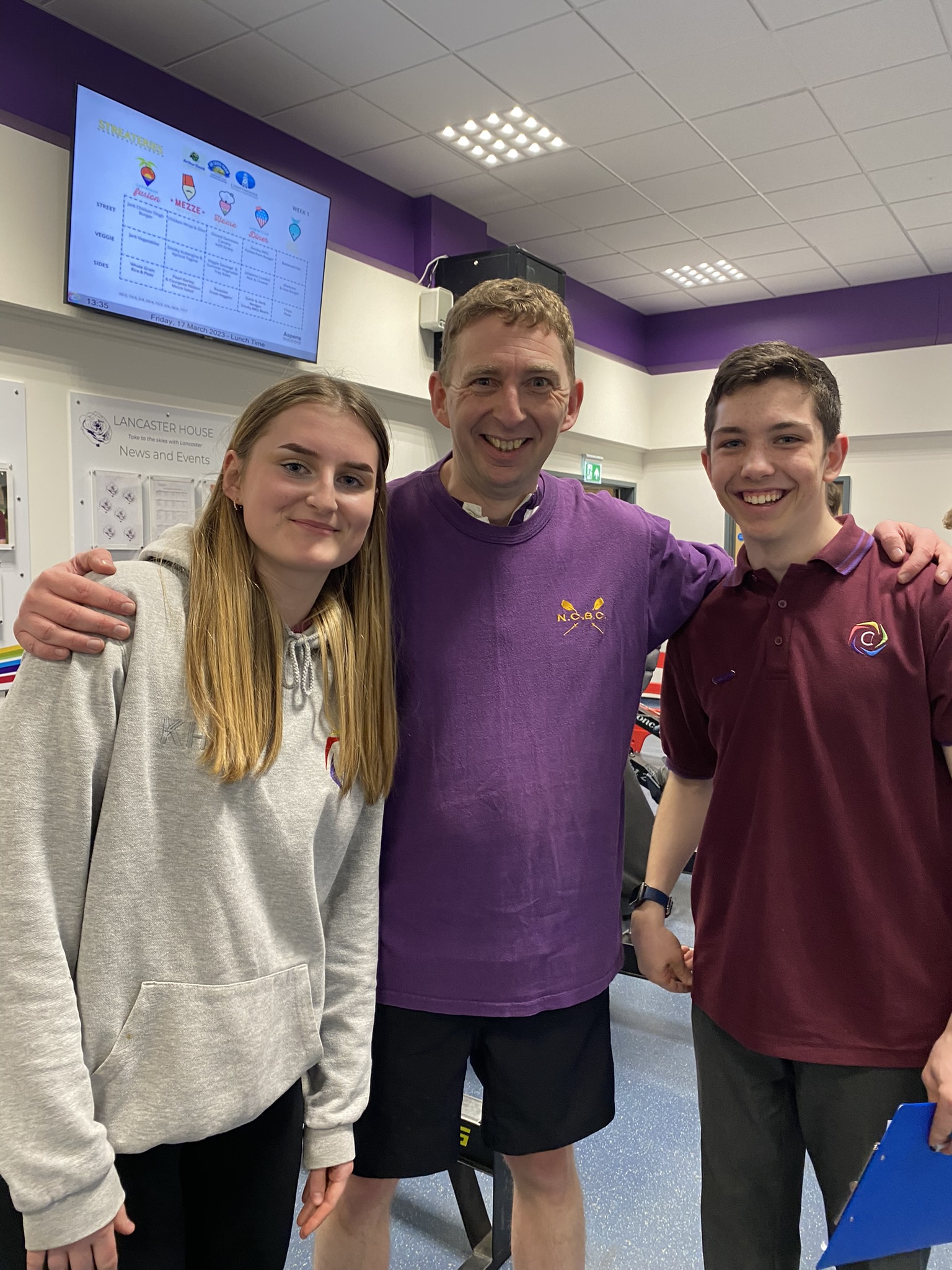
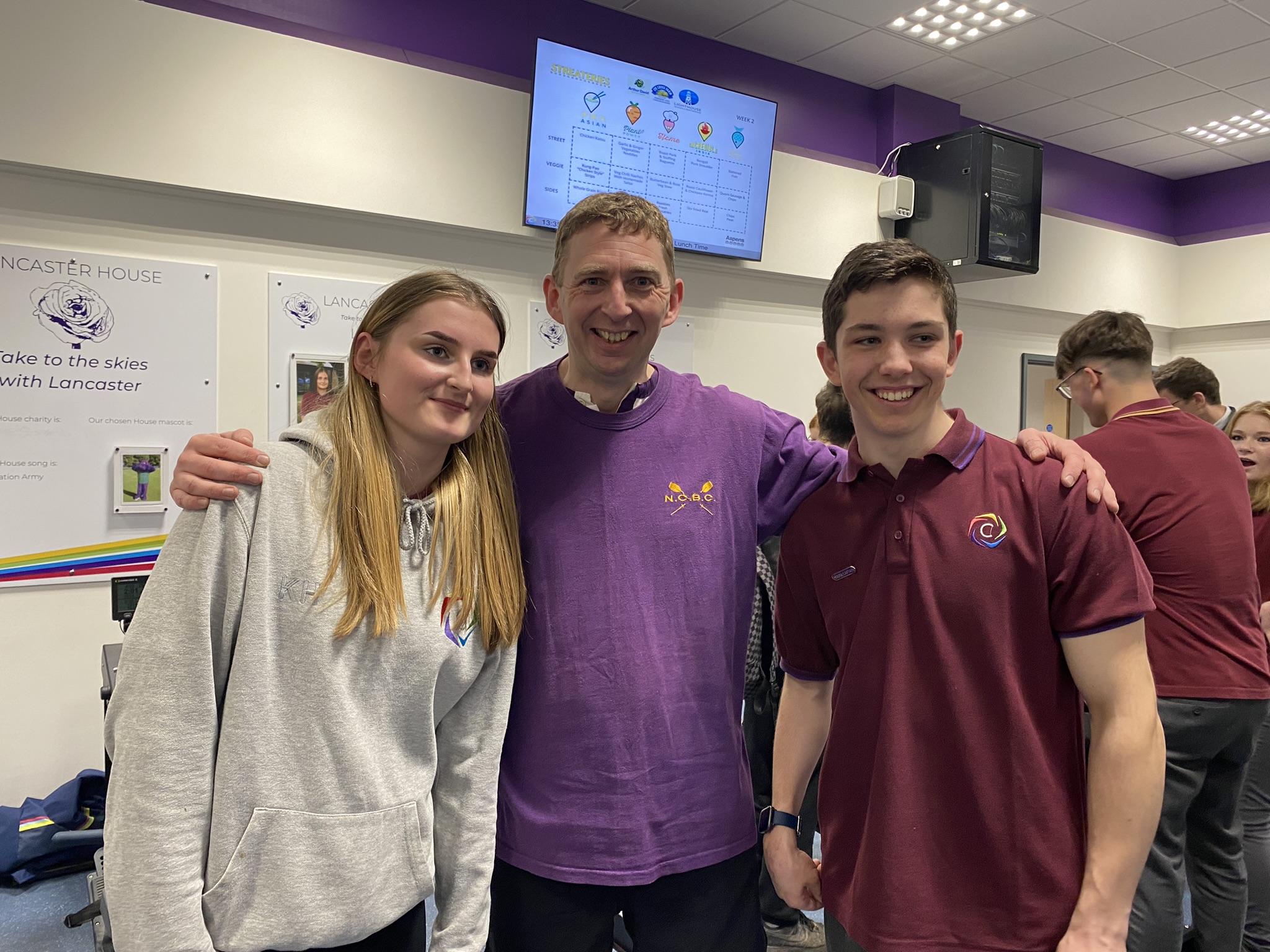
It was wonderful, therefore, to see all our staff and students back on Friday, with the added thrill of Lancaster House’s To Lancaster and back! indoor rowing challenge. Lancaster House students have begun the task of virtually rowing to Lancaster and back – a total of 868km throughout the UK canal ways – in order to raise money for their House charity, the RSPCA. You can sponsor a student directly on the sponsorship forms they have been given or make a donation online by visiting www.justgiving.com/page/tolancasterandback. I used to do a bit of rowing as a university student – but that was a very long time ago, as I found out to my cost when I sat down to add my own kilometre to the total!

Well done to all the students involved – and particularly to Kate, Adam and the Lancaster House Council, for organising this terrific event.

International Women’s Day 2023: Inspirational Sportswomen

Wednesday of this week was International Women’s Day. The last time I celebrated this important day on the Headteacher’s Blog was back in 2017 – so it’s time I did so again, to celebrate some more of my inspirational female role models. This year, I’m focusing on women in sport – and four women who have really inspired me over the past few years.

Victoria Williamson

Victoria Williamson was a Team GB track cyclist, specialising in sprints. She won a bronze medal at the 2013 World Track Championships and was on her way to being a contender for the 2016 Rio Olympics squad. In January 2016 she suffered a horrific crash on the track in a competition in Rotterdam, suffering a broken neck and back, dislocating her pelvis and slipping a disc in her neck. She had to relearn how to walk, rebuilding her strength and condition. Incredibly, in 2019, she returned to the track, competing for Team GB in the Track World Championships. She then switched to winter sport, and is now a member of the Team GB women’s bobsleigh team.

I find Victoria’s story so inspiring: to come back from a devastating crash and life-changing injuries to compete again at world championship level is a tale of such courage, determination and bravery. A true inspiration.

Leah Williamson

I found the whole team of Lionesses an incredible inspiration last year, as they brought football home in style with their victory in the European Championships. Beth Mead, Alessia Russo, Chloe Kelly, Keira Walsh, Millie Bright, Georgia Stanway…and the rest! They were all amazing. But Leah Williamson’s calm, determined captaincy; her leadership of the team on and off the field; and her superb, level-headed approach to the game just blew me away. She’s a truly inspiring role model. And, as far as I’m aware, she’s not related to Victoria Williamson…

Janja Garnbret

I loved watching the new Olympic sport of competitive climbing at the Tokyo Games. I found myself hooked by the disciplines of speed, lead and bouldering – learning all kinds of new terms along the way! In the women’s event, Janja Garnbret absolutely cleaned up.

Her athleticism, determination and skill was simply staggering – she blitzed every discipline. But it was when I watched the documentary The Wall: Climb for Gold on Netflix that I saw the struggle and difficulty behind the scenes of becoming the sports first ever Olympic gold medallist, and this made me admire her all the more. An amazing athlete!

Sky Brown

Sticking with the Olympic theme, I couldn’t complete this post without mentioning the youngest professional skateboarder in the world, who won a bronze medal for Team GB in Toyko at the age of just 13. Her ability to pick herself up when she was down, to keep going with a huge grin on her face, and to celebrate the achievements of her opponents as much as her own, won me over completely.

Who are your female sporting inspirations?

Spring

The news headlines are pretty bleak in the world of education at the moment. Industrial action by members of the National Education Union is disrupting schools up and down the country. They are taking action because of the significant financial challenges facing schools – as with every sector of the economy – in the face of skyrocketing energy bills and insufficient funding to raise staff salaries in line with high inflation. A further slap in the face was the revelation of WhatsApp messages from former Secretary of State for Education, Gavin Williamson, denigrating teachers as lazy and workshy at the height of the pandemic. I remember our staff working with students throughout that time – without vaccines or PPE – and moving heaven and earth to deliver education in unprecedented circumstances, so this is particularly galling.

There have also been shocking scenes on social media of schools around the country in disorder as students stage “protests” against rules and approaches taken by staff. I’m not going to get into the rights and wrongs of individual cases elsewhere, but I am very glad that our Academy is a school with strong student leadership and voice; a school where staff listen to students and where students are able to make positive changes to the Academy in partnership with staff – as one community. We have revised uniform rules and systems as a result of this kind of feedback from students through councils and student voice, and those groups are continuing to work hard to improve many aspects of school. We will continue to listen as our students express their views through the channels designed for this purpose – and I am grateful for the good sense and maturity that they have shown, despite the trends of social media.

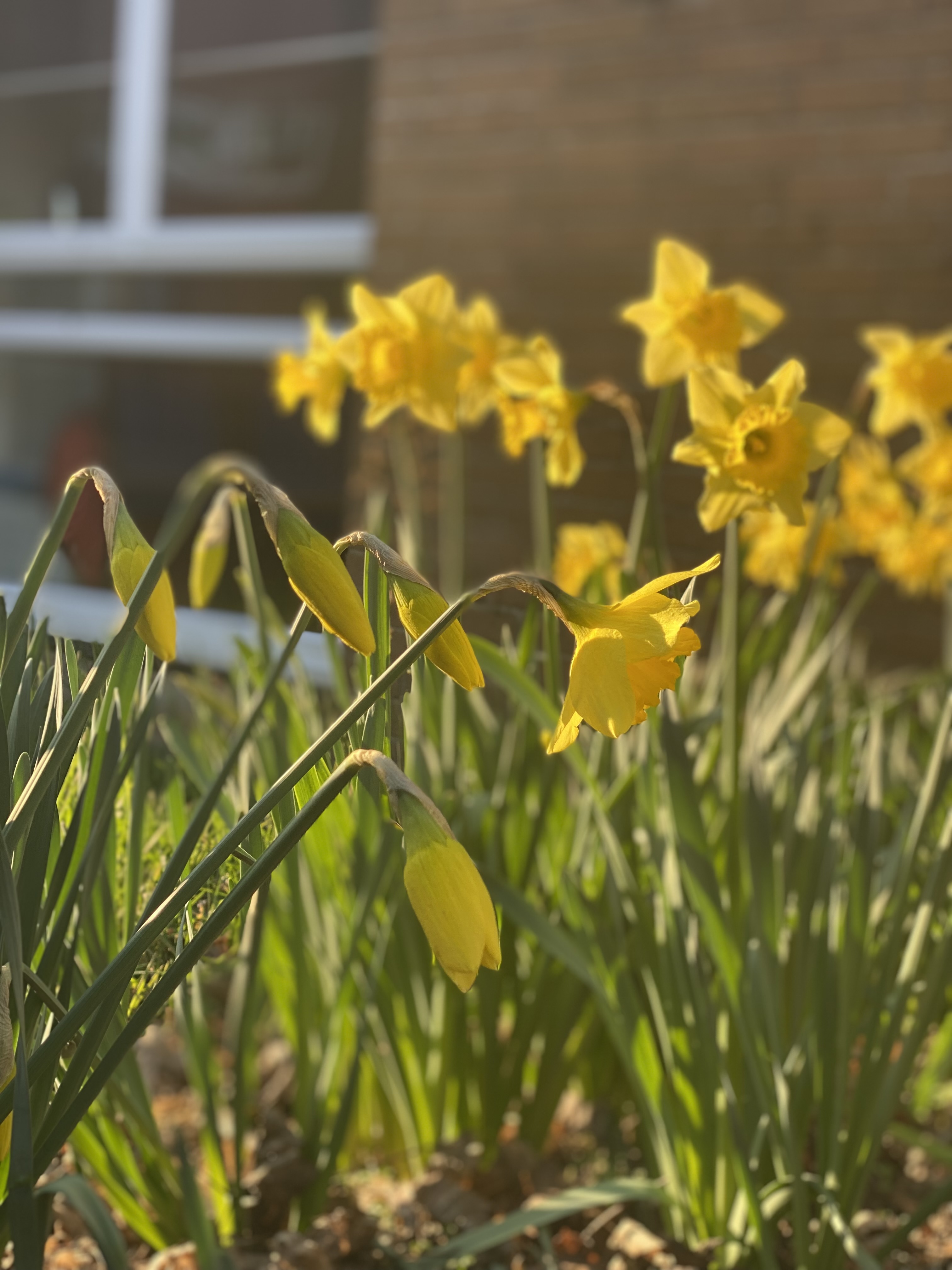
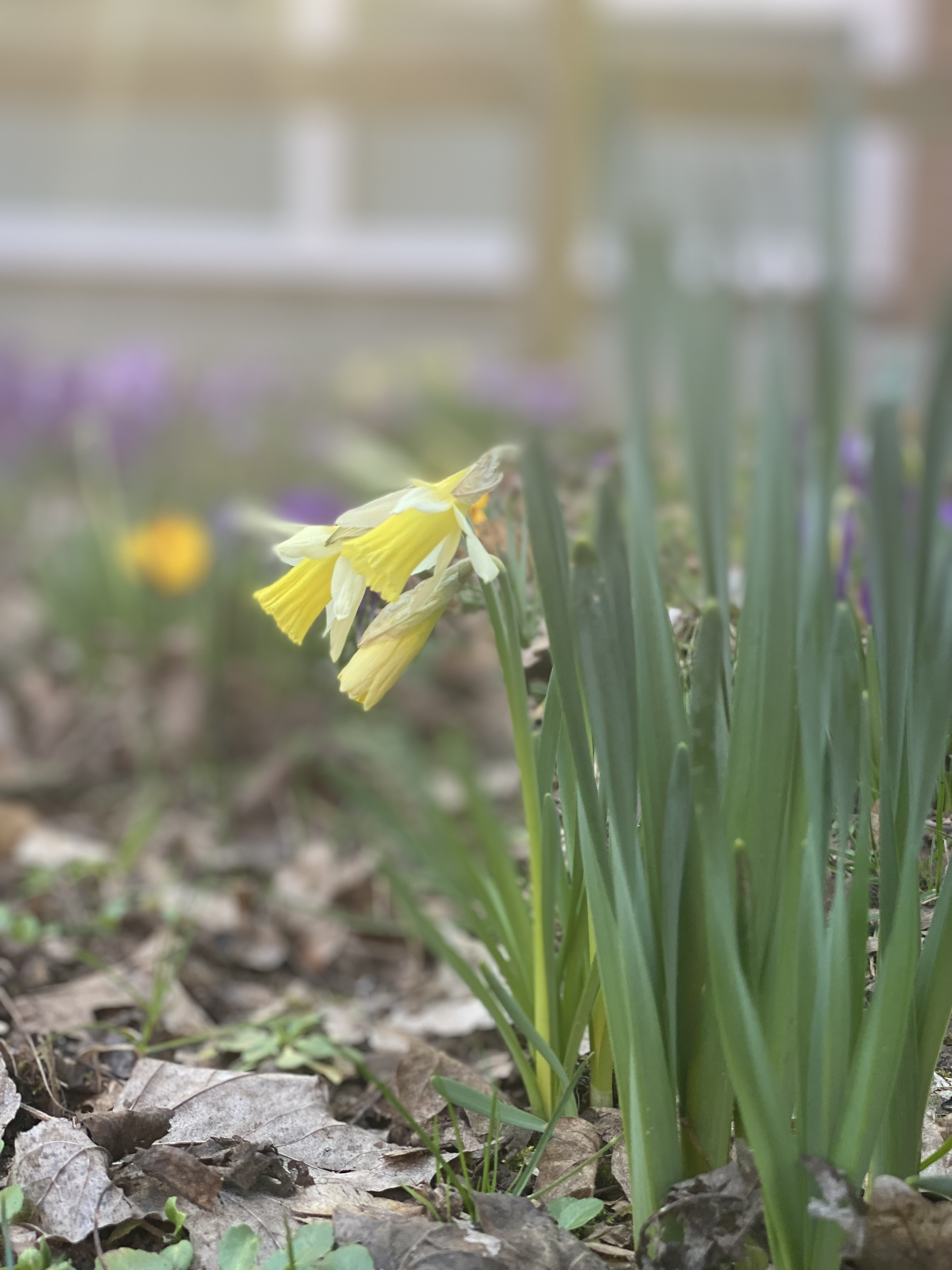
As I was leaving school at the end of the day this week, I saw the carpet of crocuses and daffodils blooming again, as they do every spring. They reminded me – as they always do – that out of the cold and dark, brightness always returns. Working in schools, we are in the business of optimism. Every day, we work with the young people who have the potential to go out and make the world better, to solve its problems, to make a positive difference. No matter how difficult things are, the positivity and potential of our students make the job worthwhile.

50 days to go

When we returned to school on Monday, there were 50 school days left until the first public examinations in the summer. Our Year 11 and 13 students are now on the final run-in towards their exams.

All our Year 11 students have been issued with a pre-exams booklet to guide them through the revision process. The booklet includes guidance on effective revision strategies, as well as helpful tools to enable them to plan their revision and monitor its effectiveness. Students will also find the exam dates, links to revision materials, exam specifications and practice papers in the electronic version of the booklet, which is available to all students in Google Classroom.

We expect all students to be completing independent revision. To help support this process, all students are receiving weekly supervisions from their tutors, Heads of House, key workers or members of the Academy’s leadership team. These supervision sessions are designed to support students with their revision, discussing the techniques from the booklet, helping structure revision planning, and reviewing the effectiveness of revision completed in the previous week. Conversations with tutors this week have been positive and productive, and our Year 11 students are focused and determined to do well.

Meanwhile, our Year 13 students are receiving their mock results from the practice exams taken just before half term. The feedback from these mocks is the key to identifying where to focus work over the coming critical weeks, as those with non-examined assessments (NEA) put the finishing touches to their submissions.

There is naturally a degree of anxiety in our students as they approach their exams. This is entirely normal and understandable: the stakes are high, and the results matter. This is why we will also be talking to students about managing their emotions, wellbeing, and ensuring that they stay healthy during this vital period of time. We know that students who don’t revise enough will underperform, but we also know that students who overwork themselves into a panic are also at risk of underperforming. A balance is essential: work hard, but stay healthy.

Good luck to all our exam students!

The power of music to change lives

Last summer, the government published “A National Plan for music education.” Whilst schools are crushed under the weight of non-statutory guidance from the Department for Education, telling schools they should be doing this, or they should be doing that, this was one plan that I could fully support. The ministerial foreword says:

Excellent music education opens opportunities, but it is not simply a means to an end: it is also an end in itself. It gives children and young people an opportunity to express themselves, to explore their creativity, to work hard at something, persevere and shine. These experiences and achievements stay with them and shape their lives.

From The Power of Music to Change Lives: a national plan for music education, June 2022

I found myself in the unusual position of being inspired by a piece of government guidance!

I grew up playing instruments, having lessons on the piano and guitar throughout my school days. I was in bands and ensembles from primary school, through university and beyond. When I completed my newly qualified teacher year, I bought myself a saxophone as a “congratulations” present to myself, alongside a challenge to learn to play it well enough to be in the band for my school’s production of Bugsy Malone in the next academic year.

Since then I have played in pit bands for school productions of Grease, Little Shop of Horrors, Godspell, Return to the Forbidden Planet (three times!) and more. I’ve directed – and even written! – musicals. I’ve played in big bands, covers bands, rock bands and jazz groups. There’s nothing quite like playing with others, sharing never-to-be-repeated moments in live performance, where the interactions and interplay between the musicians and the audiences create that unique moment in time for all involved.

This is why I am pleased to see the Department for Education prioritising music education. There is a recognition of the contribution that music makes to the economy, and the careers that can be pursued within the music industry; this is, after all, a government document. But it is also clear that a good quality music education is a right for all our young people.

We are fortunate at Churchill to be building on a firm foundation, with an established strength in the musical life of the school, supported by the North Somerset music service and, more locally, the amazing support of Churchill Music. Our partnership with Churchill Music continues to thrive, not least in the Churchill Young Musician of the Year competition which took place on Monday.

This competition, along with the wealth of musical activities across the school, shows that music is at the very heart of our education at Churchill – and will continue to be there, whether or not the government issues non-statutory guidance to tell us that it should be.

Making informed choices

This term our attention has been focused on the Year 9 options process. The options evening this week was a good opportunity to meet with students and their families to discuss the choices that they are making as they seek to personalise their curriculum for years 10 and 11. As I said to the assembled parents, carers and students in the hall alongside Mrs Dawes on Wednesday evening, the aim of the whole process is to provide as much information as possible, so that students can make good decisions about their next steps.

The same philosophy governs our whole “choices” programme – whether it be advice and guidance to Year 11 students making decisions about post-16 education; or sixth formers exploring their options for higher education through universities, apprenticeships, employment or gap years; or the wider careers inspiration, advice and guidance programme that covers all our students; the aim is to ensure that our students are well-informed about their choices, so they can make the right decisions for them.

An example of this was our “Careers to Curriculum Day” for Year 9 students on the day after options evening this week. Year 9 students followed an adapted timetable to learn more about how the subjects they follow on their curriculum apply to the real world of work. From the applications of maths to climate science, the use of economics and law, the life of an actor, product design, illustration, journalism, financial trading, medical ethics and food sciences, our students got to think about how their classroom work could serve them in a future career.

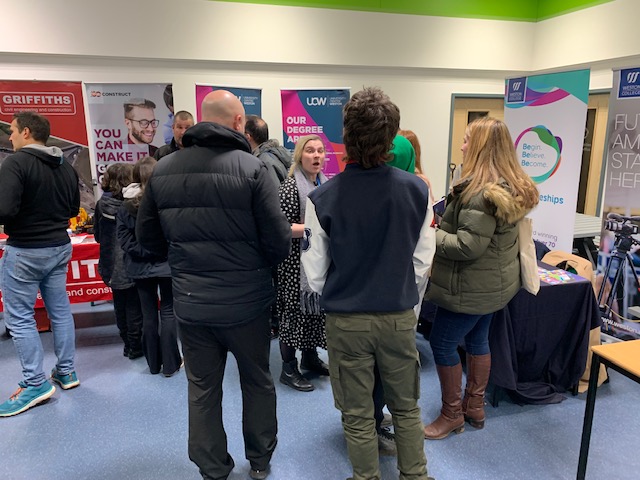
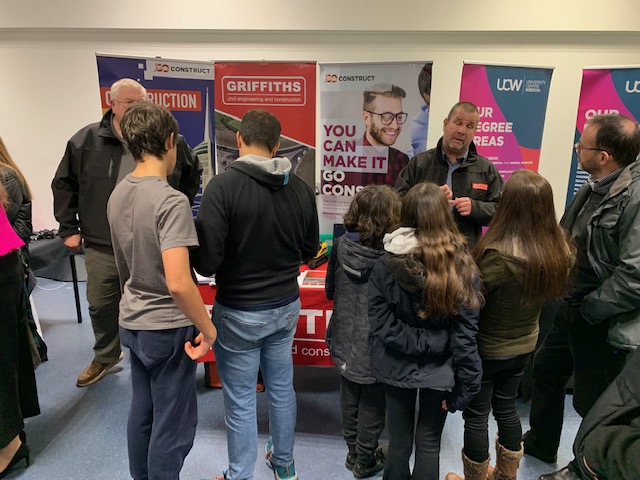
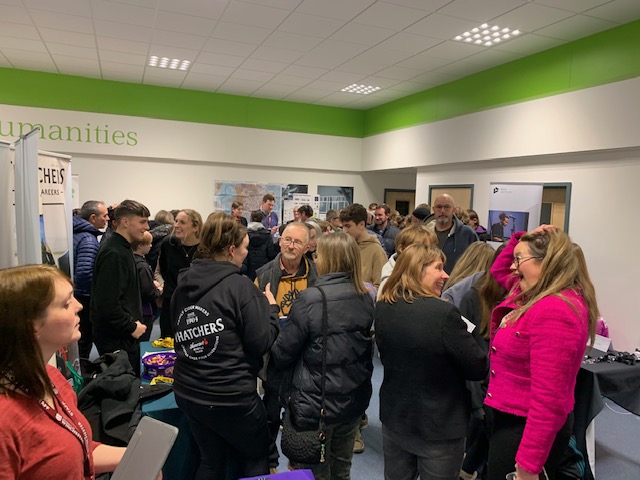
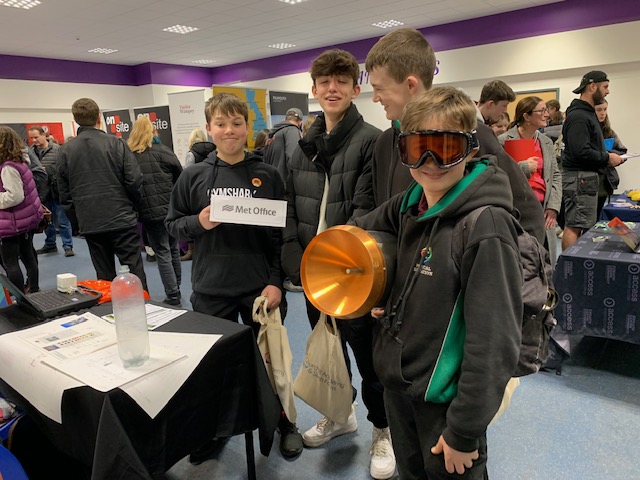
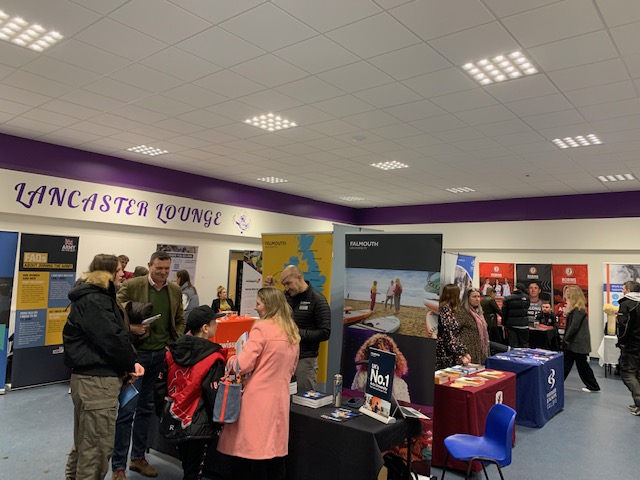
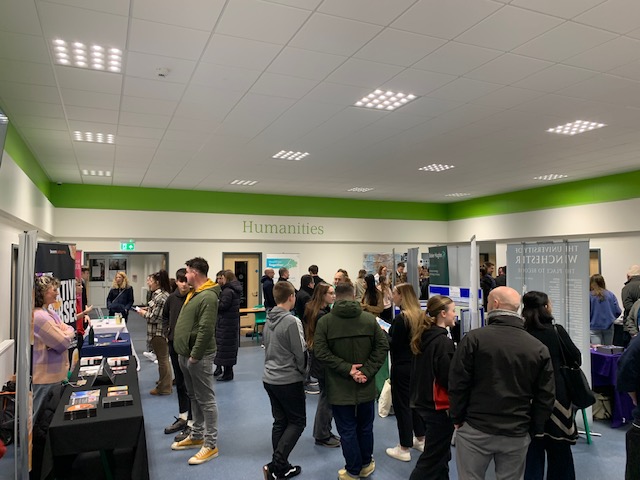
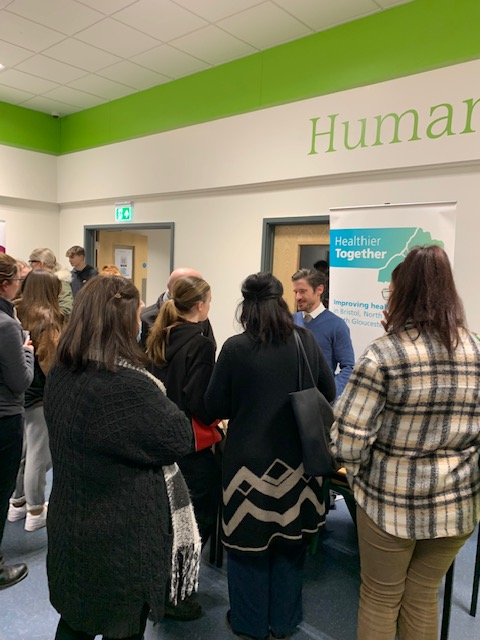
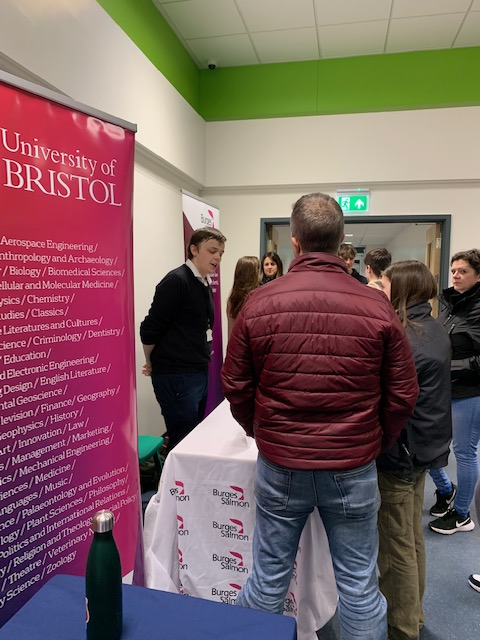
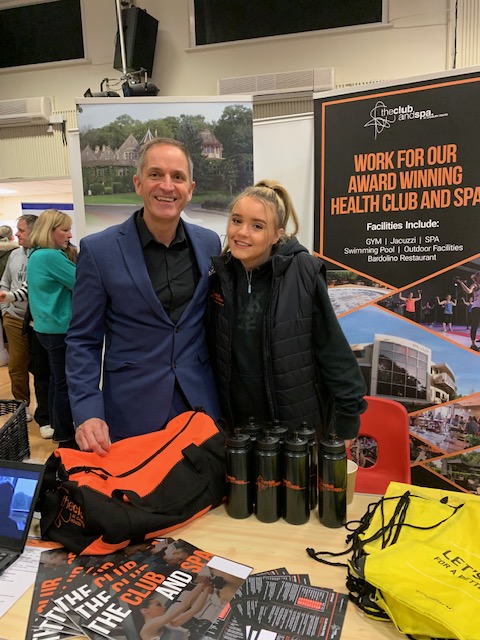
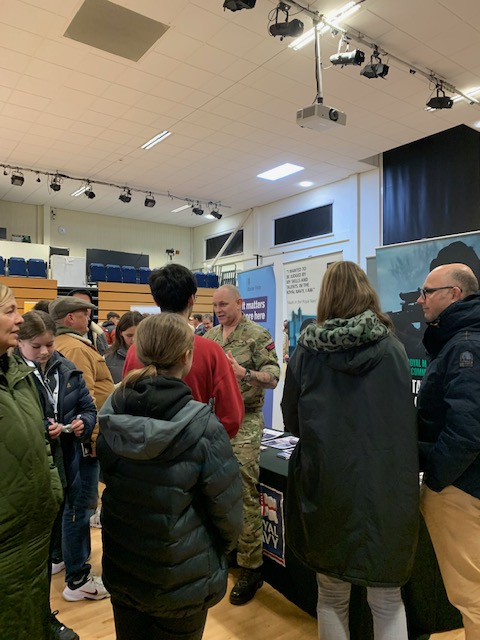
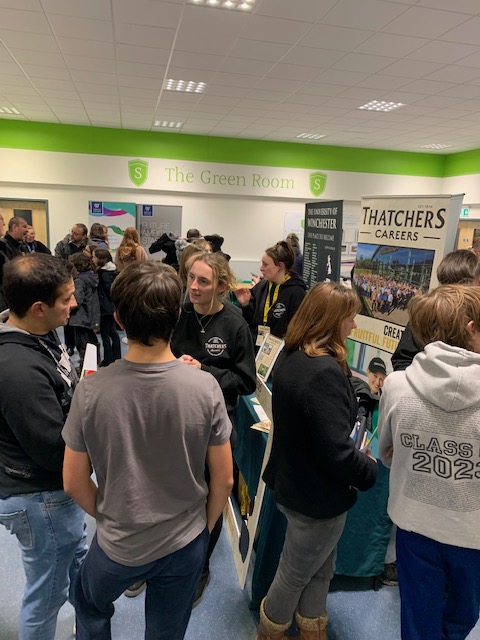
This was supported by our annual Careers Convention on Thursday evening. We welcomed representatives from businesses both local, national and international to the Academy. We had employers including Airbus, GKN Aerospace, Rolls Royce and Taylor Wimpey; Civil Service Careers and HMRC; the Army, Royal Navy and Border Force; the NHS and St Monica Trust; Virgin Atlantic and Easyjet; the Met Office, Thatchers, Wessex Water, the National Grid Electricity Distribution, Burges Salmon, Motorbodies Weston and more. They were joined by further and higher education providers including colleges, apprenticeship providers, and universities with the aim of raising student aspirations, broadening their horizons, and encouraging them to think about what may be possible in their future.

Throughout their time at Churchill, students also have access to the Unifrog system. Unifrog helps young people find and apply for the best opportunities for them after school. It gives students a wealth of information and tools to use to help them navigate the array of options open to them. From interest and personality profiling, to information about a wide variety of careers and education pathways, Unifrog also gives students a space to record their wider activities to build a profile of their skills and competencies. This can help to guide them as they consider their next steps, by enabling them to reflect on what they are good at and what they enjoy – not just in their lessons, but beyond.

All this is just scratching the surface of our careers inspiration, advice and guidance programme, led by Mr Morgan and coordinated by Mrs McGonigal. We do our very best to make sure that our students’ choices about their next steps – whatever and whenever they may be – are informed, thoughtful and the best possible choice for them.

Should everyone study maths to 18?

In his first speech of 2023, Prime Minister Rishi Sunak announced that he was looking at plans to ensure that all students study maths in some form until the age of 18. It’s fair to say that his announcement was light on detail. He did not say what this would look like; he did not say what (if any) qualification students would be studying towards; he did not say how this would be delivered. Even more worryingly, he did not say who would teach it: there is already a shortage of maths teachers nationally, and the government has missed its own target for recruiting trainee teachers (not just in maths) year on year.

His announcement also seemed to lack a rationale. Currently, students who do not get a grade 4 or above in GCSE maths are required to continue with the subject until they get the grade 4 – so these students already do maths post-16. Many students take A-level maths or further maths in the Sixth Form – it is one of the most popular subjects on offer. And still more students take Core Maths, a level 3 post-16 qualification designed to provide students with mathematical, statistics and data skills that they will need for study in most subjects and for future employment. This is a really popular option for students at Churchill to support the mathematical content of subjects such as geography, sciences, economics and others.

All of these students already take maths post-16. So, the Prime Minister can’t be talking about them. He must, instead, be talking about students who have already achieved at least a grade 4 in maths – so they have proved they have a good grasp of the subject and are able to perform at a good level – but have decided not to take it further. These are competent mathematicians who have opted not to continue with the subject, and decided to specialise in a different area instead. Why would the Prime Minister feel that this group of students should have to continue with a subject they have “passed” and decided not to take further?

There is no question that maths is important. Nobody would seriously argue that students should be able to drop maths at the age of 11, or 14. It seems perfectly reasonable that all students should study maths, English and science until the age of 16, then decide what to specialise in. There is also some logic to the idea that students who do not pass maths or English at GCSE with at least a grade 4 should continue to study the subject, as the skills of literacy and numeracy are so important to future success and underpin the ability to access so many other subjects and fields.

There will always be a point in the education journey where young people opt for a more specialised, tailored curriculum. In the English system, young people make their first options at 14 for Level 2 qualifications (including GCSE), then specialise further at 16 Level 3 qualifications (including A-levels). Lots of other countries do things differently, with greater breadth or greater specialisation at earlier or later stages. The case could be made that children in England specialise too early, and that we should carry on with a broad curriculum for as long as possible. But, if you want to gain a deep understanding of a subject, you need to spend time on it – and that means specialising. And there aren’t enough hours in the day to do everything!

There are plenty of experts in curriculum giving serious thought to a better way of providing breadth and depth in our qualifications system up to the age of 18. The National Baccalaureate Trust published a report in May 2022, following a year-long consultation, with a fascinating proposal for an alternative to our current examination system. ASCL have published proposals for a passport-style qualification in English and maths to take away the cliff-edge pass/fail of GCSE grade 3 and 4 in those subjects. Way back in 2004, the Tomlinson Report proposed wide-ranging reform of 14-19 education to provide a unified framework for curriculum and qualifications – but the Labour government of the time did not have the courage to implement it. If Rishi Sunak wanted to look, there are plenty of credible, thoughtful and workable policy options out there.
I suppose we should be grateful that this Prime Minister sees education as a priority – something that has not been the case for his predecessors. We might have hoped for policies to address a consistently underfunded education system facing an existential recruitment and retention crisis, industrial unrest, serving a cohort of young people working hard to overcome the legacy of the pandemic in a fractured and frightening world where global temperatures continue to rise…but no. We got “everyone needs to do maths till they’re 18” instead. For me, it just didn’t add up.

Welcome back assembly: why our words matter

In this week’s assembly, I welcomed our students back after the Christmas break. After a quick reminder of our behaviour expectations, Mrs McKay and I focused our assembly on the key topic of ensuring that our Academy community is a safe and inclusive one.
My part of the assembly focused on the way we use our words. I was inspired by talking to our Year 11 House Captains, who said that one of the things they wanted to concentrate on during their their year in post was on language used by their fellow students which can offend, upset, provoke or disturb them. This echoed the work of last year’s inclusion and diversity group, who presented to our Trustees on the impact that micro-aggressions can have on students’ feelings of belonging and inclusion.
There are occasions when students use words deliberately to be unkind, to upset others, to provoke them, or to offend. This is always wrong. But we can also use words thoughtlessly or carelessly, and we can offend, upset, exclude or alienate others through our ignorance or lack of consideration. Perhaps we didn’t fully understand the language we were using, or its implications, or perhaps we didn’t think carefully enough before opening our mouths. We need to be clear that this is just as problematic: our words can hurt, whether we intended them to or not.

I therefore asked our students to use the “THINK” acronym above – and to “THINK” before they speak. I used a little bit of audience participation to demonstrate this principle in the assembly. A willing volunteer from the audience donned the important safety equipment, before attempting to squirt all the toothpaste out of a tube as quickly as possible (Stuart were the best at this so far, with a time of just under 7 seconds). The second part of the experiment saw the volunteers try to put the toothpaste back into the tube. This proved much more difficult.

The experiment was designed to show that squeezing the toothpaste is like blurting something out without thinking about it. It’s easy to do – the work of a moment – and actually feels pretty good in that moment! But once it’s out, there’s no putting it back, and any attempt to do so actually creates a worse mess than you started with.

It’s also important to think about the way we “speak” online. Mrs McKay has already spoken to students this year about the importance of e-safety, but we often see how people “say” things online they would never say in person. I used this quote from the film The Social Network to demonstrate this principle:

Our words – or the images, videos, gifs and emojis we post, and the posts we like, re-post and share – define us online. Employers (including schools, under new safeguarding guidance) conduct checks on candidates’ online presence, and there are plenty of examples of thoughtless online behaviour landing people in trouble – including losing their jobs.

As well as the risk to ourselves of thoughtless online behaviour, the damage to others can be significant. Words can hurt just as much – if not more – delivered online than in person, and there is a lot of evidence to suggest that people will “say” things online – often to complete strangers – that they would never dream of saying to someone’s face. This means that we should all be even more careful with our behaviour online, as you never know the damage that you could be doing.

Mrs McKay concluded our assembly with a reminder of the things we all need to do to make sure our Academy stays a safe, inclusive environment, and how we can all work together to make sure that Churchill continues to be a supportive community – for everyone.