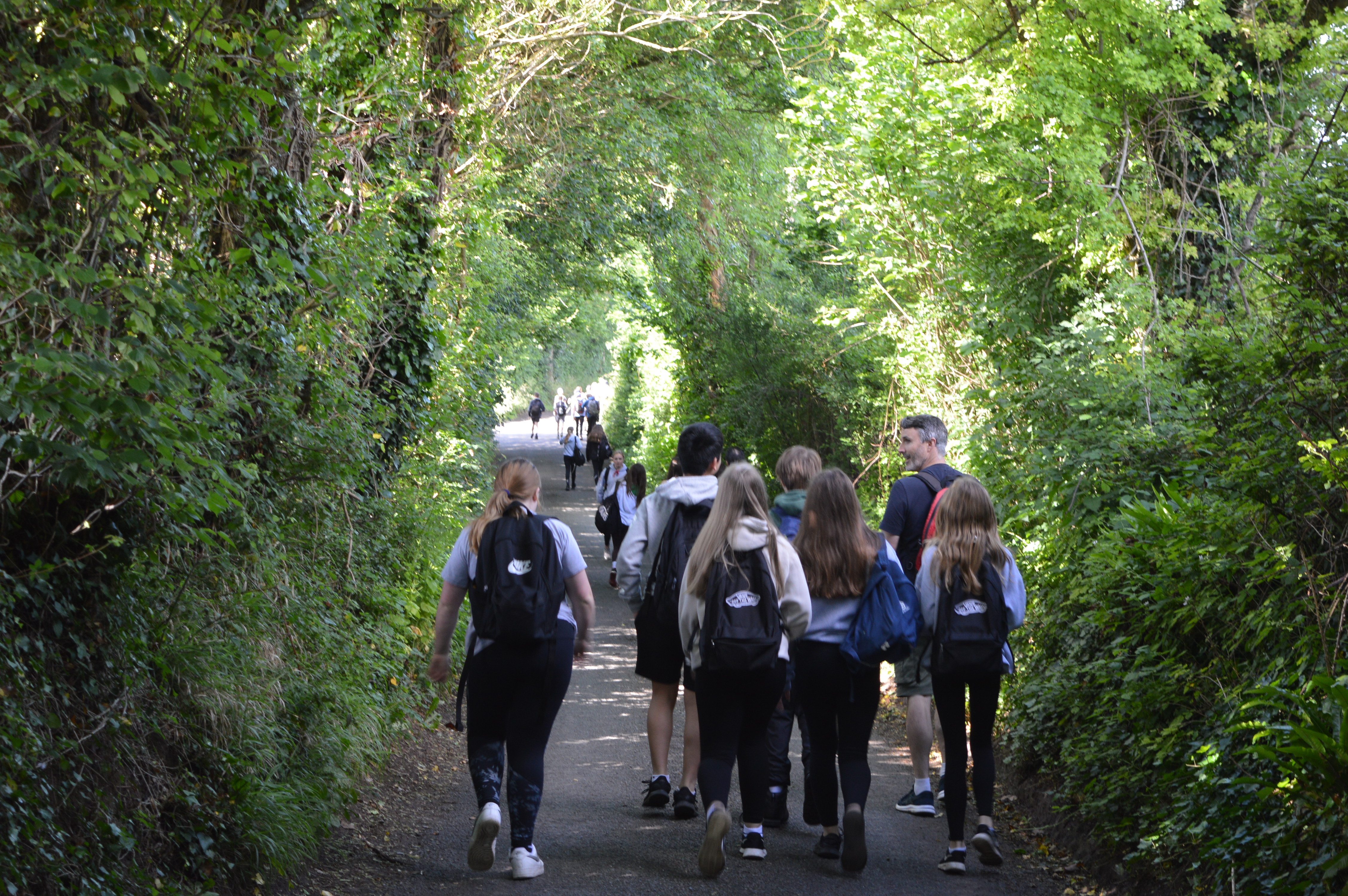
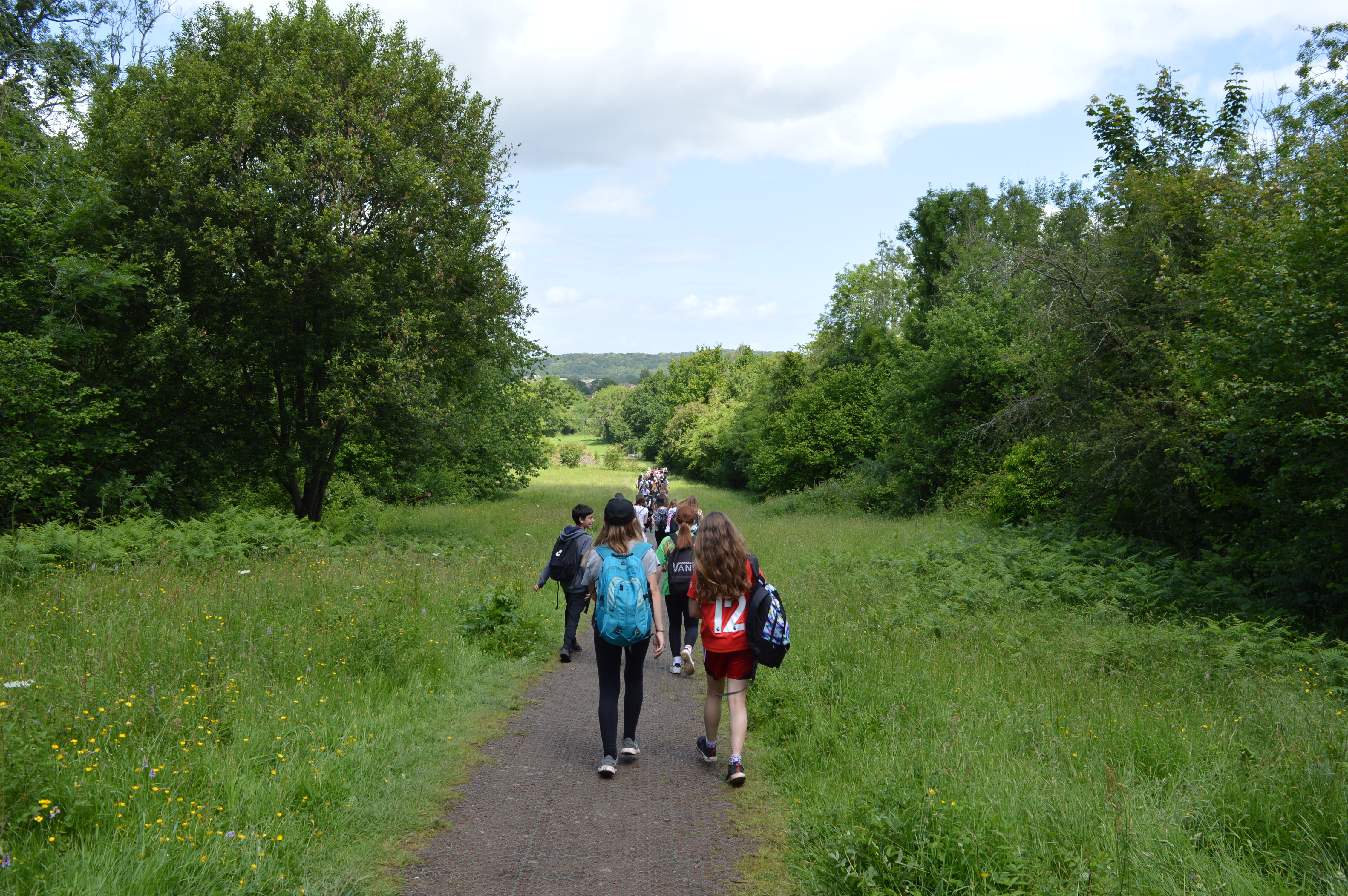
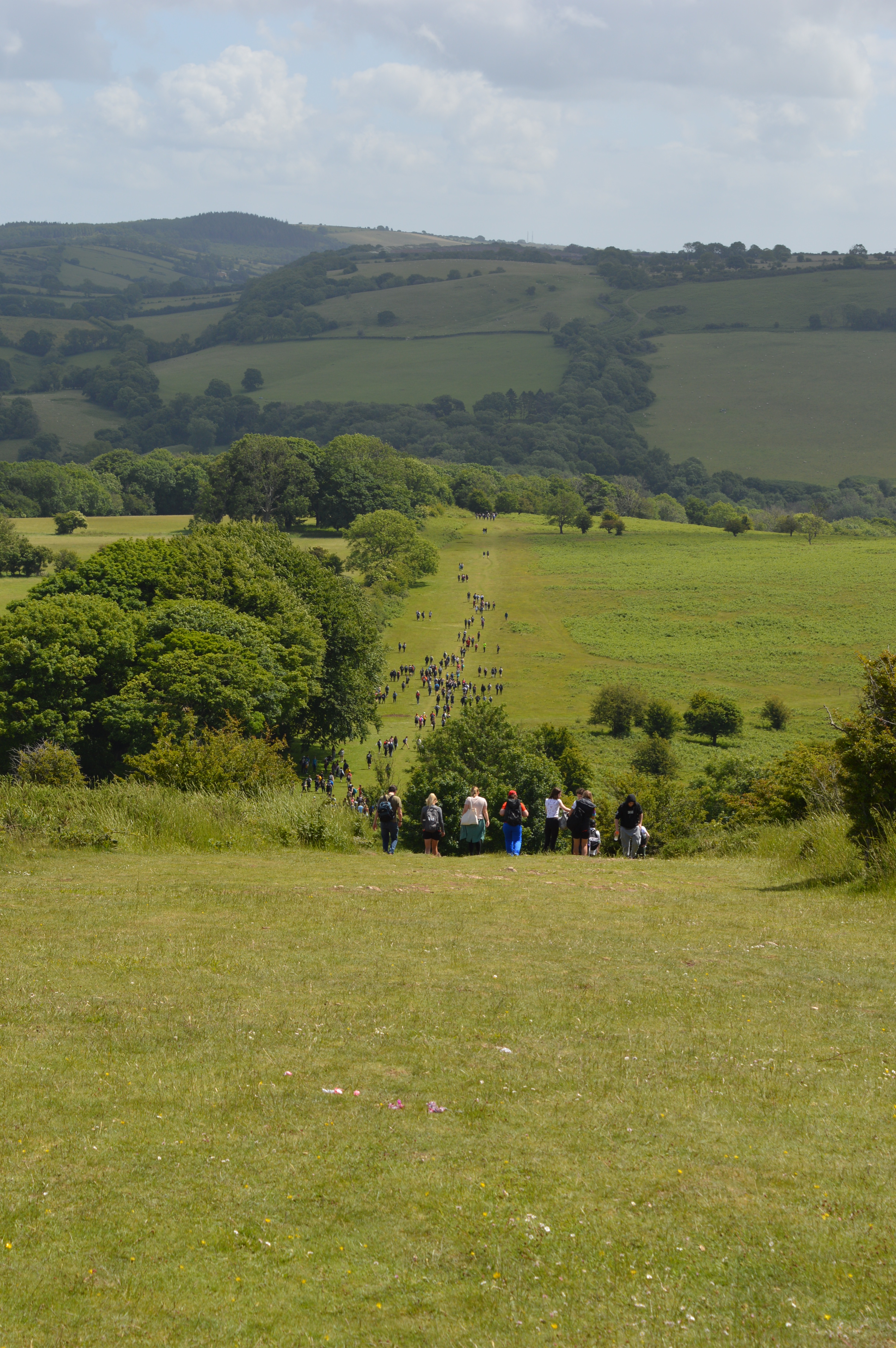
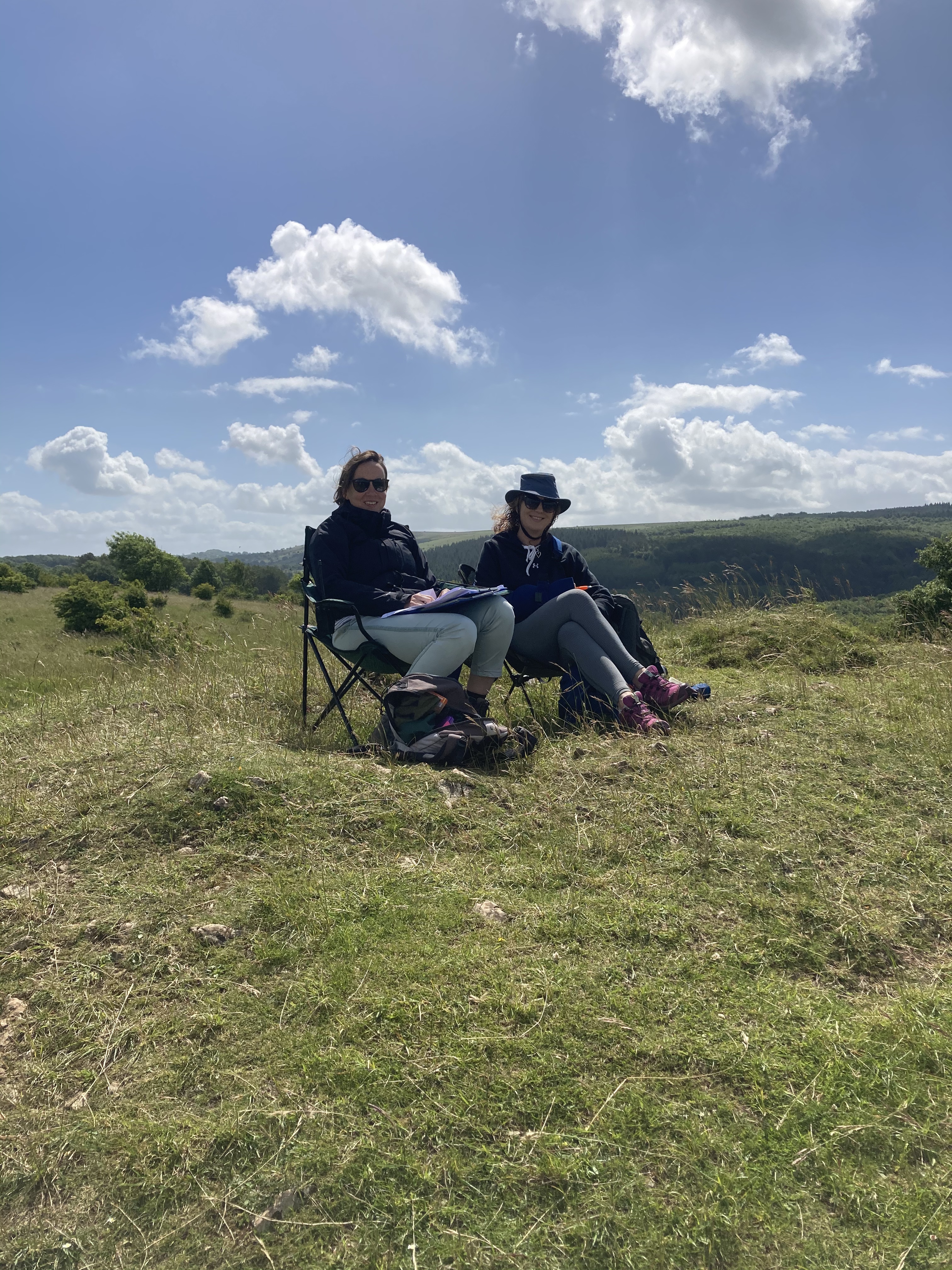
The Sponsored Walk and Trek are a long-standing Churchill tradition. Our school is beautifully situated in the foothills of the Mendips, and the walk and trek are our opportunity to get out of our school gates and up into the area of outstanding natural beauty that surrounds us.
The Sponsored Walk
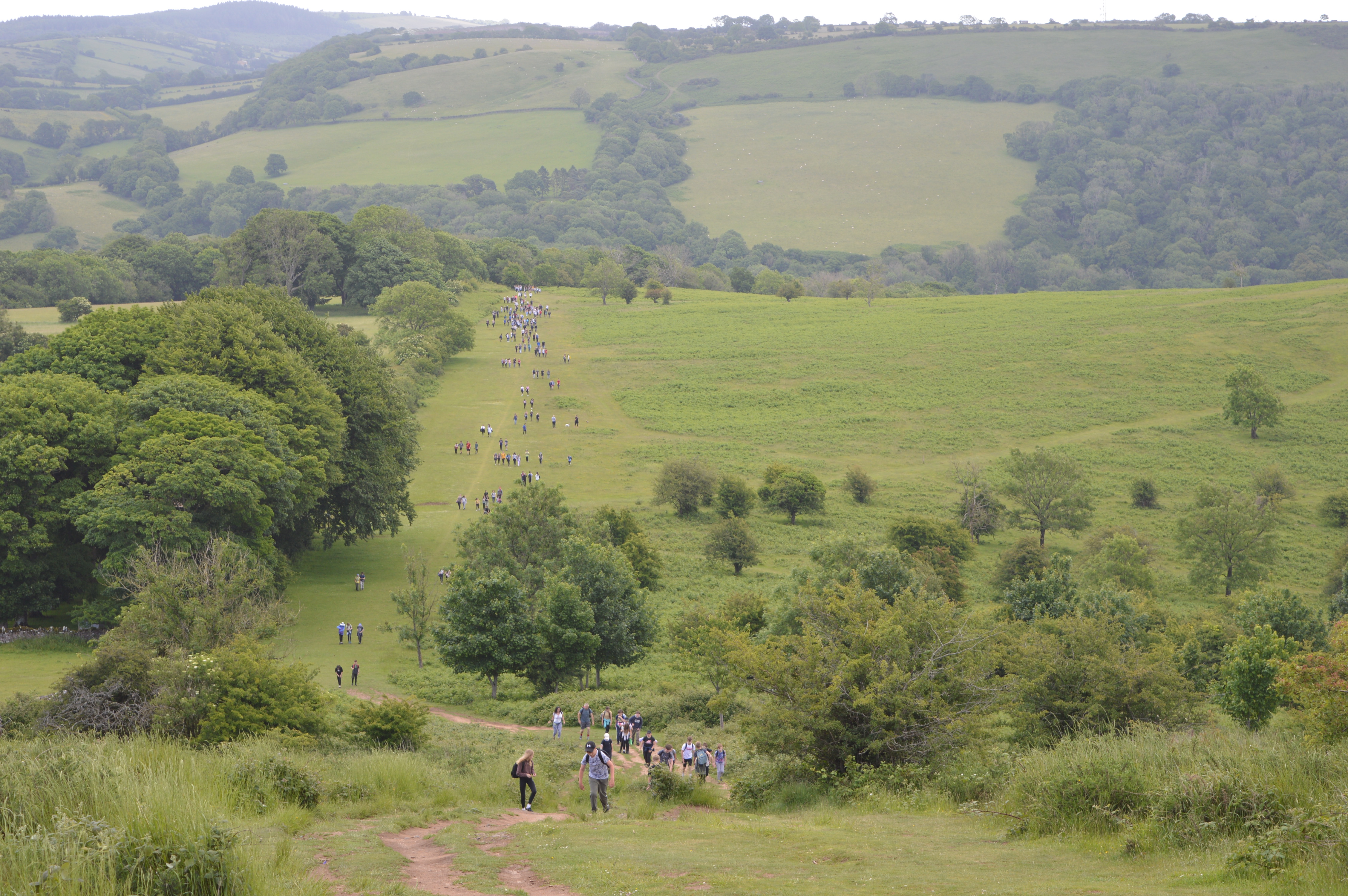
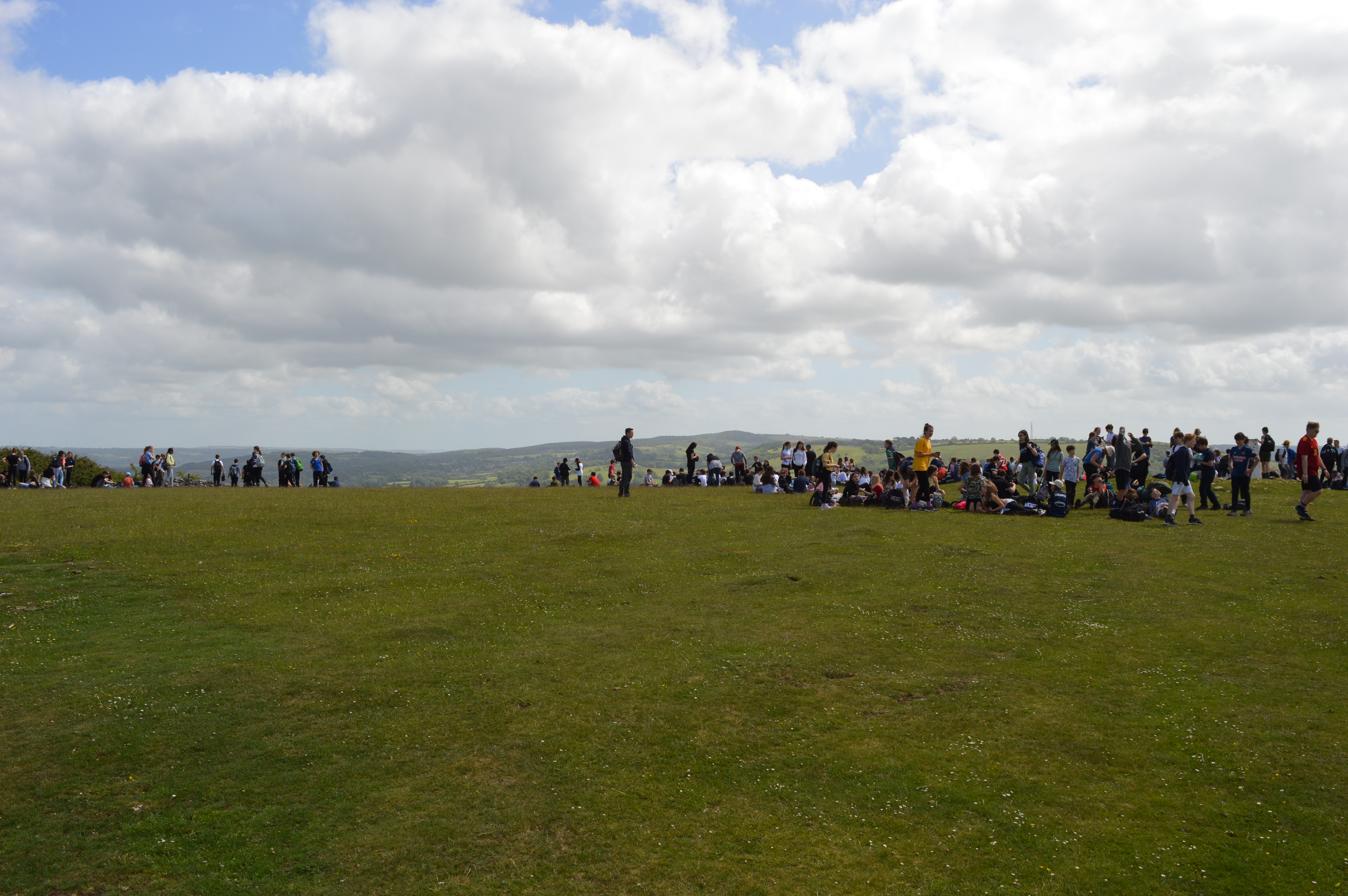
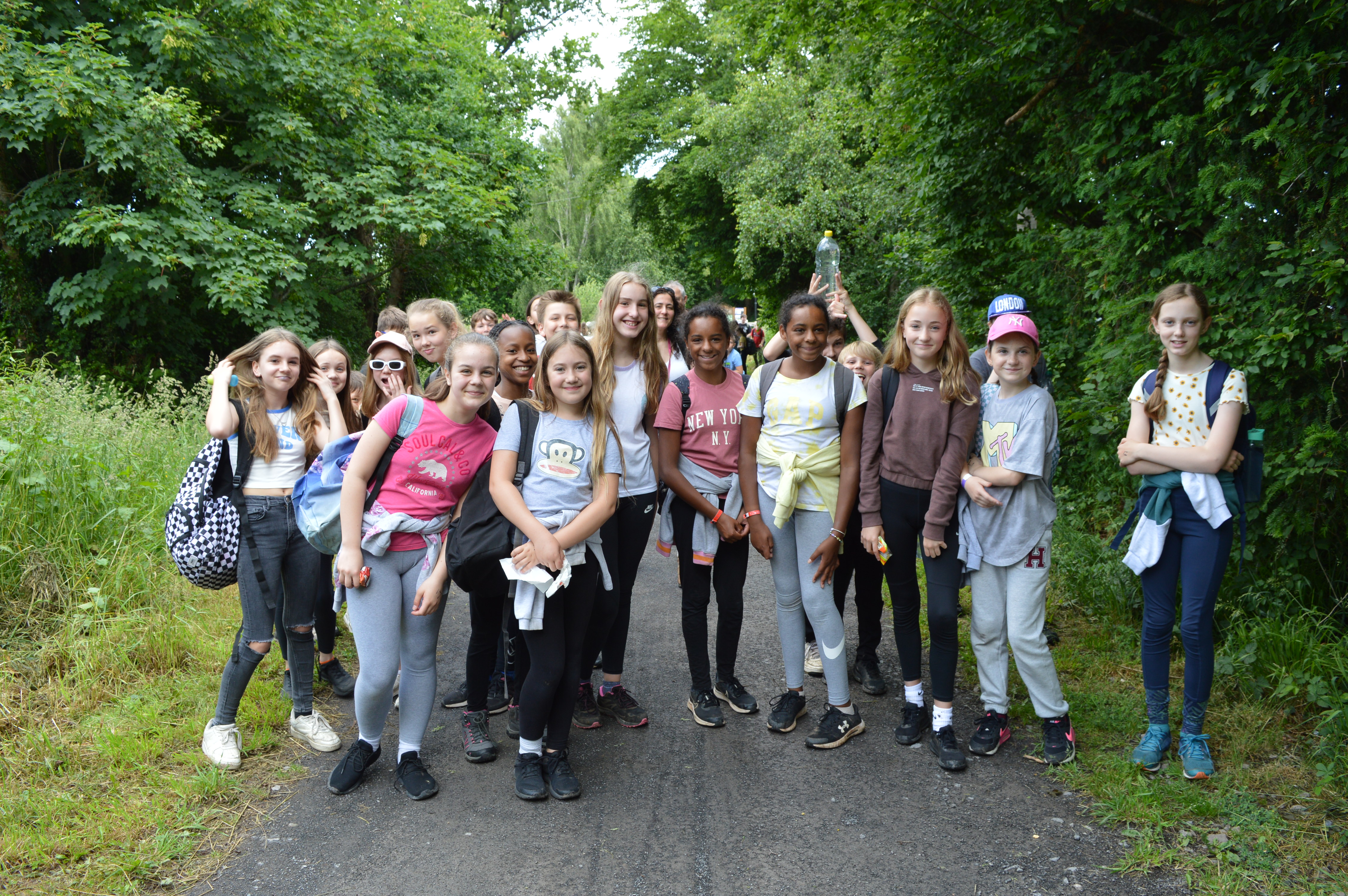
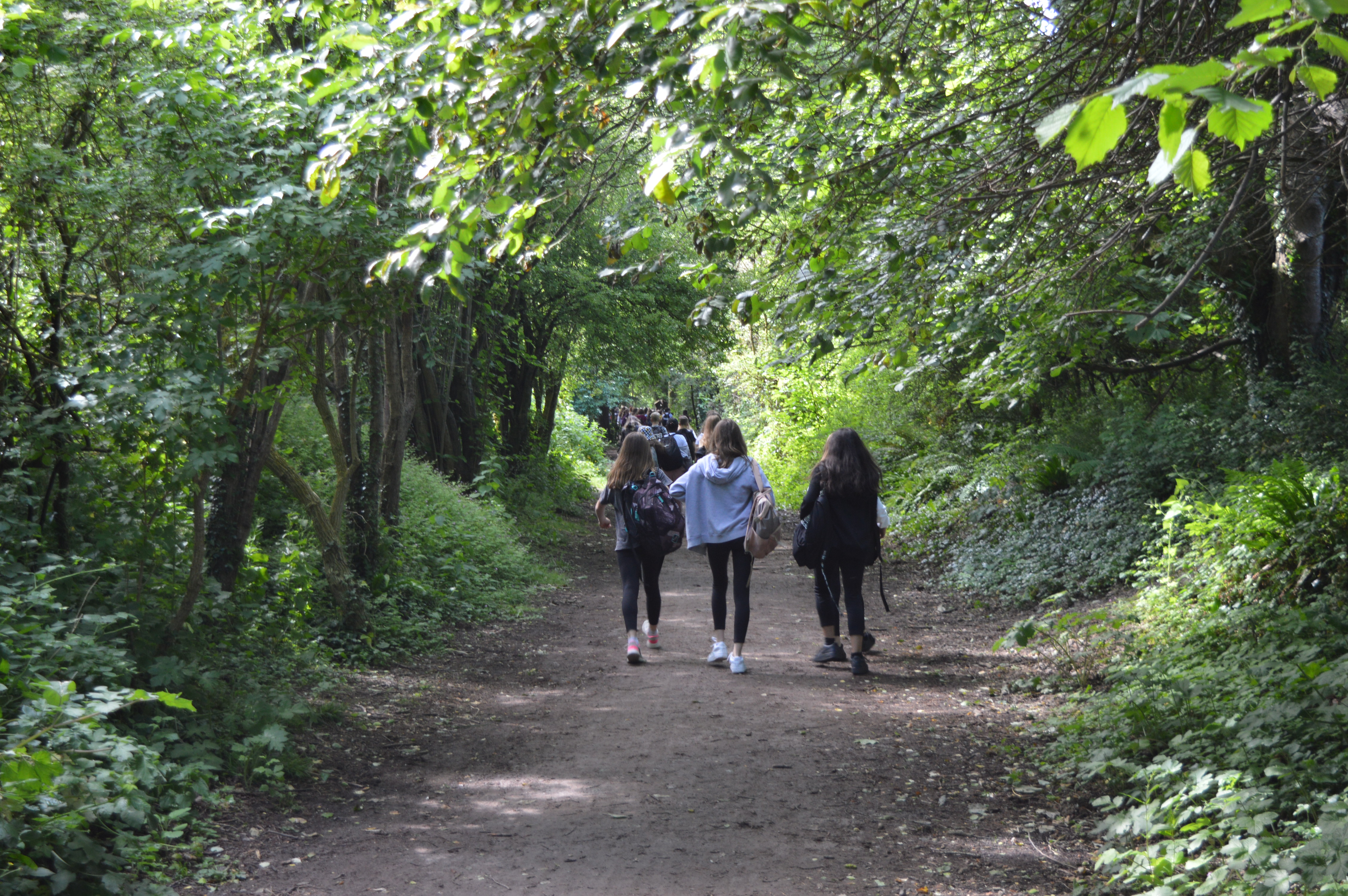
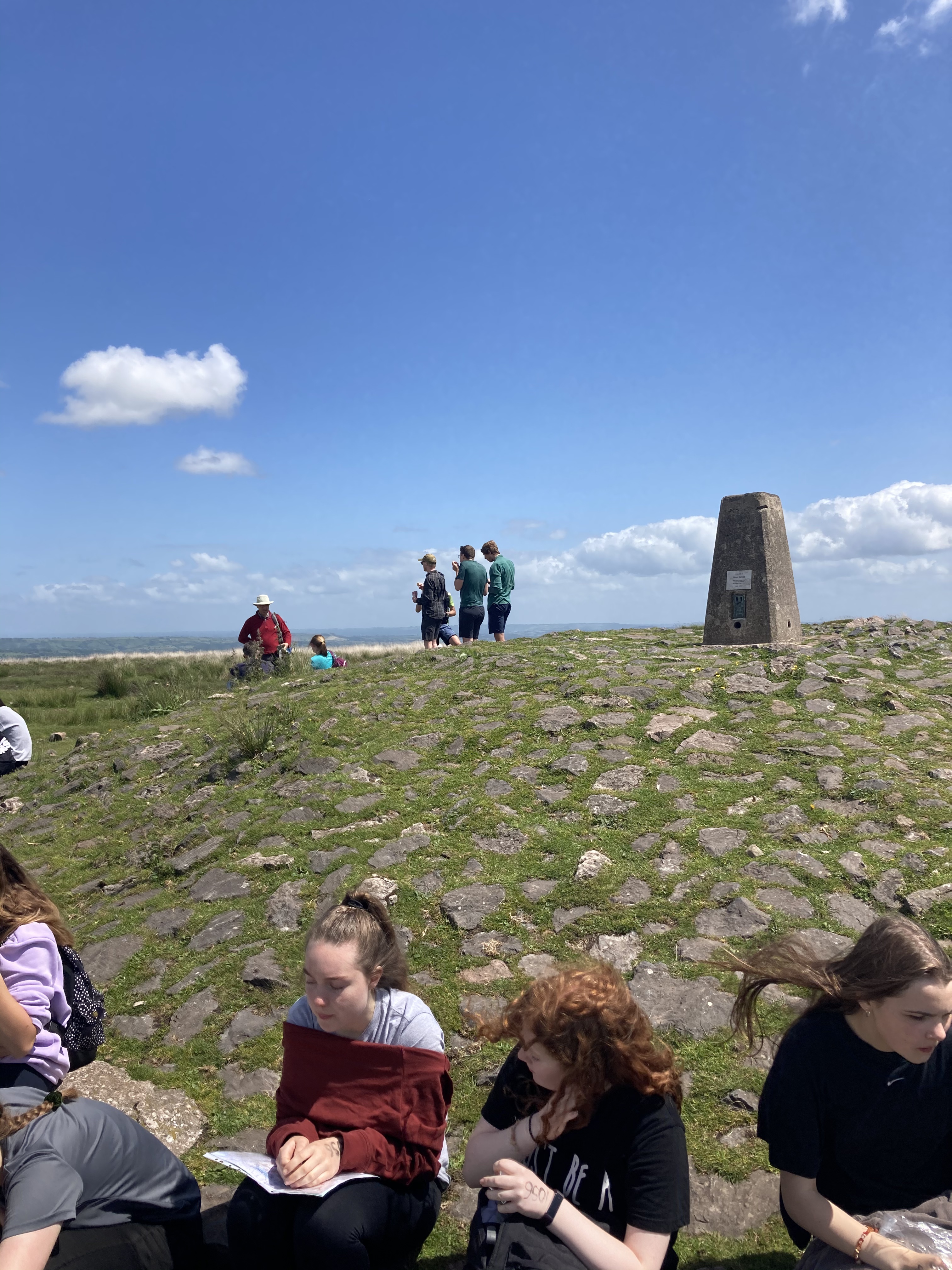
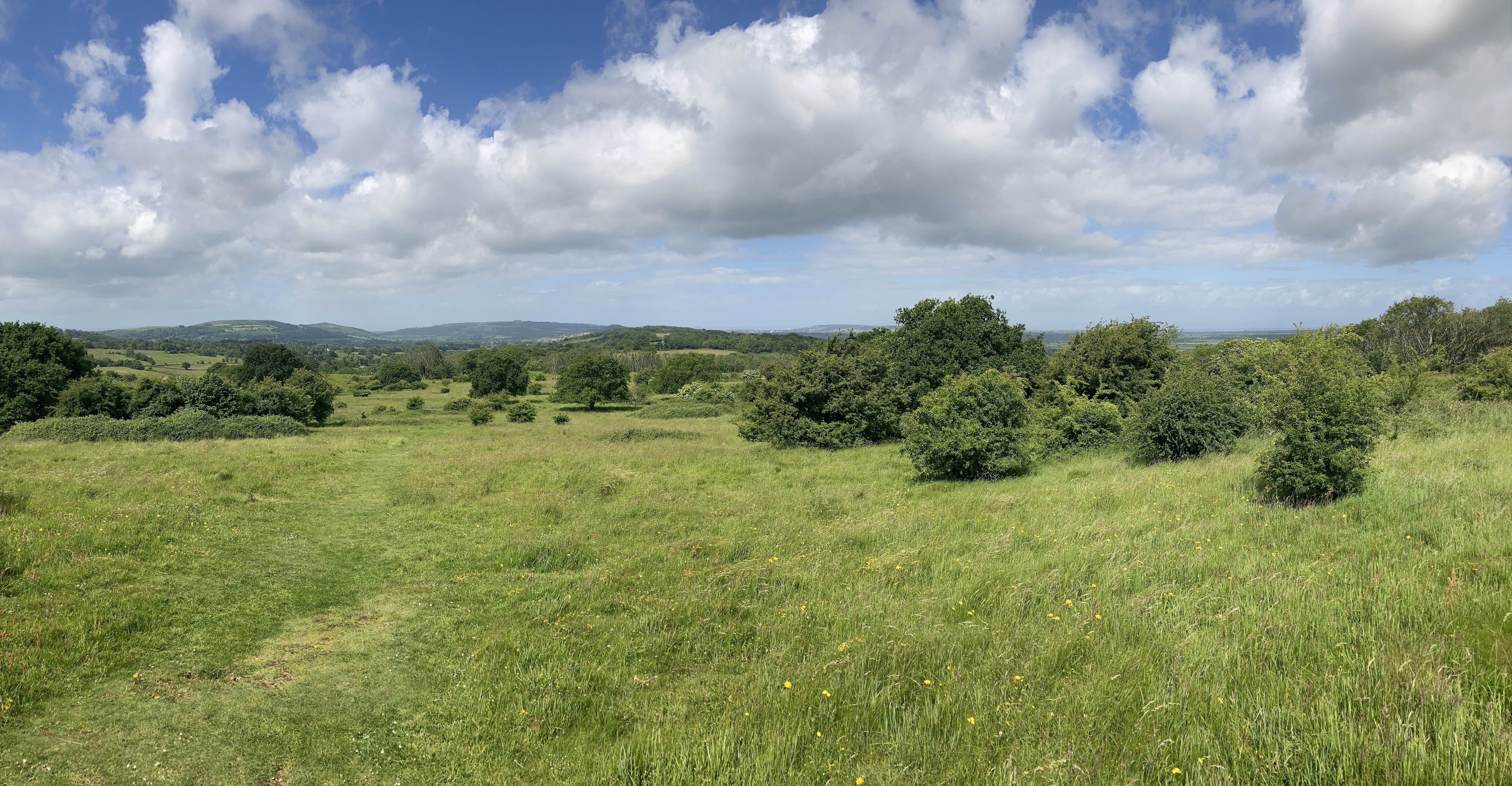
Year 7 and 8 take on a sponsored walk from the Sixth Form centre. Working in house teams, they walk from the Academy to Sandford, through the Thatchers’ Orchards, before joining the Strawberry Line. They use the Strawberry Line path to walk up through Winscombe, including the spooky dark tunnel, before turning off up to King’s Wood and, from there, to the trig point before Crook Peak. From there, students get the reward of spectacular views from Cheddar Reservoir to Glastonbury Tor, Brent Knoll, the Bristol Channel and over to Wales.
After a rest stop at the trig point, students head back down through Slader’s Leigh nature reserve for lunch at Winscombe Rugby Club, before returning to the Academy in time for the coaches at the end of school.
It’s quite a walk, with a steep ascent in the middle, but it’s well worth it!
The Senior Trek
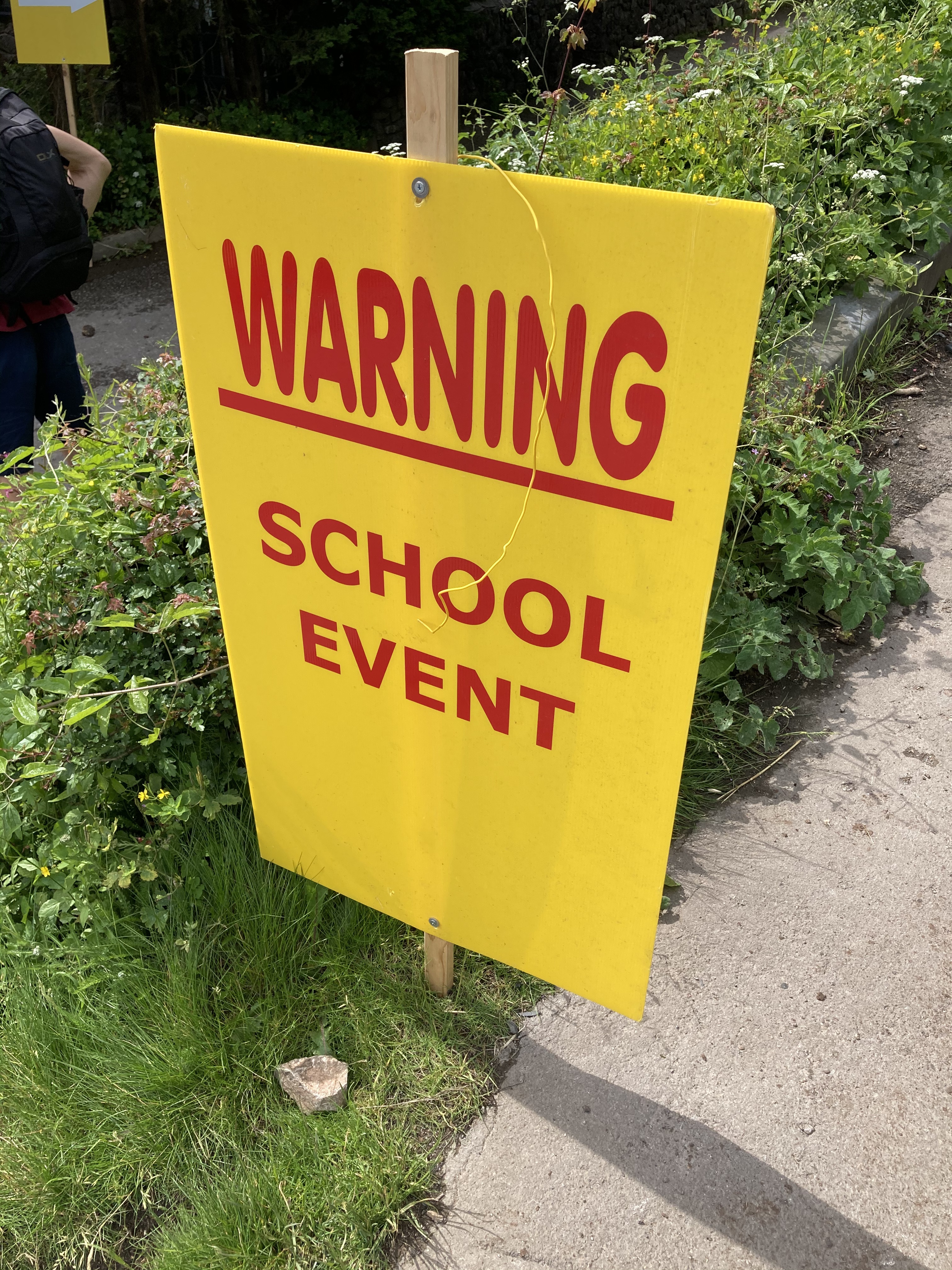
Students in Years 9 and 10 take on the challenge of the Senior Trek. The Trek is designed to promote independence as students, in house teams, navigate themselves between checkpoints on the Mendips, based around the peak at Black Down. Sixth Form students occupy the checkpoints, and students are awarded points for the number of checkpoints they are able to get to.
The key to success in the Trek is keeping your whole team together all the time. If you arrive at a checkpoint and your team isn’t together – you are disqualified! This is in place to promote teamwork and also to ensure that students are safe when navigating across the course. Teams arriving together win points for their houses – and this year’s results are below:
Senior Trek Results 2022
The Academy Values
The trek and the walk are designed to promote the Academy’s values:
Kindness: students support one another in their house teams to keep going and stick together on the trek and the walk. They are also required to be kind to the environment as they treat the area of outstanding natural beauty with respect, leaving no litter and being considerate of other members of the public enjoying the landscape.
Curiosity: students are encouraged to be curious about their local area. From spotting landmarks and landforms, to recognising the plants, birds and animals around them this is an opportunity to experience biology and geography in real life. They also learn a lot about one another – and themselves – when they take on the challenge!
Determination: the trek and the walk are big challenges – you need to be determined to keep going! Everyone who completes the challenge gets that big sense of achievement that you only feel when you’ve really had to dig deep to get it done – and that’s exactly what we’re looking for at Churchill!
It’s a huge undertaking for the staff to lead and organise these events, to get over 1000 students out onto the hills and back to school safely. I’d like to thank all the staff involved, especially those who take a lead role in the organisation. But, when you see the students back at school, tired but proud of what they’ve achieved, it’s definitely worth it!
Thursday 26th May is national Thank a Teacher Day for 2022. The day aims to celebrate the schools at the heart of our communities, and the role that they have played through the pandemic and beyond in supporting children and young people with their learning, progress and development.
For Thank a Teacher Day 2021, I wrote about two teachers who I remember with particular fondness from my own school days. This year, I want to turn my attention to the colleagues I work with as a teacher myself. And it’s important that this isn’t just about teachers – even though it is thank a teacher day! The support staff in schools enable us teachers to do our jobs. The office staff, the cleaners, the kitchen staff, the site team, the network and IT support team, pastoral support workers, counsellors, teaching and learning assistants, careers and business engagement, sustainability, finance and human resources – there is a huge team of colleagues working really hard to make sure our Academy functions properly and effectively. So, although it is the teachers who get a national day of thanks, I want to pay a special tribute today to all the support staff who work so hard at Churchill and beyond.
In particular, I want to record my thanks to Sue Griffiths. Almost anyone who comes into contact with Churchill Academy & Sixth Form will have met or spoken to Sue, as she is the smiling face working behind our reception desk. Sue has been at Churchill since the turn of the millennium, and in those 22 years she has seen and heard it all – but she’s far too professional to share her stories! Her smile, warmth and complete unflappability have ensured that countless thousands of people who have visited or called the Academy have come away with a positive first impression – myself included. For that, we owe her our immeasurable gratitude. Sue will be leaving Churchill at the end of this term, and we will miss her terribly.
And so, to all the teachers and to everyone who works in schools – thank you for all that you have done and continue to do for our children and young people. You are all superstars, and it’s a pleasure to work with you.
We temporarily abandoned our vertical tutor groups on Wednesday 4th November 2020. The decision to move to horizontal (year group) tutoring was made in the midst of the “bubble” system where close contacts of positive coronavirus cases were sent home for precautionary self-isolation, to minimise the risk of transmission and the disruption caused by close contact self-isolation. At the time, in my letter to families, I said “ We place a great deal of value on our vertical tutoring system, and students will return to vertical tutor groups once the public health situation allows.” We are now well beyond those restrictions and we are looking forward to returning to the vertical tutoring system which is the foundation of our house-based pastoral care system.
Vertical tutoring means that a small number of students from each year group belong to the same tutor group. There are many advantages to this system:
Tutor to student ratio: vertical tutor groups only have an average of five students from each year group. This means that tutors can spend more time with individuals, offering pastoral support and guidance. It also makes it easier for tutors to monitor academic progress, because when a progress report is published the tutor only has five students to work with, rather than up to thirty students in a year group system.
Role modelling and student leadership: vertical tutoring breaks down the barriers between year groups, so that students from different year groups can work together. This enables students in the older year groups to act as role models, peer mentors and sources of advice and guidance to younger students. It also means that students in younger year groups can more clearly understand the future of the educational journey, by seeing first hand the decisions, challenges and expectations of students in older years. This can raise aspiration and leads to a “future-focused” approach.
Dynamic composition: in a vertical system, each tutor group’s Year 11 cohort will move on to their next steps and be replaced in September by a new intake of Year 7 students. This means that the tutor group’s composition is dynamic over the years, ensuring that the groups remain “fresh” and there are always new students to work with.
Skills and character: working with students from different year groups every day requires our students to develop and practise important skills of teamwork, speaking and listening, problem solving, creativity, and leadership beyond the context of students the same age as them, which they do in five lessons every day. This is an important aspect of challenge which helps students to develop positively.
Behaviour: research – and our own experience – has shown that properly implemented vertical tutoring systems improve students’ prosocial behaviour across the school. Vertical tutoring can also “depolarise” behaviour, bringing out the best in all students. It reduces the amount of in-year rivalry and “cliques”: students are more likely to be friendly and kind towards each other and make friends with different year students. Older students often behave in a more grown up way as if they naturally feel a duty to model good behaviour.
Belonging and house identity: the house is the “home” for students at Churchill Academy & Sixth Form, and the vertical tutor group acts as the “family” for students. We expect students from across each house to work together as part of the house team to develop the identity and ethos of the house, in support of the Academy’s aims and values. This is greatly enhanced by vertical tutoring. This will be supported by the formation of House Councils in next year’s student leadership programme, replacing the year group councils which have been in place through the pandemic.
A letter will be coming home shortly providing details of the tutor group change, and students will have assemblies next week explaining how and why we are going back to normal. Then, on the first day back in term 6, we will be back in our vertical tutor groups. There will be an extended tutor time so that the members of the new tutor group can get to know one another, and expectations and approaches can be re-established. In this initial period, groups will be smaller, including students only from Years 7-10, as Year 11 will be on study leave. The groups will be ready to welcome the Year 6 students (who will be joining the tutor group as Year 7s in September) when they arrive for their induction day on 28th June.
Many generations of Churchill students have benefitted from this system over the years, and many other schools – both locally and further afield – have now adopted it. Any change is always accompanied by some uncertainty, and it is natural that students have become comfortable in their year group tutor groups. These were always temporary – although the twists and turns of the pandemic have forced us to hang on to them for longer than we anticipated we would have to! We know from long experience that vertical tutoring works best for getting students to work together positively, and we look forward to getting back to what we know works best for our students to help them make that positive difference to themselves and one another.
Term 5 is a pressurised term – this year especially. It’s just five weeks from Easter to the May half term, with formal GCSE and A-level exams starting on May 16th. The exams suddenly go from seeming a long way off, to being…well, next week!
The final furlong of exam preparation is about finishing touches. Courses have been finished, despite the pandemic disruption. Students have the knowledge and skills they need now to tackle the exams ahead of them. This final few days is all about honing exam technique to a sharp point: what exactly do the examiners want to see in an answer to this particular type of question? How can you manipulate what you know to squeeze as many marks as possible out of each part of the paper? How should you manage your time to ensure you leave enough to cover everything fully?
Despite two years without exams, teachers are well versed in the mystic art of exam technique. Exam preparation classes across the Academy are full of last-minute reminders about what to include, where, and how. In a exam situation, this is almost as important as the knowledge itself!
You can put yourself at an advantage by preparing well. Revision is essential, of course – you can find revision tips in the Revision category on this blog. But just as important is a good night’s sleep, and a healthy meal before an exam. An all-night revision session honestly won’t help as much as you wish it would – the brain works best when well rested and fuelled. Get to bed, sleep well, and have a good breakfast.
Once you’re in the exam itself, there are some general tips that I always swear by:
Be sure to answer all the questions – turn every page. Including the back page…yes, every year someone comes out ashen-faced when they realise there were eight questions, not seven.
Jot down your key ideas – don’t be afraid to do some rough work, or write down some key notes as soon as the invigilator says “you may begin.” Getting key ideas down will ensure that you remember them!
Write something for every question – if you’re not sure, make your best educated guess at the question. If you’ve written something, you’re in with a shout of some marks. If you write nothing – you’re definitely going to score zero.
Keep an eye on the time – you know how many questions are on the paper. You know how long you’ve got. Make sure you leave enough time to answer them all.
Check – use every minute of the exam. Check for silly mistakes. Check that you’ve written what you think you’ve written. Check for accuracy of spelling, punctuation, and grammar. Give yourself time to add in that extra bit that you forgot the first time through. It could make all the difference.
Exams bring stress and pressure with them – that’s an inevitable part of the process. Managing that pressure is an essential part of succeeding. Being well-prepared is the best way to ensure that the pressure works in your favour, rather than against you.
I hope these last minute tips have been helpful. Above all, I wish all our exam candidates the very best of luck. You deserve it.
Or why state schools actually provide a better education than private schools
This week, the front page of the Times newspaper declared (in horror): “privately educated to lose places at Oxbridge.” As Sam Freedman has subsequently pointed out, the headline here implies that privately educated students have some pre-ordained right to places at our most prestigious and elite universities, and should be up in arms about “normal” state educated children coming along to take away the places that are rightfully theirs.
This sort of stuff makes me furious!
As many of you will know, I am myself privately educated, and I went to Oxford to study English. One of the unresolved questions in my life is whether I would have got my place at Oxford if I had attended the local comprehensive, instead of being a scholarship boy at a competitive, selective, all-boys school with a long-established and well-designed Oxbridge preparation programme. Almost half of my A-level English Literature class in Year 13 successfully gained places at Oxford or Cambridge – it was “expected.” Was it my natural ability, work ethic and enthusiasm for reading and writing that got me in – or was is the advantage of a system loaded to get students from certain schools into certain universities?
I will never know the answer to that question, but one of my personal missions as teacher and Headteacher is to ensure that students from the state schools I work in recognise that they have just as much right to places at our most prestigious universities and top careers as anybody else. I want to make sure that the playing field is levelled wherever possible, so that those without privilege have equal access to the opportunities that those with privilege take for granted.
Over my 25 years working in mixed state comprehensive schools across the East Midlands and the South West, it has also become abundantly clear to me that a state education is actually superior to a private one. Not necessarily in terms of resources – private schools are cash-rich. Mine had two theatres and its own sailing club, for example; most state schools can’t compete with that. But an education in a comprehensive school gives you something that a private school can’t: the understanding of people who come from a different background to you.
At Churchill, we have students from across the whole range of ability, across a wide range of backgrounds, with different needs, family backgrounds, identities, enthusiasms and interests. Some of our students come from rich, privileged backgrounds; some live in poverty. We are a rich, diverse community. I never had that at my school – I had no idea about how people different to me lived their lives. And that meant that, although I knew I lot about Jane Austen, Shakespeare and the Romantic poets, I wasn’t really that well educated – because I didn’t really understand people who weren’t like me. That part of my education didn’t begin until I trained as a teacher, age 22, in a deprived area of north Nottinghamshire, in a state comprehensive school.
It is clear to me, having been educated in the private sector and worked for two and a half decades in the state sector, that students get a better all-round education in state schools than they do in private ones. I have three children myself – my youngest is just finishing primary, and my eldest is in Year 11. They all go to state schools. I wouldn’t have it any other way.
A lens refracts light to focus on one point (the focal point, F); our brains work in a similar way
In this week’s assemblies, I have been going through the Behaviour for Learning Top 5 we are focusing on this term:
Strong start: We arrive on time, line up and enter the classroom calmly
Full attention: We are immediately silent and face the speaker when called to attention
Full effort: We apply ourselves with our full effort to the learning tasks set
Full focus: We focus all our attention on the learning tasks set
Calm finish: At the end of the lesson we wait in silence for the member of staff to dismiss us
Part of the assembly demonstrated why it is important that we focus all our attention on the learning tasks set. The reason for this is that it’s not possible for the human brain to think about two different tasks at once.
Of course, it is possible for us to multi-task. We can walk and talk at the same time, or we can eat a snack whilst reading a book. This is possible because some of the process have become automatic in our brains: they are happening without us really thinking about then. In the examples above, the walking and eating are automatic – we can do them without thinking about them – meaning that our brain’s attention can be freed up to think about the talking or the reading.
What we can’t do, is actually think about two attention-demanding things at once.
We might think that we can – but actually what is happening is that our brain focuses on one thing, and then switches to the other thing, and then switches back to the first thing. This process is called code switching, and some people can do it faster than others – but what we can’t do is focus on two things at the same time. Like the illustration of the cats above, our focus shifts from one thing to another – but it can only be on one thing at a time.
My favourite demonstration of this is the card-sort-and-maths-questions task, as shown to students (with some helpful volunteers) in the assemblies this week.
In this demo, a willing volunteer is given a standard deck of cards and asked to sort them into suits, with each suit in number order, as shown in the illustration above. This is a simple enough task, but it requires the volunteer to think about it to make sure they identify the card, recognise it, and place it appropriately on the table in front of them. The audience watches the volunteer sorting the cards.
Then, I introduce a complication: I ask the volunteer to answer some simple mental arithmetic questions. For example:
What is half of 90?
What is 37 more than 60?
What is half of 8.2?
A television programme starts at 11:05 and ends at 12:15. How long did the programme last?
Three fifty pence coins have a mass of 18 grams. What is the mass of one fifty pence coin?
What is half of 144?
What is double 3.6?
Again, on their own these questions are all solvable – with a little bit of thought. So, what happens when I ask the volunteer the mental arithmetic questions, whilst they are sorting the playing cards?
Their hands stop moving.
If they try to keep sorting the cards, they can’t answer the arithmetic question. If they try to answer the arithmetic question, they can’t keep sorting the cards. It’s no reflection on your mathematical ability (or your card-sorting ability, for that matter): it’s a simple psychological fact that your brain can’t do both things at the same time.
So, why does this matter?
The reason why full focus is the fourth item on our behaviour for learning top 5, is that we need to concentrate fully on the task in hand if we are going to do it well. If something distracts us, or takes our attention away from the learning task, we simply cannot be thinking about the task – and therefore, we are not learning effectively. We are like Dug, the dog from the Pixar film “Up”, whose attention is dragged away from the conversation at hand whenever he sees a squirrel…
For our students to be successful, they need to avoid their own personal “squirrels” – the things that might distract them – to ensure that they stay focused on the learning at hand. That requires self-discipline, concentration and effort, but the impact on learning is significant.
And that is why we have made it our focus this term.
We know that good behaviour is essential for learning to take place. We reinforce this with our Code of Conduct and Effort Grades, and we incentivise it through our rewards system. We know that, over the past few years, it has been difficult to maintain consistency. COVID lockdowns, followed by periods of high staff and student absence, and the disruption to rooming in the Academy caused by works to Stuart House and Lancaster House have all contributed to a “stop-start” feeling for some classes, groups and individual students. We are certainly not alone in this: we have heard of many local schools having to close to entire year groups due to staff shortages this term, which is thankfully not a step that we have had to take.
Our Code of Conduct and Effort Grades
We hope that we will now be moving into a more settled period. Stuart House is open, and the long ten-day isolation periods for COVID infections are a thing of the past. Given the disruption of recent years, attendance is more important than ever – students cannot afford to miss any more school.
But simply turning up isn’t enough. For real learning to happen, students need to work hard. Learning is difficult; it requires effort. And this is where behaviour for learning comes in.
Behaviour for learning is about more than just being kind, polite and respectful. It is about more than just wearing the correct uniform and bringing the right equipment and making sure your mobile phone is not seen or heard around the Academy. These things are important, of course – but behaviour for learning is about engaging in those actions that will enable you to take in information accurately and store it in your long term memory for later retrieval. It is rooted in our learning values, which are displayed around the Academy every day. We believe in the value of:
Determined and consistent effort
A hunger to learn new things
Challenging ourselves to go beyond what is comfortable
Viewing setbacks and mistakes as opportunities to learn and grow
Seeking and responding to feedback
Encouraging others to succeed
It is these values which underpin our approach to learning across the curriculum.
This is one of my favourite videos to illustrate “passive” learning: these characters are well-behaved, but they aren’t able to take action to “unstick” themselves when they get stuck, or to apply effort to solve a problem for themselves. They are forced to wait around for someone to come and help them out. These are not Churchill learners!
When we return after the Easter break, we will be working hard with all our students to refocus on the key elements of behaviour for learning. This includes the Code of Conduct and Effort Grades, and our learning values. But we will also be clarifying and reinforcing our expectations of behaviour for learning in lessons.
In every lesson, every time, we expect students to follow our Behaviour for Learning Top 5:
Strong start: We arrive on time, line up and enter the classroom calmly
Full attention: We are immediately silent and face the speaker when called to attention
Full effort: We apply ourselves with our full effort to the learning tasks set
Full focus: We focus all our attention on the learning tasks set
Calm finish: At the end of the lesson we wait in silence for the member of staff to dismiss us
The return to school after Easter gives us a perfect opportunity to ensure that our students make the most of every moment they have at school, and use it to make progress in their learning. Staff will be working together to ensure that these expectations are clearly explained to students, and that they are supported and challenged to meet them – in every lesson, every time. Because, after the disruption of the past couple of years, we can’t afford to waste a single moment.
Since 2019 I have been one of four school leaders representing the south west region on ASCL Council. This has been – and continues to be – a privilege and an honour. In this week’s blog I hope to give you an insight into what it means to work as part of ASCL, especially through the upheaval of the pandemic.
What is ASCL?
ASCL is the Association of School and College Leaders. It is a trade union and a professional association, representing more than 21,500 leaders of primary, secondary and post-16 education from across the UK. ASCL members are responsible for the education of more than four million children and young people and children.
As an organisation, ASCL speaks on behalf of its members, but acts on behalf of children and young people. This has been most clearly seen in the role of ASCL’s General Secretary, Geoff Barton, who is often seen and heard on the news putting the view of schools when an education story hits the headlines.
ASCL’s General Secretary, Geoff Barton
As well as being a trade union which provides advice and support, ASCL works on behalf of it members to shape national education policy- and this is where ASCL Council comes in.
What is ASCL Council?
Council is the policy making body of ASCL. It is made up of elected members, representing all the regions of the UK and all sectors of education, from early years and primary through to further education. The Council meets three times during the academic year to debate ‘hot’ topics, and agree the position that ASCL should take on behalf of it members. These positions are then used to lobby government to try and promote policies that are in the interests of schools and colleges, and point out practical difficulties in policy proposals coming out of government.
The main committees are:
Conditions and Employment which includes pay, conditions, recruitment, retention, workload, employer engagement, pensions
Funding
Inclusion and Equalities which covers inclusion, equalities, closing the gap for pupils and staff, and performance of groups
Leadership and Governance which includes leader and teacher development, governance, inspections, and accountability
Curriculum and Assessment which covers curriculum, teaching and learning, assessment, and qualifications – this is the committee that I am a part of.
The work of the elected members of Council is supported by policy specialists. These are people who work specifically for ASCL, to take the views and positions of Council to government ministers and officials, Ofsted, Ofqual, exam boards and anyone else involved in education decision making, to try and influence those decisions for the good of the system.
I stood for election for Council in 2019. My aim was to make sure that the perspective of rural school was represented in policy discussions, which are often made in big cities and don’t always take account of schools in the countryside! I also wanted to play my part in representing my colleagues in the south west at a national level.
What have we done?
Since I have been part of Council, we have discussed such matters as:
The role of multi-academy trusts in the future education system
What role – if any – artificial intelligence could or should play in assessment and exams
The replacements for exams during the pandemic in 2020 and 2021
The Department for Education’s guidance on reading
The curriculum under the new Ofsted framework
How students could and should apply for university places
The role of BTECs and T-levels in the post-16 curriculum
The balance between central government control and school autonomy through the pandemic and beyond
How to ensure that education gives students from disadvantaged backgrounds the opportunity to achieve as well as their non-disadvantaged peers
The funding and provision for students with special educational needs and disabilities
I have also been privileged this year to join the ASCL Executive Committee as the organisation’s Assistant Honorary Treasurer. This has given me a seat around the ASCL “top table” and provided me with an even greater insight into the engagement between the education sector and the politicians and officials responsible for the system.
Central to the work of the past few years has been the development and publication of ASCL’s Blueprint for a fairer education system. This key document sets out how we, as school and college leaders, would like to see the education system develop over the coming years
What have I got out of it?
I have had the opportunity to meet the previous Secretary of State for Education, Gavin Williamson, and his successor, Nadhim Zahawi, to discuss policy positions and provide feedback from the “front line” of education. I have also met with Baroness Barran MBE, the Minister for the School System, and Bridget Phillipson, Labour’s Shadow Secretary of State for Education. Often these are “Chatham House Rules” meetings so the discussions can be free and open. What has struck me about all these meetings is how willing the politicians are to listen. Although they don’t always agree with the position we are putting forward, I do see the impact of hearing things from people actually doing the job, day in, day out. So, whilst not all government education policies are received with rapturous applause by the profession or the general public, some of them are considerably better than they would have been due to ASCL’s intervention!
It has been fascinating to be involved in these high-level discussions about policy at a national system level. Thinking about the implications for all schools, not just my own, has made me think about how the education system works as a whole – and how that filters down to the staff, students and families of Churchill Academy & Sixth Form. Being part of this conversation also means that I am well-informed about policy decisions coming down the track, as well as the thinking, aims and intentions behind those decisions.
Council has also enabled me to make connections with school leaders across the country, including in Scotland, Wales, Northern Ireland, to understand how different schools are responding to the pressures and challenges of leading and managing schools today. I have learned a great deal from their approaches – and shared some of Churchill’s excellent practice with them in return. It is a genuine collaboration, and it means that we are able to support one another towards greater success in the future.
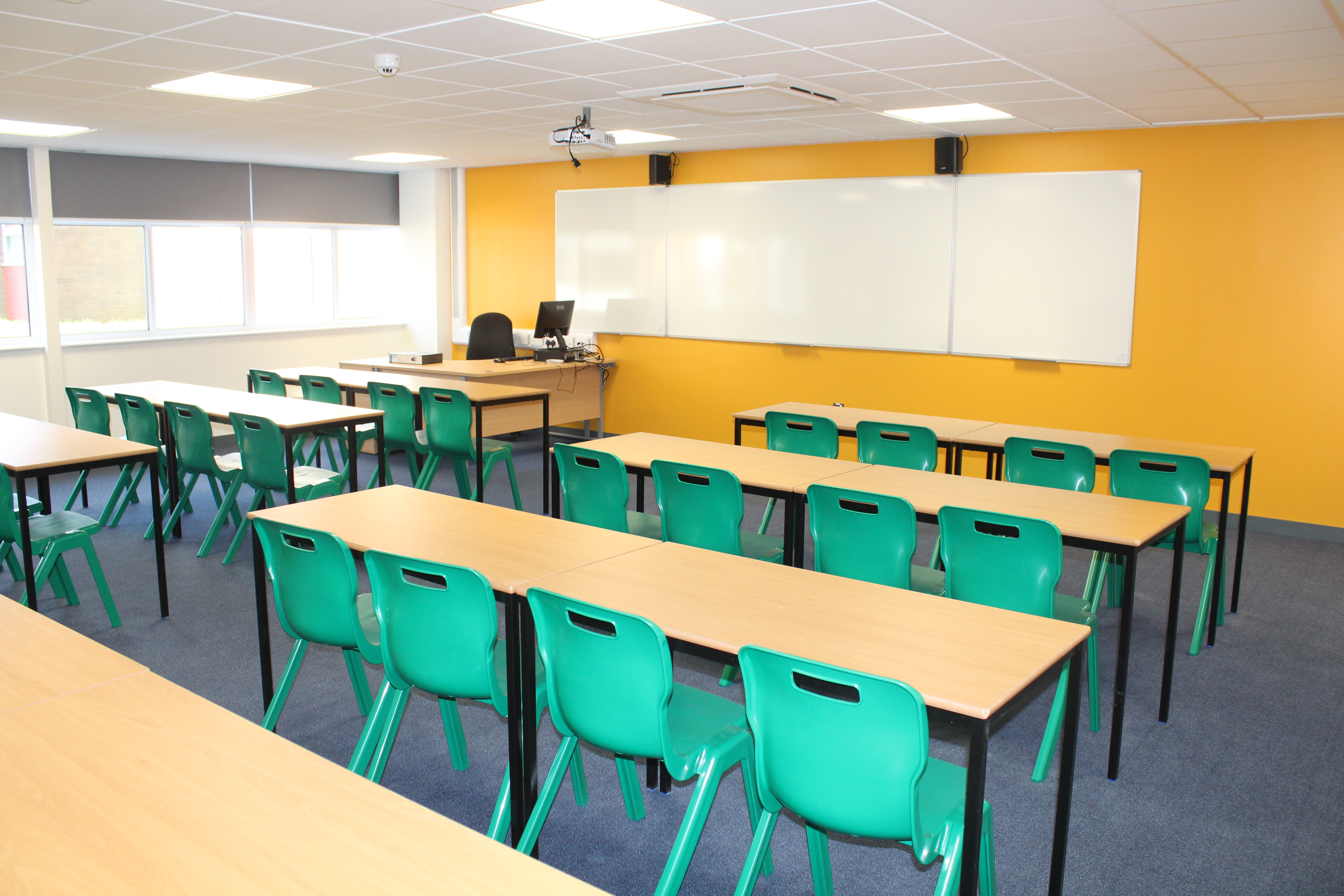
This week we have reopened the Stuart House block after a complete internal rebuild of the facility. The Stuart House tutors, and the Humanities teachers and their classes, have been spread across the school since September – but now they have a shiny new home!
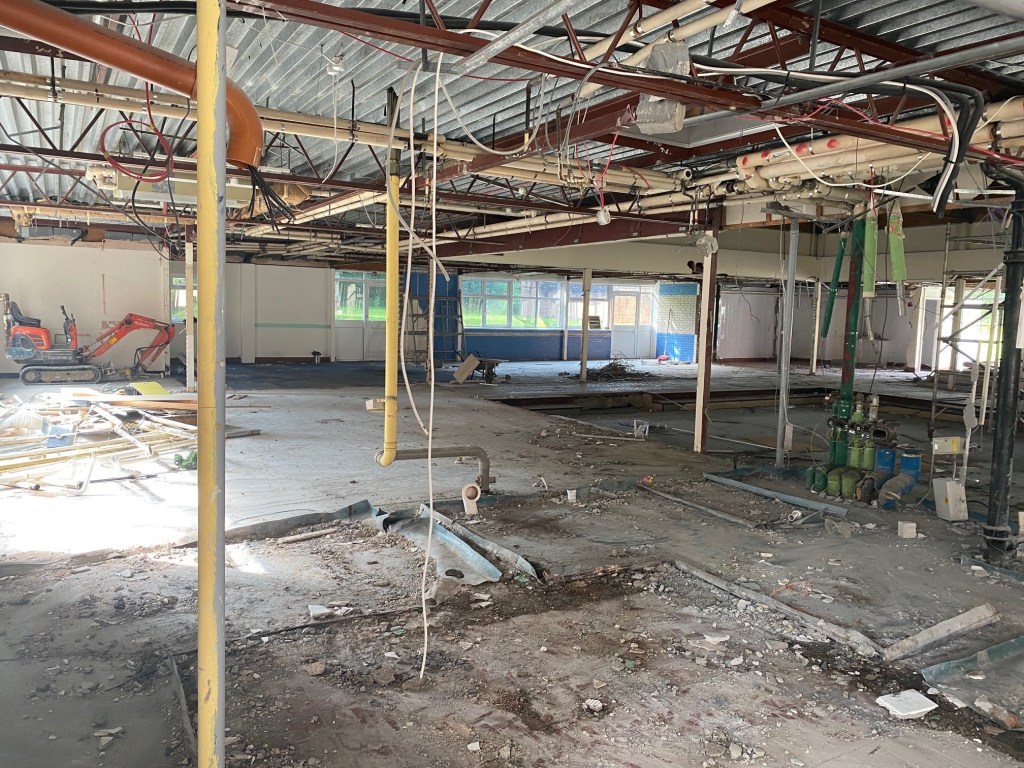
The interior of Stuart, August 2021
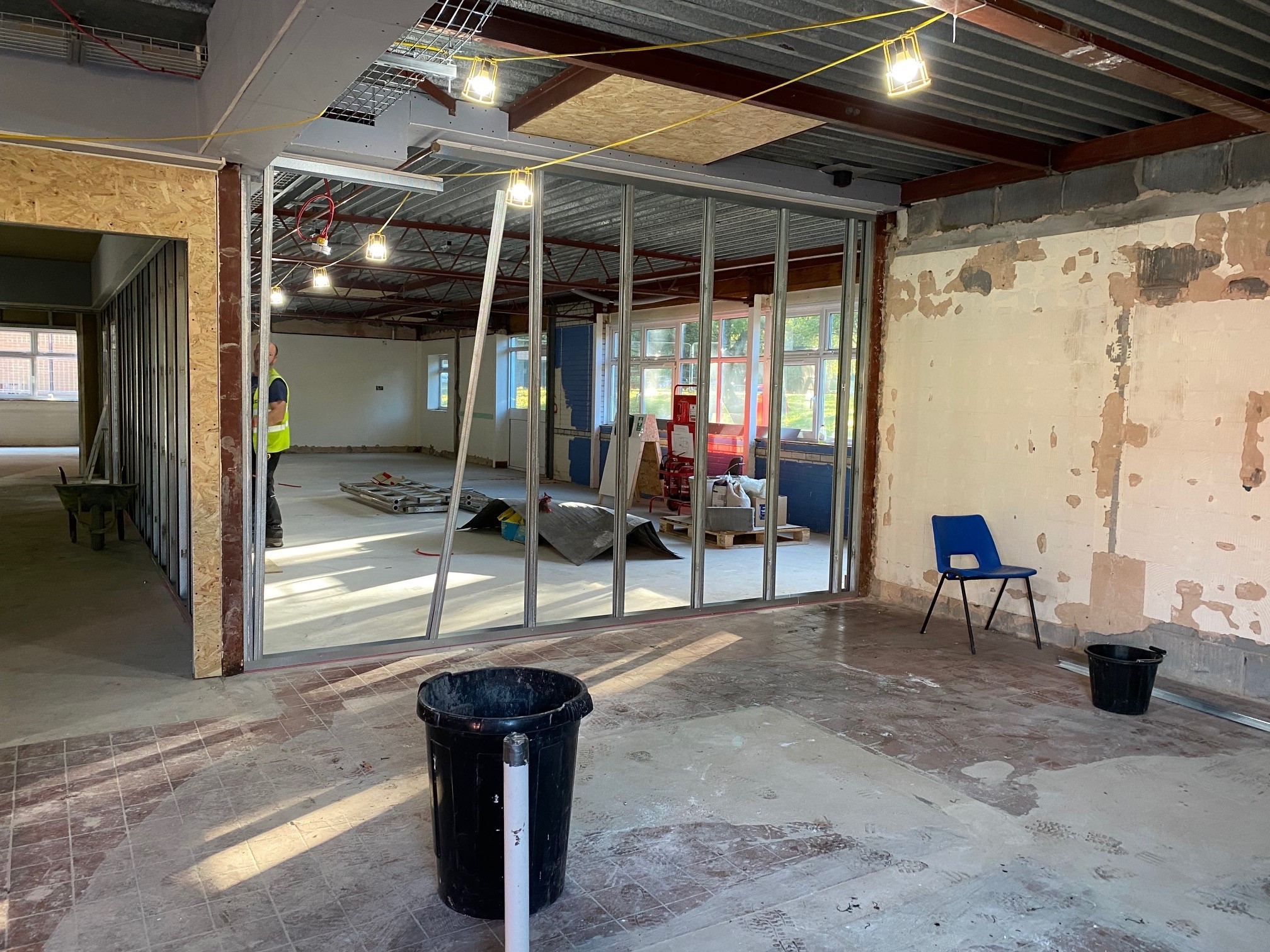
Works began last summer, with the removal of all internal walls and disconnection of services, to give our contractors the “blank slate” to work from. It was quite something to see everything ripped out of the building and the cavernous space left behind! From there, the building contractors began putting the new walls, ceilings and floors back in.
Over the past few years, we have learned a lot about “what works” in classroom design, and this is a further opportunity to put that into practice. Sound-deadening panels in the wall construction, and acoustic “pillows” above the classroom roof tiles, mean that students can concentrate on their learning without being disturbed by sound from next door. Climate control units in each room will mean that they will be warm in winter, cool in summer, and the air will be filtered and exchanged constantly.
We have also improved classroom size and layout so students are able to be seated with a good view of the coloured “teaching wall” which is a standard feature of our classroom design. Where possible, we have also equipped all rooms with new classroom chairs, designed to aid good posture and focus, as well as desks. And, of course, motion-activated LED lighting is standard to keep energy usage down, in line with our sustainability priority.
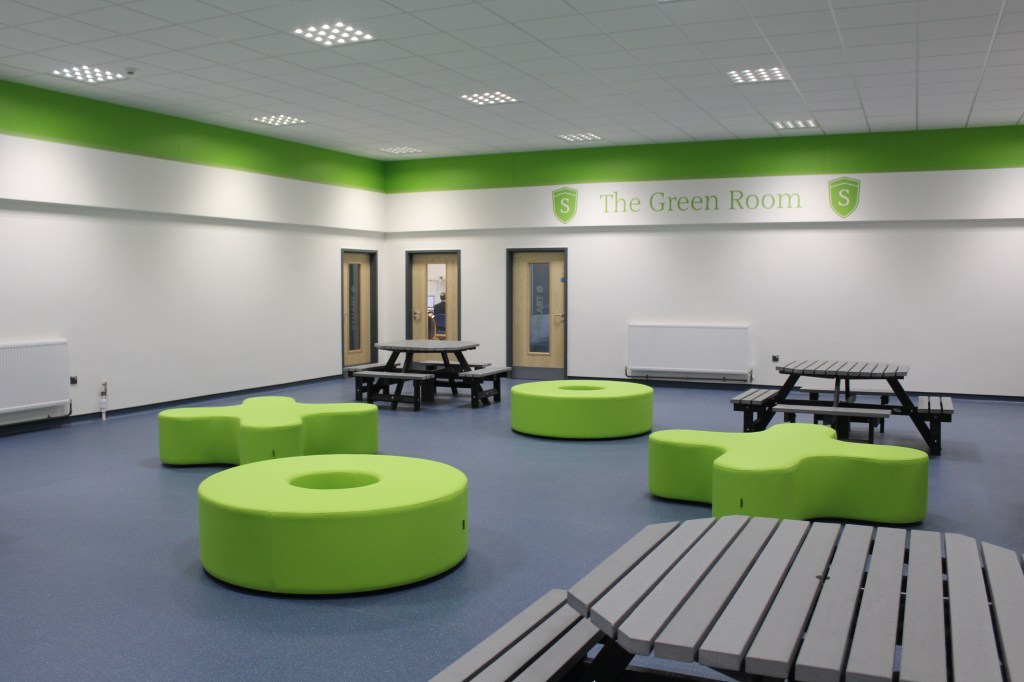
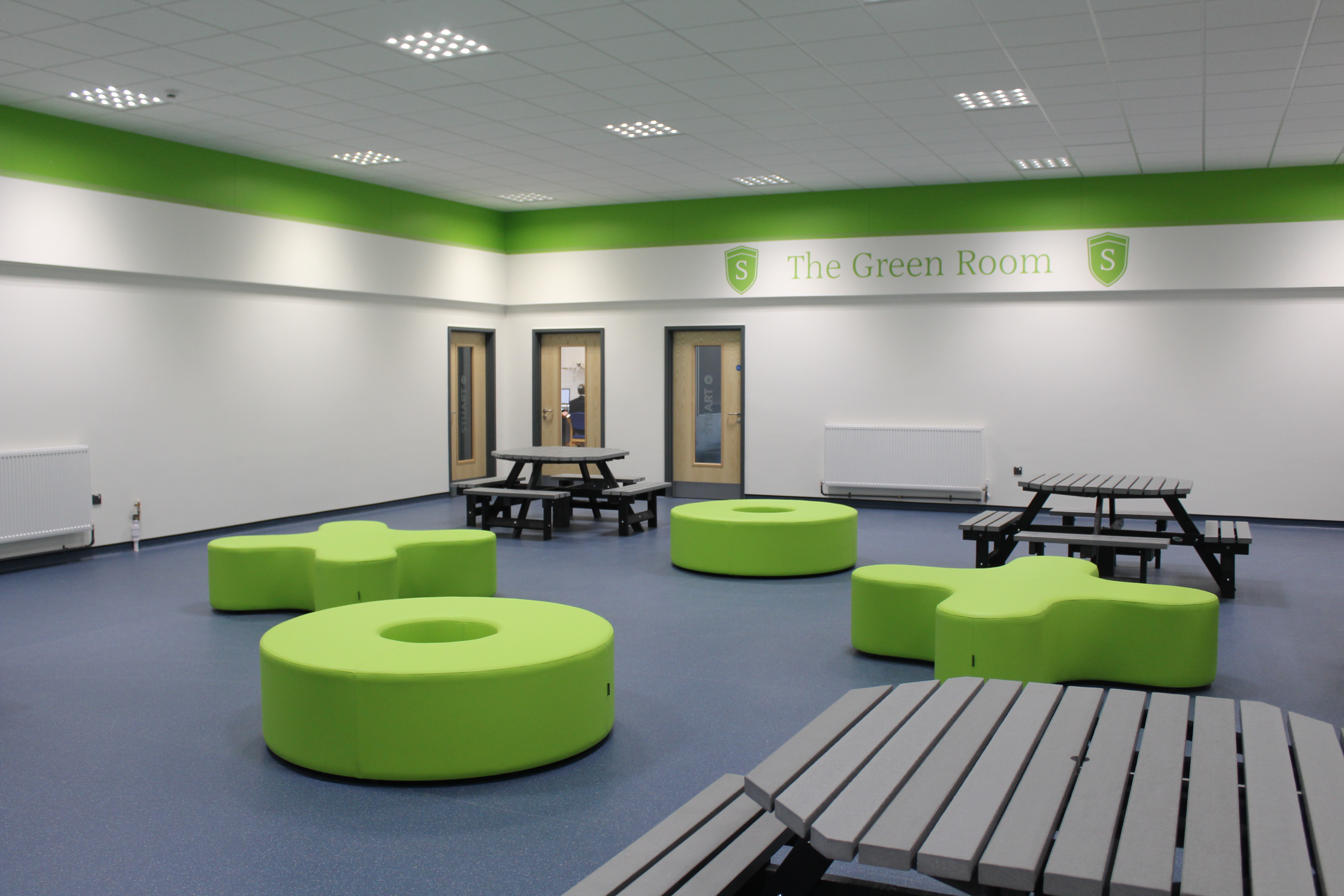
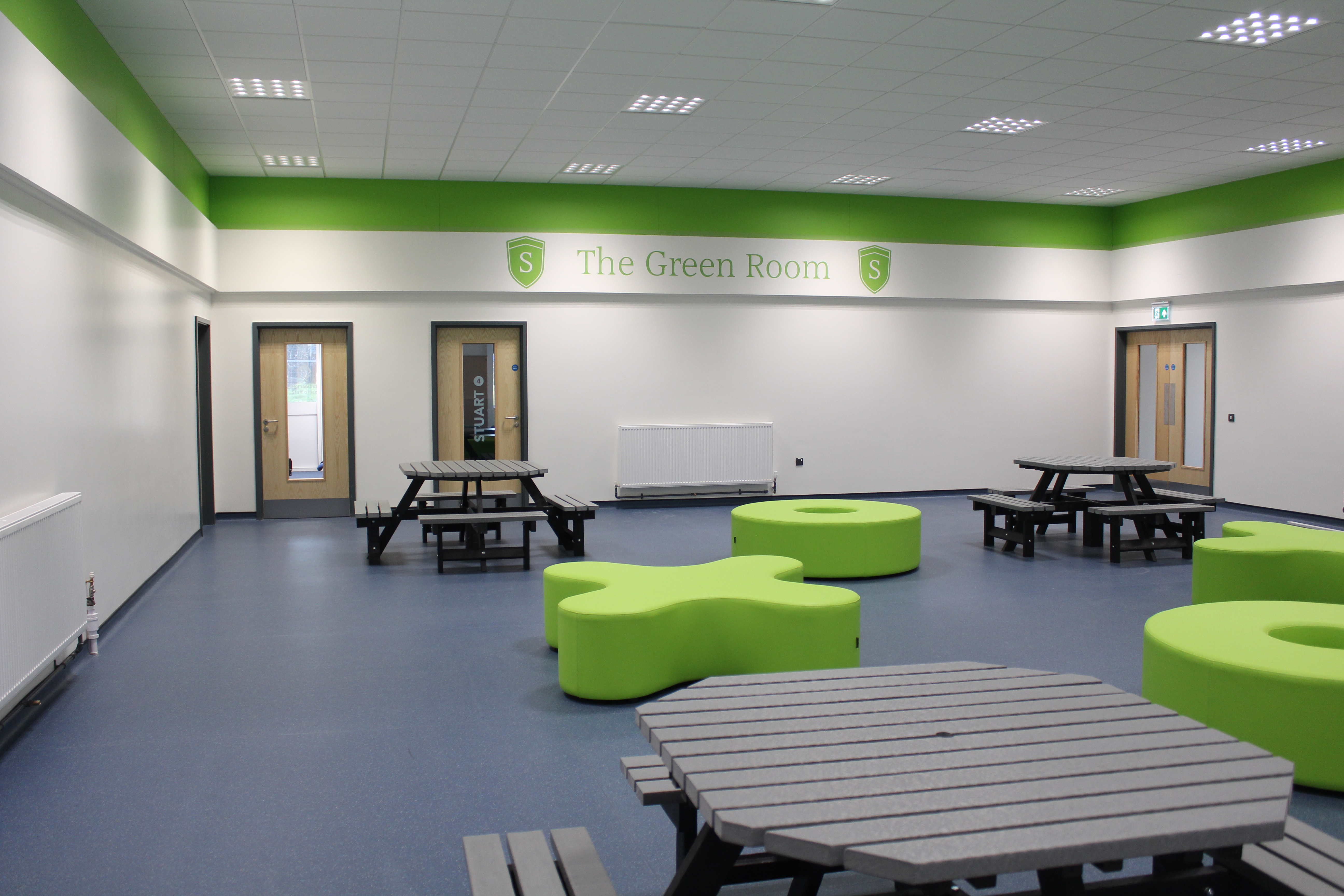
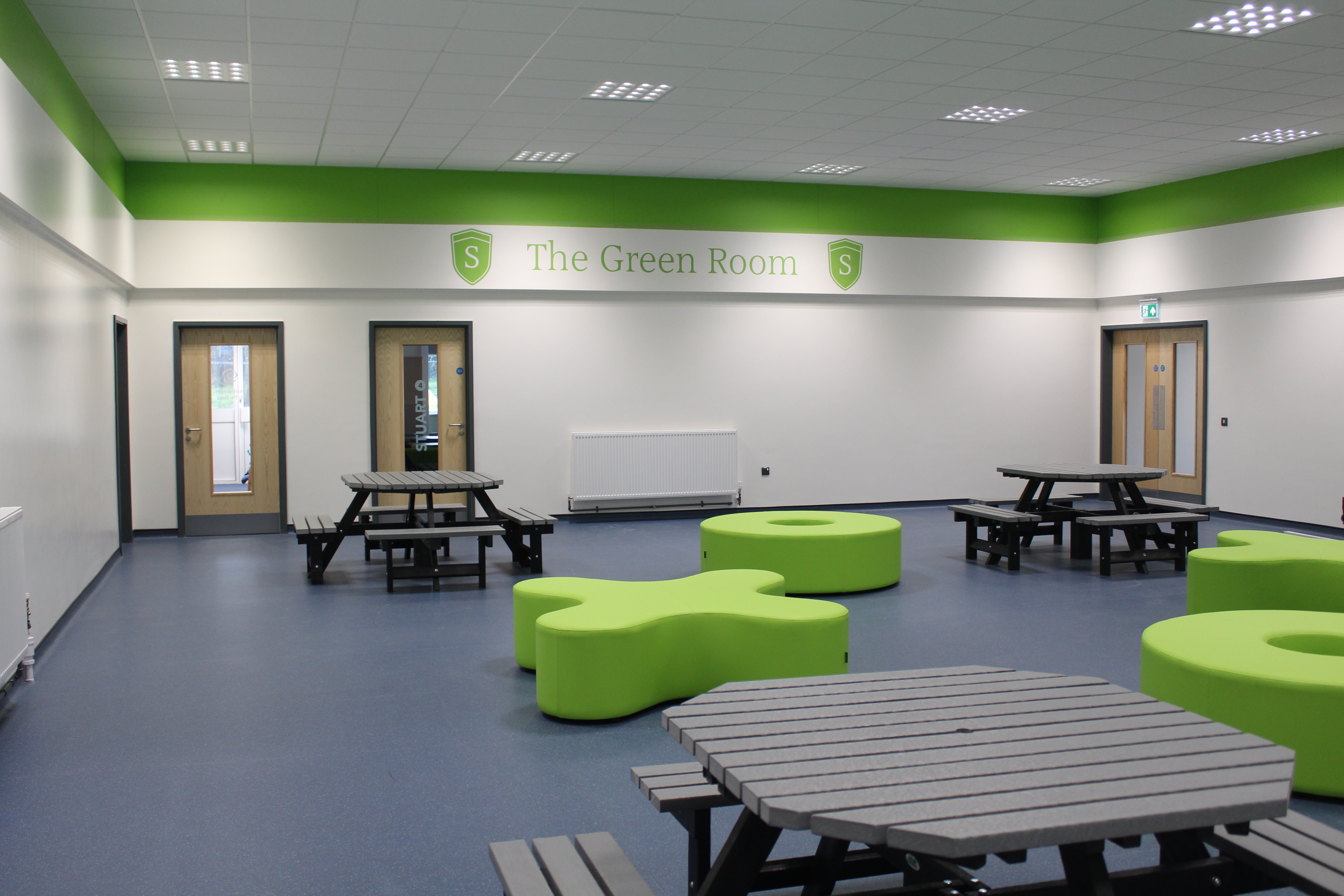
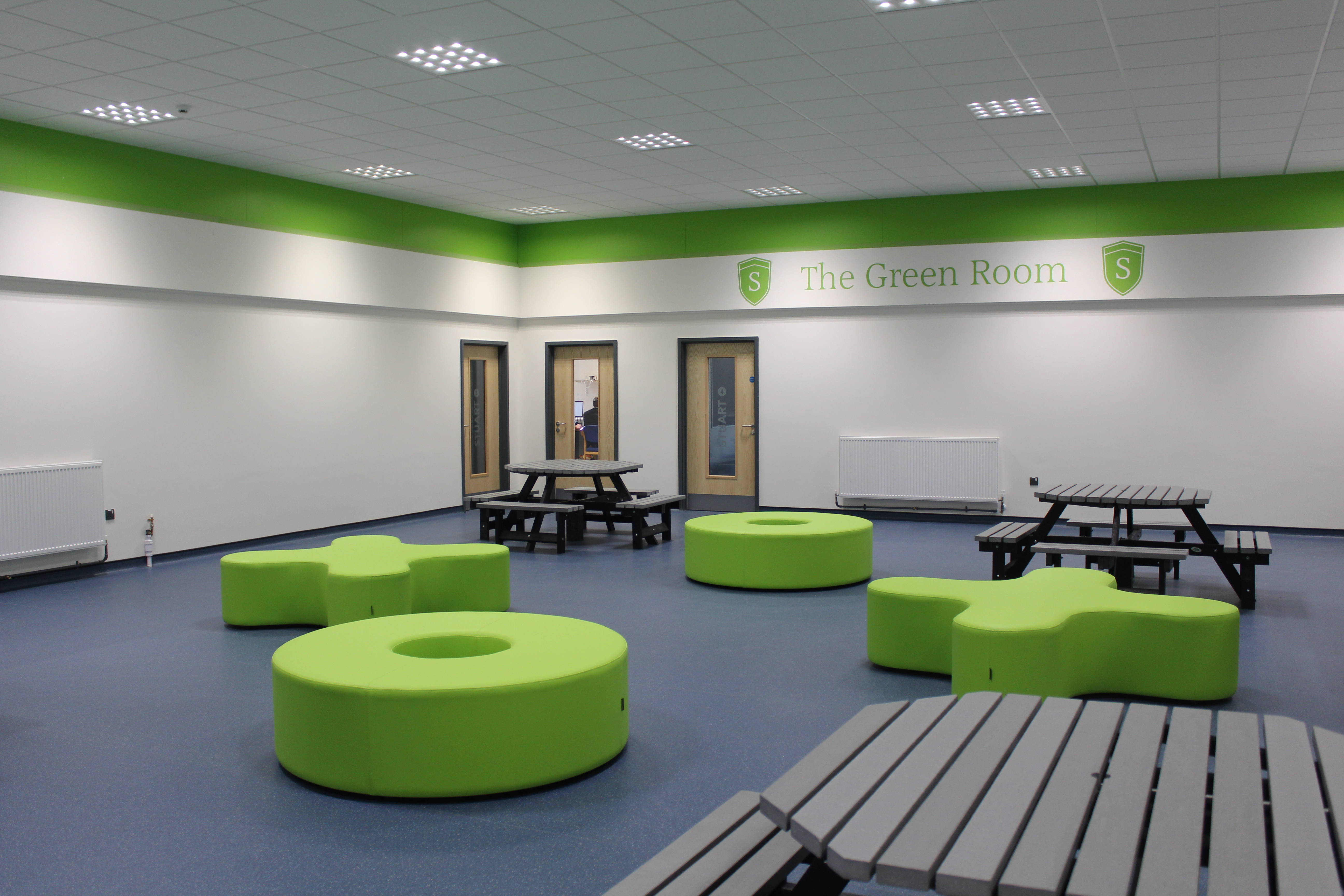
The new Green Room social space has been designed with chunky “noughts and crosses” style seating, and indoor picnic benches for students to use at break and lunchtime. The Green Room is a dedicated Year 8 social space, and they can’t wait to get in and make use of it!
The project is the latest phase of our ongoing redevelopment of the learning environment, which has included:
And we’re not done yet. We have another bid in to replace the temporary buildings which currently house S18, S19 and S20 – we should hear back about that next month.
The “behind the scenes” effort to make this happen has been immense. All of these projects have been funded with help from the government’s Condition Improvement Fund, and the astute use of Academy resources. The Academy Trust Board has supported the Academy’s vision to transform the learning environment for the the staff and students of Churchill, and that transformation over recent years has been significant, with the investment of over £10 million in the Academy site since 2016. From the writing and preparation of bids, through managing the projects and working with contractors to ensure the works were completed safely, on time and to a high standard, countless hours of staff time have gone in to the project. The results are definitely worth it!
Before we returned to school on Monday after the half term break, we planned and wrote the following statement:
Academy Statement on the war in Ukraine
We are all horrified by the suffering of innocent people in Ukraine. The invasion of Ukraine was ordered by Vladimir Putin, and is his responsibility – it is not the responsibility of the Russian people. The situation is incredibly serious; it is a time for compassion and togetherness in support of peace and our shared humanity. We expect all our students to listen, learn and do their best to understand what is happening in Ukraine, and to be sensitive to members of our Academy community who may be affected by events there. Above all things: be kind.
This statement was in our student Daily Notices on Monday morning and has remained in place throughout this week. We also provided all staff with video and text “explainers” so they could answer students’ questions about the conflict. Our intention is to support all students in our Academy community to understand the conflict and draw sensible, mature conclusions based on factual information. Staff at Churchill worked hard with our students to emphasise our shared humanity and the will for peace.
Our Academy includes students from all over the world. Some of our students have family members in Ukraine, trying to find safety; others have family members in neighbouring countries such as Hungary, Romania, or Poland, which are welcoming refugees. Several have families in Russia. All of our students need the support, understanding and kindness of the Academy community at this time, and beyond, as we all look on in horror at the suffering of innocent people in the face of violence and destruction.
We will continue to provide that support, and to work with our students to try to understand what is happening in Ukraine, and why, in the hope that the world that they live in as adults will be a world of peace.




























 The Headteacher's Blog