Manners Makyth Man

In my assemblies at the start of term 5, I spoke to our students about William of Wykeham. William was born the son of a free yeoman in around 1320, over 700 years ago. He rose up through society, the church and politics to become the Bishop of Winchester and Chancellor, responsible for the wealth of the kingdom under King Edward III and then King Richard II, the last Plantagenet monarch.

William of Wykeham (source)

As a result, William became a very wealthy man. He wanted to devote his wealth to ensuring that others could rise up from humble origins to great success, so he founded educational institutions including a school in Winchester, where he was Bishop, and a college in the developing university city of Oxford.

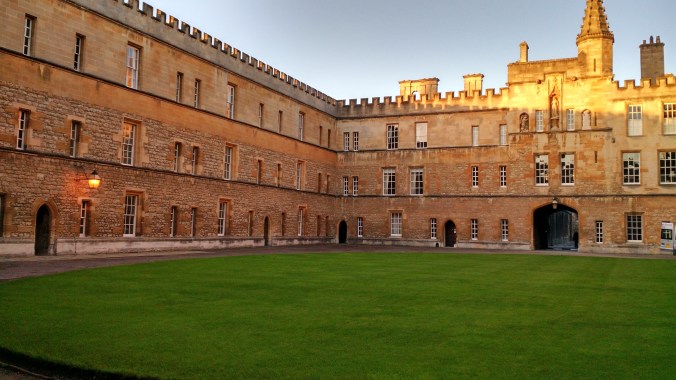
The old quad at New College, Oxford

At the time, the “Saint Mary College of Winchester in Oxenford” was a new college, and this identity stuck; the college is still called New College today, nearly 650 years after it was founded in 1379, which makes it (ironically) one of the oldest colleges in Oxford. William himself is commemorated in a statue over the gate, kneeling in worship of Saint Mary; you can see his restored statue in fresh stone in the image above.

So why are we interested in a Bishop who lived over 600 years ago? The reason is that William’s personal motto, emblazoned across the top of the frame of his portrait, the motto that remains the slogan of New College centuries later, still has resonance today.

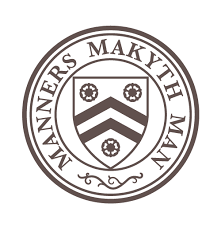
The emblem and motto of William of Wykeham and New College, Oxford: Manners Makyth Man

William’s motto, Manners Makyth Man, were words he lived by. Our manners are “a way of conducting oneself toward others” and “a person’s habitual behaviour or conduct.” That is, the way we treat other people, but also the way we behave by force of habit. Therefore, William’s motto can be translated as:

Manners Makyth Man: The way we behave towards other people makes us who we are

So what do good manners look like? I think there are some basics that are as true today as they have always been, and I went through these with our students in assembly:

  • Polite language
    • Greetings: good morning, good afternoon
    • Gratitude: please and thank you
    • Generosity: is there anything I can help you with?
  • Active listening
    • Show interest
    • Make eye contact
    • Give your full attention
  • Respect
    • Respecting personal space
    • Respecting visitors
    • Offering assistance (e.g. holding doors open)

We spent some time talking about how we can show respect in particular when we are meeting with visitors to our Academy – for example with our amazing student ambassadors who regularly give tours to families, candidates, visiting staff and others when they visit Churchill, and never fail to do a wonderful job!

I first encountered William’s motto when I was a student at New College, studying English Language and Literature in the 1990s. That simple creed – Manners Makyth Man – the way we behave towards other people makes us who we are – has stuck with me ever since, and informs my actions to this day. William’s legacy lives on, not just in the educational institutions he founded, but also in the words and ideas he left behind. Let’s all try to make sure that the way we behave towards others leaves a similarly positive, lasting impression.

Exams: the finishing line

Term 5 is a pressurised term – this year especially. It’s just five weeks from Easter to the May half term, with formal GCSE and A-level exams starting on May 6th. The exams suddenly go from seeming a long way off, to being…well, next week!

The final stretch of exam preparation is about finishing touches. Courses have been finished. Students have the knowledge and skills they need now to tackle the exams ahead of them. This final few days are all about honing exam technique to a sharp point: what exactly do the examiners want to see in an answer to this particular type of question? How can you manipulate what you know to squeeze as many marks as possible out of each part of the paper? How should you manage your time to ensure you leave enough to cover everything fully?

Our teachers are well versed in the art of exam technique. Exam preparation classes across the Academy are full of last-minute reminders about what to include, where, and how. In a exam situation, this is almost as important as the knowledge itself! This year, with our GCSE students, we will also be running subject-specific masterclasses in the days and hours before exams to give our students the final boost into their assessments, and these will continue online when students are on study leave in Term 6.

You can put yourself at an advantage by preparing well. Revision is essential, of course – you can find revision tips in the Revision category on this blog. But just as important is a good night’s sleep, and a healthy meal before an exam. An all-night revision session honestly won’t help as much as you wish it would – the brain works best when well rested and fuelled. Get to bed, sleep well, and have a good breakfast.

Once you’re in the exam itself, there are some general tips that I always swear by:

  • Be sure to answer all the questions – turn every page. Including the back page…yes, every year someone comes out ashen-faced when they realise there were eight questions, not seven.
  • Jot down your key ideas – don’t be afraid to do some rough work, or write down some key notes as soon as the invigilator says “you may begin.” Getting key ideas down will ensure that you remember them!
  • Write something for every question – if you’re not sure, make your best educated guess at the question. If you’ve written something, you’re in with a shout of some marks. If you write nothing – you’re definitely going to score zero.
  • Keep an eye on the time – you know how many questions are on the paper. You know how long you’ve got. Make sure you leave enough time to answer them all.
  • Check – use every minute of the exam. Check for silly mistakes. Check that you’ve written what you think you’ve written. Check for accuracy of spelling, punctuation, and grammar. Give yourself time to add in that extra bit that you forgot the first time through. It could make all the difference.

Exams bring stress and pressure with them – that’s an inevitable part of the process. Managing that pressure is an essential part of succeeding. Being well-prepared is the best way to ensure that the pressure works in your favour, rather than against you.

I hope these last minute tips have been helpful. Above all, I wish all our exam candidates the very best of luck. You deserve it.

The link between attendance, attainment and lifetime earnings

We have long understood the importance of good attendance at school: every moment matters. Over the past week, new research has been published which shows just how much every day at school counts.

The link between attendance and attainment

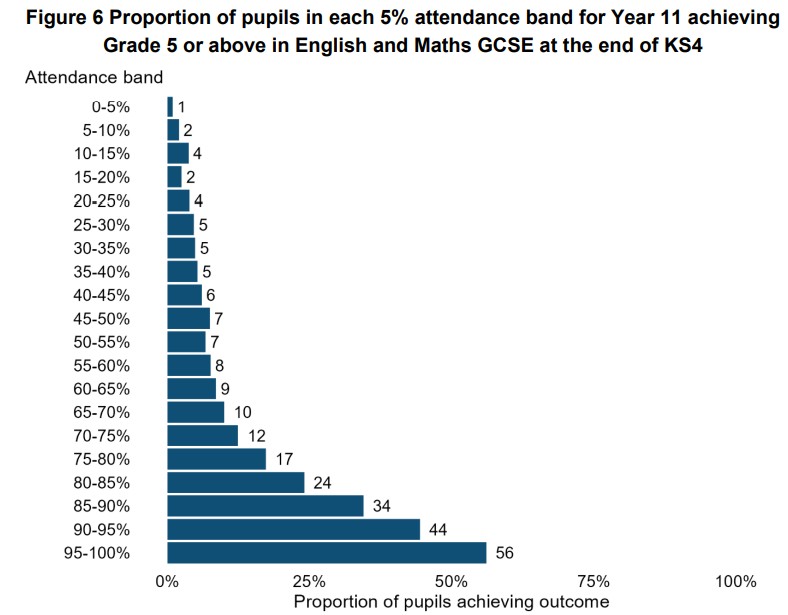
The link between attendance and attainment is at its strongest in secondary school. Year 11 students with near-perfect attendance are almost twice as likely to achieve grade 5 in English and Maths GCSE, compared to similar students attending 90-95% of the time. In other words, missing just 10 extra days a year reduces the likelihood of achieving these grades by around half.

At lower attendance levels, pupils who only attend between 50 and 55% of the time are 1.6 times more likely to achieve 9-5 in Maths and English GCSE than students who are severely absent and attend less than 50% of sessions. Increased attendance from severely absent to 60-65% (equating to approximately an extra 4-6 weeks in school) is associated with double the likelihood of the expected outcome compared with pupils who attend less than 50% of the time.

Improving attendance by just 5% makes a significant difference to academic attainment, as you can see in the chart below:

You can view the full research report here.

The link between school attendance and lifetime earnings

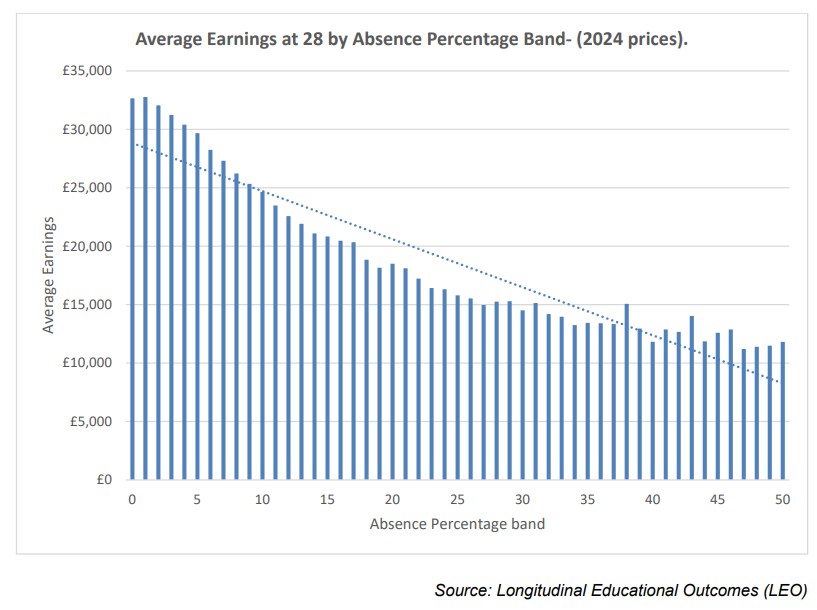
Missing school doesn’t just affect exam results and a child’s time in education. The impact of poor attendance has an impact on future earnings too. Related research has found that, for every day of absence between Years 7 to 11, the typical pupil could miss out on an average of £750 in future lifetime earnings. That’s £750 less for every single day missed.

The research also found that a one day increase in absence in Years 10 and 11 alone is associated with a 0.8% decrease in total yearly pay-as-you-earn earnings and declared self-employed earnings at age 28.

Persistently absent pupils in secondary school could earn £10,000 less at age 28 compared to pupils with near-perfect attendance. The likelihood of being in receipt of benefits increases by 2.7 times for
pupils who are classified as persistently absent (more than 10% absence). This rises to 4.2 times for those who are classified as severely absent (more than 50% absence).

As with attainment, it is clear to see the direct relationship between good attendance at school and higher earnings at the age of 28. You can see the full research report here.

Every day matters

We need to make sure that good attendance at school remains a high priority. We already ask that families only keep children off school when they are genuinely too ill to attend. We ask that you book medical appointments and holidays outside of school time whenever possible. And we ask that you talk to us if you’re having difficulties with attendance. Because every day at school gives you a better chance of good attainment, and greater earning power in adulthood.

Good attendance is an investment in the future. Let’s make it count.

Putting it all together

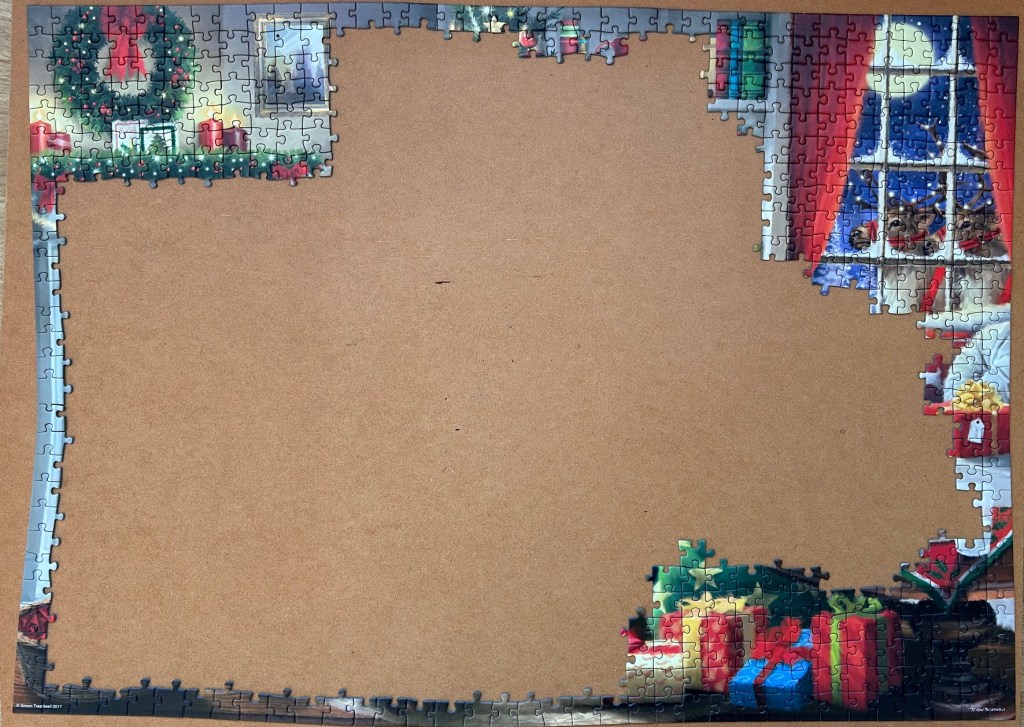
Over the Christmas holidays, my family and I always like to complete a Christmas jigsaw. We have a few 1000 piece sets that we’ve been given over the years, and it’s always a fun challenge to try and put them together to make the complete picture. You can see our progress below!

As we were putting the jigsaw together this Christmas, I was thinking about the Academy: how every piece is different and unique, but every piece needs to be in the right place, to fit, to belong, in order to make the complete picture. We work really hard every day to help ensure that students and staff are slotted in to help make the whole thing work.

But I was also thinking about how every individual is made up of thousands of tiny pieces. These micro-decisions, little things that make up our daily lives in school. I spoke to students in assembly last week about some of these component parts:

  • Lessons: including our favourite lessons and those that we find more challenging. Our curriculum is made up of lots of component parts which all work together to make a strong, deep and broad understanding of our world. Every single piece counts.
  • Social times: ensuring that the Academy is and feels safe, welcoming and friendly for everyone in it, is everyone’s responsibility.
  • Punctuality: we are particularly focused on this important life skill at the moment, and our students are working really hard to make sure that they are on time, every time.
  • Attendance: similarly, we have been really impressed by our students’ efforts to ensure that they attend school every day, every lesson that they are able to.
  • Extra curricular: both within school and beyond, the activities our students are involved in all add up to build their skills, knowledge, character and confidence.
  • Values: our values of kindness, curiosity and determination underpin everything we do, and work together to support character development in our students
  • Wellbeing: linked to last week’s assembly on sleep, we know that looking after ourselves is important. Diet, exercise, sleep and a balanced approach to health and wellbeing are all important.

In our school, and in ourselves, every single piece matters.

2024 in review

As the year draws to a close, I look back on another year on the Headteacher’s Blog. Over 100,000 views, over 20,000 visitors to the blog – it’s been a busy year!

January

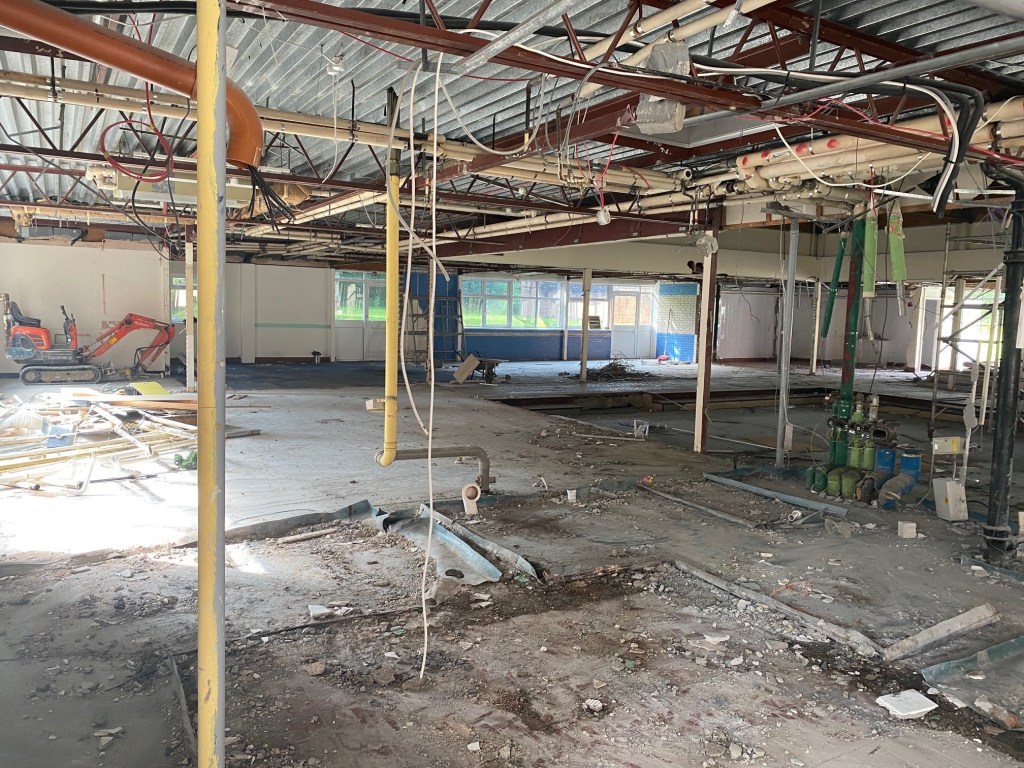
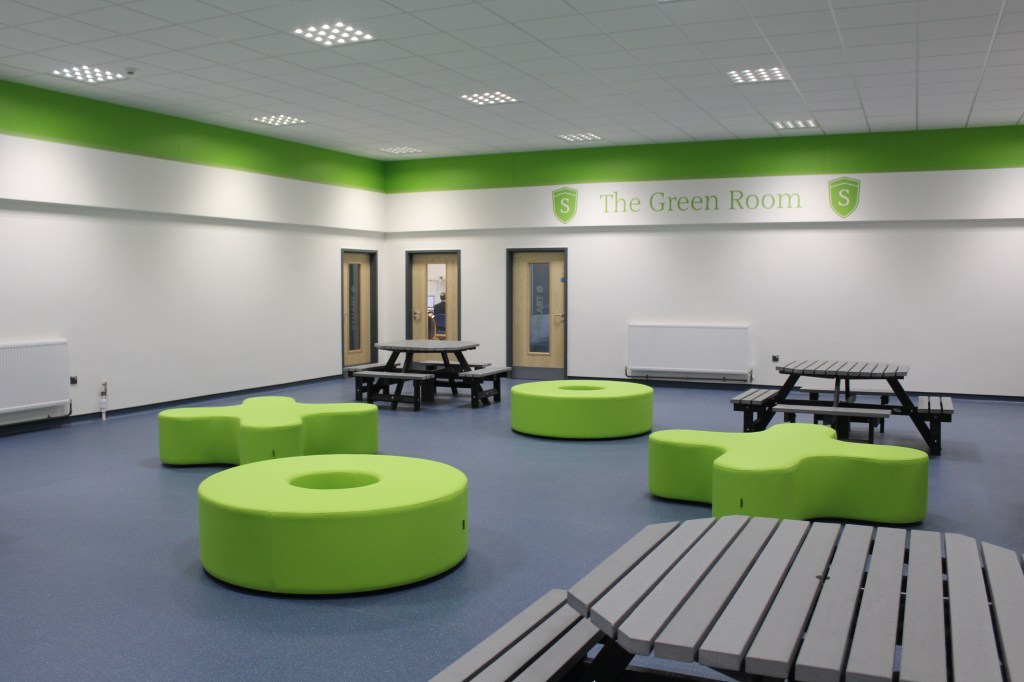
January began with a welcome back assembly thinking about resolutions, and an update on the work going on in the Sports Centre to get it ready for our use. The old swimming pool had been drained, and work was underway to get a floor laid as part of the Pool Hall conversion.

January is also the time of year when Year 9 are making choices as part of their options process, which is very nearly upon us once again! And I concluded the month with a blog on the influence of social media, and how we are working with our students to help them manage the online space.

February

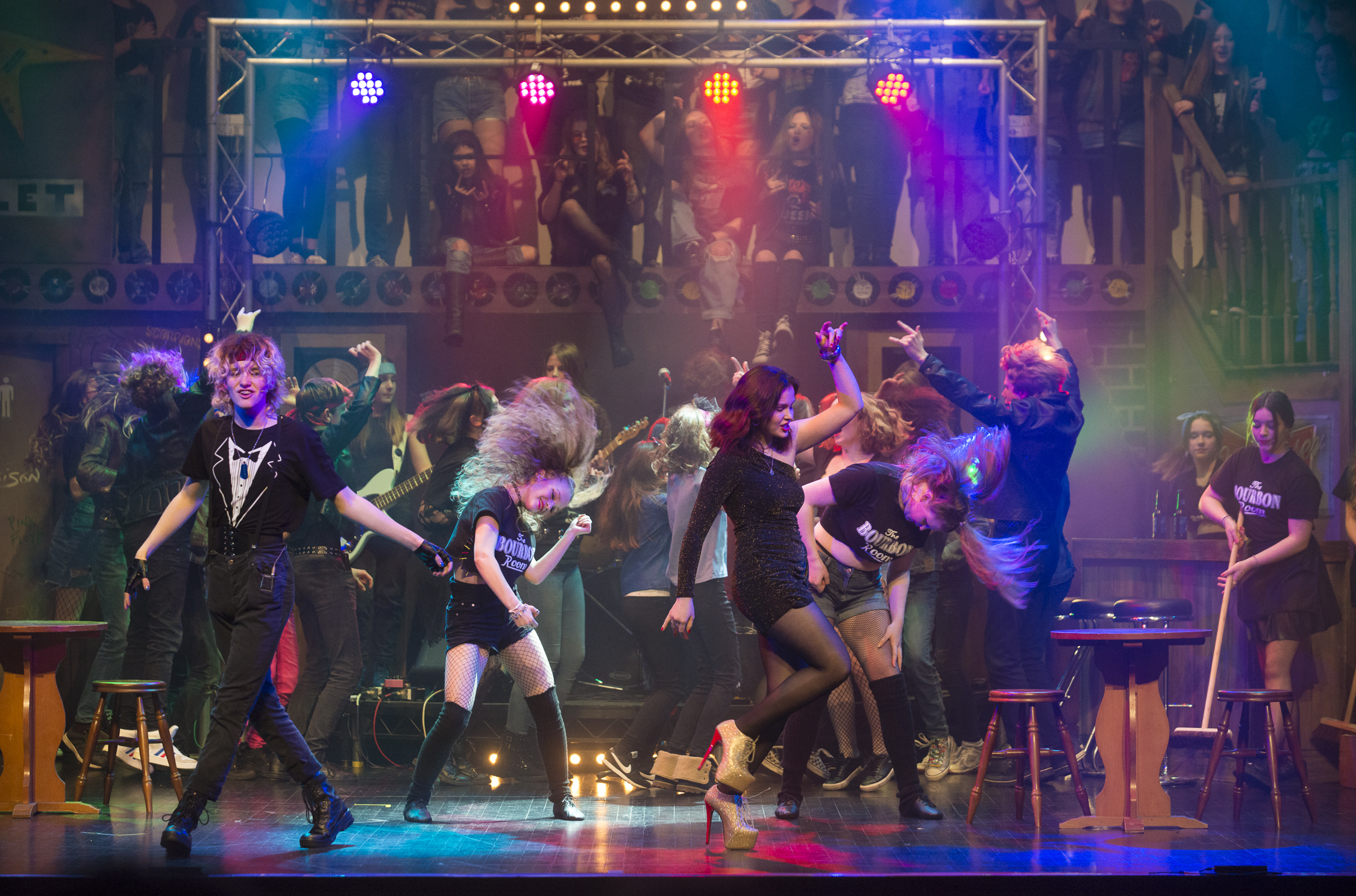
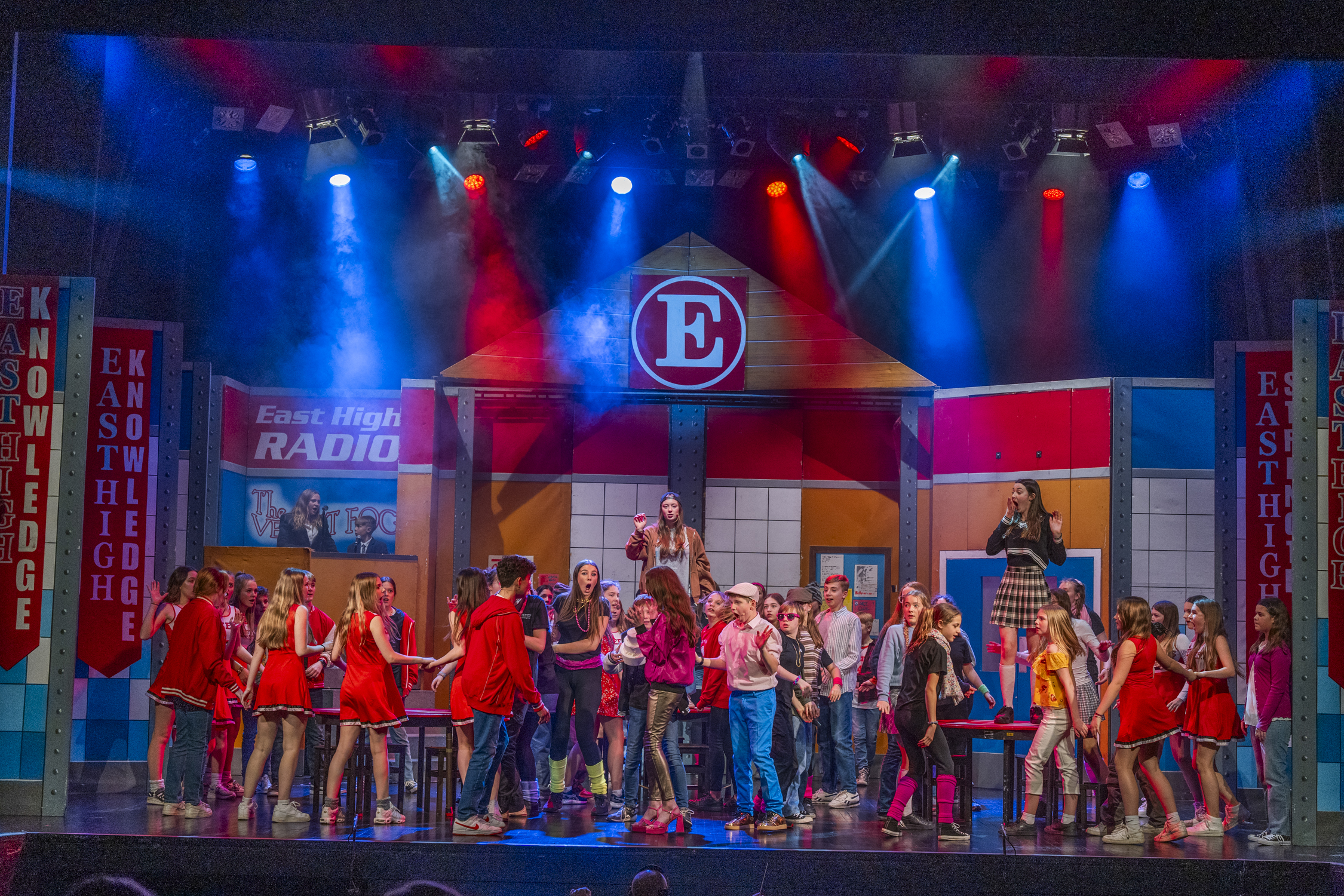
February began with a focus on attendance as part of the government’s moments matter: attendance counts campaign. The month was dominated, however, by the preparation for and four barnstorming performances of High School Musical: On Stage at the Playhouse in Weston-super-Mare!

This fantastic production produced memories for life for the casts, crew, band, and everyone in the audiences. I will never forget it!

March and April

In March I wrote three blogs based on assemblies and ideas we had been discussing in school. I wrote about the Academy’s value of curiosity, the theme of my assembly that month, followed by a discussion of neurodiversity which was the theme of Miss O’Malley’s assembly. This was followed by a reflection on the nature of equality, and how we balance the differences between us with the need for equal opportunities. It was a very thoughtful month!

This was followed, in April, by a celebration of our successful Challenge Partners review which emphasised the huge progress we had made over the preceding year.

May

Inevitably, as the summer begins, schools turn their focus onto exams. It was no surprise, therefore, that May began with a reflection on top tips for exam technique. The sunshine also made me think about how, in the end, we make the weather as we set the climate for learning in our school. There was then the opportunity to celebrate the work of our students finding real audiences, in their artwork on display as part of an exhibition celebrating Ukrainian artist Maria Prymachenko and creating podcasts as part of North Somerset’s violence reduction partnership. The month of May ended with the traditional farewells to the Class of 2024.

June and July

The summer term began with the 80th Anniversary of D-Day, before we were into the political upheaval of the general election campaign. The summer solstice came and went and, before we knew it, we were into transition days as we welcomed our newest students to the Academy.

The final month of the academic year was spent celebrating the success of our students at their prom and ball, and in our Academy events. We also had a wonderful activities week, abroad and at home.

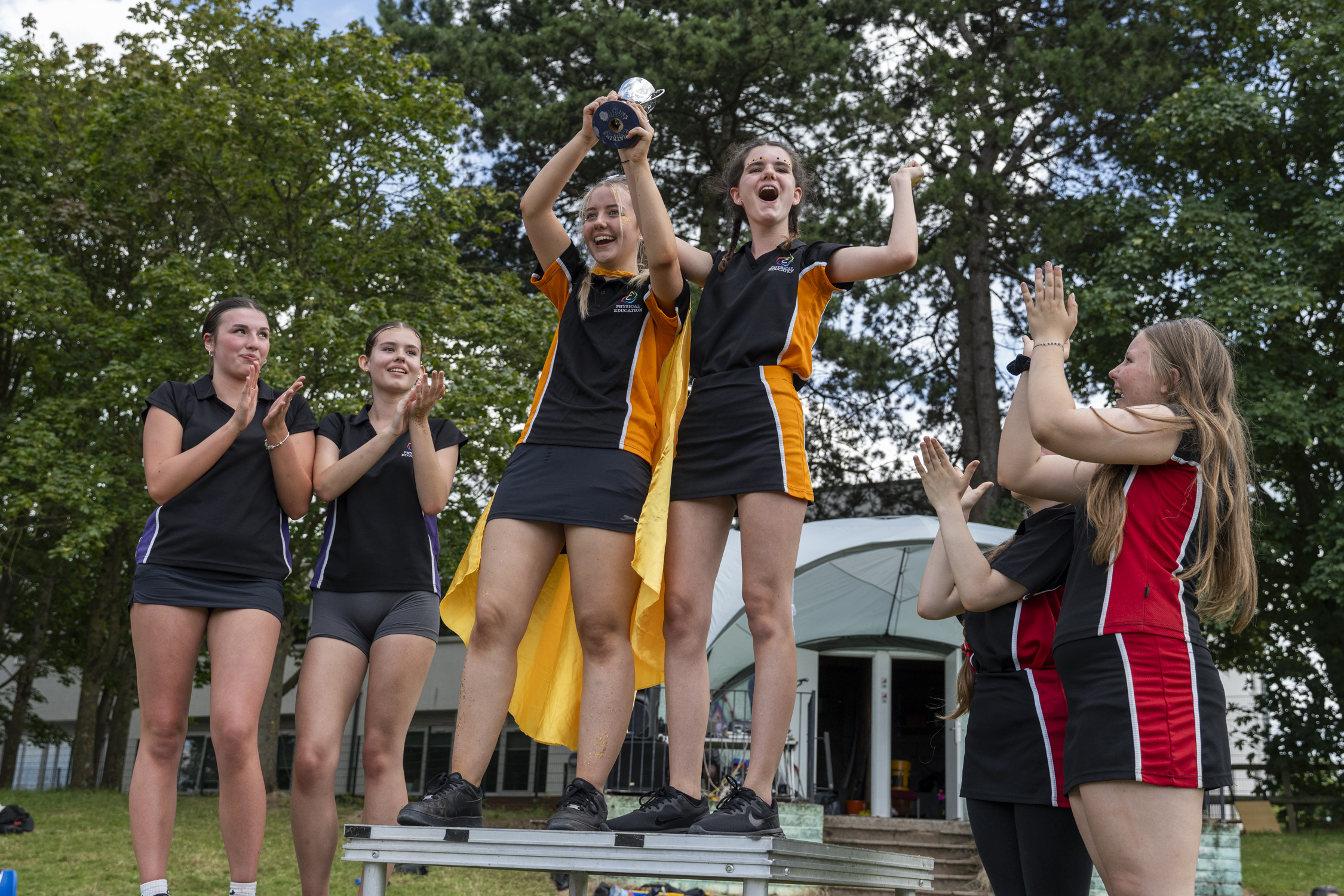
Then we were into the final stretch of the year, with a hard-fought Sports Day (congratulations Hanover!) and an even harder-fought House Cup (congratulations Tudor!)

September and October

And so, after a well-deserved summer break, we were back! September’s blogs celebrated our exam results and prize winners, and focused on making a positive difference, before our successful open evening and sixth form open evenings.

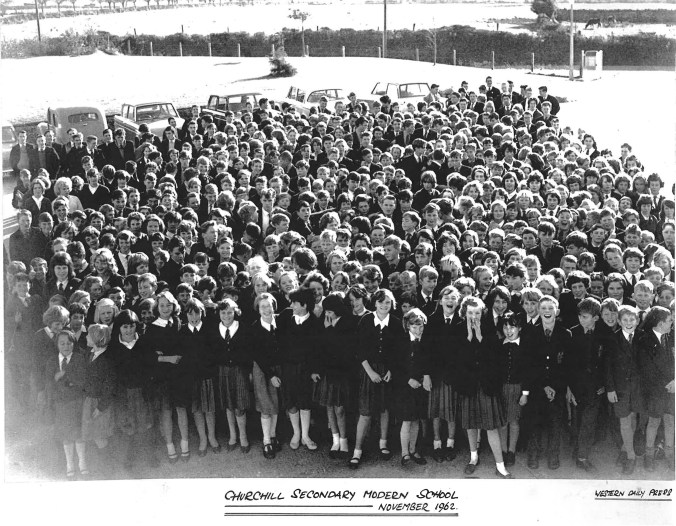
Later in term 1, I was reflecting on continuity through change as I looked back on the history of the school, what has changed and what remains the same. I also gave information about the Votes for Schools programme we are using, and backed up my Headteacher’s update letter with a post giving information about our curriculum – including the wider personal development programme beyond the curriculum.

November and December

November began with a moving remembrance day, before we moved into our anti-bullying week with a focus on the theme of respect. I also gave an insight into what happens on an inset day, before explaining more about careers education at Churchill around our successful careers convention at the end of the month.

And so we come right up to date, with last week’s blog post: my annual summary of books I have read this year! We are all looking forward to Christmas, and next week’s final blog post of the year will be a look inside our end of term celebrations with the traditional sixth form fancy dress parade, the eagerly-anticipated Headteacher’s quiz, and much, much more as we see the year out in style!
Thank you for visiting and reading the Headteacher’s blog this year – here’s to another bumper year in 2025!

What happens on an inset day? November 2024

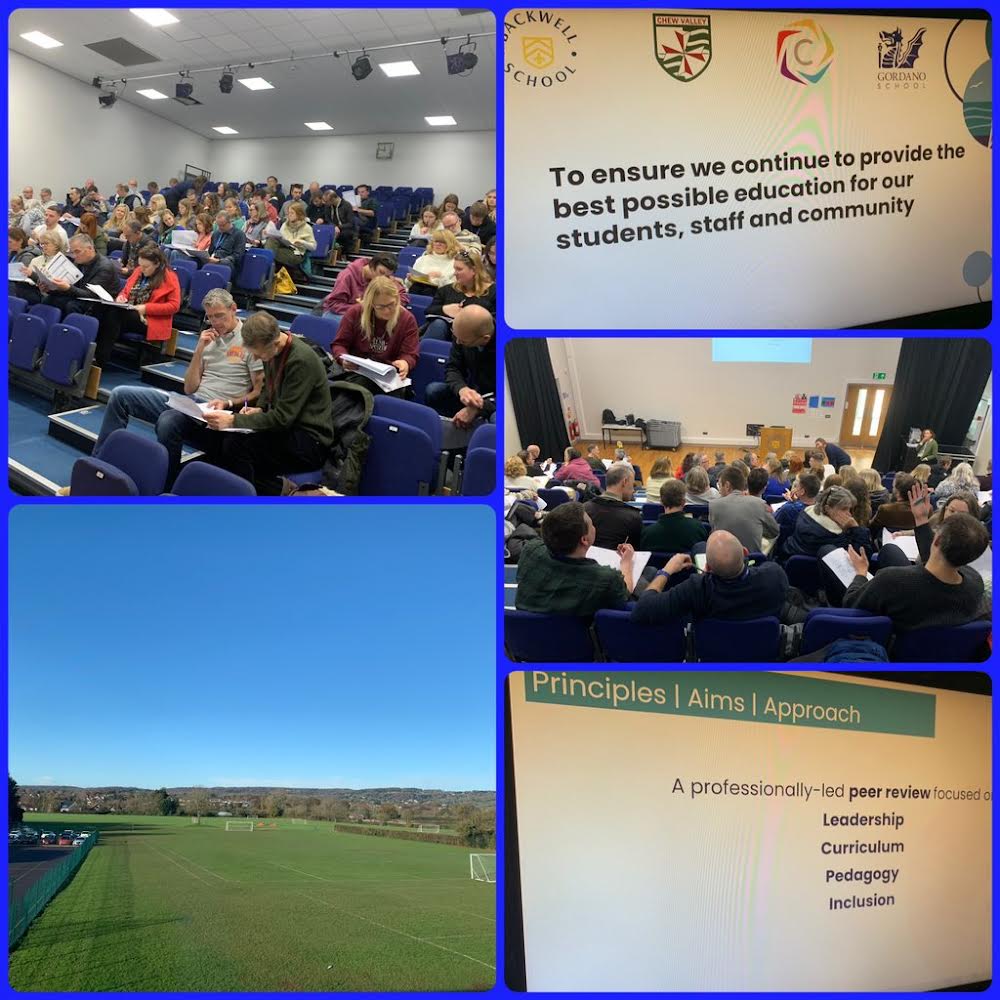
On Wednesday of this week, the four secondary schools in the Lighthouse Schools Partnership shared an inset day. Inset, which stands for “in-service training,” is a valuable opportunity for staff to refine their practice, collaborate, and develop their craft to ensure we provide the best possible education to our students. With staff from Gordano, Backwell, Chew Valley and Churchill all taking part, the day was a great success.

Subject and faculty leaders from across the trust all met at Backwell School. They met in subject groups to share lessons from analysing the summer’s GCSE, A-level and vocational exams results, to share strategies and techniques for ensuring the best possible outcomes for this year’s cohorts. This sharing of subject-specific expertise is invaluable, and all the schools in the trust benefit from these opportunities.

Later in the day, the subject and faculty leaders all came together for training in carrying out middle leadership reviews. This process sees subject experts from across the trust visiting one another’s schools to offer constructive critique, help identify areas of strength and development, and share practice to the benefit of all concerned. It is in these collaborations that the benefit of being part of a bigger trust are really apparent.

Meanwhile, back at Churchill, the day began early as we hosted the LSP’s business breakfast in the Pool Hall. Over 100 Business Partners and education colleagues attended to network, make connections, and collaborate. The main speaker at the event – Simon Lawrence OBE, General Manager of the National Trust Bristol Portfolio – provided an interesting and insightful reflection on the principles and values of ‘Servant Leadership’ that he has learnt throughout his military and diplomatic career.

Visitors also heard from Chew Valley School Headteacher, Gareth Beynon, who spoke about the importance of the outdoors when it comes to educating our children and young people. The event was closed by Sofia and Toby, from our own Churchill Sixth Form, sharing details of their upcoming trip to Madagascar.

Meanwhile, teaching staff were working on developing their questioning skills using resources from the Lighthouse Schools Partnership’s Pedagogy Framework. Questioning is fundamental teaching strategy, so getting the details right can be really significant in helping students to develop their thinking, practice key skills, and to help check for understanding. This was followed by a series of workshops on different aspects of SEND, to help us work more effectively with students with additional needs.

It was a packed day, with the importance of learning for staff at its heart: a great opportunity to refine and develop our practice across the trust to the benefit of our students. The next trust day – in February 2025 – will bring together all teaching staff from 33 primary and secondary schools in another day of collaborative learning. We can’t wait!

Anti-bullying week 2024: choose respect

The theme of this year’s anti-bullying week is Choose Respect. We have been working with our students on this theme using assemblies and our tutor programme, using the Votes For Schools resources I outlined last term.

In 2018, 98% of young people told the Anti-Bullying Alliance that showing respect to each other is important and that it is possible to be respectful even if you disagree with someone else. Students have been working together to think about how to resolve conflict respectfully.

We have been teaching our students that respectful behaviour is accepting, recognising or admiring another person’s behaviour, achievements or values. It is important to show respectful behaviour to everyone in our world. Displaying respectful behaviour can feel easy when everyone agrees and has the same plans. But when there is conflict, it can be much more challenging.

Facing and dealing with conflict in our lives is part of growing up. But if we don’t resolve issues, they can affect our relationships with other people. Without resolution, behaviours can quickly become toxic or unhealthy. Learning how to handle disagreements respectfully can help you to have more positive relationships. It can also improve your mental health and wellbeing.

Sometimes, when we experience conflict, it can lead to us acting or speaking in a disrespectful way towards someone else. This is often because we feel strongly about something or someone. his can cause further conflict. In the most extreme cases, it could even lead to bullying. While we might not behave this way on purpose, it is important that we recognise when we haven’t chosen to be respectful.

We have been working with our students on the importance of learning to agree to disagree. This is a way of showing respect for someone’s values or ideas, even if you do not agree with them yourself. We have been thinking about different scenarios, and how to approach them respectfully.

Even though conflict might make us feel uncomfortable, it’s a normal part of life. The main thing we need to know is how to respond to conflicts or disagreements and make sure we feel confident we can resolve them. We’ve then encouraged our students to vote in the weekly Votes for Schools poll: “do you know how to resolve conflict respectfully?”

What our students say: the student statement form

We continue to promote kindness to everyone in our community. However, part of growing up is learning how to manage relationships with peers and how best to handle conflicts. Our stance of bullying is clear (see our Anti-Bullying Policy), and we encourage students to let us know when they have worries and concerns.

We introduced our online “Student Statement Form” in 2023 so that students could share their concerns discreetly either in school or from home. This year we have also introduced a system for making sure that all students making a statement receive an email to confirm that their concern has been followed up and appropriate action taken.

In Term 1 this year there were 118 statements submitted about 57 different concerns. This was a mixture of statements from students with a concern and those who had witnessed an incident and wished to support their peers.

All of these reports were followed up by staff and have resulted in a range of follow up work including further monitoring, conversations with the students and their parents , supported mediation, completion of materials to teach about wider issues such as managing friendships, inappropriate language, racism, or homophobia. We have also issued Time Out detentions, Refocus Room sanctions, and Internal or External Suspensions in more serious cases.

Our most recent “Our School” Student Survey showed that students have a good awareness of the Student Statement Form and are confident to use it. We want to make sure that parents and families also know about this system, and how well it is working. If you have a child at Churchill, please can you check that your child knows about the Student Statement Form and encourage them to report any concerns? This will help us to ensure that all our students continue to feel confident and safe in school. Thank you!

Challenge Partners

Challenge Partners carries out school evaluation work across the UK. School leaders are trained to carry out review activities in one another’s schools. Leaders from Churchill Academy & Sixth Form have visited five different schools across England to carry out reviews, and in return we had five reviewers from schools across the country visit us just before Easter to review our Academy. 

The review took place over three days at the end of Term 4, and involved thorough scrutiny of documentation and data, visits to lessons and tutor times, meetings with staff and students, and discussions with governors. It was a testing and searching process, but very helpful to us in providing external scrutiny on our provision. 

Unlike Ofsted, Challenge Partners does not reduce the school to unhelpful single word or phrase judgements. Instead, they provide a narrative report designed to help the school’s continued development and improvement. 

We are delighted with the findings. Some highlights include: 

  • On behaviour: “The school now has established routines that support the calm and purposeful environment. Key Stage 3 pupils said about behaviour, ‘Quite a big change … it’s better now because it means you can do more learning and focus more…classes are quieter and more concentrated.’” 
  • On relationships: “Across the school, the very positive relationships between staff and pupils create a safe, purposeful and welcoming culture. Teachers know pupils as individuals. They celebrate achievement and effort.”
  • On tolerance: “Leaders ensure that tolerance, difference and inclusivity are promoted through curriculum design across the school. Pupils’ voice, related to their perceptions and experiences, is valued and used to inform [professional development]. The school has developed cultural celebrations to further recognise diversity, including neurodiversity and LGBTQ+.”
  • On curriculum and progress: “The curriculum is continually reviewed to ensure that it is broad and challenging for all pupils…In 2023, pupils at the school made better than national rates of progress.”
  • On disadvantaged pupils and pupils with additional needs: “Vulnerable pupils are known as ‘priority learners’ to represent the intention for them to be placed foremost when creating the universal provision. Leaders take a strategic approach to planning for pupils’ needs…A group of ‘priority learners’ who were spoken to appreciate the levels of support provided to them and they felt they could ask for help.”

These are just some of the highlights of an overwhelmingly positive report, which confirms our view that the Academy is in a strong position and that we are continuing to improve. I would urge you all to read the full report, which is published on our website here.

Equals and equality

The equals sign

Wikipedia tells me that the word “equals” derives from the Latin word “æqualis,” meaning “uniform”, or “identical”, which itself stems from aequus (“level”, “even”, or “just”). The equals sign – a pair of parallel lines, one above the other – apparently originated with a Welsh mathematician, Robert Recorde, in 1557. Bored of writing out “is equal to” again and again, he used a pair of parallel lines to stand instead.

Robert Recorde’s original explanation of the equals sign

Recorde wrote: “And to auoide the tediouſe repetition of theſe woordes : is equalle to : I will ſette as I doe often in woorke vſe, a paire of paralleles, or Gemowe lines of one lengthe, thus: =, bicauſe noe .2. thynges, can be moare equalle.” In modern English, this roughly translates to: “And to avoid the tedious repetition of these words: “is equal to” I will set as I do often in work use, a pair of parallels, or duplicate lines of one [the same] length, thus: =, because no 2 things can be more equal.”

The first recorded use of the equals sign in 1557. 14x + 15 = 71

Recorde called his new symbol – a much longer pair of parallel lines than we are now used to – “Gemowe lines.” The word “Gemowe” means “twin,” from the same root as the star sign “Gemini.” What Recorde has captured in his new symbol was the idea that the two lines are not the same – one is above the other, and one below – but they are of the same value. The are worth the same. They are equally valuable – equivalent.

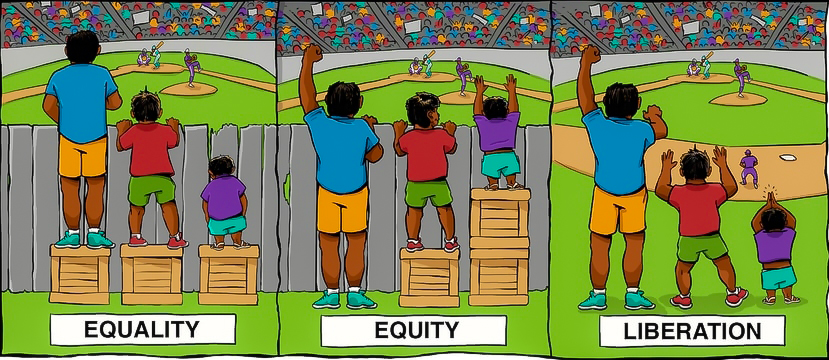
This famous illustration has been used in training to help staff think about the ideas of inclusion and diversity

We have been thinking carefully about what equality means in education. We are not all the same – each of us is unique. Achieving equality of opportunity does not mean giving everyone the same treatment – as shown in the left hand picture above. Some people need extra help or support to achieve – as shown in the middle picture – and as a school we work hard to put that in place wherever it is needed.

Our ultimate goal is to remove the barriers that stand in the way of achievement and progress, so that our students can set no limits on what they can achieve. This is illustrated in the picture on the right. We know that this is challenging, and that some of the barriers are beyond our control. We know that we can’t always achieve it on our own – but that doesn’t mean we shouldn’t try.

I recently visited a maths lesson and saw another expression of “equality.” The teacher was guiding the students through solving algebraic equations to find the value of x. Something like this:

2x2 + 12 = 44

Students volunteered to take the class through the process of solving the equation to find the value of x. The first step was to subtract 12, from both sides of the equation, to leave 2x2 = 32.

The teacher asked: “why do you need to take 12 from both sides of the equation?” The answer emerged: because both sides have to equal the same amount. If you only took 12 away from the left hand side, then they wouldn’t be equal.

The Year 8 mathematicians went on to divide both sides of the equation by 2, leaving x2= 16, before taking the square root of both sides and concluding that x=4.

After I had visited the lesson, I kept thinking about the idea of equality – in mathematics, in education, in society. 2x2 + 12 is not identical to 44 – the two sides of the equation look very different. But they have the same value. Our students are all different too, each with their own unique qualities, needs and circumstances. Their differences make them unique, and it is this uniqueness which provides the richness of our community. But every single child matters: they are all Churchill students. They are all part of the whole, all of equal value; they all belong equally.

Getting an education

Ruby Bridges, flanked by US Marshals, on her first day of school in 1960

This week I read the fascinating and terrifying story of Ruby Bridges. Ruby was born in 19 54 and grew up in Louisiana, USA, in the midst of the civil rights movement. When she was born, schools in Louisiana were segregated – black children and white children did not attend the same schools. This practice had been declared unconstitutional just before she was born, but it took six years for the first black child to attend an all-white school. Ruby was that child.

In early 1960, she passed the entrance test to attend William Frantz Elementary School – an all-white primary school. Ruby’s walk to school on her first day was big news. A crowd gathered, chanting and waving placards. One sign read: “All I want for Christmas is a clean white school.” One woman held up a miniature coffin with a black doll in it. Ruby was protected from the angry crowd by four Federal Marshals. She was six years old.

All the white parents pulled their children out of the school. All the teachers refused to teach whilst there was a black child enrolled at the school – except one. One teacher, Barbara Henry, refused to be intimidated and taught Ruby alone, in her own class, “as if she were teaching a whole class.” On Ruby’s second day at school, one white parent walked his five-year-old daughter through the angry mob, saying, “I simply want the privilege of taking my child to school.” Following his example, more parents brought their children to school over the following days, although Ruby continued to be taught by Barbara Henry in a class on her own. She would not be taught in the same class as white children until the following year. Throughout that time she was only able to eat food she had brought with her from home, due to threats to poison her school meals.

The American artist, Norman Rockwell, commemorated Ruby’s walk to school in his painting The Problem We All Live With. When he became President, Barack Obama hung the painting outside the Oval Office as a reminder that the courage of a six-year-old black girl and her white teacher paved the way for a black man to eventually become president.

Ruby Bridges visiting the White House to see her portrait hanging outside the Oval Office with President Obama, and reflecting on her experiences

Reading Ruby’s story this week reminded me of another inspirational young woman who stood up for her right to be educated: Malala Yousafzai. Malala grew up in an area of Pakistan where the Taliban had outlawed the education of girls, believing that only boys had the right to an education. Malala, like Ruby Bridges and Barbara Henry, refused to be intimidated and continued to attend school. On October 9th 2012, in retaliation for her activism, a Taliban gunman shot Malala in the head in an attempt to assassinate her.

Malala Yousafzai in 2014

Malala survived. She was flown to Birmingham where she recovered, eventually attending an English school in Edgbaston and going on to study Politics, Philosophy and Economics at Oxford University. She graduated in 2020. Throughout that time, Malala has been a prominent activist campaigning for the right to an education – a right which she nearly died for.

In this country we take it for granted that every child is entitled to a good, free education at school. We don’t stop to question it. We take it for granted that all children are welcome in our schools, no matter their background, the colour of their skin, their religious beliefs, first language, or where their family comes from. This is accepted as normal. But it’s worth reminding ourselves that we are very lucky to live in a society where this happens – because it doesn’t happen everywhere. We must remember to continue to defend the importance of getting an education. And we shouldn’t take it for granted.