In my assemblies at the start of term 5, I spoke to our students about William of Wykeham. William was born the son of a free yeoman in around 1320, over 700 years ago. He rose up through society, the church and politics to become the Bishop of Winchester and Chancellor, responsible for the wealth of the kingdom under King Edward III and then King Richard II, the last Plantagenet monarch.
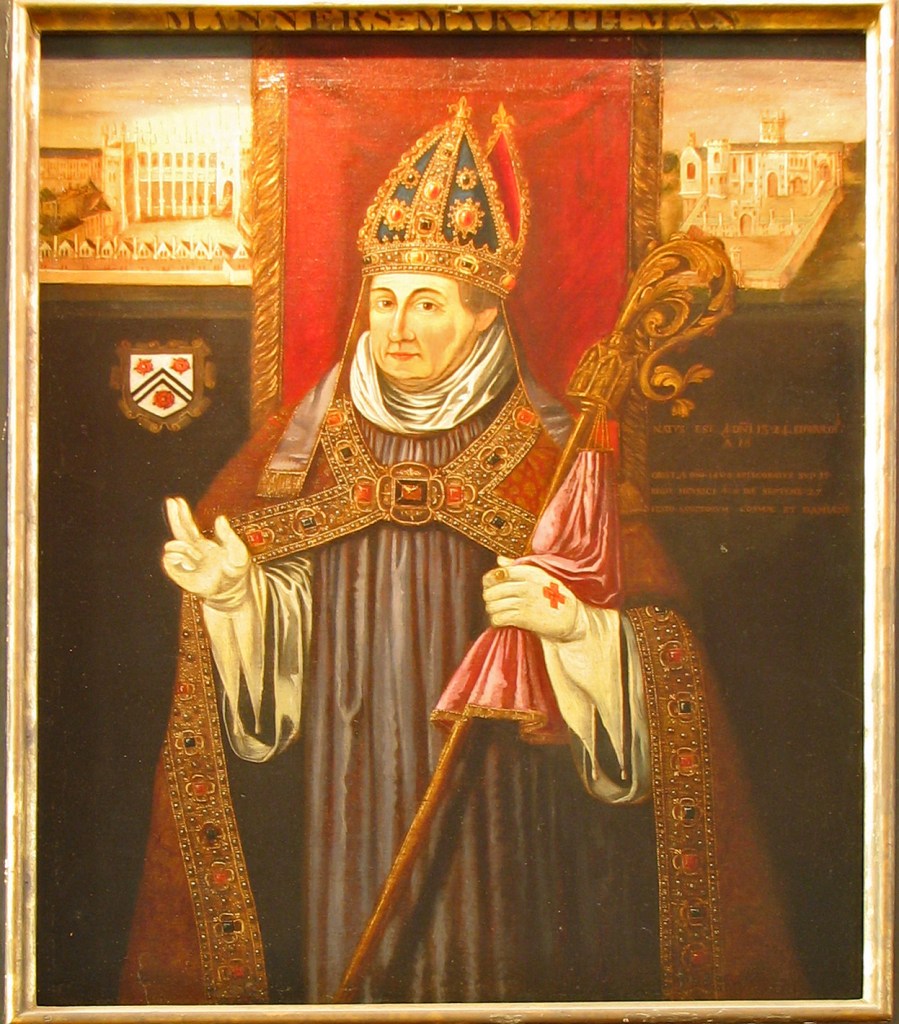
As a result, William became a very wealthy man. He wanted to devote his wealth to ensuring that others could rise up from humble origins to great success, so he founded educational institutions including a school in Winchester, where he was Bishop, and a college in the developing university city of Oxford.
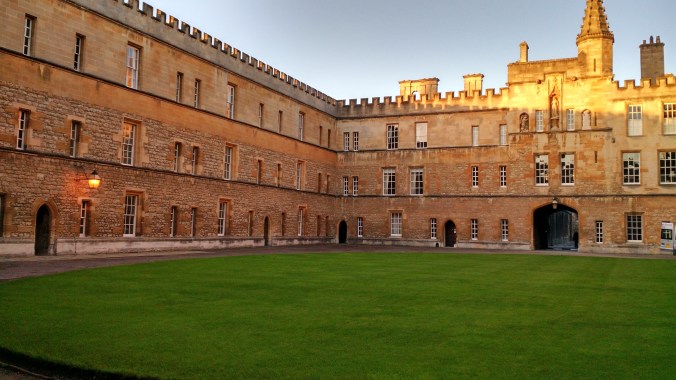
At the time, the “Saint Mary College of Winchester in Oxenford” was a new college, and this identity stuck; the college is still called New College today, nearly 650 years after it was founded in 1379, which makes it (ironically) one of the oldest colleges in Oxford. William himself is commemorated in a statue over the gate, kneeling in worship of Saint Mary; you can see his restored statue in fresh stone in the image above.
So why are we interested in a Bishop who lived over 600 years ago? The reason is that William’s personal motto, emblazoned across the top of the frame of his portrait, the motto that remains the slogan of New College centuries later, still has resonance today.
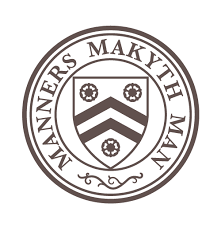
William’s motto, Manners Makyth Man, were words he lived by. Our manners are “a way of conducting oneself toward others” and “a person’s habitual behaviour or conduct.” That is, the way we treat other people, but also the way we behave by force of habit. Therefore, William’s motto can be translated as:
Manners Makyth Man: The way we behave towards other people makes us who we are
So what do good manners look like? I think there are some basics that are as true today as they have always been, and I went through these with our students in assembly:
- Polite language
- Greetings: good morning, good afternoon
- Gratitude: please and thank you
- Generosity: is there anything I can help you with?
- Active listening
- Show interest
- Make eye contact
- Give your full attention
- Respect
- Respecting personal space
- Respecting visitors
- Offering assistance (e.g. holding doors open)
We spent some time talking about how we can show respect in particular when we are meeting with visitors to our Academy – for example with our amazing student ambassadors who regularly give tours to families, candidates, visiting staff and others when they visit Churchill, and never fail to do a wonderful job!
I first encountered William’s motto when I was a student at New College, studying English Language and Literature in the 1990s. That simple creed – Manners Makyth Man – the way we behave towards other people makes us who we are – has stuck with me ever since, and informs my actions to this day. William’s legacy lives on, not just in the educational institutions he founded, but also in the words and ideas he left behind. Let’s all try to make sure that the way we behave towards others leaves a similarly positive, lasting impression.
 The Headteacher's Blog