My first year at Churchill


I started at Churchill a year ago – and what a year it’s been! One of the first things I wanted to do as Headteacher was develop communication between home and school. To help with this, we relaunched the newsletter, redesigned the website, and I started this blog. Here are some of the highlights that have been captured in the Headteacher’s Blog over this first year in charge…

Taking stock and planning

I spent the first few months at Churchill looking, listening and learning around and about the Academy. In March, I gathered my thoughts in What have I learned?. This process led to the planning of the Strategic Priorities for Churchill – our blueprint for the way ahead over the coming years.

priorities

How we learn

I have published a series of posts on learning and on developing a growth mindset, including You Can Learn Anything and How to Grow Your Brain. I also showed this really interesting video to families on my meet the Headteacher evenings. It describes some really interesting findings from research into the way in which praise can change students’ attitudes to learning and achievement. Take another look:

How to revise

I’ve also used this blog to help students preparing for exams. I started with How to revise: techniques that work, and I’m now part way through a series of How to revise posts on the six most effective revision techniques from cognitive science research. So far, I’ve outlined retrieval practice, spaced practice and elaboration. Make sure you follow the blog this year for the final three posts in this series!

Performing Arts

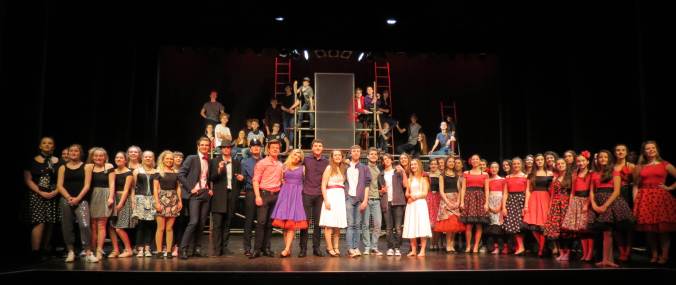
In January, I attended the Churchill Music! Young Musician of the Year competition, prompting me to write about The Power of Music  This year’s event is just around the corner, and I’m looking forward to it very much! It was also a production year and I had the chance to review West Side Story – I’m still  in awe of the brilliant show that the students and staff put on. The year was rounded off by the fantastic Christmas Concert which inspired me to write about how much I love the Junior Choir!
WSS_Fullcomp

The amazing West Side Story cast on the Playhouse stage

Assemblies

I’ve taken a few assemblies during the year! I love stitching together quite diverse examples into topics for my assemblies. For example, my assembly on Concentration featured coloured balls, an optical illusion, a cat gif and the dog from the Disney/Pixar film Up; my assembly on being Different featured metronomes, coke cans, Barack Obama and DNA. In Think Before You Speak I used a YouTuber, a tube of toothpaste, some ridiculous safety equipment and a poem by Emily Dickinson. I was relatively restrained before Christmas in discussing The 1960s as I talked about President Kennedy, the moon landings and an incredible mathematician called Katherine Johnson.

Fun
 

img_0231

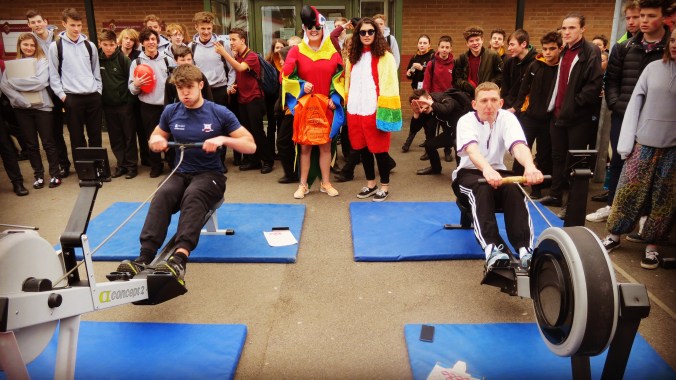
A rowing sprint competition against the GB champion wasn’t in the job description…

There has been so much to enjoy this year! From Activities Week, through Sports Day, the Year 11 and Year 13 Balls, right up to Christmas at Churchill – and it’s all still to come again this year! I even got to go to a day out at Buckingham Palace

I can honestly say I’ve looked forward to coming into work every single day of the year. It’s a privilege to work with such polite and hardworking young people and such dedicated and expert staff. Here’s to many more years – and weekly blogs! – to come.

Christmas at Churchill

I’ve had a fantastic time enjoying my first Christmas at Churchill, witnessing all the traditions I’ve heard so much about first hand! We’ve got into the Christmas spirit with an array of spectacular festive knitwear on Wednesday and Thursday as lessons continued – it’s quite a sight to see a teacher dressed as an elf explaining the details of an exam mark scheme to a student wearing a fluffy reindeer jumper with a light-up red nose…

We also had a delicious Christmas lunch prepared on Wednesday and Thursday, with the main hall transformed into an elegant family dining room with crackers, streamers and squeaky blowouts!

Today, Friday, saw us celebrate Christmas proper. The day began early with the senior team in from 6:30am to cook and serve breakfast for all the staff of the Academy, to say thank you for all their hard work this year. I managed to grab some leftovers – it was delicious!


The day continued with our carol services at the Methodist and St John the Baptist Churches, alongside our in-school activities for students in the four houses. The Sixth Form did not let us down with their spectacular fancy dress parade around the Academy site at break time! See the website for some more photos of their amazingly creative costumes. They also put on a brilliant Revue performance in which I was honoured to play a small part.

As is traditional , the Sixth Form team had been busy putting on a little entertainment of their own. See if you can spot the teachers taking on Queen in our very own Bohemian Rhapsody:

I was also lucky enough to get a treat in the English Department’s Secret Santa draw which has set me up nicely for 2017…

A merry Christmas and a Happy New Year to you all!

Assembly: The 1960s

This year marks the Diamond Jubilee of Churchill Academy, which opened its doors as Churchill Community School in January 1957. To mark this anniversary, we are having an assembly in each term looking back on the decades that the school has existed. This term, it’s been my job to look back on the 1960s.

sixties-collage

The Sixties: what a decade

When looking at this amazing decade, I could have chosen from such a wide range of events, movements, and people – I was spoilt for choice! But for me, the iconic image of the 1960s comes from the end of the decade.

man-on-the-moon

Buzz Aldrin walking on the surface of the moon in 1969 (Source: NASA)

The moon landings still represent the zenith of human scientific achievement. I have written before about the so-called “moonshot thinking” of President Kennedy who, in September 1962, gave a speech at Rice Stadium where he said that America would put a man on the moon before the end of the decade. He said:

“We choose to go to the moon. We choose to go to the moon in this decade and do the other things, not because they are easy, but because they are hard, because that goal will serve to organize and measure the best of our energies and skills, because that challenge is one that we are willing to accept, one we are unwilling to postpone, and one which we intend to win.”

We have a lot to learn from Kennedy’s ambition, from his choice to take on the difficult task because it is worth it, and because trying to achieve it will make us better.

However, my assembly does not  focus on John F. Kennedy, Neil Armstrong, or Buzz Aldrin, but another hero of the space programme – and one you may not have heard as much about. That hero is Katherine Johnson.

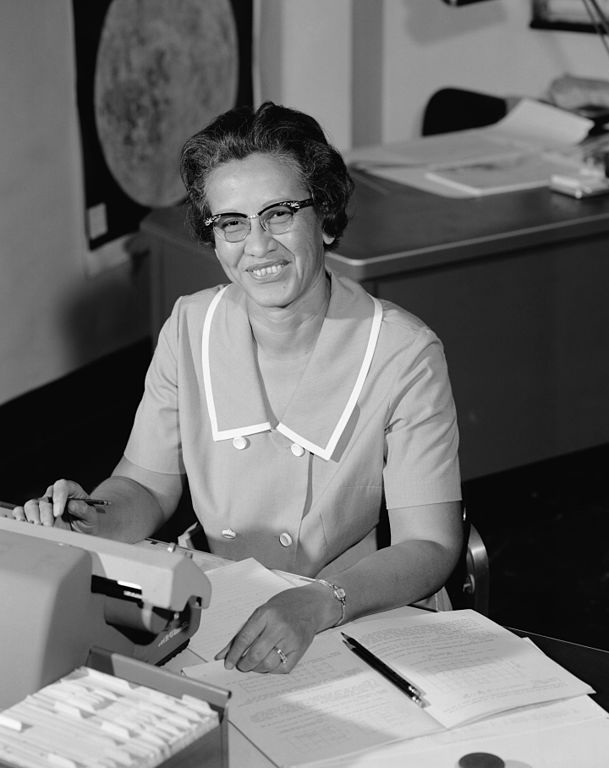
katherine_johnson_at_nasa_in_1966

Katherine G. Johnson at NASA in 1966 (source)

Johnson was born in 1918, in Greenbrier County, West Virginia. She showed an early interest in mathematics:

“I counted everything. I counted the steps to the road, the steps up to church, the number of dishes and silverware I washed … anything that could be counted, I did.”

However, Greenbrier County did not offer schooling for black students past the eighth grade, the equivalent of our Year 9. Johnson, however, knew that she was going to be a mathematician, so her family split their time between Greenbrier County and Kanawha County, where Katherine could attend High School. In 1938, Johnson became the first African American woman to attend the graduate school at West Virginia University, following the United States Supreme Court ruling which  allowed for the integration of different races in American education.

Joined NASA in 1953 when it was still called NACA, the National Advisory Committee for Aeronautics. At first she worked in a pool of technical women performing math calculations, known as “computors”. Katherine has referred to the women in the pool as virtual “computers who wore skirts.” But her skill with analytic geometry meant that she was soon working  on the all-male flight team. While the racial and gender barriers were always there, Katherine says she ignored them.

What was it that made her so successful? She remembers quite clearly her experience at the time. “The women did what they were told to do,” she explained. “They didn’t ask questions or take the task any further. I asked questions; I wanted to know why. They got used to me asking questions and being the only woman there.”
mercury-trajectory

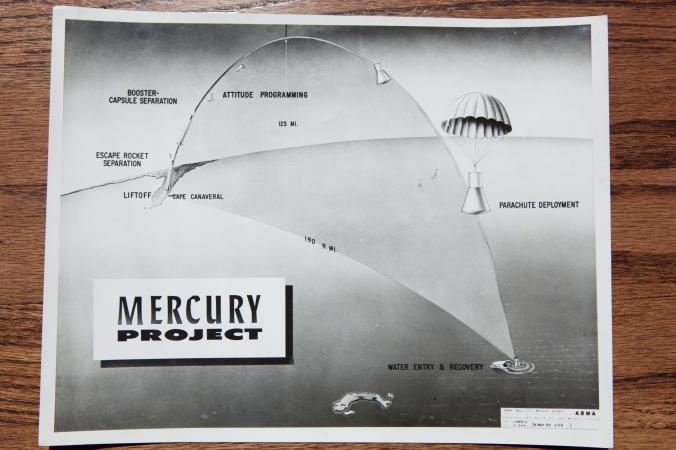
Original profile of the 1959 Mercury Mission to put the first American in space (source)

She calculated the trajectory for the space flight of Alan Shepard, the first American in space, in 1959. She also calculated the launch window for his 1961 Mercury mission. In 1962, when NASA used electronic computers for the first time to calculate John Glenn’s orbit around Earth, officials called on her to verify the computer’s numbers because Glenn asked for her personally and refused to fly unless Katherine verified the calculations. She calculated the trajectory for the 1969 Apollo 11 flight to the Moon, and worked out how to get the astronauts on Apollo 13 safely back to Earth when they called back to say “Houston, we have a problem.” She went on to work on the space shuttle programme, and she did preliminary work on the trajectory for a manned mission to Mars before her retirement in 1986. Last November, at the age of 98, she was awarded the Presidential Medal of Freedom by Barack Obama for her contribution to space flight, civil rights and gender equality.

Katherine Johnson is a truly inspirational figure, undaunted by the fact that she was born into a world which was prejudiced against both her gender and her skin colour. She new that she had something to offer, and she was assertive enough to make sure she was heard. We can all benefit from her advice: “I was always around people who were learning something. I liked to learn. You learn if you want to. So you’ve got to want to learn.”

Finally, now, they’re making a film about her:

Why I love the Junior Choir

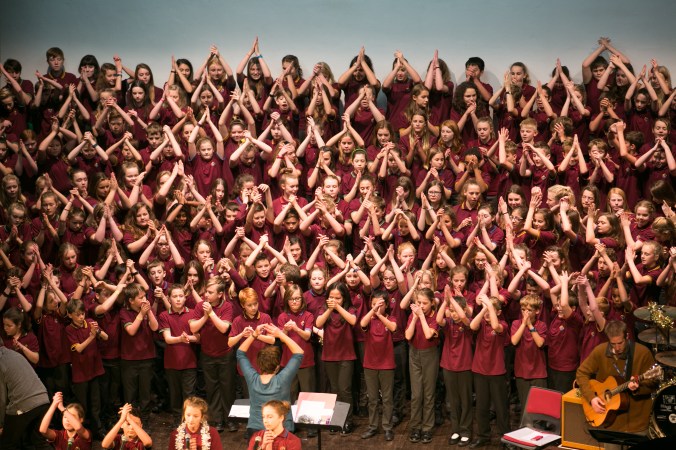
This year’s Christmas Concert was an absolute triumph, as you can read in my review for the website and all the lovely emails and messages which were sent in afterwards. The standard of music-making and performance was exceptional, and the variety of acts was joyous. But for me, and I think for most of the audience, the Junior Choir was the perfect way to close the show. Here’s why I love the Junior Choir…

Collaboration

By my count there are 237 students listed on the programme in the Junior Choir, including 21 soloists. This captures the ethos of the Academy – it’s inclusive, where all students are valued, where everyone has a voice. And what a fantastic sound 237 Year 7 and 8 students make when they’re together!
Confidence

The soloists – and the rest of the choir – who performed on the night were incredible. It’s important to remember that some of them had only been at Churchill for eleven weeks before they took to the Playhouse stage! To sing so skilfully, word- and note-perfect (or dressed as Elvis!) on a professional theatre stage is testament to all we do to build the confidence of our young people; it is this work that makes our students our best ambassadors.

f44a0348

Creativity

The songs that the Junior Choir sang were all composed by Churchill students. This year we had new compositions from Finn Williamson, Lois Hart and Brooke Knight alongside some from previous years’ songwriting competitions. The chance for students to showcase their creativity on this huge scale is such a fantastic opportunity! And the songs are great too; a fantastic alternative to traditional Christmas carols.

Choreography

As well as the sound, the sight of all those students moving together is breathtaking! The choreography really brings energy to the singing, too, and brings the words to life.

f44a0161

Continuation

The Junior Choir are the Youthful Spirit of tomorrow. Having the younger students in the Playhouse to hear the senior students sing, play, act and perform allows them to see where the performing arts can take them at Churchill. Our senior students are superb role models, and having the Junior Choir alongside them in the theatre ensures that this vital area of our work remains strong into the future.

Christmas!

Although our Christmas Concert takes place at the end of November, for me it marks the start of the Christmas season. It’s the first time this year – outside of shopping centres! – that I’d seen festive tinsel and it got me properly into the Christmas spirit.

You can watch and download a video of the Junior Choir, along with a selection of other performances from the Christmas Concert, at the Music Department website.


How to revise #3: Elaboration


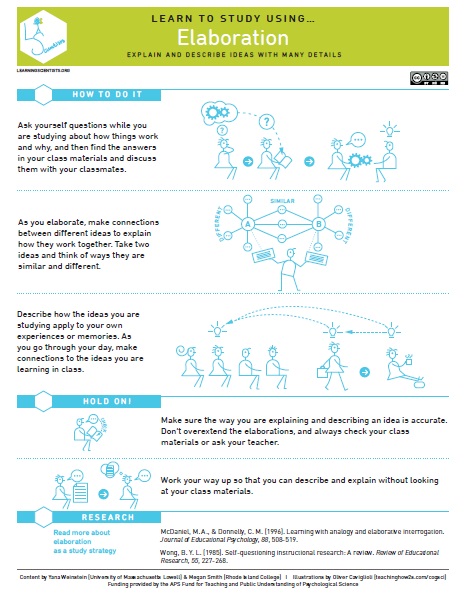
elaboration


This is the third post in a series looking at the most effective ways to revise, based on the work of The Learning Scientists. The Learning Scientists are cognitive psychologists who want to make scientific research on learning more accessible to students and teachers. Their aim is to motivate students to study and increase the use of effective study and teaching strategies that are backed by research. I’ve met Yana Weinstein PhD at an education conference in Southampton last week – she’s the real deal!

Read all the revision posts here. 

Elaboration: what is it?

When you are elaborating, you are explaining and describing what you are revising with as many details as possible. You are looking for answers to why and how things work, and you are looking for connections between the material and other things you know.

Elaboration: why?

When you elaborate, you focus on the details and the connections between the material (what you are revising) and things in your own experience and knowledge (already safely in your long-term memory). These details and connections create “hooks” to help you remember the material you are revising.

Also, by working the material through your brain and doing something with it, you are strengthening the connections in your memory.

Elaboration: how do I do it?

How you elaborate depends on what it is that you are revising. Let’s say you are revising Biology, and you want to remember cell structures. You could ask yourself why animal and plant cells differ, and how they differ. Note the answers down, or say them out loud to yourself (or into a voice memo recorder). You could then ask yourself how they are similar, and why.

Always check that your elaborations are accurate after you’ve done them. Refer back to your notes, textbooks, or online resources. Correct and mistakes and repeat the elaboration with the corrections, otherwise you’ll risk remembering the incorrect material.

Elaboration: next steps

In the early stages of elaboration, it’s a good idea to have your notes around you to refer to. The eventual aim, however, is to get to the point where you can describe and explain accurately without the material in front of you.

Elaboration: watch the video


How to revise #2: Spaced Practice


This is the second post in a series looking at the most effective ways to revise, based on the work of The Learning Scientists. The Learning Scientists are cognitive psychologists who want to make scientific research on learning more accessible to students and teachers. Their aim is to motivate students to study and increase the use of effective study and teaching strategies that are backed by research. I’ve met Yana Weinstein PhD at an education conference in Southampton – she’s the real deal!

Read all the revision posts here.

Spaced Practice: what is it?

Spaced practice, sometimes called distributed practice, means that you revise little and often rather than all at once.

Spaced Practice: why?

forgetting curve

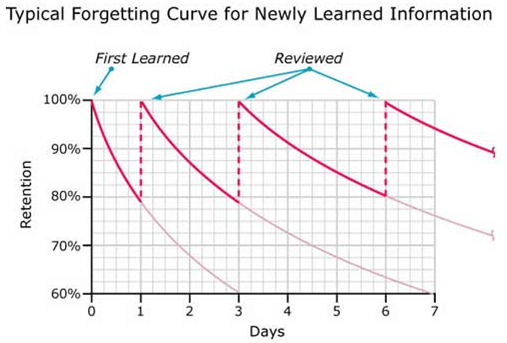
The Ebbinghaus Forgetting Curve – reviews over time lead to better retention of learned information

Spacing out your revision so that you revisit your material again and again  over time with breaks in between is far more effective than cramming all at once. Studies have shown that revisiting material helps secure the connections in your brain.

Spaced Practice: how do I do it?

Spaced practice needs planning – but it can start straight away. In any year, you can start spaced practice immediately to help secure your learning for the future. At the weekend, give yourself time to go over what you’ve learned in the previous week. It doesn’t need to be long – just a few minutes to make sure you’ve remembered what you’ve studied during the week.

Spaced Practice: next steps

After a few weeks, go back over the stuff from a month ago to make sure it’s still there. If you have to remind yourself of things that you’ve forgotten – don’t worry! Re-learning and reminding yourself of things you’ve forgotten actually makes the retention rate better.

In the run-up to exams, make sure you revise your material a little and often, leaving spaces of a few days between sessions on the same subject.

When you are revising, use the retrieval practice method, elaboration (see post #3!) and self-testing. Don’t just read over your notes – make your brain work hard with the material so you remember it better.

Finally, don’t leave all your revision to the night before – you won’t remember it! You’re actually far better off getting a good night’s sleep than pulling an all-nighter. Your brain will be sharper and more effective for the exam if you’re well rested.

Spaced Practice: watch the video

Remembrance

Mr Hildrew’s blog for Remembrance Day.

chrishildrew's avatarTeaching: Leading Learning

Remembrance Day in school is one of those moments which make you realise what an important job we do, and what a privileged position teachers are in. It’s always the day of the year when Iwantto be teaching period 3; I’m disappointed if I have a non-contact session. It’a an honour to share the silence with young people as we reflect, separately but together, on our individual and collective experience of loss and sacrifice. There are few other occasions where I’m so intensely aware of what Graham Nuthall calls the different worlds of the classroom. On the surface we all experience an identical minutebetween the bells, but in our private inner worlds each person has an unknown and unique journey.

SourceSource I always preface the silence with my classes with a little about why Remembrance Day is particularly important to me. I tell them about my Grandfather, an…

View original post 549 more words

Assembly: Think Before You Speak

funsciencebook2

Over the half term, I got a new book: Fun Science by Charlie McDonnell. I’d been looking forward to this book for ages as I’ve watched Charlie on YouTube for a long time and really enjoyed his Fun Science videos. The book is great and highly recommended! I was reminded of this video Charlie made back in 2011 explaining the science of sound:

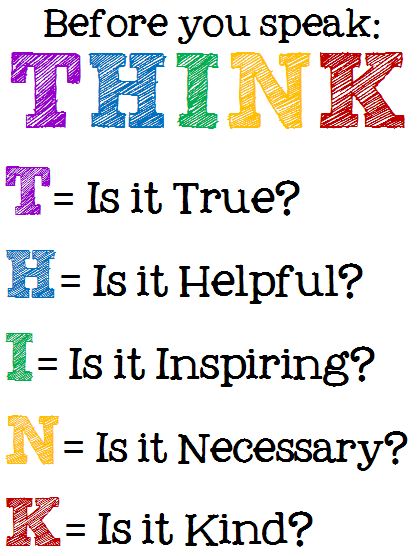
Charlie’s song discusses speech, and begins with the line “it starts with an idea, or an impulse to make a sound.” It is the gap between the idea and the sound that I want to concentrate on – when the idea to say something has formed, there is a choice about whether we should give that idea voice. There’s a useful mnemonic to help us make that decision:
thinkbeforeyouspeak

In my view, if what you are about to say does not pass one of those five tests, you should think twice before saying it. Once something is said, it is possible to apologise and try to make amends, but it is never possible to take it back.

To demonstrate this principle in assembly, we did a little Fun Science of our own. A willing volunteer from the audience donned the important safety equipment, before attempting to squirt all the toothpaste out of a tube as quickly as possible (Hanover were the best at this, with a time of 9.08 seconds). The second part of the experiment saw the volunteers try to put the toothpaste back into the tube. This proved much more difficult.

The experiment was designed to show that squeezing the toothpaste is like blurting something out without thinking about it. It’s easy to do – the work of a moment – and actually feels pretty good in that moment! But once it’s out, there’s no putting it back, and any attempt to do so actually creates a worse mess than you started with.

It’s also important to think about the way we “speak” online. Mrs McKay has already spoken to students this year about the importance of e-safety, but we often see how people “say” things online they would never say in person.

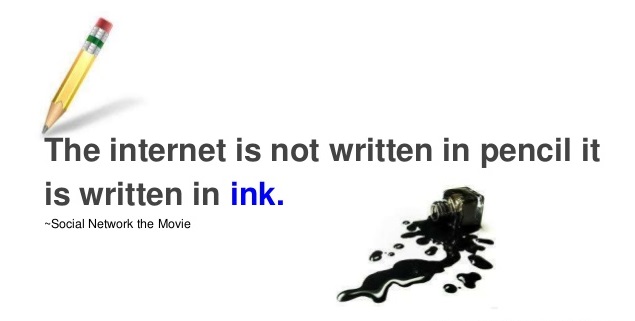
written in ink.jpg

The difference between speech and posting online, of course, is that there is a permanent record of what you have “said.” Even on services like Snapchat, where the message expires, screencaps can still be taken – and the impact of the communication is permanent. When confronted with the things they’ve put on social media, for example, people will often say “I didn’t think…” If what you’re about to say – whether in person or online – doesn’t pass the THINK test, then think twice.

Of course if we have the opportunity to say something that is true, that is helpful, that is inspiring, that is necessary, that is kind, we should take that opportunity. Because, although our words can cause damage, they can also make someone’s day immeasurably better. And by choosing to say that truthful, helpful, inspiring, necessary and kind thing, we add to the sum of positives in our community, and make everyone that little bit better.

Our words make a difference. Let’s make a positive difference.

COULD mortal lip divine
The undeveloped freight
Of a delivered syllable,
’T would crumble with the weight.

Emily Dickinson

#LoveToRead: My Desert Island Books

lovetoread_logo_blackcopy

This weekend (5-6th November) is “Love to Read” weekend, a campaign run by BookTrust and the BBC. There’s a wealth of programming across the BBC (read about it here) and as part of the campaign, Simon Mayo has been asking authors to share their six “Desert Island Books” on his Radio Two show (you can hear Marian Keyes’ choices here). Our wonderful LRC co-manager Mrs McGilloway suggested I share mine here…and I don’t need asking twice! You can read the LRC’s #LovetoRead blog post here.

Firstly, I’ve always loved to read. I used to read by torchlight under the covers at night when I was supposed to be asleep. I have always got a book on the go (it’s pretty much all I put on my Instagram!) and I don’t think there’s much to beat the feeling of being completely absorbed in the imagined world of a story. If I was really on a desert island I’d want to clear some of my “currently unread” pile, but here are the six books that had the biggest effect on me, or mean the most to me, in alphabetical order (author’s surname) because I can’t rank them!

Mansfield Park by Jane Austen

img_1001

Jane Austen famously described her novels as “the little bit (two inches wide) of ivory on which I work with so fine a brush as produces little effect after so much labour.” In this novel the art of nuance, delicacy, and meticulously crafted language is unparalleled. It tells the story of Fanny Price, a low-born girl, adopted into the rich Bertram family. Fanny has a rock-solid moral compass, and always knows right from wrong. When her uncle, Sir Thomas Bertram, goes away to Antigua to look after the plantation full of slaves his wealth is built upon, the elder and supposedly better Bertram children begin to drift away from the straight and narrow, flirting with unsuitable people and generally getting out of hand –  but Fanny stays strong. I love the fact the Austen, in 1814, was showing that those born with privilege don’t necessarily deserve it, but that being true to what you know is right will be rewarded. The novel is also notable for the fabulously awful aunt character, Mrs Norris, a horrendous snob and busybody – and the character that J.K. Rowling named Filch’s cat after in the Harry Potter series.

The Complete Poems by Emily Dickinson

emily-dickinson

Emily Dickinson is a fascinating character. She spent most of her life as a hermit, shut up alone inside her house in Amherst, Massachusetts. After her death in 1886, her sister, Lavinia, found stockpiles of poetry, hand-written and hand-bound, locked in trunks. They were breathtakingly modern, often very short, dense, and compact, using dashes as punctuation and meditating on death and immortality. She is now widely regarded as one of the most important American poets of all time. This book contains all 1775 separate poems, and I read it cover-to-cover for a final year university assignment. I’d love to have the time to do it again! As an aside, you can now see all of the original handwritten manuscripts at the open access Emily Dickinson Archive – a real treasure trove.

The Bell Jar by Sylvia Plath

thebelljar

This novel had a profound impact on me when I first read it in Year 12. I’d read some of Plath’s poems in class, and my English teacher recommended this novel as further reading. It’s a semi-autobiographical account of her depression and breakdown in 1950s America, told through a character called Esther Greenwood. Esther is a thinly-veiled version of Plath herself, and the novel deals with her treatment by electric shock following a suicide attempt. It is harrowing and horrific, but it is a story which has a strong thread of hope running through it. It is also brilliantly written, with metaphors and images so striking they remain with me still. Published in 1963, its unflinching first-person portrayal of mental illness is as important and relevant today as ever.

His Dark Materials by Phillip Pullman

hisdarkmaterials

I may be slightly cheating here by cramming a trilogy in as one book, but it has been published in one volume and it’s my list, so I’ll do what I like! The opening novel, Northern Lights, tells the story of Lyra Belaqua, living in a parallel world where people’s souls exist outside their bodies in the form of animal companions or dæmons. In the second part, The Subtle Knife, Lyra’s story intertwines with that of Will Parry, a boy from our own world, as the two of them try to find the secret of the mysterious Dust that is swirling through the universe. Supposedly a children’s book, the trilogy’s ambition and scale is huge: it takes in the nature of religion, creation, adulthood, life, death and the self within a gripping and thrilling narrative. It has to be read to be believed.

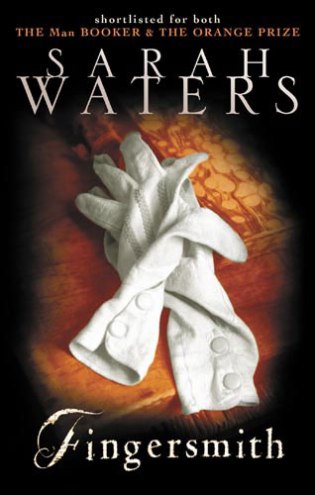
Fingersmith by Sarah Waters

fingersmith_318x500

Sarah Waters is a brilliant writer of historical fiction, often exploring the experience of women in different time periods. This perspective always makes for fascinating reading, but in Fingersmith she fashions a plot so fiendishly complex and so full of twists and turns that I remember gasping aloud as I read it. It’s definitely one for older readers, but the exploration of love, trust, betrayal, madness and deceit in Victorian Britain is simply stunning.

The Waves by Virginia Woolf

thewaves

When I was at university, I got really interested in whether it was possible to express thoughts in writing – dreams, unconscious thoughts, the inner workings of the mind. Woolf’s attempt at that The Waves reads almost like a poem, with six characters speaking in the first person in a series of interlinked inner monologues. It’s an experimental, beautiful book.

Over to you!

What are your Desert Island Books? Let me know in the comments, or have a chat about it with your teachers. Even better, let the LRC managers know so they can add you to the #LoveToRead list!

How to Revise #1: Retrieval Practice

This is the first post in a series looking at the most effective ways to revise, based on the work of The Learning Scientists. The Learning Scientists are cognitive psychologists who want to make scientific research on learning more accessible to students and teachers. Their aim is to motivate students to study and increase the use of effective study and teaching strategies that are backed by research. I’ve met Yana Weinstein PhD at an education conference in Southampton last week – she’s the real deal!

Retrieval Practice: what is it?

Retrieval practice is when you make your brain recall information from memory, and then do something with that information.

Retrieval Practice: why?

By forcing your brain to recall information from memory, it strengthens the connection in the long term memory and makes it easier to remember it next time. Failure to retrieve information also helps. If you can’t remember an important piece of information, fact or idea, it tells you that you need to re-learn it carefully so you can retrieve it next time.

Retrieval Practice: how do I do it?


Flashcards are particularly useful. Write a concept or keyword on one side, and the definition on the reverse. Alternatively, write a question on one side, and the answer on the other. Look at the front and remember the information on the reverse. Don’t be tempted to flip the card – if you do, you’re just reading the information, not recalling it from memory, and this isn’t helping with retrieval.

Retrieval Practice: next steps

Testing yourself is difficult! Don’t worry if you find it hard. The struggle is actually making the connections in your brain more secure. Follow the advice above and it will get easier – but if you cheat and look at the answers, you aren’t securing those connections to your memory.

It’s also vital to check that you’ve recalled information correctly, otherwise you might be cementing incorrect definitions and ideas into your memory!

Retrieval Practice: watch the video

In this video, the Learning Scientists explain about retrieval practice:


Happy revising!