A school year is a marathon, not a sprint: it’s important to pace ourselves. It reminds me of the story of the hare and the tortoise. The hare sets off at a terrific pace, relying on its natural talent – speed – to get it through. Initially, it pays off and the hare sprints ahead. However, it can’t maintain the pace over time, and ends up asleep under a tree. The tortoise understands that consistent, steady effort, applied over time, will bring its rewards. Because that level of effort can be sustained, the tortoise overhauls the sleeping hare and finishes ahead.
“The moment we believe that success is determined by an ingrained level of ability, we will be brittle in the face of adversity.”
Everyone at Churchill – staff and student – needs to put in constant and consistent effort in every lesson, every day. That way we can all stay on top of our work and make sure we haven’t got an impossible mountain to climb at the end of term or the end of the year. But it also means that we can sustain that level of effort over time, and make trying hard our default behaviour. Relying on our natural talents to get us through – coasting – may get us a certain distance, but there will come a time when it isn’t enough. Then, if we aren’t used to trying, we won’t have the reserves to make it count.
Another key element to making sure we have the energy to maintain our effort over time, is to ensure we build in relaxation time. We can’t work all the time, and time to unwind and de-stress is vital! It’s also essential that we eat and sleep well, so that we are charged up and ready for the hard work of learning during the school week.
This week Year 7 received their starting profile reports, which assess students as they start the school. These reports are the first we have issued at Churchill since national curriculum levels were removed from both primary and secondary schools. In their absence, we are using several measures to assess students at the Academy, and to track their progress. Our aim was to design an assessment system that gave useful information to students and families, whilst being clear and easy to understand.
Assessment on entry
Key Stage 2 Test Results (SATs)
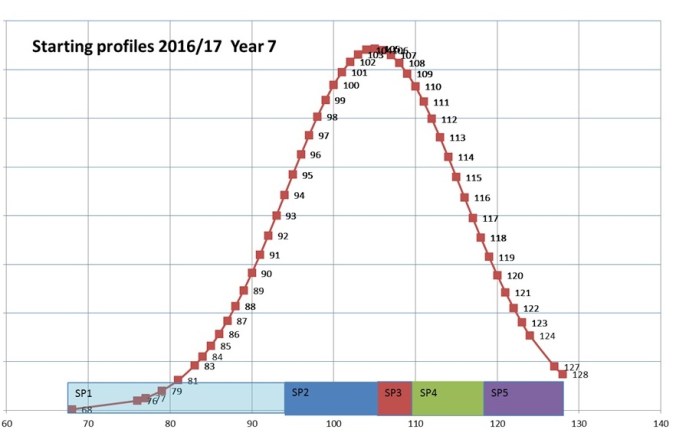
We get the results for every child who has taken the SATs at the end of Year 6 in their primary school. The overall scaled score – combined from their English and Maths tests – ranges between 80 and 120, with 100 being the national average. At Churchill, the average score we have in our Year 7 is 104.
In addition to the Key Stage 2 results, we do several tests to assess students when they start at the Academy. This helps us to “triangulate” the data and gives us a level playing field for all starters.
CATs Tests
These tests include assessments of students’ performance across four “batteries” of tests:
Verbal (handling words and language)
Quantitative (handling number)
Non-verbal (problem solving)
Spatial (handling shape in two and three dimensions)
The national average across the four batteries is 100, with scores usually ranging between 90 and 110. At Churchill our average for Year 7 is 103.
NGRT Reading Test
This test assesses reading and comprehension of text. Again, the national average is 100, with scores usually ranging between 90 and 110. At Churchill the average for our Year 7 is 107.
Starting profiles
Starting profiles for our current Year 7
We use the scores from Key Stage 2 tests, CATs and the NGRT Reading Assessment to create the profile of the year group. The chart above shows distribution of the average of the scores across the three assessments in our current Year 7. This helps us to give students a “starting profile” which we can use to track progress over time. Starting Profile 5 (SP5) represents the highest scores across the assessments. Most of our students are in Starting Profile 3 (SP3 – the highest point on the curve, with the highest proportion of students). Starting Profile 1 includes students with the lowest scores, so that we can assign support as appropriate.Starting profiles are reviewed each year.
Tracking progress over time
When students are assessed in future, we will be able to track their progress relative to their starting profile. In each subject, assessments will be scored and we will be able to report to families whether students have made:
Expected progress relative to their starting profile
Good or Exceptional progress (better than expected) relative to their starting profile
Less than expected progress relative to their starting profile
In other words, if a student with a Starting Profile of 3 completes an assessment and the score shows that they remain in that bracket, they will be assessed as having made “expected progress.” If they have worked really hard and moved up in their assessments, they will be assessed as having made “better than expected progress” and so on.
In the future
At the moment, we are running this assessment system with Year 7, and tracking the progress of Year 8. Over time, as the new GCSEs are taken, we will be able to make more accurate estimates of GCSE grade expectations for students with particular starting profiles. This means we will be able to roll the system out over time across the whole school.
We hope that you find the assessment information useful!
Open Evening is a key event in our school calendar. It’s when we get a chance to showcase our wonderful school to children and their families who are interested in coming to Churchill in Year 7. This year was my first open evening as Headteacher, and as I walked around the site I couldn’t have been prouder of the staff and students! There was a fantastic “buzz” in every part of the school, from the twinkling fairy lights outside the Design and Technology grotto to the Duke of Edinburgh fire pit, from the tarantulas, rats and tortoises in Biology to the magic in Mathematics, and from the Shakespearean photobooth in English to the crumble-making in Catering…and everything in between!
I was especially proud of Elliot, Anna and Stephen from Year 13, and James, Emma and Drew from Year 7, who spoke confidently and so warmly about their time at Churchill to the packed houses in the Academy Hall. Our student tour guides were also excellent ambassadors for the school, answering questions and making sure that no stone was left unturned. I even found myself clapping along to the Youthful Spirit Gospel Choir at one point! Thanks to everyone from the Academy who came out to help.
Next week we have our Open Mornings when we will showcase the Academy on a normal working day. We can’t wait!
Every day I walk the corridors of the Academy and pop into classrooms and lessons as I go. This week I thought I would share with you some of the things I’ve seen on my travels!
In Art, students practising single-line drawing and honing their observational drawing by creating panoramic sketches
In Business Studies Year 9 were exploring the factors of production, needs and wants, and e-commerce solutions
In Catering, there was some delicious tomato soup on the boil – the smell was fantastic!
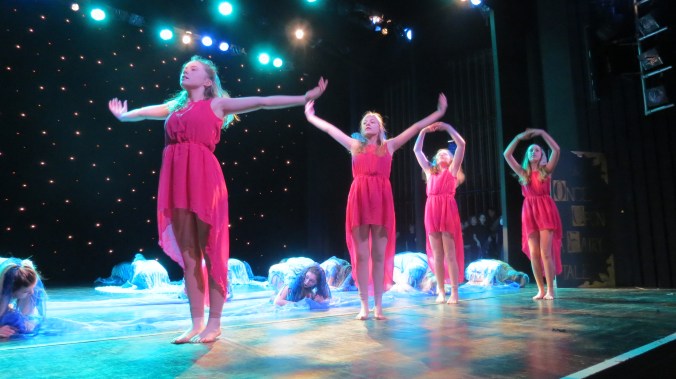
In Dance, BTECstudents working with professional dancer Emma Duffill from the TidalWave Dance company to develop their work in a contemporary style, adding their own choreography to a planned sequence
In Drama, students working on the concept of metamorphosis and presenting devised pieces showing transformations, whilst other Year 8 students were beginning preparations for their mask work.
In English, Year 11 were developing their understanding of Romeo and Juliet whilst Year 7 were producing “school poems” ahead of Open Evening next week
In Geography one class ofstudents were securing their knowledge of key features in glaciated landscapes – striations, cirques, glacial horns, arêtes, trim lines, U-shaped valleys, roches moutonnées, overdeepenings and hanging valleys – whilst another was exploring the human geography of Jamaica in their case study work. There was even time to model coastal features!
Pop up coasts! A bit of creativity going on in geog GCSE. Students demonstrating their understanding of coastal processes and landforms. pic.twitter.com/zMT0KTIqZh
In Health and Social Care Year 10 were starting their unit on verbal communication, analysing the impact of volume, tone, pace, formality, and jargon
In History students were looking at the impact of the industrial revolution on child workers, including some horrific eyewitness testimony of Victorian industrial accidents
In Languages students were developing their description skills by creating character profiles – only French and Spanish were spoken by staff and students. No English allowed!
In Maths, Year 11 were sharpening up their understanding of indices whilst Year 13 were developing their advanced calculus by using the chain rule to differentiate functions of functions
In Music, GCSE students were teaching Year 7 the elements of music theory to secure their own knowledge of pitch, tempo, harmony and notation whilst introducing Year 7 to key concepts. This was amazing!
In PE, I saw Year 9 developing their teamwork and netball technique, Year 10 pushing themselves hard in an exercise class, and in a Year 9 theory lesson students were locating muscles and bones which were vulnerable to injury for Olympic athletes. In extra-curricular this week, girls’ football kicked off with a great turnout on Thursday.
In RE, Year 10 were exploring the concept of marriage, whilst Year 7 were looking at historical conceptions of God – starting with Ancient Egypt!
In Science, Year 12 were working on a calibration practical to analyse the concentration of glucose in urine samples
In Technology Year 9 were putting great work into their bug towers, working with tools and crafting their wooden structures with great skill
Nearly 2000 lessons take place every week at the Academy. This is just the tip of the iceberg! But what all these lessons had in common was the purposeful learning taking place. In every room I visited students were focused and engaged, pushing themselves to improve. It’s a privilege to witness.
We’re into the swing of the new school year now – the summer holidays seem like a long time ago! – and the new faces of our Year 7 students are already familiar as they approach their lessons with confidence and enthusiasm. But our Year 7s aren’t the only new faces at Churchill this September: we also welcome a fantastic group of new staff!
When I was training to be a Headteacher, I was given a lot of advice about how to improve and maintain high standards in schools. In one particularly memorable document, the following piece of advice was number one:
“The most important thing the Headteacher does is to find, recruit, develop and retain great teachers. You can’t play like Barcelona if you’ve got players from Brentwood.”
I’m sure that no disrespect was meant to Brentwood in that Headteacher’s advice, but it stuck with me! For Churchill to continue to be a great school, and to continue to go from strength to strength, the quality of the teaching needs to be the best it can be in every classroom, every day. That teaching needs to be underpinned by exceptional support staff in every role across the Academy. I am very fortunate to have inherited a school already packed with dedicated, highly skilled professionals doing a fantastic job with the students, and I am thrilled that this year’s new recruits have added to that strength.
Some of our new staff at the “meet the Governors” event this week
It is especially gratifying to have such fantastic staff joining us at a time when teacher recruitment around the country is very challenging. I know of many schools – including some locally – with unfilled vacancies in key teaching posts being covered by non-specialists or temporary staff. Our reputation and the quality of our offer here at Churchill has meant that we have filled every teaching post with subject specialists, experts in their field, and fantastic teachers to boot! And our support staff has been strengthened by the recruitment of experienced, dedicated staff who have added to our capacity to ensure our students are able to learn to the best of their ability.
This year we are joined by:
Jon Bevan (Teacher of Geography)
Harry Church (Teacher of History and Politics)
Owen Davis (Teacher of Psychology and Sociology)
Joanne Dignum (Teaching Assistant)
Eric Evans (Teacher of Physics)
Chloe Harvey (Teacher of PE)
Lizzie Hudson (School Administrator)
Alison Innalls (Head of RE)
Maire McNeil (Stuart House Mentor)
James McWilliam Woods (Teacher of Maths)
Victoria Piper (Head of Maths)
Jacqueline Sims (Teacher of Modern Languages)
Jeff Spencer (Teacher of Music)
Adam Taylor (Teaching Assistant)
James White (Performance Technician)
After the Governors met with the new staff this week, the chair of our Finance Committee sought me out to tell me how impressed he was by their energy, positivity and enthusiasm, and he remarked on how lucky our students were to have these people working with them. I couldn’t agree more! So welcome to all the new staff joining us this September. We’re thrilled to have you here, and we’re very excited about all that you have to offer the students. I hope you enjoy your time at Churchill as much as me!
Welcome back everyone to a new year at Churchill! I hope you all had a great summer. I certainly did, enjoying several trips away with the family and lots of rest and relaxation time. I even got a fair bit of reading done!
Some of my summer reading!
I also spent a lot of my summer glued to the coverage of the Rio Olympics, tracking Team GB’s incredible success and binge-watching track cycling, diving and gymnastics amongst many others! It was hugely inspiring, and in this week’s blog I want to share a few of my highlights which I think captured the values we hold to at Churchill.
Care
Nikki Hamblin of New Zealand comes to Team USA’s Abbey D’Agostino’s aid in the 5,000 metres heats
Athletes train for years for the Olympics, and it can all be over in a heartbeat. In the women’s 5,000 metres heats, New Zealand’s Nikki Hamblin stumbled and fell, taking out the athlete immediately behind her – Abbey D’Agostino from the USA. In the fall, D’Agostino tore her cruciate knee ligament, and in that instant, through no fault of her own, her Olympics was over. Hamblin was distraught at the injury caused to her fellow athlete and stopped to help her up and aid her, limping, around the remaining mile so that they both finished the race. Olympic organisers reinstated both runners to the final, but D’Agostino’s injury meant that she could not take part. However, their sportsmanship and care was recognised in the award of the Pierre de Coubertin medal to both athletes – an honour that has only been handed out 17 times in the history of the games. I found the story really moving: even in the heat of competition, and in the moment that all their hopes were evaporating, their first reaction was not anger or recrimination but care and support for another human being.
Nikki Hamblin and Abbey D’Agostino have been commended for their sportsmanship after they helped each other up to finish the race. (Photo by Chris Graythen/Getty Images)
Inspire
Ruby Harrold representing Team GB in Gymnastics
I wasn’t fortunate enough to be working at Churchill when Ruby Harrold was a student here, but I felt the rush of support for her from the community through our posts on Instagram, Facebook and Twitter. By the time the Artistic Gymnastics Team Final came round I was bouncing with excitement! To see an ex-Churchill student, who walked our grounds and sat in our classrooms, on the biggest sporting stage of all was a true inspiration. It shows that, with enough hard work and dedication, you can achieve anything.
But for me, the story that encapsulated “challenge” the most was Nick Skelton.
Nick Skelton: gold medallist at 58 years old
Nick Skelton broke his neck in 2000. He had a hip replacement in 2011. His horse, Big Star, tore his lower suspensory in 2014. Careful, meticulous rehabilitation for both horse and rider saw them come back to win showjumping gold in a tense six-way medal jump-off. The tears in his eyes as he stood on the podium told the story of the challenges he and Big Star had overcome to get there: nobody deserved it more.
Achieve
Team GB medal tally: 27 gold, 23 silver, 17 bronze
I didn’t think anything could match London 2012, but in Rio Team GB won medal after medal after medal. It soon became clear that the team had got their careful preparations absolutely right: attention to detail, team unity, and investment of lottery funding was paying off. I got completely caught up in a spirit of national euphoria! And, after the games, I reflected on the lessons we could learn as an Academy from the incredible success of Team GB in Rio.
Small changes can make a big difference
The so-called “marginal gains” philosophy has long underpinned British Cycling’s success, and seems to have spread! We should all look for the small changes we can make to help us improve and do better every day.
2. Working together maximises the chance of success
When Laura Trott won her Omnium gold medal, she thanked her nutritionist, her power data analyst, her coach, and the “people at home, the people that you don’t see.” There was a massive team behind her, helping her be the best that she could be. Each of our students should be a Laura Trott, with all the staff at school, family and friends supporting them to achieve their very best.
3. There is no success without effort
The hours, days, weeks, months and years of dedicated training that elite athletes put in to achieve their medals shows us what it takes to be successful on the biggest stage. We may not all be the best in the world at what we do, but we need to dedicate ourselves to hard work, perseverance and determination if we are to achieve success on our own terms. And, at Churchill, we have plenty of examples of just that approach:
This slideshow requires JavaScript.
We are celebrating the great achievements of our students in their A-level and GCSE exams this year – achievements that are only possible because of the hours, days, weeks, months and years of dedicated hard work and effort that the students have put in to deserve them. Well done to all of you!
Jesse Owens won 4 gold medals in the Berlin Olympics in 1936 – and it’s as true today as it was then!
I wish all of our Academy community every success this year!
We certainly know how to finish on a high here at Churchill! This week has seen four excellent Celebration of Success events held at the Academy. These events are a great way to finish the year, recognising the achievements of students who have excelled in particular subjects or as members of their tutor groups throughout the year. At each event, I read out the following quotation:
“If you are going to achieve excellence in big things, you develop the habit in little things. Excellence is not an exception – it’s an attitude.”
Colin Powell
This is the key to sustaining success. The students who received certificates as part of Celebration of Success – 1080 of them! – all demonstrated this. They were getting the little things right, day in day out, all the time. Turning up for school, on time, in the correct uniform. Listening carefully. Applying themselves. Working hard. Doing their best. Looking out for others. Caring. Smiling. Helping. Not just occasionally – but all the time. These “little things” build up an attitude and approach which contributes to bigger things, recognised in the awards handed out at Celebration of Success: the formation of an attitude which will contribute to excellence not just at school, but beyond.
Of course, not everyone wins awards at Celebration of Success, and not everyone has these habits of excellence. But they can be learned – and they can be deliberate acts. I was particularly struck by one tutor’s citation for their Tutee of the Year. The tutor said that, in the first few years of school, the student and the tutor hadn’t “clicked” and they hadn’t particularly impressed one another. But the tutee developed these habits of excellence, getting the little things right all the time, and the tutor saw this build up and recognised that this was someone deserving of recognition. It was one of the most gratifying handshakes of the week – celebrating the success of someone who had changed – and done so consciously – to ensure success.
In the midst of this celebration of success, it was serendipitous that our rescheduled Sports Day also took place. And what a day! It was great that families were able to join us on the field to celebrate success in the sporting arena. The atmosphere was full of fun and enjoyment, and the Houses as fiercely competitive as ever. Despite a strong surge from Stuart, especially in the lower years, Tudor romped home as comfortable victors. I loved the whole day! There is a gallery of photos on the school website and on Facebook, and a few of my favourites are included below.
????????????????????????????????????
????????????????????????????????????
Before we break up for the summer, we say goodbye to some excellent colleagues who are leaving the Academy this year. In particular, I would like to pay tribute to Chris George, who has been at Churchill for over 20 years. I have personally found his wise counsel and listening ear invaluable since I started in January, and I know many colleagues who have been here a lot longer than me will say the same. I wish him well in his well-earned retirement.
Chris George: Chief Timekeeper
I wish all of you a restful, happy summer holiday!
What a week! It’s been my absolute pleasure (and privilege!) this week to get out and about visiting as many activities as possible. Over the week I’ve popped into Age of Mythology, Be a Film Critic, Candle Making, Magic – the gathering, Crazy Crafters, Cupcake Creations, Day of Sports, Decoupage, Got to Dance, Jewellery Making, Stop-Motion Lego Animation, Fireworks Animation, Music For All, Photoshop Masterclass, Project Catwalk, Paintball, Go Karting, Golf, Bristol City Tour and Coaching, Skiing and Snowboarding, Bag and Wallet Making, Journalist for a day, Book Making, FIFA tournament, and more..and I’ve missed several because there are only so many hours in the day! I even managed to visit some of our Year 10 students on work experience. Whilst my travel budget didn’t extend to Iceland, Austria, Belgium, France, Cornwall, Cardiff, the Forest of Dean or the Harry Potter Studio Tour, I’ve enjoyed the photographs that have been sent back and Facebook, Twitter and Instagram have been buzzing throughout the week.
Activities Week is a great chance for students to try something different. I have seen them learning practical skills like jam making, product design or putting. I’ve seen them gaining cultural knowledge from visiting galleries, museums and our European neighbours. I’ve seen them broadening their curriculum knowledge from History in Belgium, Geography in Iceland, Art and Science in Bristol. I’ve seen their teamwork and resilience improve from problem-solving, and as they push themselves out of their comfort zones into new environments. I’ve seen students taking the opportunity to spend a whole day in the specialism they love – dance, textiles, programming, sport and so on – to get the maximum enjoyment out of their passions. And I’ve seen the working relationships between students and staff continue to strengthen and grow as they experience learning in a different context.
Many schools have stopped offering Activities Weeks. They are time-consuming to organise as the Academy has to risk assess all of the activities, arrange the options, sort transport, and liaise with all the providers. The week requires a lot from staff, with a huge commitment of time and energy to take students on these amazing experiences at the end of a long and tiring year. But having seen the enjoyment and the benefits that everyone gains from it, I’m very glad that Churchill still has its Activities Week – memories have been made! Now to start planning 2017…
I will finish this week’s blog with a heartfelt thanks to all the staff who organised and ran activities both directly and behind the scenes. Thanks especially to Marilyn Cadman, who is the glue that holds the week together! And thanks of course to our wonderful students for their excellent behaviour and enthusiastic participation throughout the week. Here are a few of those memories – find more on the website and via the social media channels!
I hope you will forgive the title of this week’s blog. If you’ve found it in your heart to forgive that, then I hope you’ll also forgive this next sentence.
I’ve been to two fantastic balls in the past fortnight.
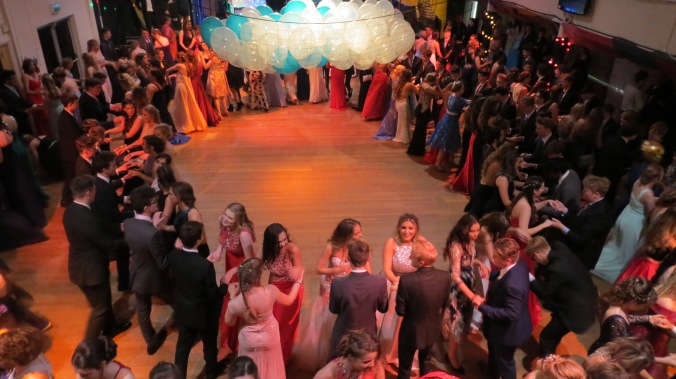
Of course, I am talking about the Year 11 Ball here at the Academy, and the Year 13 Ball in Bristol the following week. These great events have got me thinking about the spirit of celebration and what I’ve learnt about Churchill over the past fortnight.
Firstly, I’ve heard some people bemoaning the “Americanisation” of our culture as proms have taken hold across the land. I’m not one of them: I love them! And, it has to be said, Churchill’s are something special. In particular, I love the fact that the Year 11 Ball is held here at the Academy, transformed this year into an Aladdin’s Cave of Bollywood-inspired delights. I love the fact that the whole community turns out to watch the arrivals, cheering and applauding as each new spectacular mode of transport rolls around the coach loop. And I love the fact that our Year 11 demonstrate all the creativity and originality that are the hallmarks of this school in their choices of vehicle, from sports cars to scooters, tractors to trailers, motorbikes, golf buggies, wheelbarrows, camper vans and Land Rovers… And I love the fact that the students waltz, tango, and salsa together under the expert direction of our dance teachers before unleashing their own moves on the dancefloor!
What I loved more than that last week, though, was the joy on their faces and the mood of the celebration. There was genuine happiness that the exams they’d worked so hard towards were finally over, and the summer was opening up invitingly ahead of them. But there was also real warmth and affection for the school and its teachers who had helped them along the way. There were hugs and thank yous, and I think in each of them a sense that, even though many of them would be returning to us in the Sixth Form, their time as a full year group was over and that, from September, a new chapter was beginning.
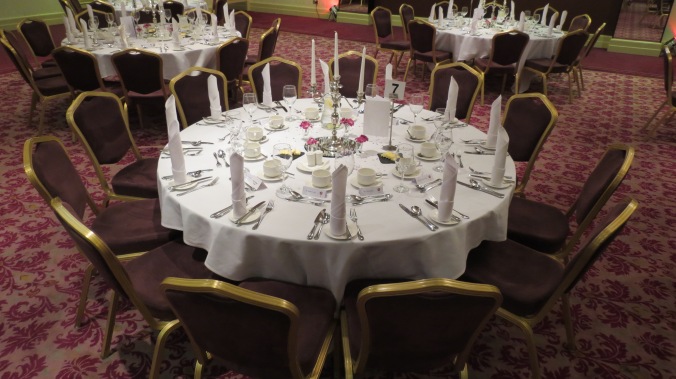
Table prepared for the Sixth Form Ball
What, then, of the celebrations for the students two years older? Well, the glamour was still very much in evidence and, if anything, turned up a notch in our Year 13 Ball…and I can certainly vouch for the enthusiasm and energy with which they celebrated! These students too are stepping into a new chapter, beyond the Academy for good. I wished them well as they prepared for that next vital step. It also struck me how many teachers came to celebrate with them, showing the real affection and respect between the staff and students at the Academy. Or the fact that the teachers were in need of a good night out too!
So should schools – places of learning and education – really be expending time and energy in organising parties? Absolutely. They celebrate the warmth of the relationships between students and staff, they bring people together to mark these mileposts on our journey together, and they give us all the chance to relax and let our hair down after all that hard work. And the students deserve it!
When I took up post as Headteacher, the Governors gave me 100 days to look at, listen to and learn about the Academy in order to plan the next steps. As part of that process I met students, staff, Governors, families, and representatives from the local community. I summarised all this in my post What Have I Learned? at the end of March.
The answer was to get down to the basics of what we need to do to ensure that the Churchill formula is sustainable, and that being a truly great school runs deep into every aspect of our practice. So, first of all, what is it all for?
The Aims of Churchill Academy & Sixth Form
The aims of the Academy are laid out by the Governors, and they are linked to our four core values. They are:
Care: To provide outstanding care to safeguard all members of the Academy and secure their well-being
Inspire: To provide outstanding teaching and opportunities for development for all members of the Academy
Challenge: To set ambitious goals for achievement, progress and behaviour for all members of the Academy
Achieve: To secure outstanding academic results and celebrate the wider achievements of all members of the Academy
Everything we do at the Academy is dedicated to achieving those aims. Underneath them, I wanted to put some detail into the priorities we now have as we move beyond our Outstanding status to become a truly great school.
The Priorities of Churchill Academy & Sixth Form
The Strategic Priorities for the Academy
Each of these four priorities will govern our planning over the coming years. Achieving these priorities will unlock the potential of students at the Academy to achieve the very best outcomes from their learning. You can find the details of the plan in our Strategic Priorities document, and I have summarised the key points below.
Care: to promote the welfare of students and staff
Care
This priority is fundamental to the success of learning at Churchill. Students are only prepared to take risks with their learning and push themselves forward if they feel safe, secure and cared for. Staff who are similarly cared for, nurtured and given the opportunities to grow will continue to give of their best, day in, day out.
Within the priority of Care, we aim to provide access to personalised pathways through the curriculum, and access to appropriate support, whilst promoting welfare. This means building on the strong foundation of the House system to provide first-rate pastoral care, and combining that with access to tailored academic support. It also means ensuring that the Academy continues to feel like a family, with a sense of belonging and enjoyment which comes from celebrating success in all its forms. Above all, it means remembering that every member of the Academy, student or staff, is an individual, and that we must, in the words of Daniel Pink, “treat people as people” in everything we do.
Inspire: to develop the very best practice in teaching, learning and leadership
Inspire
Teaching and learning is our core business. We already have exceptional practice across the Academy, so my priority is to ensure that exceptional becomes the norm. This involves learning from others, sharing our own best practice, and developing a culture of innovation in teaching and learning. Above all, though, it means empowering students to lead their own learning. Our teachers will always teach well, but only the students themselves can learn. Ensuring that they understand how to learn effectively, that they have a hunger for learning, and that they take responsibility for their own progress and development, is vital.
Challenge: to develop a growth mindset across the Academy, so that learners embrace challenges, persist in the face of setbacks, and see effort as the path to success
Challenge
“Learners” in this priority refers equally to students and staff, and the growth mindset approach means that we all share a belief that intelligence and ability are not fixed, but can grow and develop with effort, practice and determination. I have outlined growth mindset ideas on this blog before, in How to grow your brain, You can learn anything, and The power of praise (amongst others!). What it means in practice is that learners focus on the process of learning, over and above the final product. They see each lesson, each task, each event, as an opportunity to learn, and continue to seek challenges to help them grow. You can hear and see some of the research behind growth mindset, and the implications for schools, in the video below:
Committing to this approach will ensure that attending Churchill Academy will embed positive learning behaviours for life. It won’t be easy – but that’s why we hold “Challenge” as one of our core values!
Achieve: to set consistently high expectations so that all learners achieve exceptional personal and academic outcomes.
Achieve
This priority came out of the discussion: what is school for? Is it just about exam results? Or is it about more than that? I felt very strongly from my discussions with staff, students, families and governors that Churchill’s strength lies in the balance it strikes between academic outcomes – exam results – and the broader personal outcomes that ensure our students become good citizens with character, resilience and a set of skills valued by employers.
Academically, our aim is simple: year on year we want students at Churchill to do better here than they would have done in any other school. We want them to make more progress and achieve more than similar students do elsewhere. When families choose to send their children to Churchill I want them to know they are getting the best possible chance of success.
More broadly, it is about balancing that academic success with opportunities in the performing arts, sports, outdoor education, student leadership, community activities, volunteering and participation which will broaden and deepen students’ skills, understanding of citizenship, and sense of belonging. Within all these activities, curricular and extra-curricular, we expect consistently excellent attitudes and behaviour for learning, to embed those approaches in everything we do.
Sustainability: the Academy will ensure sustainability in achieving these priorities.
Sustainability – investing in the future
These are challenging times for all public services. Demands on our limited resources continue to increase. Our final priority is based on prudent and effective deployment of those resources so they have the maximum impact on learning, reducing waste, and ensuring that whatever we do is sustainable over the longer term. It means valuing the work/life balance of our staff and ensuring that they have the time, energy, expertise and resources they need to do the best job they possibly can. It means exploring collaborations with other schools to share resources where we can. It means redeveloping our site, buildings and grounds so that they are environmentally friendly, efficient, and fit for 21st century learning. And it means building an approach which is not a flash-in-the-pan but which can be sustained over the years to come.
These priorities are the aspirations of our Academy over the years to come. We are already planning what we are going to do to change, develop and improve our work to move ourselves towards achieving them. It’s an exciting time! We can’t wait to get started…







 The Headteacher's Blog