Welcome to the Athene Donald Building

img_1045

Happy New Year! 2019 has begun with the first lessons taking place in the Athene Donald Building, our brand new facility for science and food & nutrition. On January 7th, the students of Tudor House made their way to their brand new tutor rooms, and the first classes came down throughout the day. What a difference! The new rooms are spacious, well-designed, and purpose-built for modern teaching and learning. Every room is air conditioned. The building is almost completely airtight, making it very efficient to heat and cool, whilst the entire roof is covered with solar panels, further adding to its environmental credentials. It is fully accessible, with ramps, lifts and adjustable lab and food preparation benches for wheelchair users. The corridors and staircases are wide and airy, with aspects overlooking the fields and out over the tennis courts.

img_4445

The project has been years in the planning. Funding was finally awarded by the government’s Condition Improvement Fund (CIF) in April 2017. The concrete slab base was laid in December 2017. Construction continued throughout 2018 – you can view a gallery of progress on the Academy website.

img_1068 (1)

The building’s name was decided following a student research competition in February 2018, with the winning entry championing Professor Dame Athene Donald, Professor of Experimental Physics and Master of Churchill College, Cambridge. We are delighted that Professor Donald has agreed to join us at the Academy for the building’s official opening ceremony, which will take place in March.

img_1031

Moving in!

The process of moving in has been another challenge. Science and Food do not travel light! Our staff have been amazing in packing and unpacking all the equipment, resources and materials to ensure we were ready-to-go for the first day back, and the process will continue over the coming weeks to get everything properly set up.

It has been amazing to walk up and down the corridors and see the classrooms full of students, working and learning in these wonderful facilities. I know that they appreciate them – so many of them have been to tell us how brilliant it all is! And there is even better to come…Mrs Pattison put together a superb application to the Wolfson Foundation, and was successful in securing a £50,000 grant for brand new equipment. This means that the rooms will continue to be kitted out over the coming months with state-of-the-art equipment to match the surroundings.
img_1649 (1)

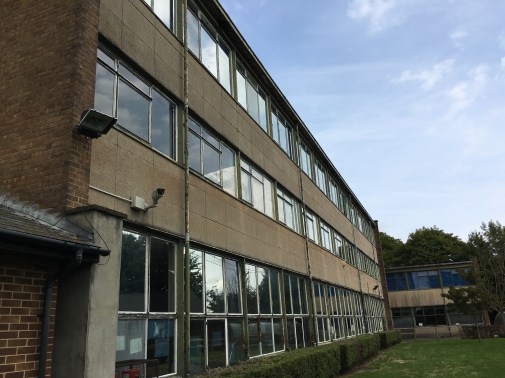
Goodbye to the Tudor Block

The Athene Donald Building replaces Churchill’s original school building. The Tudor Block was built for the 402 pupils of the new Churchill Secondary Modern School in 1956. It has served us well for over sixty years, but its time is now up; contractors have been in this week to strip out furniture, fixtures and fittings in preparation for demolition over the coming months. By the time the new school year begins in September, our site will look very different!

I’d like to thank all of the staff involved in making this project a reality, especially Deputy Headteacher Mr Branch who has overseen the whole thing with unflappable dedication. The building that we now have is ample reward for all that hard work and effort; our students will reap the benefit for many years to come.

Christmas at Churchill 2018

I love Christmas at Churchill! The Academy has many traditions, from the Christmas lunches served by staff and accompanied by the staff choir, to the Sixth Form fancy dress and revue, the church services and house activities. This week’s blog is devoted to a celebration of all things Christmas! Enjoy…

May I wish everyone in the Churchill Academy & Sixth Form community a very merry Christmas and a happy new year. See you in 2019!

Assembly: marginal gains and resolutions

CRH Marginal Gains Assembly

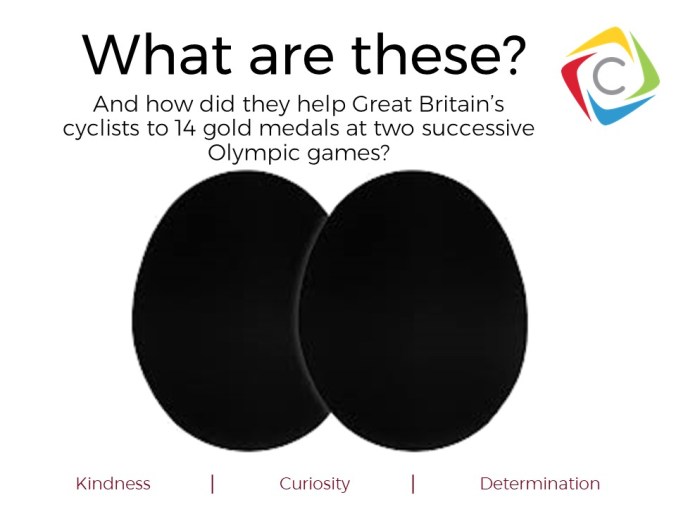
In this week’s assembly, I’ve been talking about marginal gains and resolutions. I started with the picture above: many students had a go at guessing what these objects were! The answer is that these are ‘bum warmers’, used to warm the muscles of Olympic cyclists before a race. The extra warmth means the cyclists can start one hundredth of a second faster than their opponents.

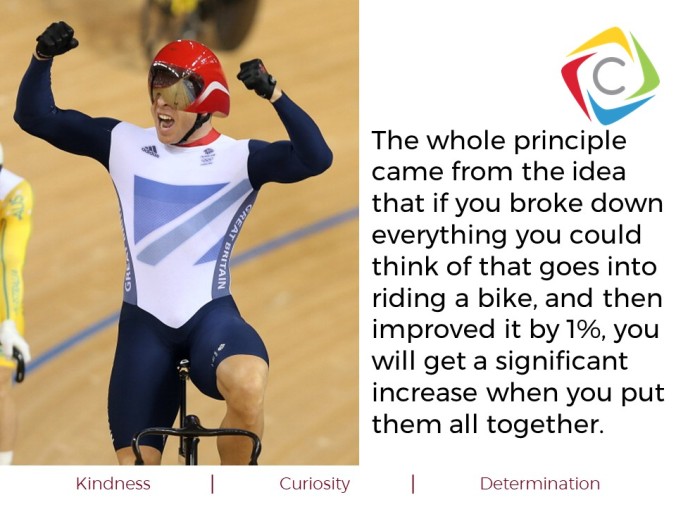
These curious devices are one example of the British cycling team’s approach to the “aggregation of marginal gains.” This approach means making tiny improvements in lots of different areas, adding up to a big overall effect. Other examples include the the cyclists always taking their own pillows and bedding with them when they travel, to reduce the chance of picking up an infection which might interfere with their training. The team tweak every aspect of the bikes, the cyclists’ equipment and clothing, their diet, sleep, schedule and training regime to try and eke out an extra 1% of performance.

CRH Marginal Gains Assembly

It’s an approach which seems to have worked. In the four Olympic Games between 1992 and 2004, the cycling team managed to win eight medals; following the adoption of the marginal gains approach, the team won 41 medals across Beijing 2008, London 2012 and Rio 2016.

Marginal gains in school

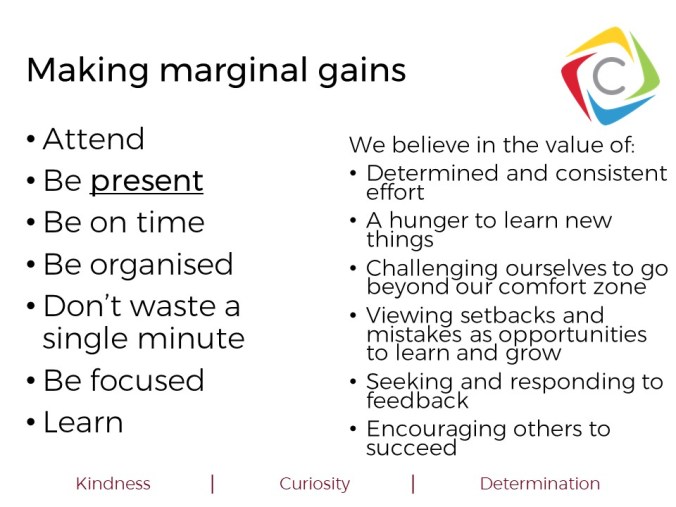
I want us all to think about what marginal gains we could make in school. What small changes could we make to our approach which, sustained and added up over time, could result in a big improvement?

clock

One change could be in making the most of the time we have. Spending five minutes of a lesson off task – daydreaming, chatting to a friend, looking out of the window – doesn’t seem like too much of a problem. But adding it up over a year can result in a lot of lost time…

  • We have five lessons every day for 190 school days in a year
  • That’s 5 x 190 = 950 lessons per year
  • Five minutes wasted in every lesson is 5 x 950 = 4,750 minutes
  • 4,750 minutes is just over 79 hours
  • That’s over THREE WHOLE DAYS of learning lost per year, just from five minutes in each lesson (three days, seven hours and ten minutes, for precision fans).

Ensuring we attend every lesson punctually, and staying focused when we are there, is a marginal gain we can all make that could add up to a big overall effect over time.

Making a resolution

newyearsday

New Year’s resolutions are notoriously hard to keep. This can be because they are too ambitious. But the advantage of resolving to make a marginal gain is that it involves a small change – or perhaps a number of them! Making resolutions to stay focused, to ensure that all equipment for school is prepared the night before, to avoid distractions, or to be more punctual to every lesson…these are not impossible goals to set ourselves, but added up they could make a significant difference.

What will your New Year’s resolution be?

CRH Marginal Gains Assembly


Thanks to Keith Neville for the inspiration for this assembly.

Advent: Acts of Kindness

Like many children up and down the country, my kids look forward to advent as the twenty four days of the year when they’re allowed to have chocolate before breakfast! We’ve hung our calendars and they are getting out of bed that little bit more willingly than usual, tempted by the lure of an edible treat.

It’s true that the consumption of daily confectionery is somewhat removed from the Christian meaning of advent. In the Christian faith, Christmas is a celebration of the birth of Jesus, and advent is a reminder to prepare for this important religious festival.

This year, like last year, Mr Gale in the Maths Faculty has shared his “Kindness Calendar” with the school. The Kindness Calendar is a great way to mark advent by giving, rather than receiving, tied into one of the Academy’s core values. Each school day of the advent period, there’s a kindness task for students and staff to carry out. There are bonus tasks to extend it into the weekend too!

kindnesscalendar

Our Kindness Calendar

Why not try each of the daily acts of kindness on the days running up to Christmas? After you’ve had your chocolate, of course…

Mistakes

Your-Best-Teacher-Is-Your-Last-Mistake

Your best teacher is your last mistake (Ralph Nader)

It’s horrible when we get something wrong. Nobody likes it! It can be horribly exposing, and it’s perfectly natural to feel upset, or embarrassed, or even ashamed. But, of course, we make mistakes all the time. They are a natural part of the learning process. So how can best use our mistakes to make progress?

FAIL-300x266

FAIL: first attempt in learning

The first thing is to accept that mistakes are inevitable. They will always happen. Nobody is perfect. Secondly, if you are doing something difficult – which, in school, we expect our students to do – the likelihood of getting it wrong is much higher. So the most important thing is not getting it right first time, but getting it right in the end.

This video from the Khan Academy shows how, as young children, we aren’t afraid to fall down, fail and try again – for example when learning to walk or ride a bike. But, as we grow, we become increasingly self-conscious and easily embarrassed. This shift can actually get in the way of our learning as we are less willing to take risks and try something new, worried that we might get it wrong, and forgetting that mistakes are a natural part of learning.

marshallautograph

Minnesota Vikings defender Jim Marshall in 1970

We can rest easy that none of us will ever make so drastic a mistake as Jim Marshall. In 1964, Marshall played American Football for the Minnesota Vikings against the San Fransisco 49ers. When one of the 49ers players fumbled the ball, it came loose, and Marshall was able to scoop it into his hands. He looked up, saw the goalposts ahead of him, and ran as fast as he could to the end zone to score what he thought was a touchdown. It was when the 49ers players started congratulating him that he realised he had run the wrong way down the pitch into his own end zone, scoring a safety and conceding two points to the opposition.

How do you recover from a mistake as catastrophic and public as that? Marshall did his best to forget about it, and crucially to learn from it. He went on to recover a total of 30 fumbles for the Vikings in his career, still an NFL record for the most recovered by any single player – and he never again ran the wrong way down the pitch. You can watch a video about Marshall’s experience here.

failure bruise

At Churchill, to learn effectively, we believe in the value of:

  • Determined and consistent effort
  • A hunger to learn new things
  • Challenging ourselves to go beyond what is comfortable
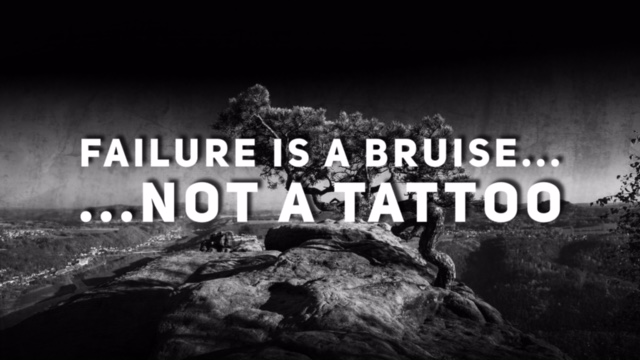
  • Viewing setbacks and mistakes as opportunities to learn and grow
  • Seeking and responding to feedback
  • Encouraging others to succeed

Having a healthy attitude to mistakes, and having the confidence and determination to take risks in our learning and try new things, are all central to our success in learning. So long as we make sure we’re facing the right way before we set off.


Christmas Concerts 2018

I love the Christmas Concert! I remember seeing my first one in December 2015, just before I started as Headteacher in January. I was blown away then, and if anything the standard just keeps on going up!

This year’s event was no exception. There were over 400 students involved over the two nights, with such an array of music on show – musical theatre, pop, folk, jazz and classical, and even a moment of metal from Churchill’s Young Musician of the Year, Kimi Powell on drums! Young Musician runner-up Bronwen Deane had the audience in the palm of her hand with a performance of her own song, “That’s what they all say” – she has a bright future ahead of her. Last year’s competition winner, Maddie Pole, is now in the final of the Fame by Fearless talent competition – you can vote for her to win here until midnight on Sunday 25th November 2018.

Gospel Choir introduced some fantastic soloists to the Playhouse this year: Ruby Polli, Cara Crozier-Cole, Benedict Pearce, Livvy Green, Olive Barnett and Freya Hinnigan-Chambers sang their hearts out, backed as ever by an incredible sound from the enthusiastic chorus. Many of the same students also sang in Chamber Choir, whilst a beautiful acapella rendition of White Winter Hymnal by Fleet Foxes showed you didn’t need instruments to make a wonderful sound.

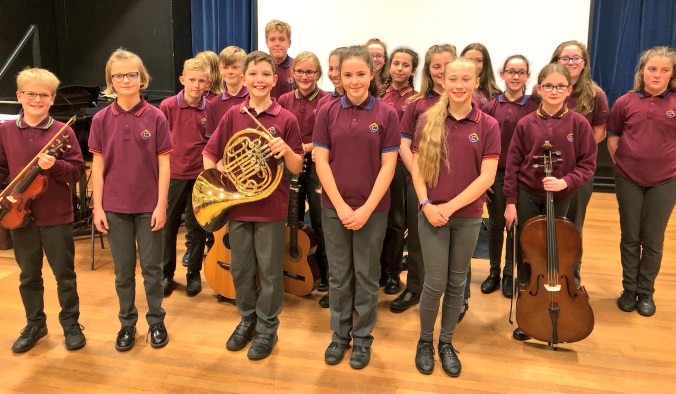
Instrumentalists, however, were in plentiful supply! Big Orchestra and Concert Band both gave excellent performances, including a suite from “Enter the Dragon” arranged by our very own Mr Spencer, and a spirited performance by the Jazz Band fronted enthusiastically by Sol Walker-Mckee and Arthur Burston.

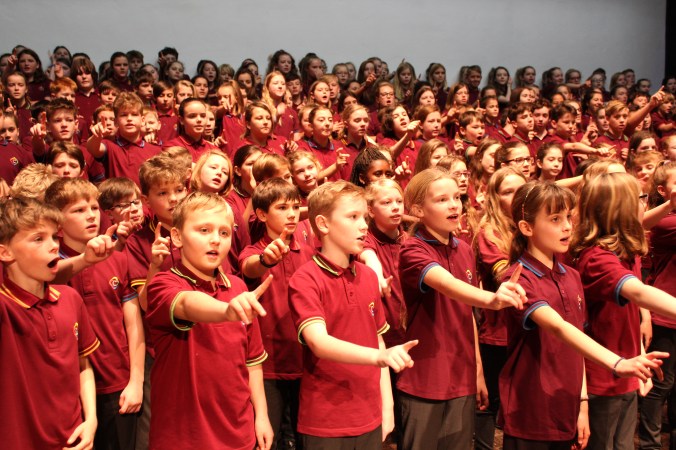
The highlight of the show for many was the Junior Choir, as the massed ranks of Year 7 and 8 singers kicked off the festive period with a re-telling of the Christmas story through songs written by students. The soloists this year were fantastic, and the actions and performance level from the choir were brilliant – how they managed to muster the energy after a disco is beyond me!

The Christmas Concert is a real team effort. Weston Playhouse work with us every year, and over thirty Academy staff were involved behind the scenes and front of house. But what impressed me most – as always – was the leadership of our students. Students compered the show, conducted orchestras, led vocal groups, ran the stage management, arranged musical items, and sold programmes. Seeing the potential and promise of these great young people, and their joy in music making, is what makes all the effort and organisation worthwhile.

I’m calling it: Christmas starts here!

The black dot in the white square

When I was training to teach, one of the techniques I was taught was to remember the black dot in the white square. In teacher training terms, the black dot represented the disruptive, naughty or badly behaved student in the class. When you look at the class, the temptation for the teacher is to focus on that badly behaved student, and not spend enough time and attention on the white square, which represents all the other well-behaved, hard-working, positive students in the room. Of course, poor behaviour needs to be dealt with, but it’s far better to reinforce and celebrate the vast majority of students who are doing exactly what they should. Far better to be emphasising the positives by saying “thank you for listening, well done for being ready to learn, thank you for putting your hand up and waiting,” than to be constantly nagging at the negatives.

screen-shot-2013-01-06-at-02-18-57

The black dot in the white square: our attention is drawn to the negative (the black dot) at the expense of recognising the positive (the white square). Image via TeacherHead

I have used this technique throughout my teaching, always seeking to accentuate the positive and ensure that those who are doing the right thing get more attention and time than those who are doing the wrong thing. It’s not always easy, but it’s always worth it.

More recently, I have been thinking about the tendency to focus on the black dot and forget the white square beyond teaching. When something goes wrong, it’s easy and tempting to fixate on that blemish or blot and see it as the whole story, to feel that everything is bad just because of that one thing that hasn’t gone to plan. At times like these, I remember that was seems like a catastrophe is just a black dot in the white square, and take a step back. I look around at all the many, many things that are going right; the positives, the successes and the promise.

Although that black dot is still there, still frustrating, still upsetting, it is in perspective – it isn’t the whole story. One problem, or even a series of them, doesn’t define the whole; there is always something to celebrate.

Remembrance 2018: #ThankYou100

Remembrance-100-Logo-Medium

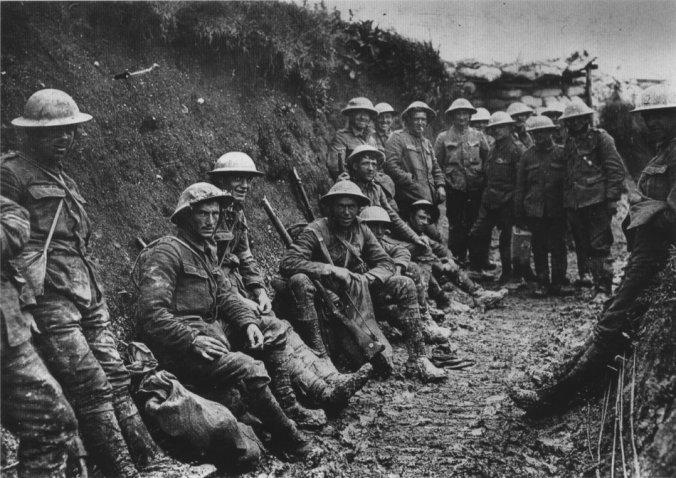
Remembrance Day is always special, but this year’s is unusually significant in that it marks 100 years since the end of the First World War. The two minutes’ silence is always a profoundly moving experience, in which we reflect on our connections to those who made sacrifices so that we could live in freedom today.

Lt. Jim Hildrew, Royal Navy, c. 1941

On November 11th, I always think about my Grandfather, an officer in the Royal Navy during the Second World War, who served in the Arctic convoys and captained a minesweeper, before working on the Pluto programme to supply fuel to the beaches on D Day. After the war he returned to teaching as Headmaster of Grasmere school, where he worked until retirement. Sacrifice is not always about death. We remember the fallen but also those who were – and still are – prepared to risk their lives to defend our society. We can learn a lot from their individual sacrifice for the collective good.

For this year’s #100years remembrance, I was impressed by this tribute from England’s men’s and women’s football teams to the sacrifices made by footballers during and after the First World War:

Just as we honour those who gave their lives, the sacrifices made by others in other ways are also significant, and just as worthy of remembrance.

Finally, each Remembrance Day, I reach for poetry. There are great works by Sassoon, Owen, McCrae, and countless other war poets, but in recent years I have always come back to Mametz Wood by Owen Sheers. This poem is so resonant and powerful in its description of the uncovering of the remnants of the battle of the Somme in peacetime as farmers plough. Sheers has spoken eloquently of the inspiration for the poem as he visited the site:

Walking over that same ground, now a ploughed field, 85 years later I was struck by how remnants of the battle – strips of barbed wire, shells, fragments of bone, were still rising to the surface. It was as if the earth under my feet that was now being peacefully tilled for food could not help but remember its violent past and the lives that had sunk away into it. Entering the wood, a ‘memory’ of the battle was still evident there too. Although there was a thick undergrowth of trailing ivy and brambles, it undulated through deep shell holes. My knowledge of what had caused those holes in the ground and of what had happened among those trees stood in strange juxtaposition to the summer calmness of the wood itself; the dappled sunlight, the scent of wild garlic, the birdsong filtering down from the higher branches.

royal_irish_rifles_ration_party_somme_july_1916

As we remember the Great War it is our duty to reach back into the collective memory of our violent past, to thank those who came before us for their sacrifice, and hope with all our hearts for a peaceful future.

Mametz Wood
by Owen Sheers

For years afterwards the farmers found them –
the wasted young, turning up under their plough blades
as they tended the land back into itself.

A chit of bone, the china plate of a shoulder blade,
the relic of a finger, the blown
and broken bird’s egg of a skull,

all mimicked now in flint, breaking blue in white
across this field where they were told to walk, not run,
towards the wood and its nesting machine guns.

And even now the earth stands sentinel,
reaching back into itself for reminders of what happened
like a wound working a foreign body to the surface of the skin.

This morning, twenty men buried in one long grave,
a broken mosaic of bone linked arm in arm,
their skeletons paused mid dance-macabre

in boots that outlasted them,
their socketed heads tilted back at an angle
and their jaws, those that have them, dropped open.

As if the notes they had sung
have only now, with this unearthing,
slipped from their absent tongues.

(Source)

You’re gonna be remembered for the things that you say and do

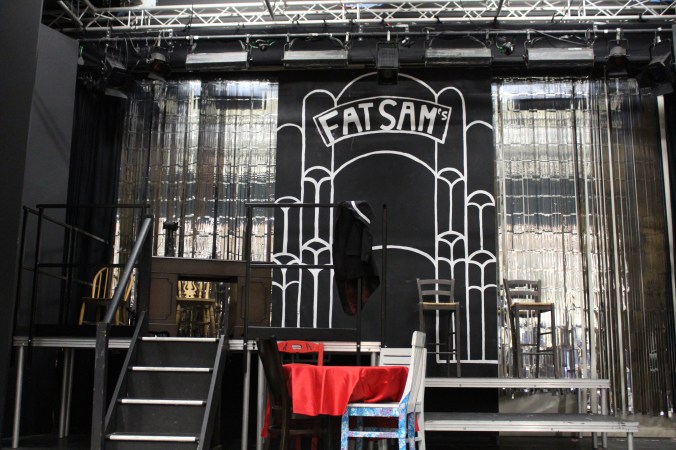
This week I watched the joyous production of Bugsy Malone put on by our Year 7 and 8 students.

IMG_3632

It was a terrific show – over seventy of our students were involved on stage across two casts. What was more remarkable is that the show only started rehearsing on 17th September, with the first performance on 23rd October! To put on such a professional performance in such a short space of time, whilst also keeping up with school work and all of the learning in lessons, is a truly staggering achievement.

IMG_3707

Tallulah and her dancers

It was a great team effort – the students worked with and for one another, playing the comic scenes brilliantly but also, in the case of Maria Amaral as Fizzy and Gemma Partridge as Blousey Brown, bringing some touching poignancy to the more emotional moments.

IMG_3761

The big “splurge”

Behind the scenes, our Sixth Formers and some older students from the main school made the show look and sound amazing. The set was designed, built, painted and decorated entirely by students from the Sixth Form’s specialist tutor programme – and it was spectacular. The band sounded great, and the technical crew on sound, lighting and stage management were excellent. The way that our older students supported the younger performers is typical of Churchill’s vertical system and our value of kindness.

Last week I wrote about the vital role of the arts at Churchill. I was left thinking that there couldn’t be a better introduction to that spirit than a show like this! Audiences were also treated to a gallery of A-level Art, Photography and Design work in the foyer, whilst refreshments were provided in aid of the Mend the Gap team’s Kenya expedition.

The final song of the show – “You Give a Little Love” – sums up the spirit of the show:

We could have been anything that we wanted to be

Yes that decision was ours

It’s been decided, we’re weaker divided

Let friendship double up our powers

The final chorus echoed out: “you give a little love and it all comes back to you; you know you’re gonna be remembered for the things that you say and do.” These students have already made such a positive difference at Churchill, and I know they will remember the experience for years to come.

IMG_3785

The cast from night two

Congratulations to all the cast and crew, and special thanks to the dedicated team of staff who made it all happen – especially director and mastermind Miss Bones.


The importance of creativity

On Wednesday, I was out of school at a conference for school leaders in Taunton. The conference was packed full of information I needed to know: the latest updates on school funding, on exam results, on Ofsted, on Department for Education policy, on teacher recruitment and retention….a lot of information! But, in the middle of the session on exam results, we were shown a chart from a BBC survey on examination entries in 2018. The chart showed the decline in exam entries across the country for arts subjects.

reflection 1

Photography taken by Year 13 during the 2018 snow

The presenters at the conference told us that exam entries for the Performing Arts fell by 44% in 2018. This is on top of falling numbers historically: in 2015, the Warwick Commission on the Future of Cultural Values, found that between 2003 and 2013 there was a 23% drop in GCSE entries for drama. Research carried out by Sussex University in 2017 warned that “music could face extinction” in secondary schools.

New website background_1

The cast of Singin’ in the Rain

Of course, it is important for all students to have a secure foundation in academic subjects. Churchill’s core curriculum in our personalised stage (Years 9-11) requires students to take English, Maths, Science, and two more subjects chosen from French, Spanish, History, Geography and Computer Science, because we agree that a core curriculum of academic subjects is the right thing for our students.

But not at the expense of the arts!

IMG_0761

The performers at this week’s Young Musician of the Year competition

The creative arts is one of this country’s most thriving industries. We are world leaders in music, drama, theatre, film, media and art – there are strong, viable careers for our young people in the creative industries. If these subjects aren’t offered, we are closing the door on those futures. Even if you don’t go on to work in the arts, studying a creative subject brings with it much needed confidence, empathy, sensitivity, thoughtfulness, and reflection.

IMG_0624

Last year’s Junior Choir in action

What makes me angry is that ensuring all students have a strong academic core curriculum does not mean the arts have to suffer. At Churchill, the arts are thriving. The school is full of music, dance, drama, and art. This year, we have 72 students taking Performing Arts courses in Year 9 – five more than the previous year. We have 41 students taking Music – an increase of more than 30% on two years ago. And as for Art itself, we have 79 students taking Art or Textiles in Year 9 – ten more than the year before. All of those students study core academic subjects too!

It’s such a shame that schools up and down the country are reducing provision in these subjects. As Headteacher of Churchill, I will continue to defend our exceptional arts provision: our children’s creativity depends on it!