On Wednesday of this week, took a train into London. I was leading a course called Becoming a growth mindset school for the Association of School and College Leaders, all about the work we are doing at Churchill to develop students’ attitudes to improve the effectiveness of learning. I was up at five to catch an early train, and caught up on some reading as we sped through the morning sunshine. As we entered the urban sprawl of the capital, I put my book down and glanced through the window.
That was when I saw it.
Grenfell Tower, June 14th 2017
I’d seen on the news on my phone that the Grenfell Tower was ablaze, but I hadn’t realised how close to the tragedy my train would pass. A column of smoke stretched up high into the cloudless sky. A helicopter hovered overhead. The tower itself was a blackened shell. Hoses sprayed water over the smouldering walls. Through the train window it was curiously silent, like a TV on mute – but real. Horribly real.
The survivors – those who made it out of the nightmare – have lost everything. Their clothes, possessions, their money, their documents. They are replaceable, of course, but my thoughts drifted to family photographs, heirlooms, those special things you keep not because of their monetary value but because of what they mean to you. Those things are irreplaceable. But the survivors are the lucky ones. Some – how many we still don’t know – have lost their loved ones, and lost their lives.
The next day, on Thursday, I heard about Ines Alves, a 16-year-old student at Sacred Heart School in Hammersmith. She was revising for her Chemistry GCSE on the 13th floor of Grenfell Tower when her father noticed smoke rising from the fourth floor. She quickly dressed in jeans and a top, grabbed her phone and her revision notes, and ran. She and her family got out of the building safely. “I was trying to revise while we waited downstairs as we thought it was a small fire at first but it was impossible,” she told the Daily Mirror.
Still wearing the clothes she had worn when she fled the tower, Ines went to school in the morning to sit her exam. “Considering what had happened I think the exam went OK. I want to do A-level chemistry and I need an A in science so I was thinking of my future when I decided to sit the exam,” she said. And she wasn’t the only one.
Girls from my 13yo's school who lived in #GrenfellTower lost everything and still turned up for GCSEs next day in night clothes
After the exam, Ines went back to rejoin her family and distribute food and water around the community centres as part of the relief work. “I just wanted to do all I could to help,” she said.
Being so close on Wednesday to such a shocking event has deeply affected me. It’s easy to say “my thoughts are with all those affected by this tragedy,” but I haven’t stopped thinking about them. Stories like that of Ines Alves show that, in the midst of tragedy, there are people – especially young people – full of determination, courage, kindness and hope. Even amidst the horror, there is always hope.
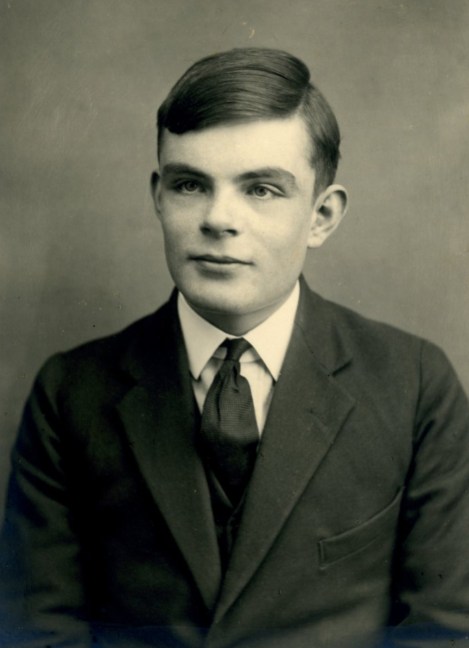
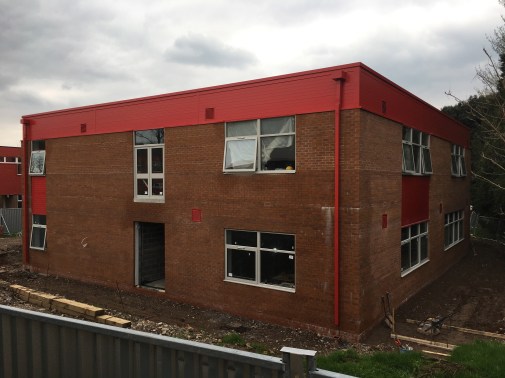
It is with great pride that we have named our new Computing, Business Studies and Social Sciences building The Alan Turing Building, in honour of the great war hero and father of modern computer science. Alan Turing died on this day, June 7th, in 1954.
Who was Alan Turing?
Alan Turing was born on 23rd June 1912, and is widely credited as the founder of computer science. He is best known for his work at Bletchley Park in the Second World War, where he and his team of codebreakers successfully cracked the Enigma Code used by Nazi Germany to communicate with its Navy. His work is thought to have shortened the war by two to four years, saving between 14 and 21 million lives in the process.
Alan Turing was educated at Sherborne School in Dorset, and later at King’s College, Cambridge. Whilst at Cambridge, Turing came across an unsolved mathematical problem – the question of Decidability, the Entscheidungsproblem. Turing set out to work out whether there could be a definite method by which it could be decided whether any mathematical assertion was provable. In order to answer this question, he came up with the idea of the Universal Turing Machine – a theoretical machine which would follow the instructions laid out by a “programmer” in order to complete mathematical tasks. In other words, he invented the idea of a computer.
It was this theory which was turned into practice at Bletchley Park. He created a machine called “Victory” in the Spring of 1940 which was able to crack the German military code-machine, Enigma. By 1943, Turing and his team were cracking a total of 84,000 different Enigma messages every month – two messages every minute. Every time the Germans introduced a new code or cipher, Turing’s machines were able to crack it.
Turing’s Bombe computer, rebuilt at Bletchley Park
Rear view of Turing’s Bombe computer
Turing’s Bombe computer, rebuilt at Bletchley Park (source)
Following the war, Turing worked on developing his code-breaking machines into universal computers, paving the way for the technology revolution which has transformed all of our lives. But nobody at the time knew of the contribution that Alan Turing had made to the end of the war, as his work was classified top secret until 1974.
Turing had been openly gay since his time at Cambridge. However, homosexuality was a criminal offence at the time, and he was arrested for gross indecency and came to trial in March 1952. He did not deny his actions or defend himself; he said he saw no wrong in being gay, and told the police he believed homosexuality should be legalised. Rather than go to prison, he accepted a form of “chemical castration” – a year-long programme of hormone injections designed to suppress his sexuality. On 8th June 1954 his body was found; he had taken cyanide poison. The coroner’s verdict was suicide.
Homosexuality was decriminalised in 1967, and in 2013 Alan Turing received a royal pardon, removing his criminal record. He is now widely recognised as a war hero and a pioneer in Mathematics and Computing.
Why the Alan Turing Building?
The Alan Turing Building at Churchill Academy & Sixth Form, opened June 2017
Turing represents the best of British innovation, using his expertise in mathematics to solve unsolvable problems, save millions of lives, and change the face of technology. He also represents equality, refusing to hide or be ashamed of who he really was, no matter what other people thought. In both ways, Alan Turing has changed our society for the better. We hope that the students educated in this building, dedicated to Computing – the subject he invented – along with Business Studies and the Social Sciences – will embody the same spirit of innovation and equality, and go on as he did to make the world a better place.
Inside the Alan Turing Building
These photographs, taken during the final fit-out of the Alan Turing Building, show the Smarter Spaces colour scheme designed by our students. This light and airy space, equipped with brand new computers and interactive displays, will be a superb facility for our students today and far into the future and, we hope, a fitting tribute to someone whose story we think everyone should know.
It’s been an emotional day at Churchill as we’ve said goodbye to our Year 11 and Year 13 cohorts, wishing them well as they head off on study leave for their exams. We look forward to welcoming many of our Year 11 students back into the Sixth Form in September, and we will continue to follow the careers of all our leavers with interest and pride.
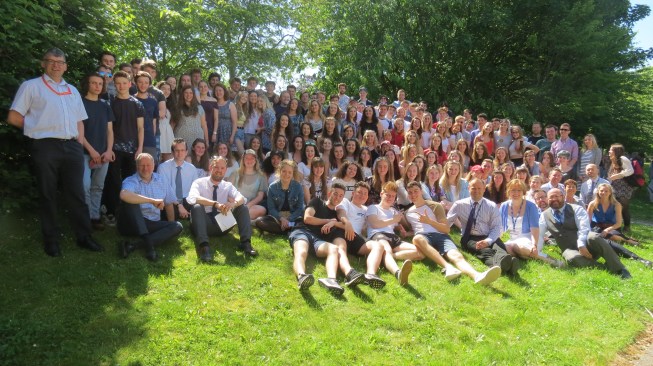
Year 13 Class of 2017
The day began with saying goodbye to Year 13. This wonderful group of students have contributed so much to Churchill in their years with us, and they will be sorely missed!
Year 11, having jumped the hurdle of a two-and-a-half-hour English Literature exam this morning, celebrated their time at the Academy in traditional style, with signed shirts, good humour, and a few tears. They did their final practice for the Ball, nailing their tango and salsa moves and managing the processions beautifully.
The farewell assembly is something I look forward to all year, and this year the staff excelled themselves with their Farewell Video, expertly directed and edited by Mr Kingscote.
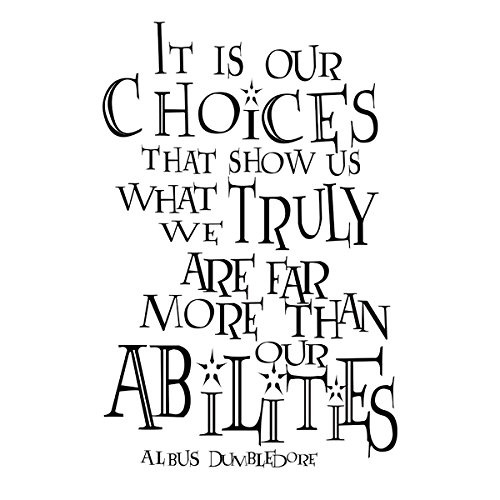
My final message to all our leavers is captured in the following quotation from my Headteacher hero, Albus Dumbledore:
We are all born with different abilities, different predispositions, different advantages and disadvantages in life. But these are not limiting factors. We are not bound by our circumstances. We can choose to make the most of the situations we find ourselves in, choose to take chances and opportunities when we have them, choose to take on the difficult challenge or the easy option. It is these choices that define us all. I hope that Churchill has provided all of our leavers with the knowledge and skills to make the best choices, so you can be what you truly are and deserve to be.
This is the sixth and final post in a series looking at the most effective ways to revise, based on the work of The Learning Scientists. The Learning Scientists are cognitive psychologists who want to make scientific research on learning more accessible to students and teachers. Their aim is to motivate students to study and increase the use of effective study and teaching strategies that are backed by research. I’ve met Yana Weinstein PhD at an education conference in Southampton – she’s the real deal!
Concrete examples help you to remember abstract or difficult ideas by finding ways in which they can be applied in the real world.
Concrete examples: why?
Ideas on their own are difficult to remember. If you have a good example of how an idea is applied, it is much easier then to remember the idea itself.
Concrete examples: how do I do it?
Keep note of examples of concepts, ideas, and theories provided in class, either by your teacher or in textbooks or other resources. Also, try to think of examples for yourself. For example, if I am trying to remember the idea that repetition is an important rhetorical device used in public speaking, it’s much easier if I think about Martin Luther King’s “I have a dream” speech which repeats “I have a dream” eight times and “let freedom ring” ten times. In this case, the speech is a concrete example of the effective use of repetition in public speaking. If I remember the speech, I remember the idea of repetition as a rhetorical device.
Concrete examples: next steps
Checking that the examples you are using are accurate is really, really important. If you are able to create your own examples it’s a sign that you have fully understood a concept or idea. And don’t assume that examples you find on the internet are necessarily correct – always double check with a reliable source. Check your examples with your teachers just to make sure.
Over the course of this year, I am visiting all the tutor groups in the school. In my visits I am asking the students for their views and advice on different aspects of our provision at the Academy. Between January and April I asked students to reflect on two questions:
What makes a good attitude in the classroom?
What makes good behaviour at social time?
Tutor groups responded in lots of different ways. Some groups put together presentations, others worked in small groups on the questions, whilst others involved me in a whole-group discussion. What they all had in common was lots of brilliant ideas about the topic!
At the end of the process I had visited twenty-seven tutor groups and heard the views of around 600 students. Over Easter, I gathered together all their thoughts and ideas. They had told me what they thought about the best way to ensure they learned effectively, and they had come up with lots of excellent suggestions for how they should behave at social time. Below, you can see the fruits of their labours:
Student Voice Feedback Terms 3 and 4
These posters have been shared with all teachers and tutor groups this week, and many have been discussing it in their tutor time sessions to help everyone improve and maintain the highest standards of behaviour in school.
Over terms 5 and 6 I am getting the views of students about our Academy values of Care, Inspire, Challenge and Achieve – do they represent the Academy? What influence do they have on our day-to-day life at Churchill? And what should we value? I’ll report back when I’ve heard what they have to say!
As I am sure you know, the Prime Minister has called a General Election on 8th June. As with any General Election, there will be many issues which will be at stake when the nation votes. I would like to take this opportunity to make you aware of the major education issues of the moment, and their impact on Churchill Academy & Sixth Form. My hope is that you will ask the candidates about these issues, find out where the different parties stand on them, and use what you find out to help you when you decide where to place your “X” on June 8th.
Issue 1: school funding
This is the major issue facing schools – including Churchill – at the moment. Schools have been on a “flat cash” funding arrangement for several years. This means that the amount of funding we receive has remained exactly the same with no prospect of any increase. However, from this “flat cash” we have been required to pay out more as cost pressures continue to rise. For example:
Pay rises and rising costs due to inflation have been unfunded.
Employer contribution on teachers’ pensions rose 2.38% from September 2015 – this has been unfunded.
Main band National Insurance employer contributions increased in April 2016 by 3.4% – this has been unfunded.
A fund called the Education Support Grant (ESG) which Churchill received as part of academy funding dropped from £140 to £87 per pupil initially, and has now been removed completely.
In simple terms, we have to pay more out but we aren’t getting any more in. The government has repeatedly said that education funding is at record levels, but the only reason they can say this is because there are more pupils in the system; the per pupil amount has not gone up. The government has also consulted on a new National Funding Formula for schools. Churchill actually stands to benefit from that formula if it is introduced as planned next year, but not all schools will do so as the amount of money in this system overall will remain the same. We have also been successful in securing grant funding for new buildings. Whilst that funding is welcome – and necessary – it is ring-fenced to the bricks and mortar and does not supplement our educational costs. Overall, the current situation equates to an 8% real-terms cut in the schools budget by 2020.
The impact of “flat cash” coming in with increased cost pressures means that schools up and down the country have less money to spend on education. Less money means fewer teachers which means class sizes get bigger. Larger classes mean less time available for individual pupil support. Less money means fewer opportunities for young people to engage in enrichment activities or educational visits. And less money means reducing the amount of support that can be given to individual students who need it such as those with special educational needs, behavioural issues, low prior attainment or those requiring support for mental health problems. In fact, the Education Select Committee published a report just this week which said “financial pressures are restricting the provision of mental health services in schools and colleges. The next Government must review the effect of the budget reductions in the education sector.”
This is the hard truth of education funding at the moment. We have continued to work very hard to provide the outstanding education that we know your children are entitled to, but without additional funding that will be difficult to sustain. Please make sure that the candidates for election on June 8th hear the message that proper funding for schools is your priority too.
Questions to ask your local candidates on school funding:
Spending on schools may be at record levels, but that is because we have more children of school age than ever before and costs are rising. How will you ensure that school budgets are protected in real terms for the duration of the next parliament?
The nation’s children should be provided with a broad curriculum, great support and enriching activities. Is your party willing to fund schools properly so our children have the same opportunities as previous generations?
The Education Select Committee noted that half of all cases of mental illness in adult life start before the age of 15, and that one in 10 children aged between five and 16 have had a diagnosed mental disorder. What will your party do to ensure that mental health services for young people are properly funded and able to cope with demand?
Issue 2: evidence-based policy
One of the frustrations of teachers and school leaders is the tendency for government to make policy for education without a firm or robust evidence base. Sometimes, it seems as if their policy decisions are based more on personal experience than on research of what actually works in schools. Therefore, as a minimum, we would ask that any future government provide a clear basis of evidence for any proposals, hold transparent consultation before any policy decisions are finalised, and establish, at the outset, evaluation models that ensure that any proposals will benefit young people from disadvantaged as well as advantaged backgrounds.
The current government’s proposals to allow the the creation of new grammar schools, or Labour’s proposal to provide free school meals for all primary school children, fail this test. There is no evidence that either of these things will help improve the standards of education in Britain. The creation of more grammar schools, along
with, inevitably, hundreds – possibly thousands – of secondary modern schools, will be hugely damaging to the nation’s children. A second class education for the many, particularly, but not exclusively, for those from more disadvantaged backgrounds, is not just educationally unacceptable but morally and economically disastrous.
The current Conservative Government has held a consultation on new grammar schools but refuses to publish the results. Yet the evidence is overwhelming: selection damages the quality of education a nation’s children receives. What we must demand is a high quality education for every child, not selection and privilege for the few. What will make a difference is creating the conditions to ensure that high quality teaching and learning takes place in every classroom in the country, by ensuring a supply of great teachers into a properly funded school system.
Questions to ask your local candidates on evidence-based policy:
What evidence is there that the education policies in your manifesto will make a positive difference to all children, both advantaged and disadvantaged?
New grammar schools mean new secondary moderns. What is your position on creating new grammar schools for the few and, as a result, new secondary moderns for the many?
Issue 3: teacher recruitment and retention
We are very fortunate at Churchill to have a full staffing complement of highly-qualified, expert teachers. However, nationally the teaching profession is facing a significant staffing shortfall: too few graduates are training to be teachers, and too many qualified teachers are leaving the profession. It is therefore vital that all political parties pledge to celebrate teaching as a great career and improve incentives to encourage more graduates into the profession, by improving career development support and opportunities for teachers in order to retain more great teachers in the profession.
Questions to ask your local candidate: teacher recruitment and retention
Great teachers are at the heart of a great school. What is your party going to do to make teaching a more attractive career to our best graduates?
The current government has missed the targets for teacher recruitment for the past four years. What are you going to do to ensure your party would hit the teacher recruitment targets in the future?
Conclusion: use your vote!
I recognise that we serve a diverse community which will include the full range of political views. It is not my intention, nor is it my place, to influence your vote. What I hope I have done is lay out the key issues in this election which impact on Churchill Academy & Sixth Form and schools across the country, so that you can ask well-informed questions and make your own decisions based on the answers you receive.
The final thing that I would say, however, is that we are incredibly fortunate to live in a democracy where every citizen has the right to help choose representatives to govern us in parliament. I would urge every member of our school community who is eligible to vote to register by 22nd May and to exercise their democratic right and responsibility to vote on June 8th.
Now that the political parties have published their manifestos, the SSAT (Schools, Students and Teachers’ Network) has collated their education policies into a side-by-side comparison document – read the comparison here: SSAT Guide to the 2017 Manifestos and Education Policy
In the summer of 2017, students in Year 11 will be the first to receive GCSEs under the new 9-1 grading system. They will be graded in this way for English and Maths. In summer 2018, these grades will be awarded for English, Maths, Sciences, History, Geography, French and Spanish. In summer 2019, all GCSEs will be graded this way.
In this blog I will explain what the new grades mean, and how they are awarded. It is quite complicated, but I have tried to make it as simple as possible! I finish the blog this week with “what it means for students” – and this is the most important bit! – so if you get lost, please skip to the end.
Why are the grades changing?
The Government have introduced new GCSE courses for all schools in England. The content of these courses is more challenging than the old-style GCSEs, including less coursework and focusing much more on assessment in exams at the end of the course. The new number grades will identify whether students have taken the new, more challenging GCSEs, or the old-style ones.
What do the new grades mean?
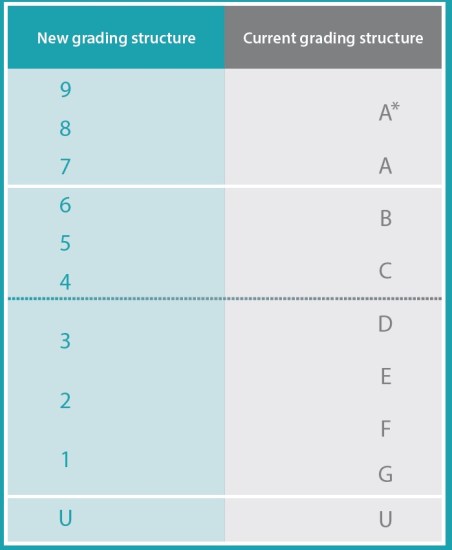
A grade 9 is the highest grade in the new system; a grade 1 is the lowest pass mark. Below a grade 1 is a fail, and will be awarded “U” for ungraded.
In the first year of each new GCSE, broadly the same proportion of students will get a grade 4 or above as would have got a grade C or above in the old system. This has been called a “standard pass” by the Department for Education. If you get a grade 4 or above in English or Maths, you won’t need to re-sit those subjects post-16. The Department for Education has called a grade 5 a “strong pass” which complicates matters. A grade 5 is equivalent (in the first year of each new GCSE) to a high C or a low B in the old system.
Broadly the same proportion of students who would have got grades A or A* in the old system will be awarded grades 7, 8 or 9 in the new system. This means that fewer grade 9s will be awarded nationally than A*s under the old system.
You can see the equivalence of new grades to old in this illustration from Ofqual, the exams and curriculum regulator:
GCSE grades are awarded after all the exam marking has taken place.
Exams and coursework are marked according to the mark schemes issued by the examination boards. These only have numerical marks on – exams and coursework aren’t graded by markers. When all the marks for everyone who has taken the subject in the country are in, then the grade boundaries are decided so that broadly the same proportion of children nationally get a grade 4 and above as would have got a grade C and above, and the same for grade 7 and above with grade A and above.
Once the candidates at grades 7 and above have been decided, a formula will be used that means that about 20% of all grades at 7 or above will be a grade 9. The grade 8 boundary will be midway between grade 9 and grade 7. The same process applies to the other grades (see Ofqual’s explanation here).
In other words, your grade at GCSE in the new system doesn’t just depend on how well you have done – it depends on how well you have done relative to all the other candidates in the country taking the same GCSE as you. If you are the top 20% of candidates in the grade 7 and above group, you will be awarded a grade 9. If you are outside that, you won’t. This will not be the same each year, and will change with each new group of students taking the exams every year.
This is very significant because it means that if, nationally, lots of children do very well in the exam, the grade boundaries will move up. If it is a hard exam, and students nationally do not do as well, the boundaries will move down. This makes it difficult for teachers to predict grades accurately; we have to make our best professional judgment on the information available to us.
What does it mean for students?
The changes mean that it is impossible for teachers to say “if you do this you will definitely get a grade 5 or above,” because getting a grade 5 depends on how well everyone else in the country does relative to how well you have done. We can’t possibly know how well everyone else in the country has done or is going to do, so all we can do is teach you to get better and better at your own Maths, English, Science, History, Geography and all your other subjects, until you sit the GCSE exam. You have to keep working and pushing yourself to achieve more because what was good enough for a grade 7 last year won’t necessarily be good enough for a grade 7 this year. Don’t settle! You need to keep improving so that you go into the exam at the end of Year 11 fully prepared and confident that you are the best at each subject that you can possibly be – and then you will get the grade that you deserve.
I was on duty on the field when I found out. Mr Neale, our Business Manager, came to find me. “We’ve got the new Science and Technology block,” he said. It took a moment to sink in, but then we were both grinning from ear-to-ear and shaking hands. It was the news that we’d been waiting for.
It’s a strange experience receiving the news that the Academy has been awarded £3,905,857 in government funding. When I got back to my office, there was an email waiting for me with the subject line “Application Outcome – Condition Improvement Fund (CIF) 2017-18″. The email went on:
Dear Colleague,
Thank you for applying to the Condition Improvement Fund (CIF) 2017 to 2018.
We received requests for more than £1.3 billion for over 3800 projects to this year’s round. Following our assessment of applications, we have announced £466 million for 1435 projects across 1184 academies and sixth-form colleges.
You can view the full list of successful projects at…
The link takes you to a Department for Education website page. Then you have to download a spreadsheet. Then you need to scroll through the spreadsheet which lists all 1435 successful projects, looking for North Somerset…and there it is. Churchill Academy. “Replacement of Science Labs and Design Technology facilities.” We’ve got the bid.
Only about a third of the bids submitted across the country were successful. We are one of only four bids in North Somerset to be funded this year. For the Academy, it’s the culmination of years of hard work. The first bid to replace our ageing Tudor block was submitted in 2014 – and was unsuccessful. Since then, we’ve been working tirelessly to convince the Education Funding Agency that the building – originally built in the mid-1950s for the very first students to come to the new school in Churchill – was in need of replacement.
Photographs from our CIF bid showing some of the issues with the Tudor block roof
We’ve had surveys. We’ve had health and safety and environmental audits. We’ve had structural reports. We’ve been up on the roof to photograph the cracks, leaks and gaps. And we’ve put hours and hours into planning for the replacement buildings, working with our architects and our contractors to ensure that every detail was considered and every eventuality planned for.
In the last cycle of funding, we were awarded £1.3 million to build our new Computing and Business Studies block, which is very nearly finished. That project has run like clockwork, with minimal disruption to the Academy, and is due to be handed over to us by the end of April. We will then fit it out with computers and equipment, ready for students in June.
Computing and Business Studies building – nearly finished!
That building replaces the top floor of the Tudor block, and was called “Phase One.” We submitted “Phase Two” – the replacement of the ground and first floor – in December 2016. At the top of the submission documents, I wrote a letter to plead our case, which concluded:
“2017 is the school’s Diamond Jubilee year. Our main building has served us well for sixty years, but the students of 2017 deserve better than to receive their education in a building designed and built for the students of 1957. Its replacement is now a necessity.”
All that hard work has paid off. The second phase of the project will go up on the site of “The Cage” behind the Sports Centre, and will include twelve brand-new Science Labs and two modern and fully equipped catering rooms. Work has already begun this week in preparation for the build. Ground will be broken this summer. The first students are due to go into the new facilities at the beginning of 2019. Now all that’s left to do is to bid for the funding to demolish the decommissioned building…
It’s Mr Neale’s last term-time week at the Academy this week, as he is relocating to take up a new role after Easter. He’s been busy tying up loose ends, handing over to those taking over, and in particular seeing our current building project through to completion. I’d like to pay tribute to him here as he leaves us, and thank him for his contribution to Churchill. The facilities that students will enjoy for generations to come are a fitting legacy for him to leave behind – we all wish him well in the future.
This is the fifth post in a series looking at the most effective ways to revise, based on the work of The Learning Scientists. The Learning Scientists are cognitive psychologists who want to make scientific research on learning more accessible to students and teachers. Their aim is to motivate students to study and increase the use of effective study and teaching strategies that are backed by research. I’ve met Yana Weinstein PhD at an education conference in Southampton last week – she’s the real deal!
Interleaving is when you switch between different topics in your revision sessions.
Interleaving: why?
Switching between topics helps your brain to see the similarities and differences between them. It helps to avoid confusion and also allows you to make links between different areas of study, which aids retention. Finally, it’s much harder than studying just one topic for a long time, and this difficulty means your brain has to work harder, which means it remembers more.
Interleaving: how do I do it?
It’s more effective to revise one topic for a short time, making sure you have a good grasp of it, then switch to another topic, then another. When you come back to the topics again as part of your spaced practice, review them in a different order. Try to look for the links and connections between topics as you study them.
Interleaving: next steps
Don’t switch too often – you’ll get confused! Three separate topics in one revision session is usually about the right balance. And don’t switch too quickly – make sure you’ve fully understood what you’re studying before you move on to the next topic.
A lovely thing happened the other weekend. I was working in my office at home, when a paper aeroplane came soaring through the air to land nearby. Written on one wing were the words “open this”. Intrigued, I unfolded the aeroplane to find a lovely message from my six-year-old son.
“Dear Daddy I love you love from Joseph”
I asked what I had done to deserve this wonderful gift, but there was no reason. My son had just decided to do something kind – and it made my day. It got me thinking about kindness, and what motivates us to do something nice for somebody else.
Of course, there might be selfish motivations. People might do nice things because they think there’s something in it for them. It might help their reputation and social standing, or there might be a financial reward in it for them. Or there might be a sudden emergency and instinct could kick in to help someone in danger…
All of these are completely understandable motives for doing something kind and nice for other people. But what we see in the video clip was that, as one person came to help, so did more and more, until everyone on the train and platform was united in trying to help the single passenger in distress. This domino effect is powerful, and it can happen more slowly and subtly than in the emergency situation we saw on the station platform in Australia.
There are global movements like Random Acts of Kindness and Pay It Forward which are founded on the idea that if each of us acts kindly towards another person for no other reason than that it’s a nice thing – the right thing – to do, it has the cumulative effect of making the world better for all of us. And this is not a new idea!
Marcus Aurelius
Marcus Aurelius was Roman Emperor from 161 to 180 AD, and a renowned philosopher in the Stoic school. In his book Meditations, he lays out his guide to self-improvement, including in the twelfth book this simple advice:
If it’s not right, don’t do it
If it’s not true, don’t say it.
This is a great maxim to live by; indeed, if we all stuck to that rule, our world would certainly be a better one. The only thing I take issue with in Marcus Aurelius’ advice is the note of prohibition, of telling us what not to do. I would revise it to:
If it’s right, do it.
If it’s true, say it.
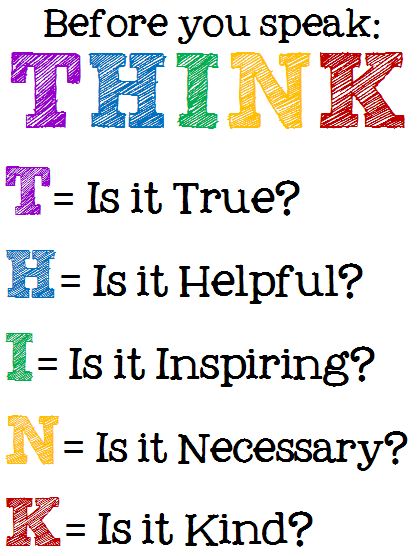
But of course, truth always needs to be tempered with kindness. And, before we act or speak, we need to think carefully about our actions and words.
This came through to me most powerfully this year when I heard the tragic story of Megan Evans. 14-year-old Megan, from Milford Haven was found dead on February 7. She had been the victim of online bullying, which her mother Nicola Harteveld believes drove her to take her own life.
Megan Evans
“Megan was bright, vivacious, happy, hugely popular, sporty, confident, outgoing, fiercely independent, just a normal, happy go lucky teenager,” Ms Harteveld told Phillip Schofield and This Morning co-host Holly Willoughby, when she appeared on the show in February.
When Megan started to be inundated with bullying messages on Snapchat, she kept it to herself. Her mother said: “We’re all distraught, and angry because no one noticed anything different with her.”
The final message she received read “Why don’t you kill yourself?”
Megan replied saying: “Ok.”
The fact that somebody in Megan’s life chose to express cruelty and unkindness had the most tragic and devastating consequences. Her family and her friends – and the young person who sent that final message – will be living with the consequences of that for the rest of their lives.
However, it doesn’t have to be that way. In 2007, Jonny Benjamin, aged just 20, was diagnosed with a mental illness, schizophrenia, and hospitalised. Desperate, and unable to understand his condition or see any way out, on January 14th 2008 he walked out of hospital in London and on to Waterloo Bridge, intending to throw himself off into the icy waters below. Hundreds of Londoners were walking across the bridge on their way to work. How many of them saw what was happening? How many walked on? We don’t know. But we do know that one man stopped and spoke to Jonny. He offered to buy him a cup of coffee, and he said words which changed Jonny’s life. He said: “you can get through this. You can get better.” Up until that moment, nobody had told Jonny that getting better was a possibility. And, in that moment, Jonny himself stepped back from the brink. After twenty five minutes of talking, he came down. The police took him away. And the stranger went on his way to work.
Jonny Benjamin
Jonny went on to control his condition with medication and treatment, and became a campaigner for mental health, raising awareness of the condition so that other sufferers have people to tell them “you can get through this; you can get better.” In 2014 he ran a campaign to find the stranger on the bridge who stopped and helped him six years earlier, using social media to track him down. He found him. He is a man called Neil Laybourn, who said this:
“In truth, it could have been anyone who stopped that day. It could have been the person behind me, but this time it was me.”
Neil’s kindness saved Jonny’s life, and Jonny’s life has gone on to save countless others through his campaigning work. He couldn’t have known that at the moment he chose to stop and help; in that moment, he was just doing the right thing because it was the right thing to do.
When we do something nice for no reason, everybody benefits. We feel better; we make somebody else’s life better too. At school this week – and from now on – make sure that you choose kindness. Do something nice for somebody else. Help one another. Not because there’s anything in it for you, but because when you do something kind, you’ve made school a nicer place for someone else to be. And if it’s a nicer place for someone else, it’ll be nicer for you too. So when you choose kindness, everybody benefits.




















 The Headteacher's Blog