Smarter Spaces: colour for learning

03 09 17

As you will have seen from our newsletter, our new Business Studies and Computing building is nearing completion. As part of this project, we have been working with Smarter Spaces, an education project arm of Dulux, to design the colour scheme for the building’s interior.

Smarter Spaces HD Logo

Smarter Spaces aims to help teachers and children thrive by enabling schools to design building environments to support better teaching and learning. Central to the approach is that teachers and children are involved in design, so they take more pride in their school.

Our students, with the help of Mr Smith and Mrs Foster from the Academy and Yusuf Alharrari  from Smarter Spaces, have been working on the design brief for the interior of the new building since July 2016. The rest of this blog has been written with their help to show you what they’ve done!

The Smarter Spaces Project (by the Smarter Spaces Team)

We came up with the following objectives:

  • We needed to understand what colours had to feature in the new building so it still fitted into the rest of the school
  • We needed to work with Dulux’s Colour Advisor to create two colour schemes
  • We needed to vote on which colour scheme we wanted to use
  • We needed to work together to select what colours to go in what rooms

Factors to consider

  • Needs to fit into the feel of the school
  • The new build will be Tudor House, so Tudor’s red needs to feature in the building
  • We needed to choose colours that would go with the red and with each other
  • It needs to be easy to maintain
  • This is our legacy – what we design now will be passed down to students who come to Churchill for years to come.

We then met with a colour consultant from Smarter Spaces to work on a design that fitted the brief.

Tudor Red

We decided to make the interior doors Tudor red, so that the building had a clear house identity. We also made the trim grey, which is easy to maintain and matches the outside of the Hall.

Red and Grey

The “Teaching Wall”

Inside the classrooms, our Colour Advisor explained that research has shown that the “teaching wall” (where the screen and whiteboard are situated) should be a bright colour, so that attention is drawn to it. The other walls, meanwhile, should be a neutral colour. We also learned that walls should be painted in a single block colour so they are easy to maintain and so that they don’t distract attention from learning.

Choosing a colour palette

Following our brief, the Colour Advisor came up with sets of colours which would work with the red doors and grey trim. Option 1 was bright and exciting, because we told Dulux we wanted our school to be bright and energetic.

Option 1a

Option 2 was fresh and vibrant, because our school is in the countryside and surrounded by nature.

Option 2

We voted – and Option 1 won (just)!

 Choosing the colours for the rooms

Once we had chosen the colour palette, we had to select which paint would be used for the teaching wall in each room. We used the architect’s floor plans to work this out.

groundfloorfirstfloor

Smarter Spaces then helped us to create a visualisation of what this might look like when the building was finished:

This slideshow requires JavaScript.

We presented our work to the Senior Teachers at the school – and they loved it! We can’t wait to see it in reality when the new building opens this summer.

Thank yous

As an Academy we are very grateful to Smarter Spaces for working with us, and for donating the paint to the project as part of the deal! They have been fantastic partners to work with and they have helped us to understand the design process, the importance and impact of colour, and to create a legacy for future generations of Churchill students.

Prepared by the Smarter Spaces Team:

  • Molly Ebdon (WRO)
  • Courtney Evans (SNM)
  • James Goodyear-Evans (TPOC)
  • Alfie Laws (WVP)
  • Rowan Vine (HFH)
  • Charlotte Wilkinson (TMR)
  • Charlee Beach (HLCB)
  • Paige Evans (TMB)
  • Katie Ward (SASH)
  • Mr Smith
  • Mrs Foster
  • Yusuf Alharrari from Smarter Spaces

Thank you!

Inspirational Women

Wednesday of this week was International Women’s Day. As a proud feminist and #HeForShe advocate, I thought I would some of my feminist role models on the blog this week!

Emma Watson

emwatson

The former Harry Potter star has shown how brave, intelligent and focused she is as she has taken on the role of UN Goodwill Ambassador to promote gender equality. Her passionate, often personal, and powerful speech to launch the HeForShe campaign vocalised everything that I believe to be important about gender equality and she continues to campaign today. Hermione would be proud!

Ada Lovelace

534px-Ada_Lovelace_portrait

Ada Lovelace was the only legitimate child of the Romantic poet Lord Byron. Born in 1815, she worked with Charles Babbage on his new proposed mechanical general-purpose computer, the Analytical Engine. She realised, before he did, that the theoretical machine could do more than just calculations – it could follow sets of logical instructions, or algorithms, to solve problems by itself. Lovelace wrote the first algorithms for Babbage’s Analytical Engine and, in doing so, became the world’s first computer programmer.

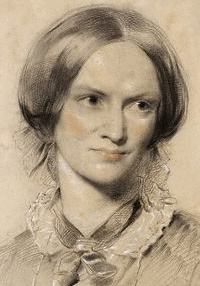
Charlotte Brontë

CBRichmond

All of the Brontë sisters were amazing women, living on the moors of Yorkshire and writing wild romantic poetry and fiction. They published their work under pseudonyms because they “had a vague impression that authoresses are liable to be looked on with prejudice.” I actually prefer Wuthering Heights by younger sister Emily to Charlotte Brontë’s Jane Eyre,  but Charlotte wins my admiration for one particular museum exhibit: the mourning shoes she wore after her two sisters had died. When the shoes became damaged by long walks over the moors, she repaired them, stitching a sprig of heather into the fabric of the shoes to symbolise her solitude, using her dead sisters’ hair as thread. That’s pretty impressive needlework.

Katherine Johnson

katherine_johnson_at_nasa_in_1966

Katherine Johnson featured in my assembly earlier this year. She overcame prejudice against her race and her gender to work on NASA’s space programme, calculating by hand the launch and orbit trajectories for the first manned missions beyond our atmosphere and onwards to the moon.

Carol Ann Duffy

dufft

Duffy is one of my favourite poets. She fulfilled the role of Poet Laureate with real skill, most notably with her Olympic poem Translating the British and her bleak 12 Days of Christmas (2009). Her unflinching honesty and her mix of horror and humour make her books a gripping read, and her trademark final-line twists mean than her poems stay with me long after I’ve put the book down. Her re-imagining of female characters from fiction and non-fiction forms the backbone of the fantastic collection The World’s Wife, providing voices for the voiceless and identity to the invisible. She continues this mission of exploration and examination of female identity in Feminine Gospels. English Literature is so often male-dominated, that it makes me proud to read and teach in a time when female voices are as influential, passionate and powerful as Duffy’s.

Taylor Swift

taytay

I am well-known for my admiration of Taylor Swift, whose complete stranglehold on the music industry is something to behold. She is a great songwriter and performer, of course, but actually an even more impressive businesswoman. She has taken on the likes of Spotify and Apple Music for not offering fair payments to musicians, and won in both cases – most spectacularly with Apple Music, who reversed their policy of not offering royalties to artists because Taylor Swift threatened to take her music off their service. All this, whilst sending Christmas presents to her devoted fans and even visiting them at home!  No wonder my “I ❤ Taylor Swift” mug is one of my most prized possessions.

This Girl Can

I love the “This Girl Can” campaign – it says everything that needs to be said right there in the video!

Like A Girl

I also think that this Always campaign, from 2014, is worth revisiting.

Happy International Women’s Day!

Sharing a book

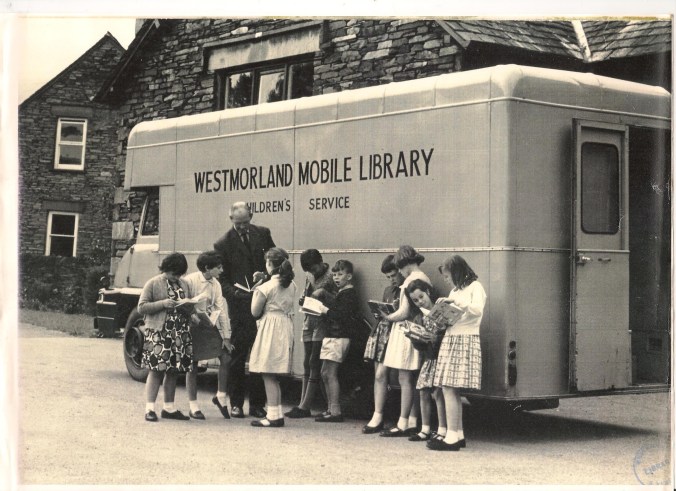
grasmere-school-date-unknown

Jim Hildrew at Grasmere School (date unknown)

This photograph hangs on my office wall. It’s a photograph of my grandfather, Jim Hildrew, when he was Headteacher of Grasmere primary school. Although it’s undated, we think it was taken at some point in the early 1960s.

I love this photograph for lots of reasons. Firstly, my grandad was a huge inspiration for me. He taught at Percy Main School in North Shields in the 1930s, before serving in the Royal Navy in the Second World War on minesweepers and as part of the D-Day landings. He came back to teaching after the war, settling into the school house in Grasmere that came as part of the job of Headteacher. His passion for teaching and learning was clearly infectious as his eldest son became a teacher and Head of House at Sedbergh School, and his youngest – my father – a Headteacher himself. As the third generation Headteacher in my family, this photograph reminds me of the legacy that I try to uphold every day.

Secondly, I love the story the photograph tells. The mobile library wound its way through the Lake District lanes, visiting schools so that children could feed their appetite for reading. The girl on the left of the picture is already lost in her latest story, whilst the children leaning against the side of the van are so excited to share the books they’ve chosen. I especially like the young lad who has just realised there is a camera watching him!

But above all, I love the fact that this photograph captures my grandfather sharing in the children’s joy and love of reading. The girl he is talking to can’t wait to show him her book, and he’s frozen there in the moment of discovery with her. She knows that he loves books too, and sharing that love has brought them together in a common purpose. The relationships you can forge in sharing a story is one of the main reasons I got into teaching, and teaching English in particular, in the first place, and it’s still one of the most unalloyed pleasures that teaching brings.

Reading a book – getting lost in a story, involved in the characters, thrilled by twists and turns – is joyous. But sharing a book is even better. Seeing someone’s eyes light up when you ask them: “have you got to the bit when…” or “just you wait till you get to the end!” is one of the real privileges of teaching. Whenever I see a student stuck in a book around the site, I’ll always ask them what they’re reading, and how they’re finding it, because sharing your reading is often even better than the reading itself. It’s clear that my grandad knew that all those years ago, and I’m proud to carry on that tradition today.

world-book-day-2017

Churchill at 60: February 1957

logo-c60

As you will know, Churchill is celebrating its Diamond Jubilee this year. The school first opened its doors to teachers and pupils sixty years ago, and I shared with you earlier this term the first entry from the school log book when the very first children and staff arrived.

February 1957 was an even more momentous month, as the existing secondary school in Churchill – Churchill Church of England Voluntary Controlled Secondary School – transferred all its resources and students over to the new Churchill School on our current site. The event is recorded in the school’s log book by the Headmaster, Mr Dennis, as follows:

13.2.57

Following the decision of the Governors and with the help of Mr Haydon, Headmaster of the Churchill V.C. Secondary School, all the books, equipment and furniture of that school were moved into this school. During the afternoon, the children of the V.C. school came down with their teachers, bringing their books and personal belongings. An assembly was held, and the Headmaster welcomed staff and pupils to the new school.

The school closed at 4 o’clock for the four-day grant of holiday occasioned by the Somerset Teachers Course and half-term.

After half term, the school was fully open – although not without its difficulties:

Wednesday, February 20th

The school re-opened this morning with its full complement of children and staff. Children were dispersed as follows:

  • 1c – Mrs Cornish
  • 1b – Miss Young
  • 1a – Miss Ford
  • IIc – Mr Lloyd
  • IIb – Mrs Miell
  • IIa – Mr Harris
  • IIIc – Mr Griffiths
  • IIIb – Mr Hector
  • IIIa – Mr Livingstone
  • IVb – Miss Owen
  • IVa – Mr Simmons

Twelve children from the Holmfield Close area of Winscombe were absent to-day. This was due to their being detained at home by their parents as a protest against there being no school bus provided from that area.

It sounds like there were a few teething troubles for the Head to cope with!

I will continue to update this blog with extracts from the school Log Book throughout this Diamond Jubilee year – they will be collected in the Churchill at 60 category. In the meantime please be sure to have a look at our Churchill at 60 webpage and, if you have memories to share or want to reminisce, join our Churchill at 60 Facebook group.


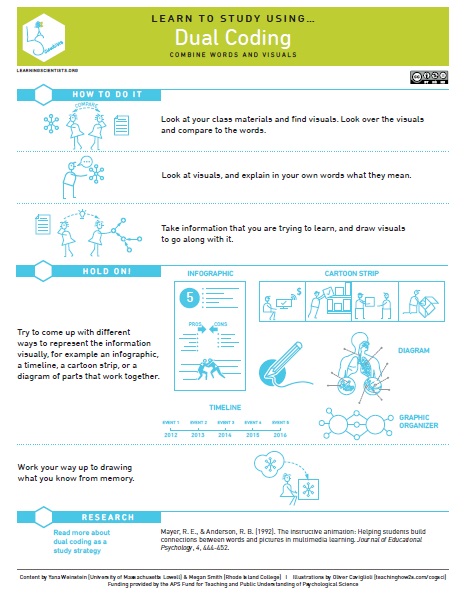
How to revise #4: Dual Coding

This is the fourth post in a series looking at the most effective ways to revise, based on the work of The Learning Scientists. The Learning Scientists are cognitive psychologists who want to make scientific research on learning more accessible to students and teachers. Their aim is to motivate students to study and increase the use of effective study and teaching strategies that are backed by research. I’ve met Yana Weinstein PhD at an education conference in Southampton last week – she’s the real deal!

Read all the revision posts here.

Dual Coding: what is it?

Dual coding is when you use a combination of pictures/visuals and words to help you learn material.

Dual Coding: why?

By transferring the material from a visual form into words, or from words into visuals, you are strengthening the connections in your brain around the material itself. You are also giving yourself multiple formats to remember things in – the words might act as a memory hook for the visuals, or you might remember the visuals and that will trigger the memory of the words.

Dual coding: how do I do it?

If you have a textbook, look for the visuals and see what the connection is between those and the words. What does the visual tell you that the words don’t? What do the words clarify that isn’t clear in the visual? Asking these questions helps secure your knowledge of all aspects of the topic.

When you are revising, draw visuals to go along with each section of your written notes. This could be a timeline, a diagram, a flow-chart, a mind-map, an illustration, an infographic or whatever you want!

If you have diagrams, illustrations or other visuals to work from, write down in your own words what the visual is telling you. Processing the information from one code (visual) to another (words) helps you to recall it later.

Dual coding: next steps

When you are first starting out, you will have your notes, textbook or resources in front of you. As you get better, try to dual code without the material in front of you – drawing a visual representation of the material from memory, or writing a description or explanation of the visual in your own words without looking at it. This combines dual coding with retrieval practice to help secure your revision.

Dual coding: watch the video

A letter to your younger self

Here at Churchill, we spend a lot of time with students asking them to think about their attitude and approach to learning. The aim of this reflection and work is for the students to refine their behaviours so they are the most effective learners possible. As part of this process, one teacher asked their Year 11 Economics class to reflect on what they’d learnt over the past year, especially from the mock exams they had completed before Christmas. The teacher asked the group to write a letter to a year 10 student, or to themselves a year ago, giving them the benefit of their additional year’s wisdom.

This is one student’s response:

“To a year 10 student

Here are a few tips I would suggest to a younger me I guess:

Firstly, recap what you learn during lessons at the end of the week or sub-topic.  In particular in unit 2 keep reminding yourself of fiscal, monetary and supply-side policies because that’s what I struggled with the most.

Secondly, don’t stop trying to improve your skills in answering questions.  In years 9 and 10 I was working at a solid F grade and I no longer tried because I thought it was hopeless, but at the start of year 11 and over the summer I did a lot of revision and just got my mock back with a B (1 off an A) which shows if you work hard you are able to improve.

Lastly, don’t stress about the information during lessons if you don’t get it, because you can put in extra time another time.”

This message – “if you work hard you are able to improve” – is the cornerstone of the growth mindset approach we are working hard to cultivate at Churchill. It’s fantastic to hear this is paying off for this particular student. I hope that others take heart from their advice and take the same approach!

What advice – if you could! – would you give to your younger self?

Assembly: Grit and Flow

As the students came into the hall for my assembly this week, they were treated to a video of violin virtuoso Itzhak Perlman performing Antonio Bazzini’s La Ronde des Lutins (the dance of the goblins). He makes this fiendishly difficult piece of music, full of extended passages of rapid double stops, artificial harmonics and left-hand pizzicati seem easy! This astonishing performance establishes the concept of “flow” at pretty much its zenith.

Flow

Flow is being able to do something well. So well, it seems almost effortless. Perlman manages to make this most challenging of pieces in the classical violin repertoire seem like a breeze, remaining seated, flourishing his bow, enjoying the performance.

My second illustration of "flow"

An illustration of “flow”

How, then, should we go about achieving this state of flow? Counter-intuitively, to achieve this apparently frictionless and smooth process, we first need to apply “grit” to give us traction.

Grit

Psychologist Angela Duckworth has spent her career studying the quality of “grit” and how it contributes to higher achievement. She says:

We define grit as perseverance and passion for long-term goals. Grit entails working strenuously toward challenges, maintaining effort and interest over years despite failure, adversity, and plateaus in progress. The gritty individual approaches achievement as a marathon; his or her advantage is stamina. Whereas disappointment or boredom signals to others that it is time to change trajectory and cut losses, the gritty individual stays the course.

“Grit” is perseverance; hard work and effort sustained over time. This grit will give the learner purchase on the slippery surface of the learning in just the same way as we grit an icy road to allow traffic to flow freely.

Grit means putting the hours in. Putting in the time. Putting in the effort. Repeating something until you know you can do it well. Itzhak Perlman says (here) that repetition is the key to successful practice – again and again and again. Slowly. He does give a warning though – there is such a thing as too much practice. I’m sure the students will breathe a sigh of relief, until they hear that his idea of “too much” is anything more than five hours of the same thing in one sitting. Now that is grit.

My challenge to the students is to aspire to “flow” in all their learning by applying “grit” in their lessons and at home. I spoke to them about the importance of deliberate practice – not just “doing work” but thinking about the knowledge and skills they are applying to the task and how they will use the process to improve.

I started the assembly with Perlman playing La Ronde des Lutins – the dance of the goblins. I finish with another example of La Ronde, this time from the masters of “flow” FC Barcelona:

This training ground exercise is the perfect mesh of grit and flow – deliberate practice demonstrated by those who demonstrate mastery. And enjoy it.

You can view my assembly Prezi here.


Student voice: how we learn

Over the course of this year, I am visiting all the tutor groups in the school. In my visits I am asking the students for their views and advice on different aspects of our provision at the Academy. Between September and December I asked students to reflect on two questions:

  1. What makes good teaching?
  2. What makes good learning?

Tutor groups responded in lots of different ways. Some groups put together presentations, others worked in small groups on the questions, whilst others involved me in a whole-group discussion. What they all had in common was lots of brilliant ideas about the topic!

At the end of the process I had visited nineteen tutor groups and heard  the views of around 450 students. In January, I gathered together all their thoughts and ideas. They had told me what helped them the most from their teachers, and they had come up with lots of excellent suggestions for how they could best help themselves to be effective learners. Below, you can see the fruits of their labours:

This poster has been shared with all teachers and tutor groups this term, and many have been discussing it in their tutor time sessions and team meetings to help everyone improve and maintain the highest standards of both teaching and learning in school. It’s been a really valuable process to take time out to reflect on what it is that makes for successful teaching and learning, and to keep our focus squarely on our main task.

What was also lovely was to hear the students suggesting the names of teachers who they thought were doing a brilliant job in supporting them and helping them to learn. I took great pleasure in writing to every teacher whose name was mentioned – over fifty of them! – to thank them, on behalf of the students, for the great work they do every day at the Academy.

This term students are helping me with feedback on what makes excellent behaviour in lessons and at social time, and how we can work together to make things even better. I’ll report back after Easter!

Churchill at 60: the first day of school

Sixty years ago this week, on 14th January 1957, the first students and members of staff started in the brand new Churchill Secondary Modern School. The school later became Churchill Community School and, more recently, Churchill Academy & Sixth Form. The 14th January 1957 is recorded by hand as the first entry in the School Log Book, which was passed to me as I took up post at Headteacher a year ago.  Click on the pictures below to read the log book – the “Administrative Memorandum” is especially interesting! – and see below for a transcript of the first entry.


January 14th, 1957

The first Headmaster, Reginald J. Dennis B.Sc., took up duty to-day, together with the following members of staff.

  1. Mr J. Simmonds – Deputy Headmaster
  2. Miss G.A. Ford B.Sc.
  3. Mrs Young
  4. Mrs King – a supply teacher, filling a vacant post.

First year secondary school children, together with a few second year children, were absorbed from the following primary schools: Banwell, Winscombe, Wrington and Blagdon. They were disposed in the following classes:

  • IF – 32
  • IK – 33
  • IY – 32
  • II – 27
  • Total – 124

As the building was unfinished, it was only possible to make use of four rooms on the second floor. The back door of the building had to be used as work was still in progress at the front entrance.

The kitchens were not ready for occupation and hence school dinner was brought to the school in containers from the central kitchen at Yatton.

The Chairman of the Governors, Lt. Colonel Lee, D.S.O., visited the school this morning. He said that he had come to wish the staff and school a happy and successful life in this new building.

It sounds like an exciting time, bringing together children from the local community into a brand new secondary school in a brand new building. It’s fantastic to think that, although the world is very different now, we are continuing the work that they started sixty years ago.

logo-c60

To mark our Diamond Jubilee, we have created a special “Churchill at 60” page on our website. We will be updating the page with photographs from the school’s history, information about events, and memories from the sixty years that there has been a school on this site.

If you have, or if you know anybody that has, any photographs or memories from the early days of the school, we’d love to hear from you! Please contact the school on churchill@churchill-academy.org with the subject line “Churchill at 60“.

I will be including guest posts from the Log Book over the coming months as we prepare for the 60th Anniversary of the school’s official opening in September. Watch this space!

My first year at Churchill


I started at Churchill a year ago – and what a year it’s been! One of the first things I wanted to do as Headteacher was develop communication between home and school. To help with this, we relaunched the newsletter, redesigned the website, and I started this blog. Here are some of the highlights that have been captured in the Headteacher’s Blog over this first year in charge…

Taking stock and planning

I spent the first few months at Churchill looking, listening and learning around and about the Academy. In March, I gathered my thoughts in What have I learned?. This process led to the planning of the Strategic Priorities for Churchill – our blueprint for the way ahead over the coming years.

priorities

How we learn

I have published a series of posts on learning and on developing a growth mindset, including You Can Learn Anything and How to Grow Your Brain. I also showed this really interesting video to families on my meet the Headteacher evenings. It describes some really interesting findings from research into the way in which praise can change students’ attitudes to learning and achievement. Take another look:

How to revise

I’ve also used this blog to help students preparing for exams. I started with How to revise: techniques that work, and I’m now part way through a series of How to revise posts on the six most effective revision techniques from cognitive science research. So far, I’ve outlined retrieval practice, spaced practice and elaboration. Make sure you follow the blog this year for the final three posts in this series!

Performing Arts

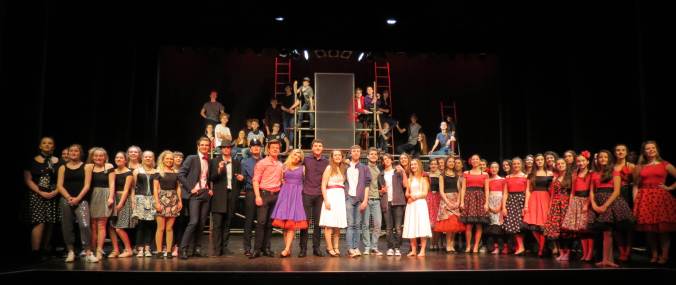
In January, I attended the Churchill Music! Young Musician of the Year competition, prompting me to write about The Power of Music  This year’s event is just around the corner, and I’m looking forward to it very much! It was also a production year and I had the chance to review West Side Story – I’m still  in awe of the brilliant show that the students and staff put on. The year was rounded off by the fantastic Christmas Concert which inspired me to write about how much I love the Junior Choir!

WSS_Fullcomp

The amazing West Side Story cast on the Playhouse stage

Assemblies

I’ve taken a few assemblies during the year! I love stitching together quite diverse examples into topics for my assemblies. For example, my assembly on Concentration featured coloured balls, an optical illusion, a cat gif and the dog from the Disney/Pixar film Up; my assembly on being Different featured metronomes, coke cans, Barack Obama and DNA. In Think Before You Speak I used a YouTuber, a tube of toothpaste, some ridiculous safety equipment and a poem by Emily Dickinson. I was relatively restrained before Christmas in discussing The 1960s as I talked about President Kennedy, the moon landings and an incredible mathematician called Katherine Johnson.

Fun


img_0231

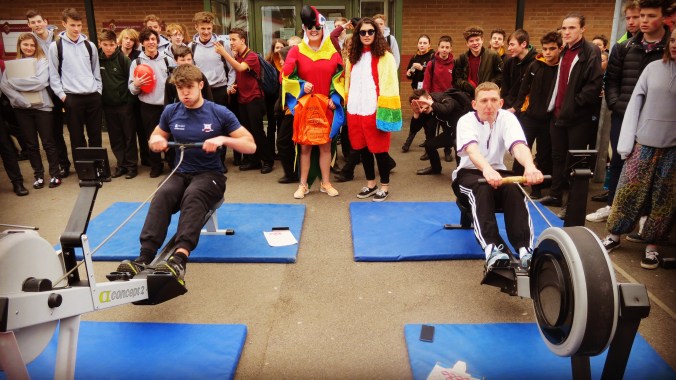
A rowing sprint competition against the GB champion wasn’t in the job description…

There has been so much to enjoy this year! From Activities Week, through Sports Day, the Year 11 and Year 13 Balls, right up to Christmas at Churchill – and it’s all still to come again this year! I even got to go to a day out at Buckingham Palace

I can honestly say I’ve looked forward to coming into work every single day of the year. It’s a privilege to work with such polite and hardworking young people and such dedicated and expert staff. Here’s to many more years – and weekly blogs! – to come.