Like many children up and down the country, my kids look forward to advent as the twenty four days of the year when they’re allowed to have chocolate before breakfast! We’ve hung our calendars and they are getting out of bed that little bit more willingly than usual, tempted by the lure of an edible treat.
It’s true that the consumption of daily confectionery is somewhat removed from the Christian meaning of advent. In the Christian faith, Christmas is a celebration of the birth of Jesus, and advent is a reminder to prepare for this important religious festival.
This year, like last year, Mr Gale in the Maths Faculty has shared his “Kindness Calendar” with the school. The Kindness Calendar is a great way to mark advent by giving, rather than receiving, tied into one of the Academy’s core values. Each school day of the advent period, there’s a kindness task for students and staff to carry out. There are bonus tasks to extend it into the weekend too!
Our Kindness Calendar
Why not try each of the daily acts of kindness on the days running up to Christmas? After you’ve had your chocolate, of course…
It’s great to be back for a new year at Churchill! In my start-of-term assembly for each of the Houses, I outlined some practical priorities: some of the key changes to the Academy site which will be taking place this year, and reminders about our expectations of behaviour and conduct.
At the start of the year, however, my most important priority was to take a longer and wider view, and to remind all students why were are here, and what we are trying to achieve together at Churchill.
Our purpose: to inspire and enable young people to make a positive difference
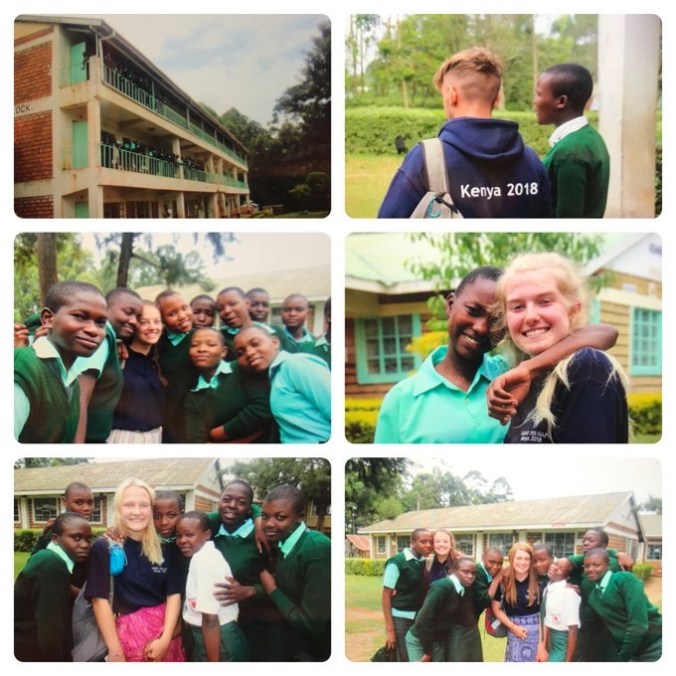
Churchill students working with young people at Rigoma Primary and Secondary School in Kenya, summer 2018 (source)
Our purpose at Churchill is “to inspire and enable young people to make a positive difference.” This can be at a personal level: we can all make a positive difference to ourselves, through the work we do to improve our knowledge, skills and character every day. We can also make a positive difference to others, through helping them when they are finding things difficult and making their experience of school better.
On a wider scale, we can all make a positive difference to the Academy community. This can be in simple, practical ways like keeping the site neat and tidy, but also in less obvious ways by contributing to our positive atmosphere: behaving kindly and respectfully; being ready and eager to learn; and supporting and encouraging one another in our efforts to improve.
Looking up still further, we know that all our young people can make a positive difference in the wider world, both during their time as students here but also after they have left us. Our hope is that, because of the education they have had here, Churchill students will go on to make the world a better place. This is a lofty ambition – but it is what motivates and guides us in the work we do every day.
Our vision: to set no limits on what we can achieve
Sports Day 2018
Our vision at Churchill is “to set no limits on what we can achieve.” Limits can be external, with other people telling you that “you’ll never be able to do X,” or “you’re only capable of Y.” We strive to avoid this kind of talk at Churchill, recognising that it is impossible to know someone’s true potential, and that effort and application make it far more likely that we will achieve our goals.
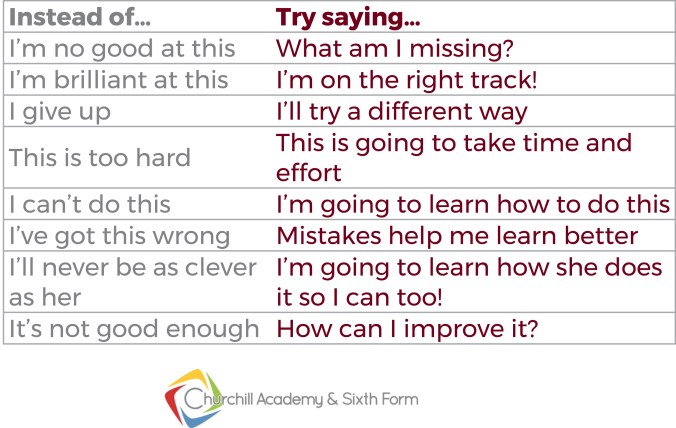
The limits we set ourselves can be far more challenging. We all have a voice inside ourselves that says “it’s too hard,” or “I’ll never be able to do it,” or “I can’t.” At Churchill we try hard to find an inner voice to talk back in, so that we can find a way to overcome those barriers we can set ourselves.
Our values: kindness, curiosity, determination
Our three values are based on the character strengths that underpin our vision and our purpose. Developing kindness, curiosity and determination will help us all to reach our goals. Each value reflects a different aspect of our character: kindness is a strength of the heart; curiosity is a strength of the mind; determination is a strength of the will.
Kindness
At Churchill, we are kind to one another. This means that we are considerate and generous every day, caring for one another and doing everything we can to make sure everybody else has a good day at school. Kindness reinforces our shared sense of community; it builds trust and respect; and it ensures that we take our social responsibilities seriously.
“A single act of kindness throws out roots in all directions, and the roots spring up and make new trees.” (Amelia Earhart)
Curiosity
At Churchill, we are constantly curious and hungry for new learning. We value enquiring minds and a spirit of exploration. The desire to know or learn something new motivates us to try our hardest in everything we do.
“The mind is not a vessel to be filled, but a fire to be kindled” (Plutarch)
Determination
At Churchill, we are persistent and relentless in the pursuit of our goals – both academic and personal. This determination to keep going when learning is difficult, and to come back and try again when we struggle, helps us to succeed.
“Our greatest weakness lies in giving up. The most certain way to succeed is always to try just one more time.” (Thomas Edison)
It is the interplay between our values, our vision and our purpose that enable us to achieve success. I’m looking forward, this year, to taking further strides towards our shared goals. As Henry Ford said, “if everyone is moving forward together, success takes care of itself.”
Monday 13th November was World Kindness Day, and kicked off our Focus Fortnight on our core value of Kindness. Over this two weeks we are encouraging all students, staff and members of the Academy community to make a special effort to carry out acts of kindness for one another. Here are some of the suggestions that have been made:
This slideshow requires JavaScript.
There are global movements like Random Acts of Kindness and Pay It Forward which are founded on the idea that if each of us acts kindly towards another person for no other reason than that it’s a nice thing – the right thing – to do, it has the cumulative effect of making the world better for all of us. This is something that is really important to us at Churchill, which is why it is one of our three core values. It was also the theme of my Kindness Assembly back in March.
When we do something nice for no reason, everybody benefits. We feel better; we make somebody else’s life better too. Not just this fortnight, but from now on, we want to make sure that we all choose kindness. Do something nice for somebody else. Help one another. Not because there’s anything in it for us, but because when we do something kind, we’ve made school a nicer place for someone else to be. And if it’s a nicer place for someone else, it’ll be nicer for us too. So when we choose kindness, everybody benefits.
Our values are what we judge to be important in life; they are the principles and standards that govern our behaviour. We spent the summer term thinking long and hard about what we valued, and what we should value, as a school. A group of sixteen staff volunteers worked together to develop our ideas, before representatives from each of the main school tutor groups and the Sixth Form council offered their views. The Governing Body formally adopted Churchill Academy & Sixth Form’s new values in July 2017.
The values are designed to guide our behaviour and decision-making in everything we do at the Academy. Our three values are kindness, curiosity, and determination.
Kindness
At Churchill, we are kind to one another. This means that we are considerate and generous every day, caring for one another and doing everything we can to make sure everybody else has a good day at school. Kindness reinforces our shared sense of community; it builds trust and respect; and it ensures that we take our social responsibilities seriously.
“A single act of kindness throws out roots in all directions, and the roots spring up and make new trees.” (Amelia Earhart)
Curiosity
At Churchill, we are constantly curious and hungry for new learning. We value enquiring minds and a spirit of exploration. The desire to know or learn something new motivates us to try our hardest in everything we do.
“The mind is not a vessel to be filled, but a fire to be kindled” (Plutarch)
Determination
At Churchill, we are persistent and relentless in the pursuit of our goals – both academic and personal. This determination to keep going when learning is difficult, and to come back and try again when we struggle, helps us to succeed.
“Our greatest weakness lies in giving up. The most certain way to succeed is always to try just one more time.” (Thomas Edison)
Thank you to all the staff, students and Governors who contributed to the work on our vision and values.
A lovely thing happened the other weekend. I was working in my office at home, when a paper aeroplane came soaring through the air to land nearby. Written on one wing were the words “open this”. Intrigued, I unfolded the aeroplane to find a lovely message from my six-year-old son.
“Dear Daddy I love you love from Joseph”
I asked what I had done to deserve this wonderful gift, but there was no reason. My son had just decided to do something kind – and it made my day. It got me thinking about kindness, and what motivates us to do something nice for somebody else.
Of course, there might be selfish motivations. People might do nice things because they think there’s something in it for them. It might help their reputation and social standing, or there might be a financial reward in it for them. Or there might be a sudden emergency and instinct could kick in to help someone in danger…
All of these are completely understandable motives for doing something kind and nice for other people. But what we see in the video clip was that, as one person came to help, so did more and more, until everyone on the train and platform was united in trying to help the single passenger in distress. This domino effect is powerful, and it can happen more slowly and subtly than in the emergency situation we saw on the station platform in Australia.
There are global movements like Random Acts of Kindness and Pay It Forward which are founded on the idea that if each of us acts kindly towards another person for no other reason than that it’s a nice thing – the right thing – to do, it has the cumulative effect of making the world better for all of us. And this is not a new idea!
Marcus Aurelius
Marcus Aurelius was Roman Emperor from 161 to 180 AD, and a renowned philosopher in the Stoic school. In his book Meditations, he lays out his guide to self-improvement, including in the twelfth book this simple advice:
If it’s not right, don’t do it
If it’s not true, don’t say it.
This is a great maxim to live by; indeed, if we all stuck to that rule, our world would certainly be a better one. The only thing I take issue with in Marcus Aurelius’ advice is the note of prohibition, of telling us what not to do. I would revise it to:
If it’s right, do it.
If it’s true, say it.
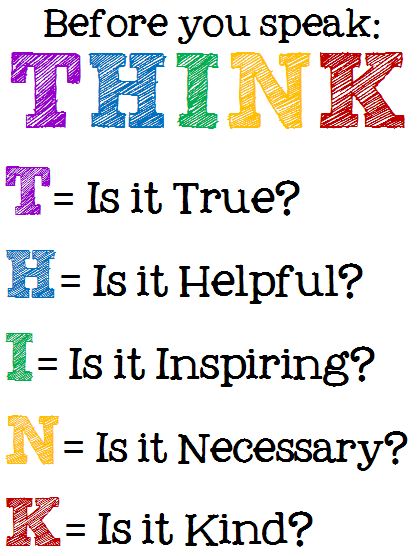
But of course, truth always needs to be tempered with kindness. And, before we act or speak, we need to think carefully about our actions and words.
This came through to me most powerfully this year when I heard the tragic story of Megan Evans. 14-year-old Megan, from Milford Haven was found dead on February 7. She had been the victim of online bullying, which her mother Nicola Harteveld believes drove her to take her own life.
Megan Evans
“Megan was bright, vivacious, happy, hugely popular, sporty, confident, outgoing, fiercely independent, just a normal, happy go lucky teenager,” Ms Harteveld told Phillip Schofield and This Morning co-host Holly Willoughby, when she appeared on the show in February.
When Megan started to be inundated with bullying messages on Snapchat, she kept it to herself. Her mother said: “We’re all distraught, and angry because no one noticed anything different with her.”
The final message she received read “Why don’t you kill yourself?”
Megan replied saying: “Ok.”
The fact that somebody in Megan’s life chose to express cruelty and unkindness had the most tragic and devastating consequences. Her family and her friends – and the young person who sent that final message – will be living with the consequences of that for the rest of their lives.
However, it doesn’t have to be that way. In 2007, Jonny Benjamin, aged just 20, was diagnosed with a mental illness, schizophrenia, and hospitalised. Desperate, and unable to understand his condition or see any way out, on January 14th 2008 he walked out of hospital in London and on to Waterloo Bridge, intending to throw himself off into the icy waters below. Hundreds of Londoners were walking across the bridge on their way to work. How many of them saw what was happening? How many walked on? We don’t know. But we do know that one man stopped and spoke to Jonny. He offered to buy him a cup of coffee, and he said words which changed Jonny’s life. He said: “you can get through this. You can get better.” Up until that moment, nobody had told Jonny that getting better was a possibility. And, in that moment, Jonny himself stepped back from the brink. After twenty five minutes of talking, he came down. The police took him away. And the stranger went on his way to work.
Jonny Benjamin
Jonny went on to control his condition with medication and treatment, and became a campaigner for mental health, raising awareness of the condition so that other sufferers have people to tell them “you can get through this; you can get better.” In 2014 he ran a campaign to find the stranger on the bridge who stopped and helped him six years earlier, using social media to track him down. He found him. He is a man called Neil Laybourn, who said this:
“In truth, it could have been anyone who stopped that day. It could have been the person behind me, but this time it was me.”
Neil’s kindness saved Jonny’s life, and Jonny’s life has gone on to save countless others through his campaigning work. He couldn’t have known that at the moment he chose to stop and help; in that moment, he was just doing the right thing because it was the right thing to do.
When we do something nice for no reason, everybody benefits. We feel better; we make somebody else’s life better too. At school this week – and from now on – make sure that you choose kindness. Do something nice for somebody else. Help one another. Not because there’s anything in it for you, but because when you do something kind, you’ve made school a nicer place for someone else to be. And if it’s a nicer place for someone else, it’ll be nicer for you too. So when you choose kindness, everybody benefits.







 The Headteacher's Blog