Assembly: Value

Slide2

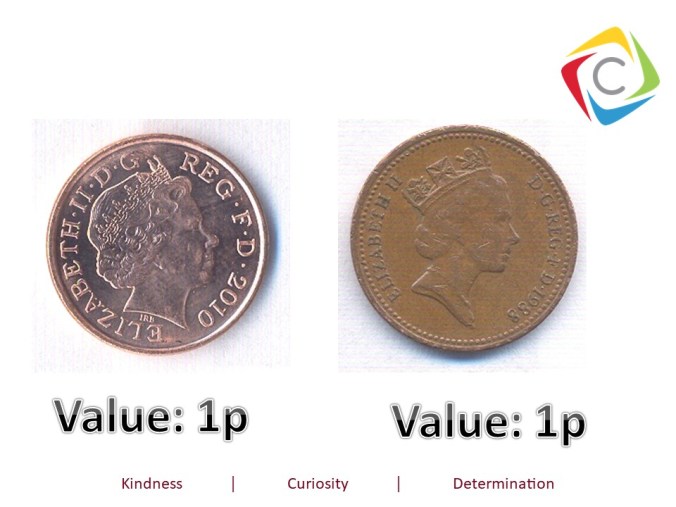
Take a look at the two coins above. They look so different! One, minted in 1988, is tarnished and dull. It’s marked around the edges with the impacts of thousands of other coins in hundreds of pockets, tills, machines and moneyboxes. The 2010 coin is shiny and bright, and the Queen’s profile looks markedly different. Yet both coins have the same value – they are worth exactly the same. The age, condition, and the year they were made makes no difference to what they are worth.

Slide3

These two coins look similar to the pennies. One is old and tarnished, the other shiny and new. But they do not have the same value. Despite the fact that they have the words “one pound” written on the front, the coin on the left is worthless, no longer legal tender, and only the coin on the right is worth £1 now.

Looking at these coins causes me to reflect on how we assign value to things. It seems clear that things are only worth what we agree together they are worth. If we agree, as a society, that one object is worth £1 and another is worthless, then that is the value that these objects have.

In the case of the coins, the condition of the object has no bearing on its value. However, with some other objects this is not the case.

Slide4

In the case of the two guitars above, we have an unusual situation. The brand new guitar on the left is worth much less than the one on the right, despite the fact that the one on the right has been on fire, has a melted scratchplate, and had a broken neck which had to be replaced. That’s because the guitar on the right was set on fire and smashed up by Jimi Hendrix at the 1967 Monterey Pop Festival; it’s appalling condition is a testament to its place in the history of rock’n’roll.

This is not normally the case. As shown above, the value of the £120,000 Ferrari is not increased after it has been driven into a lamppost. In fact, more usually, we need to care for and look after the things we value so that they remain in good condition for us to enjoy.

Over the two years of my Headship to date, I have written three times to the Education and Skills Funding Agency to argue that the students of Churchill Academy and Sixth Form deserve a better learning environment. Twice the ESFA have agreed with the arguments we have presented – we are waiting to hear about the third! – and that is why we have the Alan Turing Building, complete with brand new IT facilities, and the new Science and Technology building under construction. That is why we are renovating and refurbishing classroom and improving the computer equipment across the site. These project all have a significant value – not just the financial resource required to put them in place, but the value they add to the learning experience for our students.
Slide10

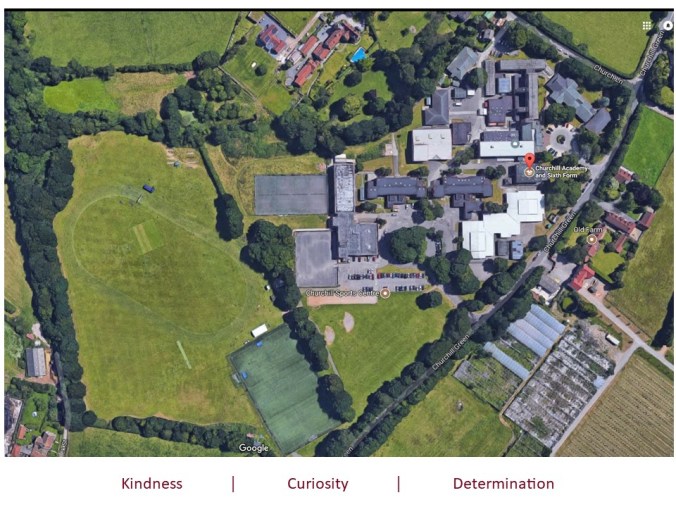
We are lucky to learn and work in a beautiful, rural school site, with excellent and improving facilities. It is essential that we all work together to look after this place, ensuring that it is litter-free and kept in an excellent condition.


This slideshow requires JavaScript.

Our values at Churchill determine all of our actions, and there have been many great examples of students demonstrating those values since we launched them in September. Maintaining those excellent habits will ensure that we all continue to contribute positively to the community we are building together.

Slide16

My portrait

portraitcrop

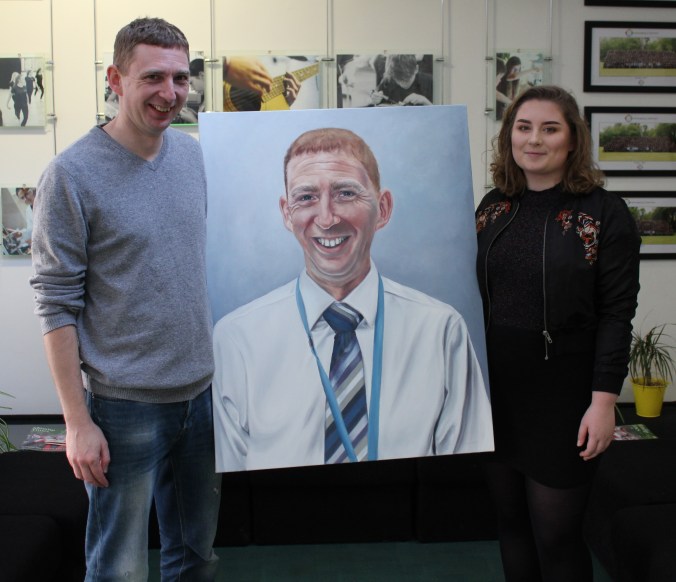
Artist Katie Jackson with my portrait and me, January 2018

In the summer term of 2017, Mr Downing approached me with the idea for an annual Academy portrait painting event. I thought it was a great idea – a long term project to celebrate the teaching staff at Churchill Academy. The aim is that each year students will be able to vote for a member of staff to have their portrait painted by one of our A level Art students, and we would build a gallery of portraits over time. So, would I mind being the first subject, to kick the competition off? I jumped at the chance! Year 13 student Katie Jackson was selected as the first artist and, after a brief photoshoot during Activities week, Katie went off and developed the painting, and brought it in to present to me just before Christmas.

It’s a strange thing, seeing yourself through the eyes of someone else. It’s not like a photograph, or a mirror – Katie has interpreted me and put that interpretation onto canvas. I couldn’t be happier with the outcome – I absolutely love it! I feel like she’s really “got me” and managed to communicate that through the image she’s made. It is a fantastic painting, an exciting beginning to this project.

I’d like to thank Katie for all the time and effort she put into the picture, which is truly remarkable. Katie is now studying Make Up for Media and Performance at Arts University Bournemouth and clearly has a bright future ahead of her! The portrait will be on display in reception this term before going into the gallery.

Who will be the next member of staff, and the next artist? Watch this space!

Christmas at Churchill 2017

The last week of term before Christmas is a magical time at Churchill. We keep our lessons going right up until the end, but on the final day we all get together to celebrate. The Sixth Form lead the way with their annual fancy dress parade, closely followed by the four Houses with their carol services, tutor events and mini-competitions. Enjoy the photos below, and I wish everyone in the Churchill Academy & Sixth Form community (and beyond) a very merry Christmas and a happy new year!


Laying the foundations

On Tuesday of this week I was invited down to the construction site where work is progressing on our new Science and Technology building. It was an important day as the contractors were using a 39 metre boom to lay down 243 cubic metres of concrete in a single slab to form the base of the building. It was quite an operation: the concrete arrived in a series of mixer wagons (30 in all during the day); it was transferred into an on-site hopper, which pumped the concrete along the boom and out into the site. One operator used a remote control to move the boom around whilst his team directed the flow of concrete into the steel mesh framework. A second pump made sure no air bubbles were trapped, whilst behind them a final contractor used a beam screeder to ensure a completely flat surface. It was amazing to watch! Over the course of twelve hours, the complete base of the building was laid out in one piece. Pipework is left to connect up the plumbing, and there are bolts sticking up from the foundation piles where the steel frame for the walls will be anchored.

As I watched this work taking place, it occurred to me that, eventually, none of this will be visible. The building will rise up, completely covering it; the ground floor materials will be mounted on top of this concrete. And yet, although none of it will be visible, it is this solid foundation which will hold the whole thing together.

As a school, we aim to provide the solid foundations and the framework upon which young people can build their futures. It’s vital to get this right. Gaps or errors in the process would be like air bubbles left in the concrete: they could weaken the whole structure. That’s why we work so hard to ensure that all our students make the most of every day, every lesson that they can.

Eventually, all the work done in school will become invisible, covered by the progress and achievements of the young people themselves as they build their own futures. But it will always be there: a firm, smooth, solid base anchoring them securely and allowing them to rise up. What a privilege it is to be a part of that process.


Success

Pelequote

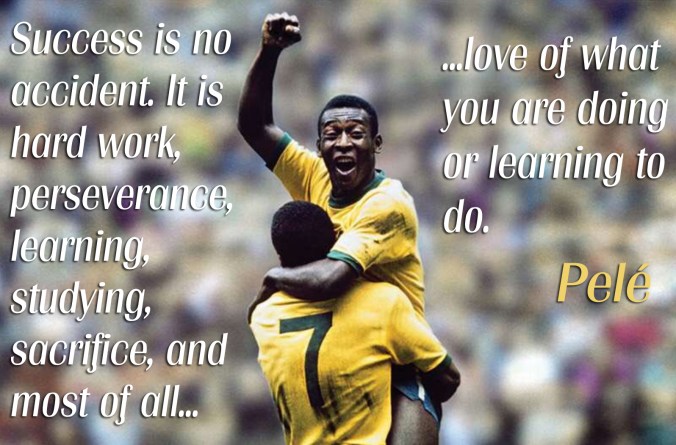
After last week’s blog about failure, I wanted to write a companion piece about success. We all want to be successful. We all aim for success. But what does success mean to you?

At the end of each school year at Churchill, we have our annual Celebration of Success events. These evenings aim to celebrate those student who have been successful in many different ways. Of course, academic success is a huge part of that. As a school you wouldn’t expect anything different! But, as an institution, we believe that personal and academic accomplishments are equally valuable, and we try to celebrate success in all its forms.

For some of us, a string of A* grades (or 7, 8 or 9s!) is a mark of success. For others, achieving a grade 4 will be a huge achievement. For some, winning the 1500m on Sports Day will bring that sense of pride; for others, simply finishing the race is worth even more. For those students who successfully complete their Duke of Edinburgh award, the feeling of success is palpable; I’m looking forward to handing out this year’s awards later this term.

These are all major achievements, which we rightly mark up as successes. But it’s important also to celebrate the small triumphs which occur every day. We know that for some students simply getting into school and making it through the day is a success to be celebrated. Finally grasping that difficult concept in a lesson, or having the courage to have a go at a challenging task, or recognising a mistake and going back to fix it – all of these are important successes that matter hugely to all of us.

Blackboard with the chemical formula of dopamine

There are interesting things happening in our brain when we are successful, with two different “feel good” chemicals being released: dopamine and serotonin. We get little shots of a chemical called dopamine when we get things done; I like to think of it as the “achievement” chemical. It exists in our brains to make sure we achieve our goals. The trouble with dopamine is that it doesn’t really differentiate between big successes and small successes, so you’ll get a little shot of dopamine if you find that pen you were looking for, even if you don’t start your homework. Dopamine can be tricky – it will reward you for completing smaller, less challenging tasks as well as the big important things.

757px-Serotonin-Spartan-HF-based-on-xtal-3D-balls-web

Serotonin molecule

Serotonin is released when we get recognition from other people for something we’ve done – it feels really, really good. But the great thing about serotonin is that it’s released in other people too. When you get a little dopamine shot from ticking off something important on your list, you feel good. When you achieve something that your teacher, your parents, or your friends think is great, they feel good too. Back in caveman times, serotonin helped members of tribes work and stay together by encouraging them to invest in each other. That’s what’s so great about working in a school. When students do well, I feel proud of them – and I feel good. How brilliant is that?

That’s why recognising and celebrating success is so important. When effort leads to achievement, we feel good about ourselves. When other people tell us they’re proud of us, or celebrate that success with us, we feel even better about ourselves – and they feel great too. It’s a win-win. So cherish those moments, and celebrate every success, no matter how small – they all count.

success

Failure

In 1919, a young man was fired from his job at a newspaper for “lacking imagination” and “having no original ideas.” The young man’s name was Walt Disney. He went on to win 22 Academy Awards.

In 1998 an 11 year old boy was cut from his football team because a growth hormone deficiency made him shorter than other kids his age. The boy’s name was Lionel Messi. He went on to be named FIFA’s World Player of the Year four times.

On 1st January 1962 a band auditioned for Decca Records in West Hampstead, London. Decca rejected the band, saying “guitar bands are on the way out” and the group had “no future in show business.” The band was The Beatles. They went on to have 15 number one albums, sell 21.9 million singles in the UK, and change the face of music forever.

In 1985, aged 30, a successful businessman was fired from the company he had founded. “I was out — and very publicly out,” he recalled. “What had been the focus of my entire adult life was gone, and it was devastating.” He added, “I was a very public failure.” The man’s name was Steve Jobs. He went on to co-found Pixar Animation Studios, where he co-produced the first ever full-length computer animated film: Toy Story. He was lated re-hired by Apple, the company he had founded, and he went on to develop and launch the iPod, iPhone and iPad. Apple today is worth $900 billion. 

It would be easy to think about Walt Disney, Lionel Messi, The Beatles, or Steve Jobs and only to think of the successes. But those successes were only possible because of the unseen failures that preceded them.

Coping with failure

Failure is a big issue for all of us. None of us sets out on a task wanting to fail. It isn’t something desirable or positive. And, when it happens, it feels awful. But the hard fact is that some degree of failure is inevitable. We can’t be successful all the time and sometimes even the best laid plans come unravelled. For us at Churchill, our aim is to build understanding and acceptance that setbacks, mistakes and failures are part of the learning process, and to help our students react well when things don’t go the way we want them to.

We don’t seek failure out – that would be horrible! But equally we shouldn’t protect students from experiencing setbacks. The most important part of the process is showing them how to learn from the experience and improve as a result. When we are learning something new, it’s unreasonable to expect perfection first time – it’s going to take time and effort. We are constantly failing every day, but learning all the time, improving with each mistake, and getting closer and closer to our destination.

Question 1: Why did you fail?

Understanding the causes of failure help us to learn from it. Sometimes the answers to this question will be easy: I didn’t work hard enough. I didn’t prepare thoroughly enough. I didn’t fully understand what it was that I needed to do. In cases like this, the solutions will also be straightforward: work harder. Prepare. Go back and revise.

Sometimes, the answers will be less easy to find. Sometimes something completely unexpected will happen that makes it impossible to succeed. In these situations we we can also ask ourselves whether there was anything we could have done to forsee what went wrong, or whether there was anything we could have prepared for. If the answer is “no” then we can chalk those up to experience, but if the answer is “yes” then we can learn from it.

failure prepare

Sometimes, you will know what went wrong, but you won’t know what to do about it. This is where teachers, mentors, tutors, family and friends really come into their own. Asking for help when you don’t know what to do next can feel like an admission of weakness, but it is actually a strength. Getting help from those who know more than you do, or who can do it better than you, will help you to get better too. And offering help to those that need it is part of our mission as an Academy – to “encourage others to succeed.”

Question 2: how do you feel?

Let’s not pretend that the feeling of failure is a pleasant one. It isn’t. It can be embarrassing, even humiliating to get something wrong in front of other people. It can be upsetting. If you’ve invested a lot of time, energy, hope and aspiration into a project, failure can be devastating.

failure bruise

But failure is not fatal, and it is not permanent.

Acknowledging this simple truth is essential for us to learn and grow. It helps all of us to remind ourselves that the disappointment we feel when things go wrong is something that hurts now, but over time it will help us to be stronger and more resilient. It won’t hurt forever – and it could make us better.

Question 3: what have you learned?

Having experienced the horrible feeling of failure, we are faced with a choice. Part of us will certainly want to avoid that feeling in future by not trying – by avoiding the situation where we might fail again. If we do that, however, we risk the failure permanently affecting our confidence and limiting our ability to succeed in future.

Failure and learning

It takes courage and determination to pick ourselves back up and to have another go – but that is the only way to turn failure into learning. Work out where we went wrong, fix it, get help if we need it, and try again.

My failure

One failure that I will never forget comes from my time as the Head of an English Department. I was asked by a colleague to tell off a boy who had been disrespectful in her lesson. I checked the boy’s details on the computer, then went to find him at break time. When I saw him, I launched straight in to my best teacher telling-off, full of disappointment and indignation that this young man had dared to behave so poorly. After about two minutes, I paused for breath. “I think you might want my brother, sir,” said the young man – who had an identical twin.

Why did I fail? Because I didn’t check.

How did I feel? Very stupid.

What did I learn? Always – ALWAYS – check you’ve got the right person before you tell them off.

jk

We can’t get everything right all the time. But every time we get it wrong we learn more, and improve. Every failure, mistake, and setback is making us stronger, making us smarter. So be brave, keep going, and next time do it a little bit better.

Focus Fortnight: Kindness

Monday 13th November was World Kindness Day, and kicked off our Focus Fortnight on our core value of Kindness. Over this two weeks we are encouraging all students, staff and members of the Academy community to make a special effort to carry out acts of kindness for one another. Here are some of the suggestions that have been made:

This slideshow requires JavaScript.

There are global movements like Random Acts of Kindness and Pay It Forward which are founded on the idea that if each of us acts kindly towards another person for no other reason than that it’s a nice thing – the right thing – to do, it has the cumulative effect of making the world better for all of us. This is something that is really important to us at Churchill, which is why it is one of our three core values. It was also the theme of my Kindness Assembly back in March.

When we do something nice for no reason, everybody benefits. We feel better; we make somebody else’s life better too. Not just this fortnight, but from now on, we want to make sure that we all choose kindness. Do something nice for somebody else. Help one another. Not because there’s anything in it for us, but because when we do something kind, we’ve made school a nicer place for someone else to be. And if it’s a nicer place for someone else, it’ll be nicer for us too. So when we choose kindness, everybody benefits.

act-of-kindnessjpg

You can take a “Be Kind” pledge on the This Morning website here, and view some more “kindness” videos below:

If you’ve noticed a special act of kindness, please let us know in the comments or contact the Academy. Thank you!

Year 7 Learning Groups: Humanities Heroes

There’s a long tradition of naming our Key Stage 3 Learning Groups at Churchill around a particular theme. The current Year 8 groups are named after endangered or at-risk species: Panda, Turtle, Lion, Jaguar, Leopard, Tiger, Gorilla, Rhino, and Polar Bear. There’s a great display in the ground floor Science corridor giving more details about these animals, and the work of the World Wildlife Fund to help protect them.

It’s the turn of the Humanities Faculty this year, so the learning groups in Year 7 have been named after British heroes from the fields of History, Geography, and Philosophy and Ethics. Hence we have 7Brunel, 7Seacole, 7Anscombe, 7Attenborough, 7Fiennes, 7Kingsley, 7Davison, 7Locke and 7Hume being taught right across the Academy! This week Mrs Amer, Director of Humanities, has been telling the students more about these Humanities heroes in assemblies. So here’s a run-down of who the learning groups are named after…

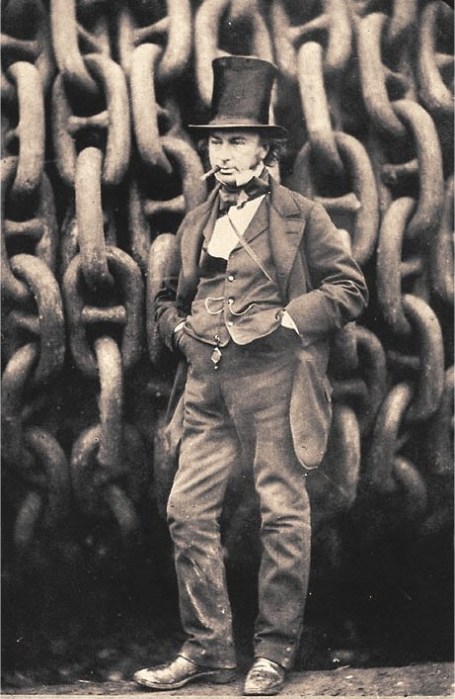
Brunel

IKBrunelChains

Isambard Kingdom Brunel (1806-1859) was named as one of the greatest Britons in a BBC poll. A famous engineer, he spent much of his life in Bristol where he designed the Great Western Railway, Temple Meads Station, the SS Great Britain, and the Clifton Suspension Bridge amongst many more achievements.

Hume

Allan Ramsay, David Hume, 1711 - 1776. Historian and philosopher

David Hume (1711-1776) was a Scottish philosopher and historian, best known for developing the system known as empiricism. He argued that all human knowledge is based on experiences; he also investigated the concept of miracles and put forward opposing scientific arguments.

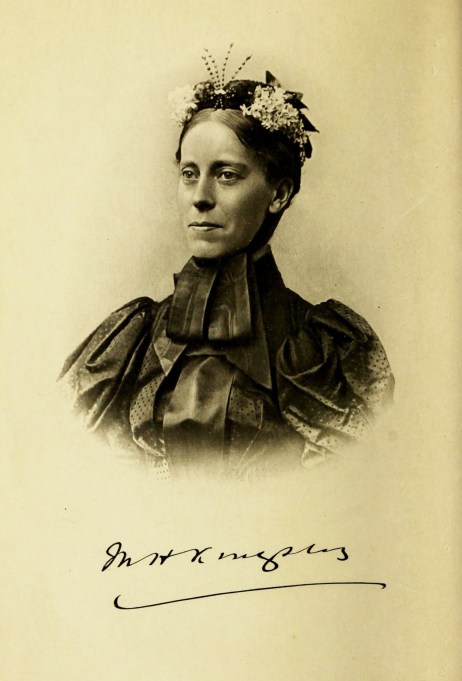
Kingsley

Mary_Kingsley_West_African_Studies

Mary Kingsley (1862-1900) was an explorer. At a time when it was unheard of for women travel alone, Kingsley explored central and west Africa. Her work was vital in helping Europeans understand African cultures and the effects of the British Empire. Kingsley also took an important stand against slavery.

Davison

Emily_Wilding_Davison

Emily Wilding Davison (1872-1913) was a suffragette who campaigned for votes for women. She was arrested nine times for her protests, went on hunger strike seven times, and was force-fed in prison forty-five times. She died after being hit by King George V’s horse at the 1913 Epsom Derby when she walked onto the track during the race to protest for votes for women. Women were finally given the vote in 1918.

Locke

JohnLocke

John Locke (1632-1704) was a philosopher who is known as the “Father of Liberalism.” One of the earliest empiricists, he was one of the first thinkers to define the self as a continuity of consciousness. He was also a believer in the importance of proof: for Locke, ideas had to be capable of being tested repeatedly, and nothing was exempt from being disproven. Locke was also born in Wrington!

Fiennes

Ranulph_Fiennes_2014

Sir Ranulph Fiennes (1944- ) is an explorer and writer. He was the first person to visit the North and South Poles by surface means, and the first to cross the continent of Antarctica on foot. In 2009, at the age of 65, he became the oldest person to reach the summit of Mount Everest.

Seacole

Seacole_photo

Mary Seacole (1805-1881) was born in Jamaica. She was born mixed race, to a Scottish father and a free Jamaican mother. She overcame Victorian racial prejudice to serve as an outstanding nurse during the Crimean War and was named as the greatest black Briton in a 2004 BBC poll.

Anscombe

anscombe

Elizabeth Anscombe (1919-2001) was Professor of Philosophy at both Oxford and Cambridge. Her greatest work focused on the ideas of intention, action, and practical reason. Well known for being outspoken and opinionated, when accosted by a mugger in the street she told her attacker that it was ‘no way to treat a stranger’ – they stopped and talked instead.

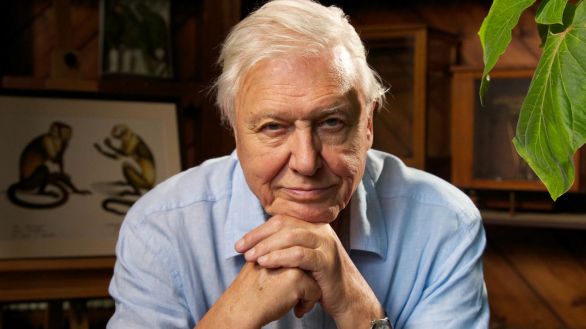
Attenborough

david-attenborough

Sir David Attenborough (1926- ), the well-known broadcaster and naturalist, has done more perhaps than any living person to raise awareness of animal, plant and marine life on Earth, and the impact of human activity on the environment. Attenborough’s appetite for discovery demonstrated our core value of curiosity; he famously said:

“I just wish the world was twice as big and half of it was still unexplored.”

His most recent project, Blue Planet II, is currently being shown on BBC1.

We hope that naming our learning groups after such significant individuals will help raise awareness of their contribution to History, Geography, and Philosophy and Ethics and broaden our students’ understanding of these figures. What will we name our groups next year? Leave a comment with your suggestions!

Training to teach

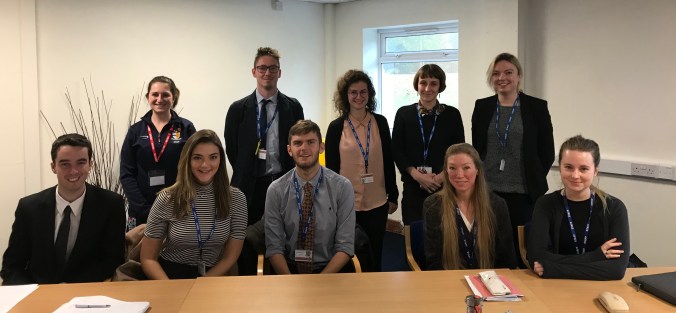
Trainees 2017

Churchill Academy’s cohort of trainee teachers 2017

This week I’ve had the privilege of working with our newest cohort of trainee teachers, who have started their teaching practice placements with us. Training the next generation of teachers is a vital part of the work of the Academy, and our school community is enriched by the new ideas and energy that our trainees bring to us each year.

I always wanted to be a teacher. My Grandad, both parents, my cousin and my uncle are teachers; it’s our family trade! As a teenager I did summer jobs teaching music and drama on performing arts and activity camps, and I did work experience in local schools. I went straight into a PGCE (postgraduate certificate of education) from University. I promised myself that, if I didn’t enjoy it, I’d stop – but I loved it, and I’ve never looked back.

Even though I trained as a secondary English teacher, my course began with a two-week primary school experience. Where better to start than right at the beginning? I went to a primary school on the outskirts of Nottingham and worked with a mixed Year 5/6 class. I started with some small group work. I remember helping the class teacher hand-crank the Banda machine to get my worksheets off to do some technical accuracy work with a group of six hand-picked students. Here’s my crib sheet from my very first try at “proper teaching”:

pgce-0021

Hand-cranked Banda-machine worksheet from pre-photocopier days, in purple ink with red pen notes from my younger self!

And then, in the last days of the fortnight, it was time to take the whole class. I was going to get them to do some creative writing based on a piece of music. I cranked the Banda machine, I planned my lesson with the class teacher, I psyched myself up. Then, the class teacher stepped out. It was over to me.

pgce-003

Worksheet from my first ever full-class lesson

I don’t remember much about the lesson, if I’m honest. What I do remember – what I’ll never forget – was the debrief with the teacher afterwards. “How do you think it went?” she asked, kindly. “It was okay…” I said, hesitantly. “And were you comfortable with the noise level?” she asked. A sure sign of a skilful teacher: giving me the opportunity to learn from failure and improve. Here’s what I wrote in my evaluation:

lessoneval

Evaluation of my first lesson

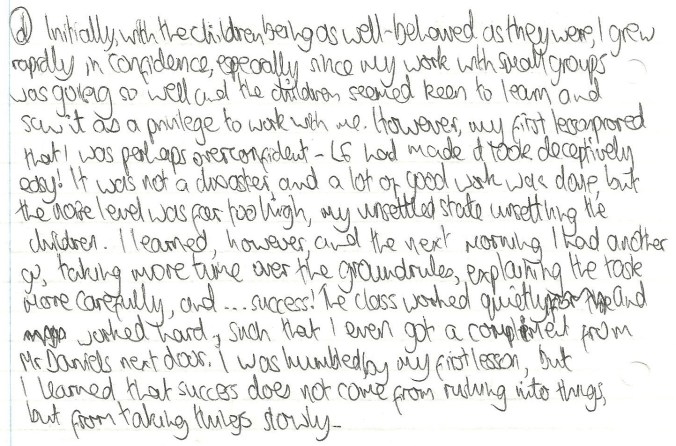
“I learned that success does not come from rushing into things, but from taking things slowly.” The first lesson wasn’t brilliant, but the second was better. I learned, very early on, that it’s okay not to get something perfectly right first time, provided you learn from it and do better the next time. This has stayed with me to this day.

My primary school experience journal ended with a series of reflection tasks. The final question was: “How do you now see yourself as a beginning teacher?” Here’s what I wrote:

future1

How I saw myself, as a beginning teacher, in 1996

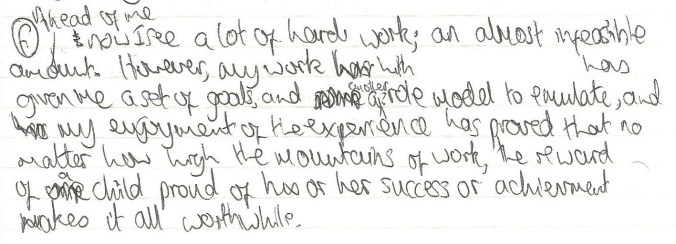
“Ahead of me now I see a lot of hard work; an almost infeasible amount. However, my work with LF has given me a set of goals, and another role model to emulate, and my enjoyment of the experience has proved that no matter how high the mountains of work, the reward of a child proud of his or her success or achievement makes it all worthwhile.”

Nothing has really changed since then: there is still nothing better than seeing a student proud of what they’ve achieved. I’m quite envious of our new trainees: they have so much to look forward to.

*****

If you’re thinking of a career in teaching, there a lots of ways to get into the profession. We run School Experience Days at Churchill where you can find out what it’s like to be in the classroom, and learn more about routes into teaching. For more details, see the “Train with us” page on the Academy website.

Alternatively, the Get Into Teaching website gives all the information you need about training to teach. There is a free Get into Teaching event in Bath on Saturday 11th November 2017, where colleagues from Churchill and a range of local providers will be on hand to answer any questions about teaching or teacher training. Click here to register.

What is a growth mindset?

One of the principles of our approach to education at Churchill is the development of a growth mindset. But what exactly is it?

img_0002-1

Growth mindset is an idea developed by Professor Carol Dweck at Stanford University in the USA. Your mindset is what you believe about yourself and your abilities. Dweck’s research into this idea – what she originally called “self-theories” – revealed that some people have what she calls a “fixed mindset.” In the fixed mindset, you believe that your qualities are carved in stone. You are born with a certain amount of ability, and that is all there is to it. Some people are better than you. Other people are not as good as you. But your abilities are fixed, and there is nothing you can do about it.

Other people, Dweck discovered, have a “growth mindset.” In a growth mindset, you believe that the abilities and qualities you are born with can be developed and cultivated through effort, application, experience and practice. With the growth mindset in place, we see challenging situations as opportunities to learn and grow. When we make a mistake in our reading or writing, we learn from it and improve the next time we come across that word or that expression. When the teacher asks a question, we think about it, and we are happy to explore it together with our classmates to help refine and develop our thinking, leading to greater and deeper understanding. The process helps us to improve. To grow. And even if we don’t know the answer right now, if we work at it, listen carefully, and apply ourselves, we will know it soon. In the growth mindset, Dweck suggests, the priority is “learn at all times and at all costs.”

The best way to understand the ideas behind mindsets is to listen to Carol Dweck herself. This video is an illustrated version of a talk she gave to the RSA in 2015, explaining some of her research and what it means for learning. Take ten minutes to have a watch – it could change your life!