As students returned this September, they have had their French and Spanish lessons in some very unusual locations across the Academy, including Art rooms and Science labs. Why? Well, because the languages classrooms don’t currently have any walls…
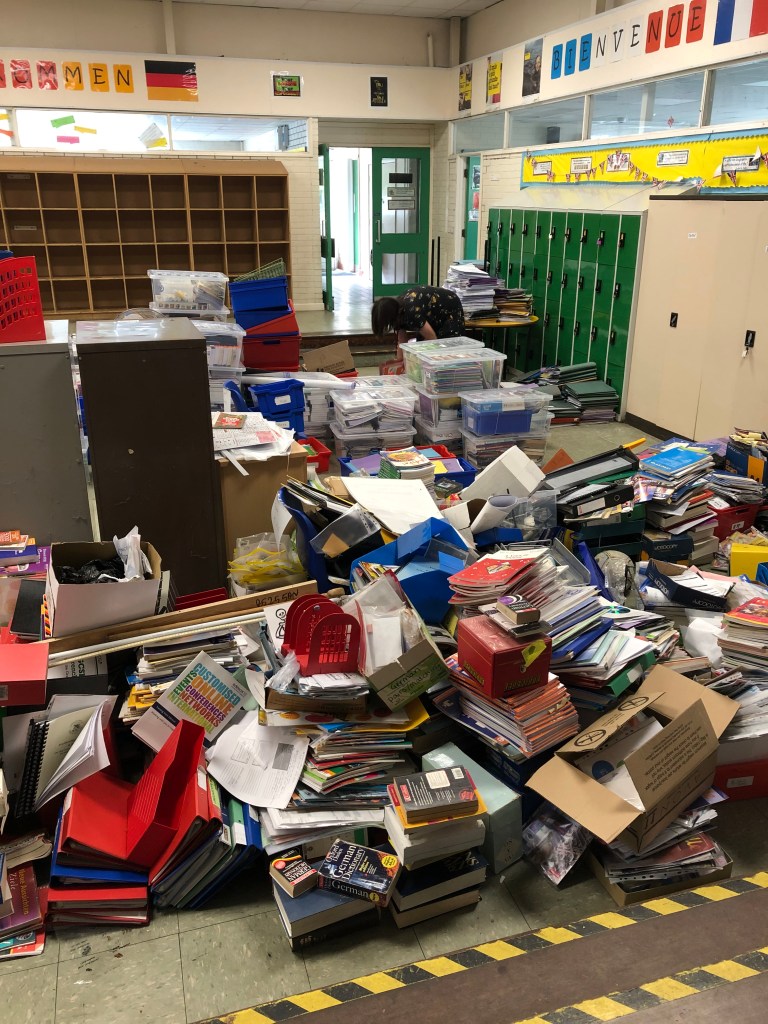
Inside the Languages Well area, last week
We have become accustomed to new, modern facilities at Churchill Academy & Sixth Form. The Alan Turing Building for Business, Computing and Social Sciences, the Athene Donald Building for Science and Technology, refurbished classrooms in English and Maths, and our new reception and administration area have transformed the learning environment. But over to the side of the Academy site, the Stuart House block remained untouched.
This aerial shot from 1970 shows the Stuart House block in the foreground
The building was added when Churchill converted to a comprehensive school in the late 1960s. Since that time, its flat roof has been replaced and the internal structure has slowly been developed – but, compared to the bright and modern facilities elsewhere, the classrooms were looking tired. They were too hot in the summer, too cold in the winter. The walls were thin and not particularly soundproof – not helpful when trying to teach languages! – and the electrics needed work. The building itself was sound, but the interior was in dire need of attention.
As a result we put together a bid for funding from the government’s Condition Improvement Fund. The plan was to leave the shell of the building intact, but to hollow it out inside and rebuild brand new, modern classrooms inside the existing structure. We submitted the bid late last year, expecting to hear back in April 2020. But then, coronavirus struck, and the decisions were delayed and then delayed again. But then, finally, at the end of June we got the news – we had got the funding!
The work will progress in phases, so that we are able to manage the project within our existing facilities. We have started with the languages end as phase one. When that is completed, we will move on to the middle of the building, before finally completing the Humanities end next year.
The Languages Department clear-out, summer 2020
Over the summer the Languages team cleared out their department. It was a de-clutter to end all de-clutters! And once everything was clear, the demolition teams could move in.
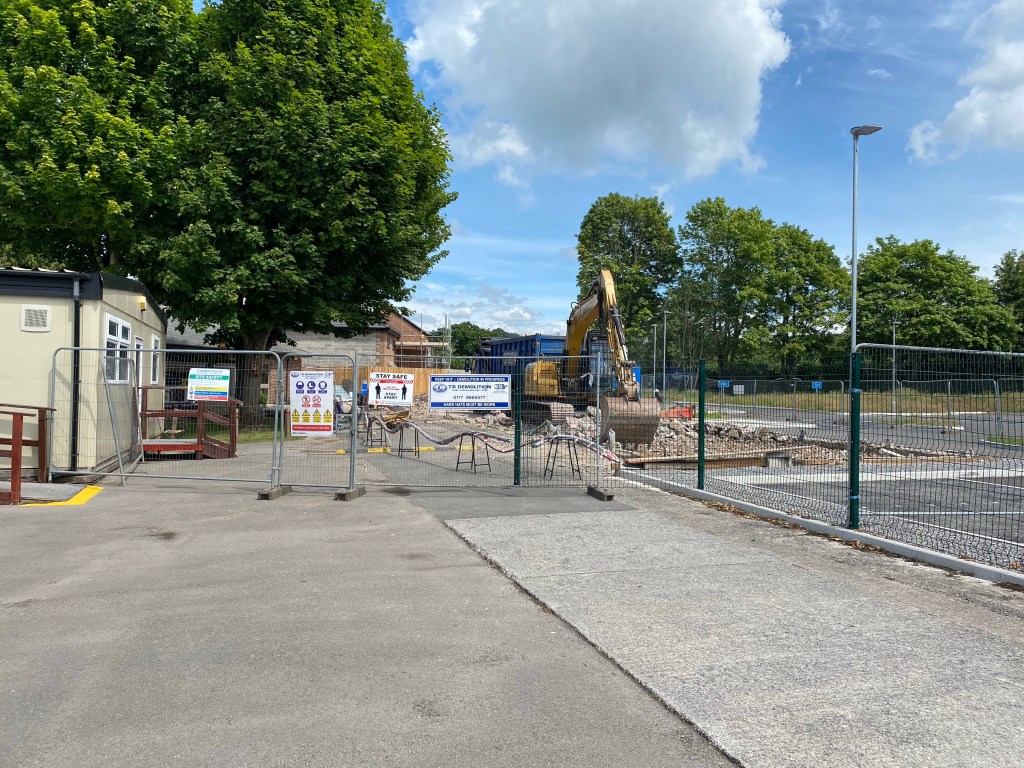
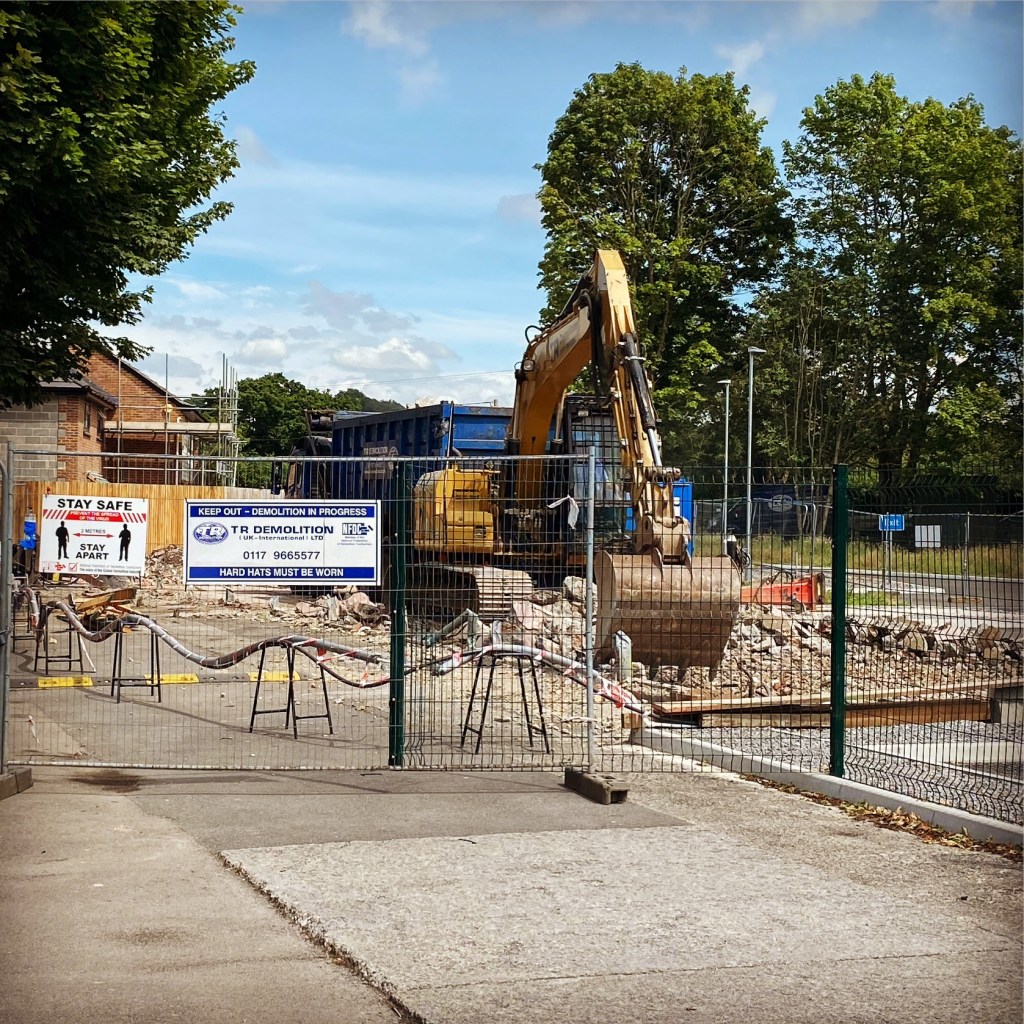
The classroom walls came down in less than a week, leaving the empty shell behind. We are now ready for the construction teams to move in, and create the new rooms our students and staff deserve. The LPod has also gone, and will not return: in its place will be two new, separate classrooms for the Humanities department. All the rooms will be built to the latest specification, with special attention paid to sound proofing, climate control and energy efficiency.
The work has also coincided with the launch of Lancaster House, and we are therefore dividing the block into two halves. The languages end, currently being developed, will be reinstated as Lancaster House area with tutor rooms and a social area. Meanwhile the Humanities end, in phase three of the project, will be home to Stuart House – again with brand new tutor rooms and a social area.
The transformation of our learning environment continues. And so, whilst the languages teachers and Lancaster House tutors are currently displaced, they know that it’s only temporary. It’s exciting to see French being taught in an Art room – but it will be more exciting still when it returns home to brand new, state-of-the-art facilities in the coming months. Magnifique!
This year’s A-level results have been the most controversial ever, by a long way. But what exactly has happened? And what can we do about it?
How were the grades calculated?
When the Secretary of State announced on 18th March that schools would close, he also announced that exams were cancelled, but that “we will work with the sector and Ofqual [the exams regulator] to ensure that children get the qualifications that they need.” Detailed guidance followed.
Teachers were asked to provide a “centre assessed grade.” In the Ofqual guidance it says: “we asked schools and colleges to use their professional experience to make a fair and objective judgement of the grade they believed a student would have achieved had they sat their exams this year.” These grades were then moderated by the exam boards, using an algorithm designed by Ofqual, to ensure that grades in 2020 were similar (or “comparable”) to previous years.
Why were teacher recommendations so high?
Some parts of the media have accused teachers of assessing too generously, or trying to unfairly boost their own schools’ results. All of this is wrong. Firstly, no data on schools’ overall results is being collected or published this year. There are no performance tables – a welcome move, which has allowed teachers to focus on what really matters: the students and their results.
But, if teachers’ recommended grades had been accepted without moderation, nationally results would have risen: there would have been a 13% rise in A-levels awarded grade A*-B, which is an “implausibly high” increase. Why has this happened?
Put simply, teachers were asked to assess what they believed students to be capable of. Real exams assess how students actually perform on the day. If a teacher believed a student was capable of achieving an A in the summer, then they assessed that student at an A. If that student had sat the real exam, they may have achieved that A. But, if there was a particularly tricky question, or they managed their time badly, or they had a mental blank in the exam, they might not have done. They might have ended up with a B. So the teacher recommended grades were always going to be higher – that was baked into the system, and it is why some form of moderation was needed.
So how did the algorithm work?
The standardisation and moderation process is explained in Ofqual’s interim technical report, published on A-level results day. The report is 319 pages long, which gives you some idea of how complex the process is. It is called the Direct Centre Performance model (DCP). In Ofqual’s own words, it “works by predicting the distribution of grades for each individual school or college. That prediction is based on the historical performance of the school or college in that subject taking into account any changes in the prior attainment of candidates entering this year compared to previous years.”
What does this mean? If we take A-level Maths as an example, the exam board would look at what distribution of grades students from Churchill Academy & Sixth Form had achieved in A-level Maths over recent years. It adjusts that distribution based on the prior attainment (GCSE and other results) of the students taking A-level Maths at Churchill in 2020, and then makes a prediction of what grades it expects to see from Churchill based on that information. The algorithm then adjusts the teacher recommended grades from Churchill to fit the “expected” or predicted distribution of grades.
This is where one of the major problems has arisen. Whilst the algorithm is actually very sensible at a whole cohort level, it forgets that individual candidates are human beings and don’t necessarily fit the statistical prediction. They can surprise us – and, as a teacher, I know that they do, every single day. The algorithm doesn’t account for which students are really revising hard, which students have really pushed themselves, which students have suddenly found a new passion and understanding for a subject…it cannot possibly do this. So, instead, it irons out the students into the distribution that the algorithm suggests, almost completely ignoring the teacher recommended grades. The consequences are explained really well by Alex Weatherall in this thread on Twitter.
I was going to wait till tomorrow but I can't.
The U grades (and other large drops) appear to be the result of a rounding issue when assigning ranked students to their grades. It'll be hard to explain via tweet but I'll try.
Please bear with me as I use a simplified example.
It also means that schools which have historically performed well at A-level are at an advantage over those which have not. So students that were recommended A* can end up with a C. And, even more cruelly, students that were recommended to pass an A-level can end up with a U grade – failing an exam they hadn’t even sat. Unfairness and injustice is baked into the system.
What about small groups?
An additional unfairness in the system is that statistical models can’t be applied fairly to small groups. In Ofqual’s own words:
“Where schools and colleges had a relatively small cohort for a subject – fewer than 15 students when looking across the current entry and the historical data – the standardisation model put more weight on the CAGs…there is no statistical model that can reliably predict grades for particularly small groups of students. We have therefore used the most reliable evidence available, which is the CAGs.”
From Ofqual’s Interim Report Executive Summary here.
If you happen to have taken a popular A-level which more than 15 students took at your school, you will have been subject to the algorithm. If your A-level choices were less popular, and fewer than 15 students took that subject at your school, greater emphasis was placed on the teacher recommended grades. Still more unfairness and injustice.
A particular example here is Maths (which a lot of people take) and Further Maths (which many fewer people take). This has resulted in many students nationally getting A-level Maths grades adjusted down, whilst their Further Maths grades go through as recommended, creating nonsensical combinations like a C grade for Maths and an A* for Further Maths.
A further inequality here is that in smaller sixth forms, you are more likely to have smaller cohorts of under fifteen taking subjects. Whereas in larger sixth forms – and especially in large sixth form colleges – cohorts are always larger than 15. Therefore the smaller the sixth form, the fewer adjustments have been made to the grades. So it isn’t even necessarily about which subjects you have chosen, but which school or college you happened to be studying them at.
What about appeals?
If you are unhappy with your grade, you have the option of mounting an appeal. This can be done if:
There is an administrative error and the wrong grade has been put into the system. [We haven’t found a single example of this at Churchill].
If your mock exam result shows that you are capable of achieving a higher grade than your final result.
At the moment, that’s it – there are no other grounds for challenging your result, unless you feel you were discriminated against. Mock exams are not the same from subject to subject, much less from school to school – they don’t always assess the full A-level content, they are much more about finding out what candidates need to focus their revision on in the run-up to the real exams than providing a solid grade. We expect mock results to be lower than final results – of course. In some cases, this route will help – but by no means in all.
The only other option open is to sit the full A-level exam in a special Autumn exam series. But who, honestly, could get a higher grade in October or November, without having been in a classroom since March? This is the longest of long shots.
So what can be done?
Currently, the government is saying nothing will change – but surely this can’t stand. The injustices are too great. I think the options are as follows:
Look again at the algorithm and improve the level of “tolerance” around the grade boundaries so that it prioritises the teacher recommendation when a student is being downgraded, especially if they are being downgraded by more than one grade, or moved down from a passing grade to a U.
Just scrap the whole thing and go back to the teacher recommended grades, like Scotland did. Although this would solve the human cost of all the disappointments, it would devalue the 2020 grades compared to previous and following years. An A grade from 2020 would simply not be worth the same as an A grade from another year. As Ofqual said themselves, the teacher recommendations on their own are “implausibly high” for all the reasons outlined above. It would solve the immediate problem – but create another one for the future.
Open up an additional appeals route for candidates who feel an injustice has been done, but whose mocks don’t help them. Again, a tempting route, but what evidence could be used to support such an appeal? In the end, it comes back to the teacher recommendation, and this route very quickly ends up the same as option 2.
My feeling is that Ofqual need to go back and look again at the algorithm, and account for the human cost of squeezing individual candidates into a statistical model that does not account for their unpredictability, their uniqueness, and their actual performance to date. They might have time to do this ahead of GCSE results next week. But, for some A-level candidates, it is already too late – their university places have gone on the basis of results from exams they didn’t even sit.
Who is to blame?
Fundamentally, this is a government decision. As Laura McInerney said in her column for the Guardian today:
“Ultimately, young people have been caught in a farce presided over by an education secretary who let an obviously problematic results day go ahead with no clear plan and no appeals process. How did that happen? Civil servants busy on Brexit? On holiday? Did the exams watchdog not have the bottle to flag problems? I can’t fathom it.
But none of these questions help the Lilys, Matts, or Aatiyahs, or any one of thousands of young people, to understand how a baffling set of grades tanked their future and they weren’t given a clear way to challenge it.”
I feel deeply aggrieved for those individuals whose futures have been decided not by their own work ethic, revision, effort and learning, but by an algorithm. We will continue to make the case that what has happened is wrong, unfair, and unjust – and hope that the government listens.
Throughout the Academy’s closure – apart from a few weeks’ pause during the total lockdown – our building contractors have been carrying on with the building of the extension to the Athene Donald Building.
The extension to the Athene Donald Building nearing completion
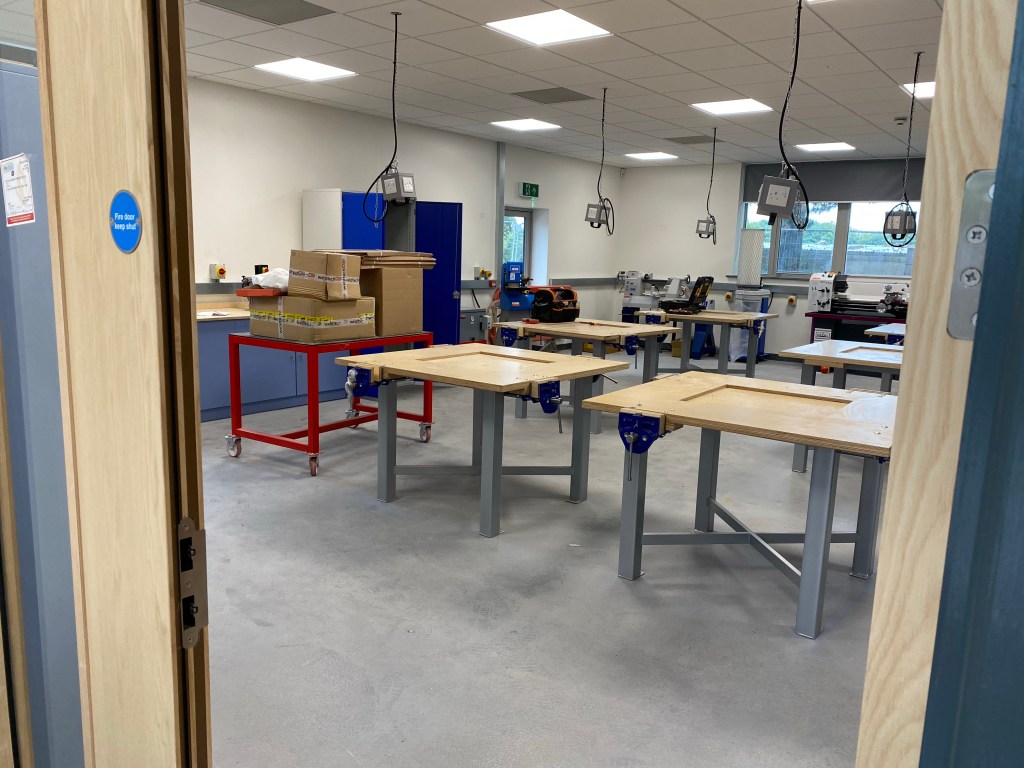
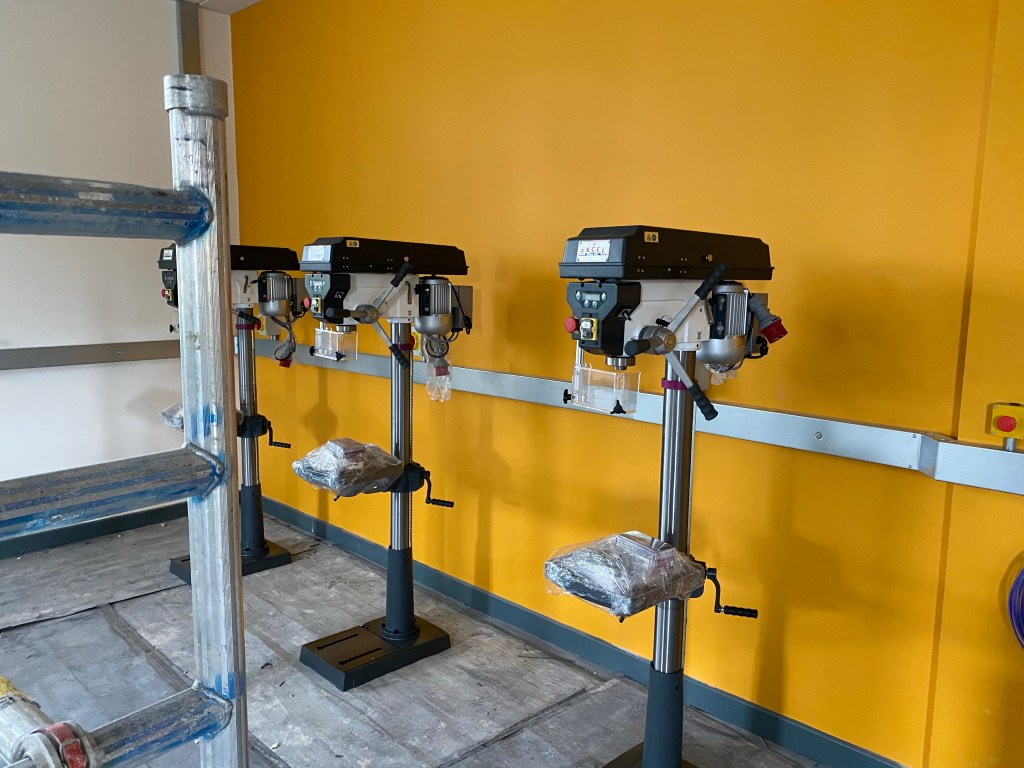
The extension, when complete, will house two brand new Technology workshops. It’s been great to be back in school for Exam Support the past few weeks, seeing the new equipment being delivered: pillar drills, saws, and machines which I don’t even know the names of!
Inside the new Technology workshops – under construction, June 2020
The rooms are really fantastic: airy and spacious, with the latest kit and great innovations like power supplies which retract into the ceiling so there’s no messy cabling to get in the way of the workshop. Our students (and staff!) are so lucky – they’re going to love it in these rooms!
Goodbye to the past
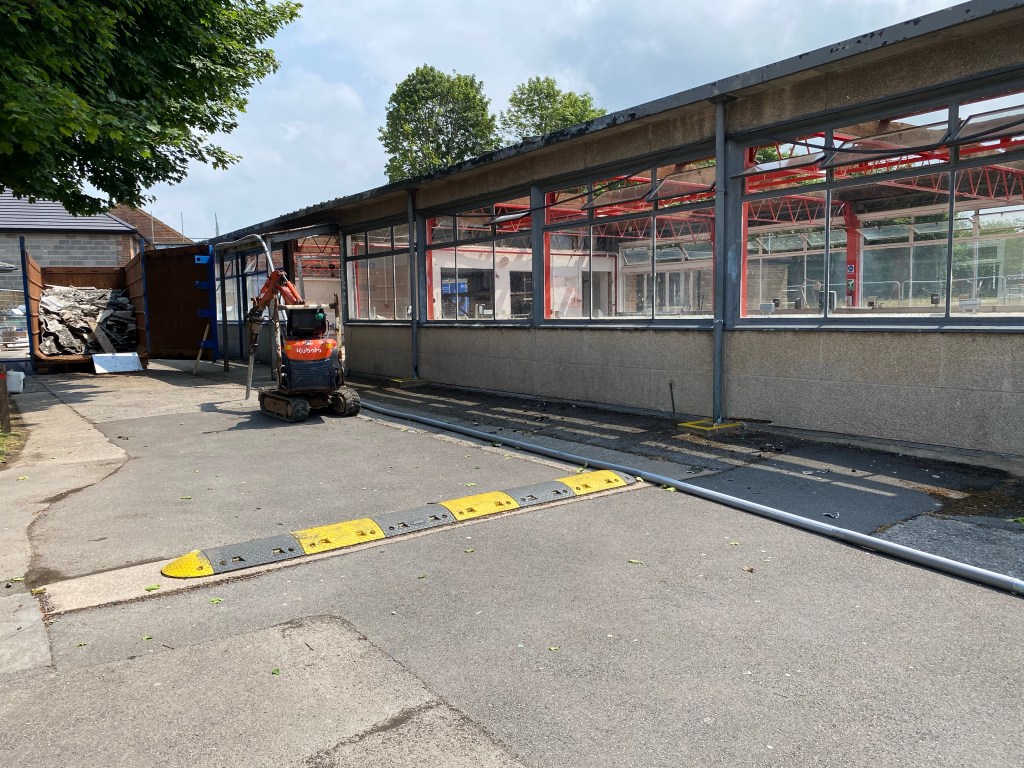
Demolition of the old Technology classrooms
Because the Academy is closed, we have been able to demolish the old Technology classrooms ahead of schedule. These rooms were the last remnants of the original 1956 design buildings, after the demolition of Tudor in spring 2019. Unlike that three-storey block, this small single-storey building was flattened in a matter of days.
The footprint of the old Technology block – completely flattened in less than a week
What’s next?
The coronavirus pandemic has delayed many things, and the 2020 round of the government’s condition improvement funding has been no different. But, just as the existing projects were being concluded, on 29th June 2020, the outcomes were announced – and Churchill Academy & Sixth Form has been successful again! This time, we have been awarded funding for two separate but concurrent projects. Firstly, over £250,000 to completely secure the Academy’s perimeter, with modern access gates and fencing to keep our students, staff and site safe. And secondly – and this is the best bit – over £1.5 million to completely rebuild the interior of what is now the Stuart House block.
This will transform the tired, dilapidated classrooms that house our Humanities and Languages faculties and Stuart and Lancaster House. The bid also includes brand new toilet facilities, social spaces, offices and meeting rooms…basically tearing down every internal wall in the building and starting again from scratch. It’s an incredible opportunity!
The coronavirus delay means that our original plan to complete the first phase of the works before September is not achievable, so there will be some disruption as the works progress in phases through the block. However, if the past few months have taught us anything, it’s that Churchill staff and students can overcome any kind of disruption and thrive!
Taking stock
Looking back over the past four years, we have successfully secured funding for:
The construction of the Athene Donald Building extension and the demolition of T21/22
The perimeter fence and access gates
The Stuart House redevelopment
The total additional investment in our site now stands at over £8.5 million between 2016 and 2020 – an incredible achievement, which will benefit generations of students to come.
Over the past week I have seen the Black Lives Matter protests sweeping across the United States and Europe. I have taken the opportunity to listen to, and learn from, the experiences and views of black and ethnic minority voices from both sides of the Atlantic.
This week, my blog is not about my voice. At this moment, the world does not need to hear from another white male in a position of authority, another beneficiary of unseen privilege. This week, I will use my blog to amplify voices that have helped my understanding, by giving me a window into an experience that is not my own.
Dave: Black (Live at the BRITs 2020)
#BlackLivesMatter: Kennedy Cook
No! You Cannot Touch My Hair
British Nigerian Bristolian Mena Fombo describes her experience of the objectification of black women, and her drive to challenge it through her #DONTTOUCH “No, You Cannot Touch My Hair” campaign
Girl, Woman, Other
Bernardine Evaristo’s novel won the 2019 Booker Prize. I have just finished reading this story of the lives of 12 characters – most of them black, most of them women – and their intertwined experiences over the course of several decades. It is sensational.
All Lives Matter?
What next?
As Headteacher of the Academy, I am pledging that we will continue to strengthen our curriculum to ensure that all perspectives and voices are represented and valued.
We will continue to actively teach anti-racism at the Academy, ensuring that we are a school which actively works to reduce inequalities and make a positive difference to our society.
Prime Minister Winston Churchill waves to crowds in Whitehall on the day he broadcast to the nation that the war against Germany had been won, 8 May 1945 (source)
In May 1945, fighting in the Second World War had continued for nearly six years. However, following the D-Day landings in June of 1944, the Allied armies from Britain, France, Canada and the United States were advancing on Berlin from the West, whilst Soviet forces were attacking from the East. Nazi Germany, surrounded, agreed to a complete surrender on 7th May 1945. Prime Minister Winston Churchill broadcast a speech to the nation to say that hostilities would cease at one minute after midnight on the 8th May 1945. That day would be a public holiday known as Victory in Europe Day, or VE day.
On VE Day itself, huge crowds gathered in the streets to celebrate. The Prime Minister and the royal family appeared on the balcony of Buckingham Palace. Such was the enthusiasm of the crowd that the royal family made eight appearances on the balcony that day to celebrate with the people. After dinner, the 19-year-old Princess Elizabeth – now our Queen – and her 14-year-old sister Princess Margaret left the palace and celebrated with the people, singing and dancing in the streets. Dressed in her Auxiliary Transport Service uniform, the future Queen avoided much notice. “I pulled my uniform cap well down over my eyes,” Elizabeth recalled in 1985. “I remember lines of unknown people linking arms and walking down Whitehall, and all of us were swept along by tides of happiness and relief.”
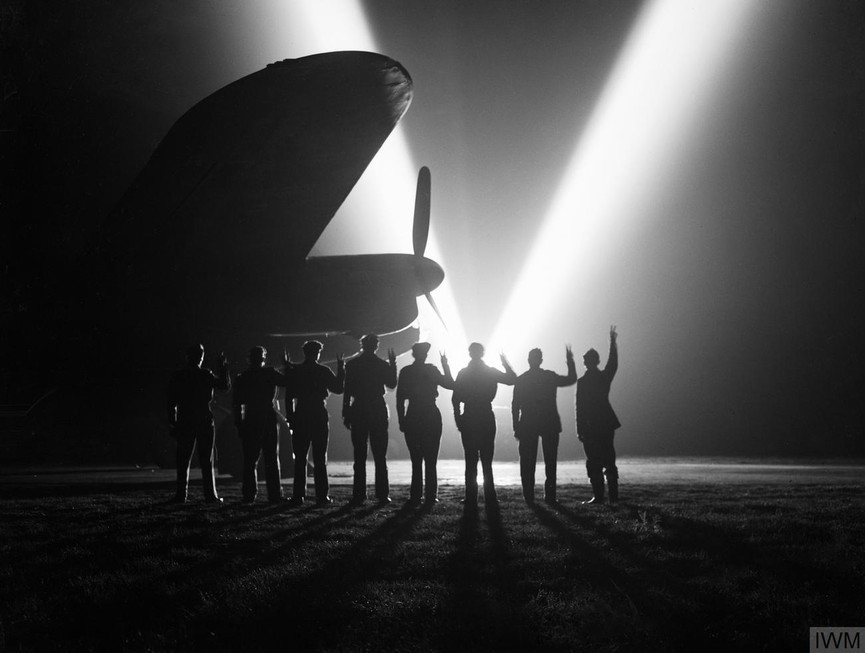
Ground crew on a RAF Bomber Command station return the ‘V for Victory’ sign to a neighbouring searchlight crew. Silhouetted is the nose of a Lancaster bomber. (source)
Despite the celebrations, the war was not over. Fighting continued in the Asia-Pacific region until the dropping of atomic bombs on the cities of Hiroshima and Nagasaki forced the Japanese to surrender on 15th August 1945 – VJ Day. By the end of the war, 18,000,000 service personnel and 45,000,000 civilians had been killed. Families had been devastated. Cities across the world were in ruins. Rationing– the control of how much food and essential commodities people could buy – continued until 1954.
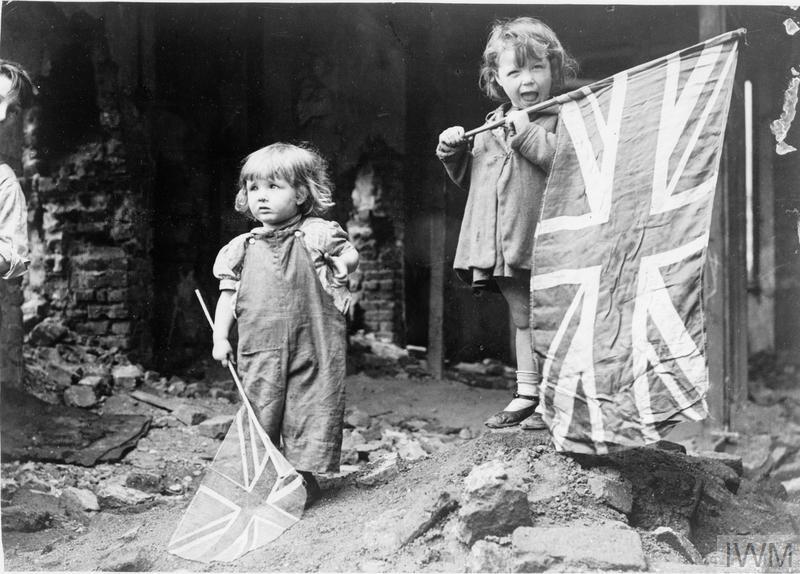
Two small girls with their flags in the ruins of Battersea, London, 1945 (source)
This year, on the 75th anniversary of VE Day, we find ourselves again involved in a collective struggle. I don’t feel comfortable with some of the comparisons between the coronavirus outbreak and World War Two. Our contribution to this effort is not to leave our homes and go off to fight, but rather – for most of us – it’s to stay at home and limit the spread of the disease, to ease the pressure for those on the front line. The virus is not going to surrender: victory will be slow and gradual. But what is clear is that, if we are to win in the battle against COVID-19, it has to be a collective effort. Success in this struggle relies on all of us working together, supporting each other, ensuring that our actions protect those more vulnerable than ourselves. We must all play our part.
So, when I stand for the two minutes’ silence on Friday morning, I will be thinking of all those heroes who lost their lives to defend our freedom and our way of life, not only in the war of 1939-1945, but on the front line of the struggle against COVID-19. I am – we are – forever in their debt.
The original logo of Churchill County Secondary School, as presented to the first Head Boy in 1957
Churchill has had four houses since its foundation in 1956. The very first school badge features the symbols of Windsor, Hanover, Stuart and Tudor on four quarters of a shield. The house structure works well splitting the Academy into smaller units, to make a big school feel smaller. Vertical tutoring is one of the unique features of Churchill Academy & Sixth Form, with students from Years 7-11 in the same tutor groups. This provides continuity of pastoral care and guidance, and encourages peer support across year groups.
When the school was first started, however, it only had 402 students on roll: around 100 students per house. Our school overall now has nearly 1600 students, with over 1300 in Years 7-11. Over the past four years, more than 150 additional students have joined our popular Academy. This means that the size of the houses has grown, with over 330 students currently in each one. We recognise that our students need and deserve a lower staff-to-student ratio, so that they can get the time and attention they all deserve. We are therefore introducing a fifth house to Churchill Academy & Sixth Form from September 2020.
Introducing Lancaster House
Our new Academy logo, to be rolled out in September 2020
The introduction of a fifth house will reduce the size of each house to a maximum of 270 students. At the same time, we will be adding four additional tutor groups to the house system. This will reduce the size of all main school tutor groups to 23 or fewer, and ensure that all students benefit from their tutor’s care and guidance whilst looking after our staff and making their jobs more manageable.
Keeping with the tradition of naming our houses after the houses of the British royal family, the new house will be called Lancaster House, after the royal house of Henry IV, Henry V and Henry VI. The new house will have the colour purple, which will be incorporated into our new pentagonal logo from September.
There is a lot of work for us to do between now and September, when Lancaster House will officially begin. We will be re-organising students and staff across the Academy into the new five-house structure. You can read my letter about the practical arrangements on the Academy website.
Although there will inevitably be some disruption as the changeover takes place, we are confident that the benefits will be well worth it. Every student will benefit from a lower student-to-tutor and student-to-Head-of-House ratio. We are also going to ensure that students in our Sixth Form retain their house identity, so that they can provide additional support to the main school houses and retain that sense of belonging to something bigger that the house structure provides.
This is an exciting time for all of us at Churchill, as we add to our existing structure to make sure that all our students have the best possible experience at school. We look forward to welcoming our Lancaster House students in September 2020!
The Holocaust (The Shoah in Hebrew) was the attempt by the Nazis and their collaborators to murder all the Jews in Europe. The Nazi Party persecuted Jews throughout their time in power, victimising them and whipping up hatred based on their anti-semitic beliefs. After the invasion of Poland in 1939, Nazis forced Jews to live in confined areas called “ghettos,” in squalid and unsanitary conditions.
Jews being held at gunpoint by Nazi SS troops in a Warsaw ghetto in 1943
Jews were subject to further persecution, removal of rights, forced labour and violence as the Nazis swept across Europe and Russia. In 1941, emboldened by their progress, the Nazis began a programme of systematic murder of Europe’s Jews. Death squads called Einsatzgruppen swept Eastern Europe and the Soviet Union, killing Jews by firing squad. By the end of 1941 the first extermination camp, Chelmno in Poland, had been established. These camps, including Auschwitz, Treblinka, and others, enabled the Nazis to commit mass murder throughout the rest of the Second World War.
Jews on the selection ramp at Auschwitz II, c. May 1944. Women and children are lined up on one side, men on the other, waiting for the SS to determine who was fit for work. About 20 percent at Auschwitz were selected for work and the rest gassed
By the end of the Holocaust, six million Jewish men, women and children had been murdered in ghettos, mass-shootings, in concentration camps and extermination camps.
Churchill students visiting Auschwitz to learn about the Holocaust during Activities Week 2019
I find the idea of the Holocaust unbearable. The fact that human beings – actual people – could be so inhuman in the treatment of others, is shocking. I will never forget my own visit to the Dachau Concentration Camp memorial site. I went when I was in Year 12, on a German exchange, with my German host family. The father of the family openly wept as we walked through the memorial, confronted by horrific images of the atrocities committed there, by Germans, just a generation before. I remember thinking at the time that the lessons learned from the horrors of the Holocaust must never be forgotten.
This year marks the 75th anniversary of the liberation of Auschwitz. In recognition of this event, Holocaust Memorial Day on Monday used the theme of “Stand Together.” In the years leading up to the Holocaust, Nazi policies and propaganda deliberately encouraged divisions within German society – urging ‘Aryan’ Germans to keep themselves separate from their Jewish neighbours. The Holocaust was enabled by ordinary citizens not standing together with those people targeted and singled out as “others.” We can – and we must – do better.
Today there is increasing division in communities across the UK and the world. Now more than ever, we need to stand together with others in our communities in order to stop division and the spread of hostility in our society, because the horrors of the Holocaust can never be allowed to happen again.
I had a good chat with Year 11 during lunchtime last week where we discussed our thoughts on the latest – and last – film in the Star Wars story. These films have been around my whole life. The first one came out when I was three years old. I can remember going up to London to watch The Return of the Jedi in Leicester Square in 1983 for my younger brother’s birthday treat. The multiplex there had the full surround sound experience which had not yet reached our local cinema, and the experience of hearing the speeder bikes zooming past from behind me in my seat blew my mind! Anyone who has been into my office will know that my collection of Star Wars Lego has pride of place on a special shelf. So it was with some anticipation that I went with my family to watch Episode IX over the Christmas break. And I have some thoughts about it. This might seem an odd topic for a Headteacher’s Blog, but bear with me – it is relevant!
Before we go any further, this blog will be FULL OF SPOILERS. I am writing it assuming you have seen The Rise of Skywalker and you know what happens and what is revealed – or that you don’t care. If you haven’t seen it and you’ve avoided spoilers so far, come back and read this when you’ve seen the film.
Last chance…spoilers below…
Right, let’s begin.
Firstly, I enjoyed The Rise of Skywalker. I thought the action scenes were amazing, and I liked the adventure. The lightsabre duel in the wreckage of the Death Star in the same location as Luke and Vader’s duel in Return of the Jedi was brilliant. Flying Stormtroopers? Loved it. Leia’s death? Perfectly judged. There were a few plot holes, for sure, but the whole thing rattled along like a good old sci-fi adventure film should. But I did feel let down by one thing (and here’s the major spoiler, last chance to bail out of this blog now!): the revelation that Rey is the granddaughter of Emperor Palpatine.
Here’s why I have a bad feeling about this.
I understand that The Last Jedi wasn’t everyone’s cup of tea, but I loved it. It managed to do that incredible thing of doing something completely unexpected within a franchise where everyone thought they knew the rules. Back in the original trilogy, The Empire Strikes Back did exactly the same thing. That completely iconic, legendary moment in Cloud City where Darth Vader reveals to Luke Skywalker: “I am your father.” It’s been imitated, parodied, copied and quoted so often since that it’s sometimes difficult to remember what a complete rug-pulling surprise that revelation was at the time. It was so significant that George Lucas eventually devoted three prequel films to showing how young Anakin Skywalker came to be the evil, masked Sith Lord who had also fathered the Jedi twins, Luke and Leia.
“No! I am your father.” The moment that changed everything.
This was the moment that defined the films for many people. It has entered folklore. And when the new, Force-sensitive character of Rey was introduced in The Force Awakens, with mysterious unidentified parents who had disappeared, it was natural that many assumed that she was descended from some Jedi parentage too. It made sense. It played into the established mythology of Star Wars. How brave, then, how brilliant, how unexpected was the revelation in The Last Jedi that she wasn’t, actually, related to anyone special at all.
In the climactic scene in the ruins of Snoke’s throne room, Kylo Ren asks Rey “do you want to know the truth about your parents? Or have you always known?” In a brilliant performance from both Adam Driver and Daisy Ridley, Rey replies: “they were nobody.” Kylo Ren confirms: “they were filthy junk traders. Sold you off for drinking money…you have no place in this story. You come from nothing. You’re nothing.”
Every time I watch this scene I get the same shiver as when Darth Vader reveals he’s Luke’s father. It’s such an amazing twist: you don’t have to be related to anyone special to be a powerful Jedi. Because, by the end of the film, despite coming from nothing, Rey is single-handedly rescuing the resistance from the stronghold on Crait by lifting an entire rockfall with the Force. She’s nobody – but she’s incredible.
“The Force is not a power you have. It’s not about lifting rocks.” But then again…
Of course, this is how the Jedi are supposed to be. Anakin Skywalker broke the Jedi code by marrying Padme and fathering children. Jedi weren’t supposed to marry. Therefore Luke and Leia were the exceptions in inheriting their abilities from a parent – every other Jedi was just “discovered”, like Rey, with Force abilities coming “from nothing.” The director of The Last Jedi, Rian Johnson, underlines this point in the very final scene of the film.
In this scene, a group of children on Canto Bight have been re-enacting Luke Skywalker’s last stand in the Battle of Crait. They are literally no-one: no parents, working as slaves in the stables of the oppressive casino-city. In the final scene, one boy steps out of the stable to sweep the floor. In a brilliant moment, he uses the Force to move the broom from its resting place into his hand. He is no-one, but he can use the Force – just like Rey. As the camera sets him against the starry sky, the broom becomes a lightsabre and this unknown, not-special, not-Skywalker child becomes the symbol of hope, the future of the resistance and the Jedi. It’s the perfect ending and the perfect message: you don’t have to be anyone special to be a hero.
Given how much I loved this aspect of The Last Jedi, I was pretty frustrated when Kylo Ren – yes, the same Kylo Ren who told Rey her parents were filthy junk traders – does a complete one-eighty in The Rise of Skywalker and tells her that actually, her parents (presumably just one of them?) were the children of Emperor Palpatine and he’s known this all along and, presumably, was just kidding in the previous film. Emperor Palpatine, who was never seen in the company of a woman, who trusted nobody, who lived a secret double life as a Sith Lord…who did he have this child with? And when? And why has it never been mentioned or even hinted at across eight other films?
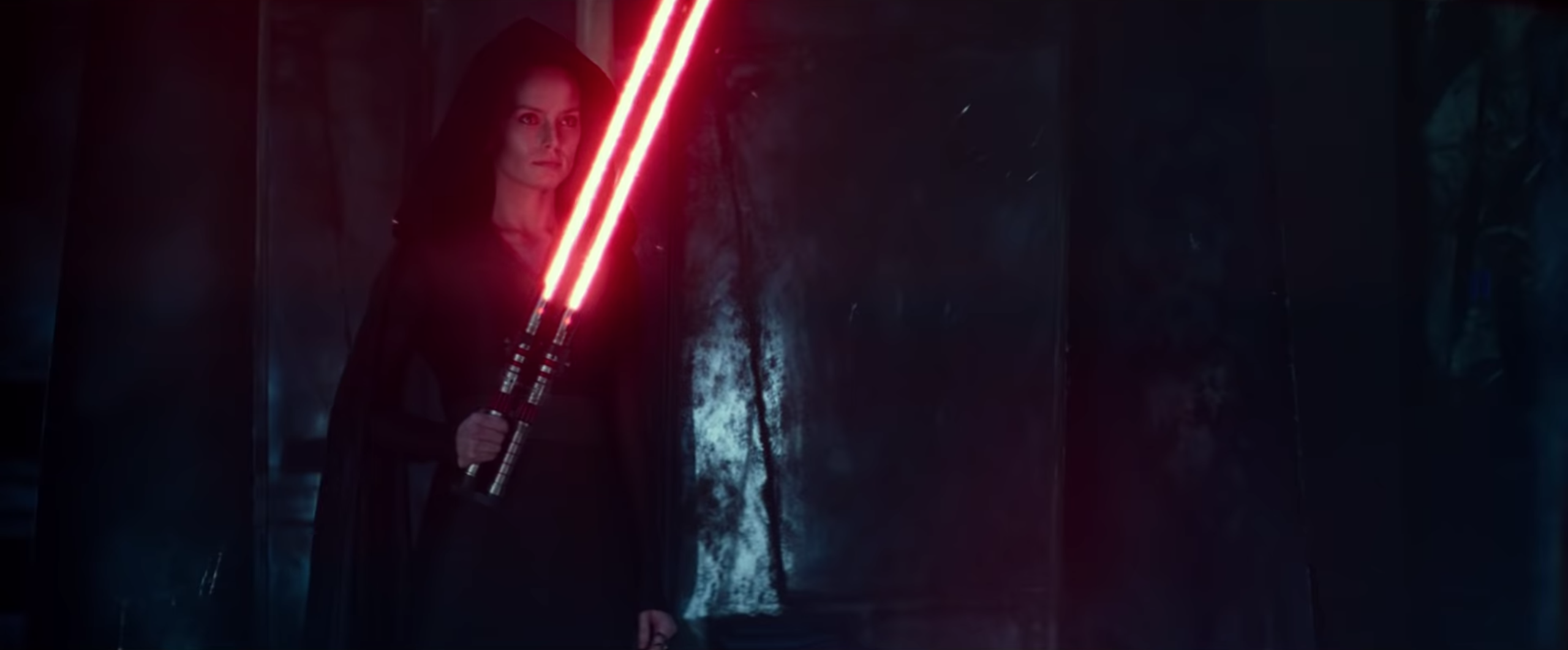
“Dark side Rey”: we all have a dark side. We don’t need to be related to a cackling source of pure evil to wrestle with the good and bad inside us.
It’s as though it was impossible for Rey to have such powerful Force abilities unless she was descended from someone “important.” But, as I’ve previously argued, I don’t think Yoda’s parents were anyone special, nor Obi-Wan Kenobi’s. Nor Qui-Gon Jinn’s, or Mace Windu’s, or anyone really except Luke, Leia, and Leia’s son Ben Solo/Kylo Ren. It’s as though all the work done by The Last Jedi to establish that strength is who you are, not where you’re from, is just ripped up and discarded in favour of “you can only be powerful if you’re descended from a powerful family.”
So, whilst I enjoyed The Rise of Skywalker, I was a lot happier with the message of the Star Wars universe from The Last Jedi: you don’t have to be anyone special to be special. It doesn’t matter who your parents, or your grandparents, are. It doesn’t matter if you’re born a princess or a junk trader, a stable boy or a farmer: what’s inside you makes you special. Finding that thing that makes you special, nurturing it, training it, and being honest with yourself about your strengths and your weaknesses – these are the things that will lead you to be the most powerful version of you that you can be.
This is the philosophy that guides me as a teacher, and as a school leader: every single one of us is special. It doesn’t matter what your family background is, where you come from, or your previous history. We all have the capacity to do incredible things, and to change the world around us. We just need to believe in ourselves, and have the right teacher to guide us.
As the clock ticked over to midnight on New Year’s Eve, we bid goodbye to the 2010s (the teens?) and welcomed in the 2020s. It feels like the future has arrived! Over the past decade I’ve worked in three schools, moved house twice, had a book published, appeared on TV, and – of course – been appointed as Headteacher of Churchill Academy & Sixth Form.
Mrs McKay reminded me that Monday marked the fourth anniversary of my first day at Churchill in January 2016! Since then our school has seen some big changes:
The number of students at Churchill has risen from 1430 to 1581. We have an additional 151 students on our site compared to four years ago
The Sixth Form has grown from 256 to 276
Level 3 Value Added scores for Sixth Form outcomes have risen from +0.02 in 2016 to +0.17 in 2019
The proportion of students gaining a strong pass (grade 5+) in English and Maths GCSE has risen from 52.3% in 2017 to 54.8% in 2019
The Academy has a new vision – to set no limits on what we can achieve – and we have introduced our values of kindness, curiosity and determination.
The Athene Donald Building, the Alan Turing Building, new main reception and admin, new staff and sixth form car park, “The Tower,” the Broadwalk, and refurbished classrooms in English and Maths have transformed the site and the learning environment.
Taking stock of all that, I feel very proud of what we have achieved together in four years. We are now developing our planning for the next five years, looking ahead to the next phase of the Academy’s progress and development. The future looks bright!
Happy New Year to everyone in the Churchill Academy & Sixth Form community.
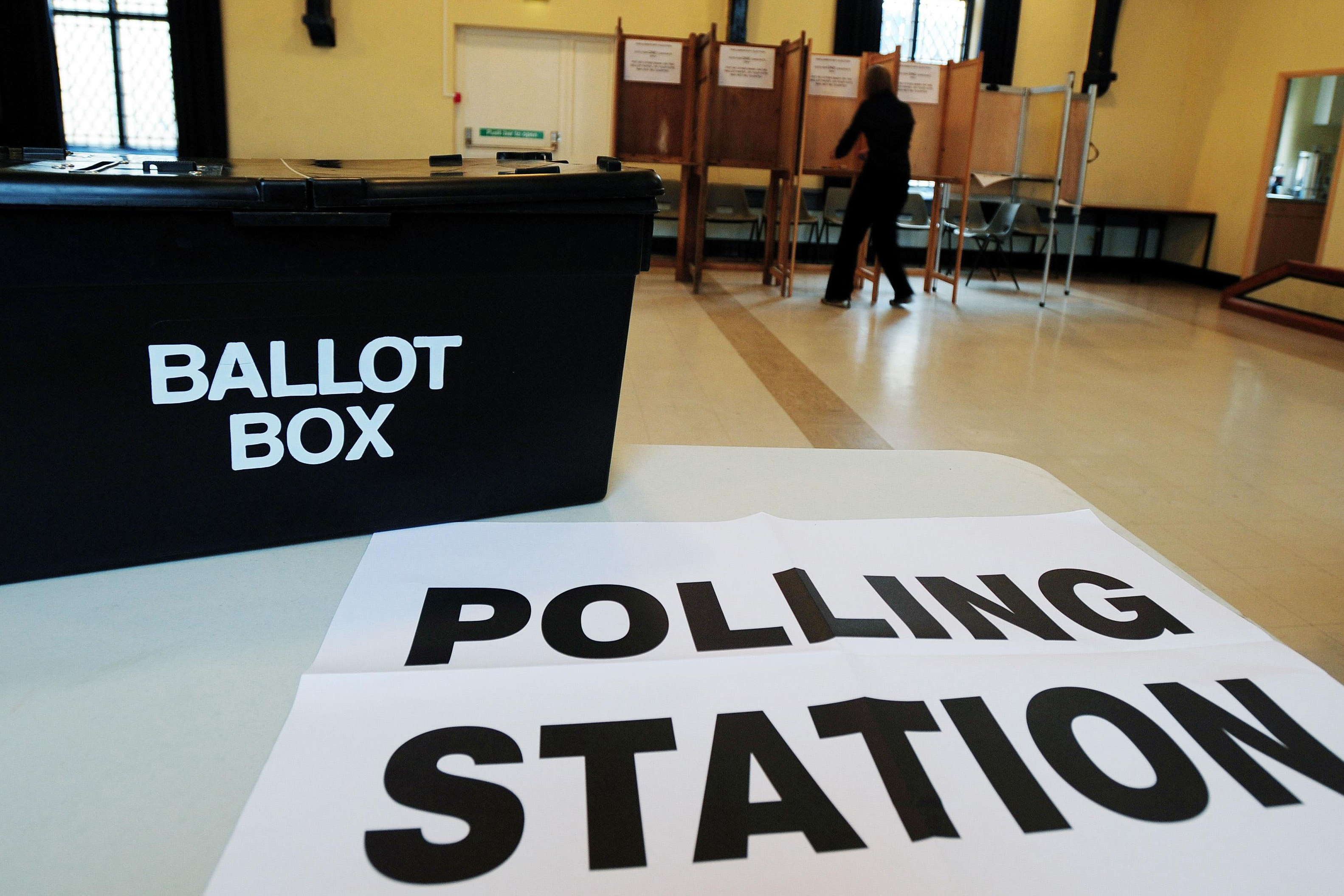
This week the nation goes to the polls once again to vote for our local representatives in parliament. It has been a tense, confusing and frustrating period since the last election, with Brexit dominating the political scene and frequent turmoil in the House of Commons.
Schools and teachers have a responsibility to remain politically neutral – especially during an election season. This is right and proper. We serve a diverse community which includes the full spectrum of political views. Our role is to educate children and young people so that they can make informed choices about their vote when they are old enough to exercise that right. We aim to give our students the critical skills to be able to see through “fake news” and false claims made on any side of the argument, to get to the facts and the verifiable sources which provide reliable, objective information. In the current world of rapidly evolving social media stories, this can be a challenging task – but it is a vital one if our democracy is going to survive and flourish in the future.
Further than that, we must then educate our young people so they know what to do with the facts, once they have disentangled them from the noise of opinion online. What are the implications of the parties’ policies for their lives? What are the implications for their futures? What sort of society do they want to live in? What values do they hold, and who do they want to represent those values in parliament?
School funding
Education funding was a major issue in the last election
One issue that it is my duty to highlight – as you might expect! – is education policy. I hope that parents and members of the Academy community take education into account when casting their votes on Thursday. In the last election, which was only in May 2017, school funding was a significant issue – as I highlighted in my blog post at the time. All of the major parties have included pledges to raise school funding in their manifestos this time, which is certainly welcome – but, as I indicated above, the facts behind the claims are always worth exploring. Websites such as the School Cuts site show what the implications of the different parties’ manifestos would be for the funding of individual schools across the country, including Churchill. Above all, I hope that whichever government is elected works with the education profession, trusting schools and school leaders to make the right evidence-informed decisions in the interests of all children and young people.
Casting your vote
I have voted in every election since I was old enough to do so. I take the responsibility of casting my vote very seriously – I always read the manifestos (especially the education sections!) and research my local candidates. I want to make the most informed decision possible, and I vote not only in my interest but in the interest of all the students and teachers I am responsible for at Churchill. We are very lucky to live in a democracy where we have a free choice to make for our local representatives. I will be watching with interest on Thursday and into Friday as the results roll in, to try and see what the future holds…until the next election!











 Keeping with the tradition of naming our houses after the houses of the British royal family, the new house will be called





 The Headteacher's Blog