Behaviour for learning

08_Chapter 8 Figure 3

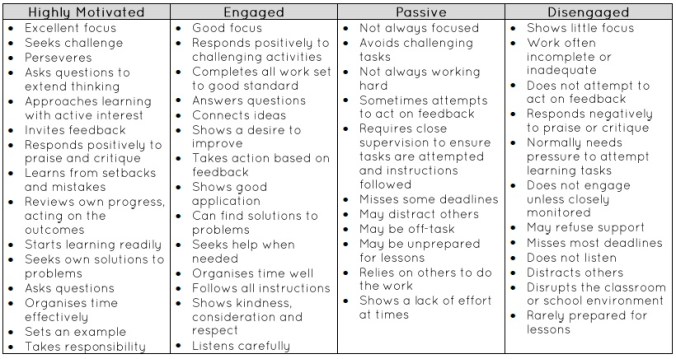
Churchill Academy & Sixth Form’s Attitude to Learning Scale

This year at Churchill we have made behaviour our number one priority. We wanted to build on our already high standards to ensure the very best behaviour and conduct from all our students, all the time.

In March this year the government published an independent review of behaviour in schools. The report’s author, Tom Bennett, says:

“A student’s experience in school remains one of the most insightful indicators of later life success in any one of a number of metrics. For many it is the best chance they will ever have to flourish. How they conduct themselves at school is crucial to that experience. Helping them develop good behaviour is therefore one of the most important tasks a school faces…

…Whatever one believes the aims of education to be, all of [them] are best realised in schools where good behaviour is the norm, and antisocial, selfish, or self-destructive behaviour is minimised.”

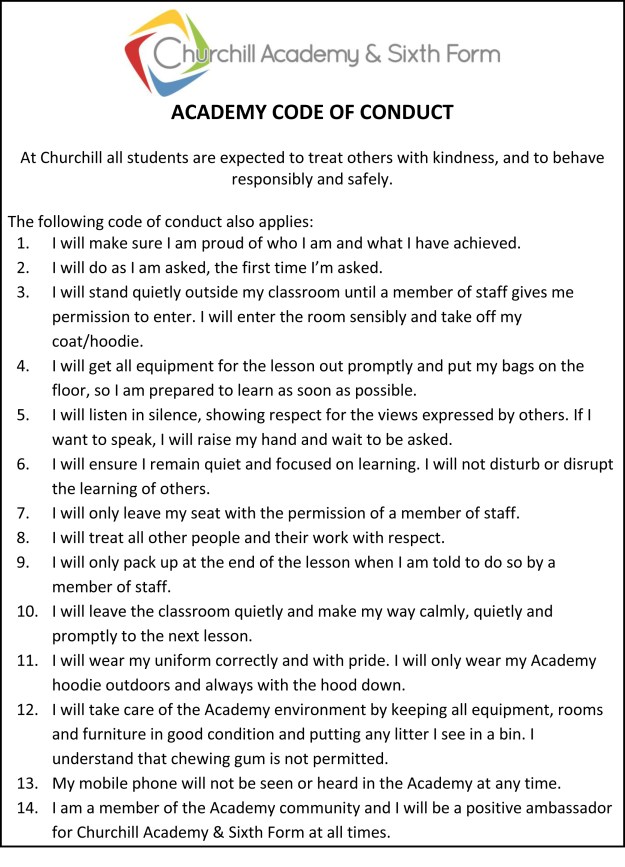
It’s hard to argue with Bennett’s conclusions. Here at Churchill we believe that good behaviour is the foundation upon which a successful education is built. It’s a minimum expectation that students at Churchill will be polite, well-mannered, and tolerant, but we expect not just compliance but active participation in learning and taking responsibility for the choices they make. That’s why we use the Attitude to Learning Scale (pictured above) alongside the Code of Conduct (below) to help our students understand our expectations of them.
ACADEMY CODE OF CONDUCT final-1

Churchill Academy Code of Conduct

The Code of Conduct lays out our expectations of student behaviour in, around and beyond the Academy; the Attitude to Learning Scale helps students understand the things they need to do in lessons to ensure they are making the most of their opportunities to learn and make progress.

Each subject reports on Attitude to Learning in every progress check, but teachers can now reward students for demonstrating “Highly Motivated” attitudes in lessons at any time through our new rewards system. Similarly, whilst students may receive concerns for breaking the Code of Conduct, we are now placing an increased emphasis on giving rewards to those who consistently meet or exceed our expectations. Our aim is to use this positive reinforcement to ensure that those students who behave well consistently are recognised for their part in building a culture where exemplary behaviour and attitude to learning is the norm. It is this interplay between behaviour and attitude to learning that ensures the best chance of success in school.

Our staff and students have responded brilliantly to this new focus. Since the start of the term, our 1481 students have been awarded a staggering 8335 reward points for attitude to learning alone, alongside over 2000 for excellent classwork and homework and 1148 for demonstrating our values of kindness, curiosity and determination or making a contribution to Academy life. In total, across all categories, our students have been awarded 12,794 reward points in three weeks!

It’s safe to say it’s been a good start to the year.

How families can support learning

F44A9719

Welcome back to another new school year! Our students have made an excellent start and they are ready to learn and raring to go. This year we are taking our next steps in developing the learning culture at the Academy, focusing on students taking responsibility for their own learning, progress, attitude and behaviour. As part of this, there are three key strategies families can use to support students’ learning at home.

F44A1091

  1. Praise the process, not the product

Research shows that praising children for their intelligence – “you’re so clever!”, “wow, you’re so great at Maths!” – can actually harm their motivation by making them believe that they should find the work easy. Instead, when your children get great results or do well, try something like: “that’s great – can you tell me how you did it?” This is more helpful as it will provoke a conversation around strategies, techniques and approaches, showing that your interest is not so much in the product as the process. Instead of saying “you’re so good at English/Art/Science” and so on, try “you’ve really pushed yourself on this project – it’s great to see you working so hard at it.” Instead of “you’re so clever/brilliant/wonderful,” try “I’m so proud of the way you’ve put your time and energy into this,” or “we’re so happy to see that you persevered with this – it was worth all that effort, wasn’t it?”

F44A0292

  1. Embrace struggle

We have an instinct to rush to praise when children “get” something quickly or produce perfect work first time. However, if students find something quick and easy to grasp, the likelihood is that they either knew it (or something very like it) already, or that the level of challenge was too low. Try asking your children after they get home: “what did you find difficult today?” Praise children when they struggle, because that shows that they’re trying, pushing themselves to do something difficult. That’s the attitude we encourage. Seek out challenging tasks for your children to do, and challenging texts for them to read, to reinforce the message that we give in school: if you’re finding it easy, you’re not learning anything. If you’re struggling, you’re learning.

F44A0895

  1. Use the power of “yet”

“Yet” can help when students fail, or when they are in the midst of the struggle to master a new and challenging concept. “I can’t do it,” or “I’ll never get it,” or “I’ve never been able to do this,” can be turned around with “…yet.” Learning is a process, and students are always on an upward curve. If they can’t do it today, they’ll have to try again tomorrow, perhaps coming at it from a different angle or using a different strategy. As Thomas Edison famously said: “Our greatest weakness lies in giving up. The most certain way to succeed is always to try just one more time.” If you struggled with Maths or languages or spelling at school, by all means share that struggle with your children, but share it with the determination that they will be able to conquer it if they apply themselves and get the help and support they need – giving up is not an option.

I’d like to thank our families for all the support you give to Churchill’s students and to the Academy as a whole. We couldn’t do it without you!

What I believe about education

F44A9401

Over the past couple of months we have been doing some deep thinking at the Academy about our purpose, our beliefs, and our values. There will be more to follow on this blog about the conclusion of that work, but this week I thought I would share with you some of what I have come to believe about education.

1. Learning

I believe that we should learn at all times, and at all costs.

2. Growth

I believe that we can all improve through effort, deliberate practice, the right attitude and an effective approach.

3. Attitude

I believe that we should build the best attitudes and behaviours for learning to enable achievement.

4. Wellbeing

I believe that achievement, progress and success bring well being and should not cost us our well being.

5. Opportunity

I believe that through taking part and making the most of the opportunities presented to you, you make the most of yourself.

And that’s it: five beliefs about education that we are using to shape the Academy’s values, vision and approach. Keep reading The Headteacher’s Blog to find out more about how we are implementing those beliefs across the school.


Smarter Spaces: colour for learning

03 09 17

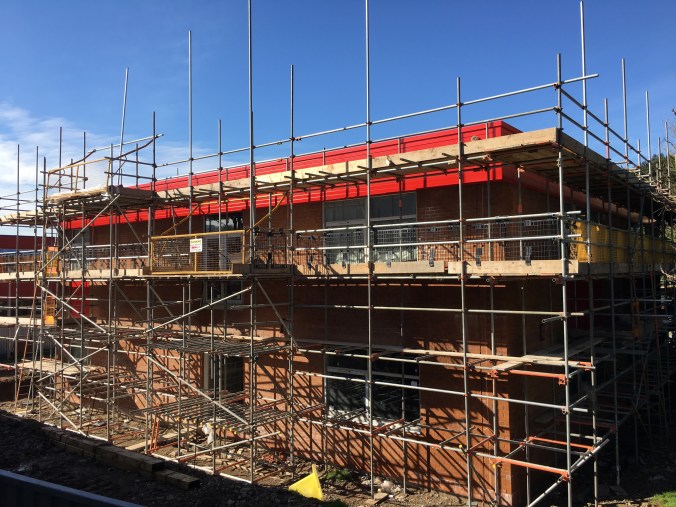
As you will have seen from our newsletter, our new Business Studies and Computing building is nearing completion. As part of this project, we have been working with Smarter Spaces, an education project arm of Dulux, to design the colour scheme for the building’s interior.

Smarter Spaces HD Logo

Smarter Spaces aims to help teachers and children thrive by enabling schools to design building environments to support better teaching and learning. Central to the approach is that teachers and children are involved in design, so they take more pride in their school.

Our students, with the help of Mr Smith and Mrs Foster from the Academy and Yusuf Alharrari  from Smarter Spaces, have been working on the design brief for the interior of the new building since July 2016. The rest of this blog has been written with their help to show you what they’ve done!

The Smarter Spaces Project (by the Smarter Spaces Team)

We came up with the following objectives:

  • We needed to understand what colours had to feature in the new building so it still fitted into the rest of the school
  • We needed to work with Dulux’s Colour Advisor to create two colour schemes
  • We needed to vote on which colour scheme we wanted to use
  • We needed to work together to select what colours to go in what rooms

Factors to consider

  • Needs to fit into the feel of the school
  • The new build will be Tudor House, so Tudor’s red needs to feature in the building
  • We needed to choose colours that would go with the red and with each other
  • It needs to be easy to maintain
  • This is our legacy – what we design now will be passed down to students who come to Churchill for years to come.

We then met with a colour consultant from Smarter Spaces to work on a design that fitted the brief.

Tudor Red

We decided to make the interior doors Tudor red, so that the building had a clear house identity. We also made the trim grey, which is easy to maintain and matches the outside of the Hall.

Red and Grey

The “Teaching Wall”

Inside the classrooms, our Colour Advisor explained that research has shown that the “teaching wall” (where the screen and whiteboard are situated) should be a bright colour, so that attention is drawn to it. The other walls, meanwhile, should be a neutral colour. We also learned that walls should be painted in a single block colour so they are easy to maintain and so that they don’t distract attention from learning.

Choosing a colour palette

Following our brief, the Colour Advisor came up with sets of colours which would work with the red doors and grey trim. Option 1 was bright and exciting, because we told Dulux we wanted our school to be bright and energetic.

Option 1a

Option 2 was fresh and vibrant, because our school is in the countryside and surrounded by nature.

Option 2

We voted – and Option 1 won (just)!

 Choosing the colours for the rooms

Once we had chosen the colour palette, we had to select which paint would be used for the teaching wall in each room. We used the architect’s floor plans to work this out.

groundfloorfirstfloor

Smarter Spaces then helped us to create a visualisation of what this might look like when the building was finished:

This slideshow requires JavaScript.

We presented our work to the Senior Teachers at the school – and they loved it! We can’t wait to see it in reality when the new building opens this summer.

Thank yous

As an Academy we are very grateful to Smarter Spaces for working with us, and for donating the paint to the project as part of the deal! They have been fantastic partners to work with and they have helped us to understand the design process, the importance and impact of colour, and to create a legacy for future generations of Churchill students.

Prepared by the Smarter Spaces Team:

  • Molly Ebdon (WRO)
  • Courtney Evans (SNM)
  • James Goodyear-Evans (TPOC)
  • Alfie Laws (WVP)
  • Rowan Vine (HFH)
  • Charlotte Wilkinson (TMR)
  • Charlee Beach (HLCB)
  • Paige Evans (TMB)
  • Katie Ward (SASH)
  • Mr Smith
  • Mrs Foster
  • Yusuf Alharrari from Smarter Spaces

Thank you!

A letter to your younger self

Here at Churchill, we spend a lot of time with students asking them to think about their attitude and approach to learning. The aim of this reflection and work is for the students to refine their behaviours so they are the most effective learners possible. As part of this process, one teacher asked their Year 11 Economics class to reflect on what they’d learnt over the past year, especially from the mock exams they had completed before Christmas. The teacher asked the group to write a letter to a year 10 student, or to themselves a year ago, giving them the benefit of their additional year’s wisdom.

This is one student’s response:

“To a year 10 student

Here are a few tips I would suggest to a younger me I guess:

Firstly, recap what you learn during lessons at the end of the week or sub-topic.  In particular in unit 2 keep reminding yourself of fiscal, monetary and supply-side policies because that’s what I struggled with the most.

Secondly, don’t stop trying to improve your skills in answering questions.  In years 9 and 10 I was working at a solid F grade and I no longer tried because I thought it was hopeless, but at the start of year 11 and over the summer I did a lot of revision and just got my mock back with a B (1 off an A) which shows if you work hard you are able to improve.

Lastly, don’t stress about the information during lessons if you don’t get it, because you can put in extra time another time.”

This message – “if you work hard you are able to improve” – is the cornerstone of the growth mindset approach we are working hard to cultivate at Churchill. It’s fantastic to hear this is paying off for this particular student. I hope that others take heart from their advice and take the same approach!

What advice – if you could! – would you give to your younger self?

Assembly: Grit and Flow

As the students came into the hall for my assembly this week, they were treated to a video of violin virtuoso Itzhak Perlman performing Antonio Bazzini’s La Ronde des Lutins (the dance of the goblins). He makes this fiendishly difficult piece of music, full of extended passages of rapid double stops, artificial harmonics and left-hand pizzicati seem easy! This astonishing performance establishes the concept of “flow” at pretty much its zenith.

Flow

Flow is being able to do something well. So well, it seems almost effortless. Perlman manages to make this most challenging of pieces in the classical violin repertoire seem like a breeze, remaining seated, flourishing his bow, enjoying the performance.

My second illustration of "flow"

An illustration of “flow”

How, then, should we go about achieving this state of flow? Counter-intuitively, to achieve this apparently frictionless and smooth process, we first need to apply “grit” to give us traction.

Grit

Psychologist Angela Duckworth has spent her career studying the quality of “grit” and how it contributes to higher achievement. She says:

We define grit as perseverance and passion for long-term goals. Grit entails working strenuously toward challenges, maintaining effort and interest over years despite failure, adversity, and plateaus in progress. The gritty individual approaches achievement as a marathon; his or her advantage is stamina. Whereas disappointment or boredom signals to others that it is time to change trajectory and cut losses, the gritty individual stays the course.

“Grit” is perseverance; hard work and effort sustained over time. This grit will give the learner purchase on the slippery surface of the learning in just the same way as we grit an icy road to allow traffic to flow freely.

Grit means putting the hours in. Putting in the time. Putting in the effort. Repeating something until you know you can do it well. Itzhak Perlman says (here) that repetition is the key to successful practice – again and again and again. Slowly. He does give a warning though – there is such a thing as too much practice. I’m sure the students will breathe a sigh of relief, until they hear that his idea of “too much” is anything more than five hours of the same thing in one sitting. Now that is grit.

My challenge to the students is to aspire to “flow” in all their learning by applying “grit” in their lessons and at home. I spoke to them about the importance of deliberate practice – not just “doing work” but thinking about the knowledge and skills they are applying to the task and how they will use the process to improve.

I started the assembly with Perlman playing La Ronde des Lutins – the dance of the goblins. I finish with another example of La Ronde, this time from the masters of “flow” FC Barcelona:

This training ground exercise is the perfect mesh of grit and flow – deliberate practice demonstrated by those who demonstrate mastery. And enjoy it.

You can view my assembly Prezi here.


Student voice: how we learn

Over the course of this year, I am visiting all the tutor groups in the school. In my visits I am asking the students for their views and advice on different aspects of our provision at the Academy. Between September and December I asked students to reflect on two questions:

  1. What makes good teaching?
  2. What makes good learning?

Tutor groups responded in lots of different ways. Some groups put together presentations, others worked in small groups on the questions, whilst others involved me in a whole-group discussion. What they all had in common was lots of brilliant ideas about the topic!

At the end of the process I had visited nineteen tutor groups and heard  the views of around 450 students. In January, I gathered together all their thoughts and ideas. They had told me what helped them the most from their teachers, and they had come up with lots of excellent suggestions for how they could best help themselves to be effective learners. Below, you can see the fruits of their labours:

This poster has been shared with all teachers and tutor groups this term, and many have been discussing it in their tutor time sessions and team meetings to help everyone improve and maintain the highest standards of both teaching and learning in school. It’s been a really valuable process to take time out to reflect on what it is that makes for successful teaching and learning, and to keep our focus squarely on our main task.

What was also lovely was to hear the students suggesting the names of teachers who they thought were doing a brilliant job in supporting them and helping them to learn. I took great pleasure in writing to every teacher whose name was mentioned – over fifty of them! – to thank them, on behalf of the students, for the great work they do every day at the Academy.

This term students are helping me with feedback on what makes excellent behaviour in lessons and at social time, and how we can work together to make things even better. I’ll report back after Easter!

How to Revise #1: Retrieval Practice

This is the first post in a series looking at the most effective ways to revise, based on the work of The Learning Scientists. The Learning Scientists are cognitive psychologists who want to make scientific research on learning more accessible to students and teachers. Their aim is to motivate students to study and increase the use of effective study and teaching strategies that are backed by research. I’ve met Yana Weinstein PhD at an education conference in Southampton last week – she’s the real deal!

Retrieval Practice: what is it?

Retrieval practice is when you make your brain recall information from memory, and then do something with that information.

Retrieval Practice: why?

By forcing your brain to recall information from memory, it strengthens the connection in the long term memory and makes it easier to remember it next time. Failure to retrieve information also helps. If you can’t remember an important piece of information, fact or idea, it tells you that you need to re-learn it carefully so you can retrieve it next time.

Retrieval Practice: how do I do it?


Flashcards are particularly useful. Write a concept or keyword on one side, and the definition on the reverse. Alternatively, write a question on one side, and the answer on the other. Look at the front and remember the information on the reverse. Don’t be tempted to flip the card – if you do, you’re just reading the information, not recalling it from memory, and this isn’t helping with retrieval.

Retrieval Practice: next steps

Testing yourself is difficult! Don’t worry if you find it hard. The struggle is actually making the connections in your brain more secure. Follow the advice above and it will get easier – but if you cheat and look at the answers, you aren’t securing those connections to your memory.

It’s also vital to check that you’ve recalled information correctly, otherwise you might be cementing incorrect definitions and ideas into your memory!

Retrieval Practice: watch the video

In this video, the Learning Scientists explain about retrieval practice:


Happy revising!

The hare and the tortoise

tortoise_hare

A school year is a marathon, not a sprint: it’s important to pace ourselves. It reminds me of the story of the hare and the tortoise. The hare sets off at a terrific pace, relying on its natural talent – speed – to get it through. Initially, it pays off and the hare sprints ahead. However, it can’t maintain the pace over time, and ends up asleep under a tree. The tortoise understands that consistent, steady effort, applied over time, will bring its rewards. Because that level of effort can be sustained, the tortoise overhauls the sleeping hare and finishes ahead.

“The moment we believe that success is determined by an ingrained level of ability, we will be brittle in the face of adversity.”

Josh Waitzkin

Everyone at Churchill – staff and student – needs to put in constant and consistent effort in every lesson, every day. That way we can all stay on top of our work and make sure we haven’t got an impossible mountain to climb at the end of term or the end of the year. But it also means that we can sustain that level of effort over time, and make trying hard our default behaviour. Relying on our natural talents to get us through – coasting – may get us a certain distance, but there will come a time when it isn’t enough. Then, if we aren’t used to trying, we won’t have the reserves to make it count.

Another key element to making sure we have the energy to maintain our effort over time, is to ensure we build in relaxation time. We can’t work all the time, and time to unwind and de-stress is vital! It’s also essential that we eat and sleep well, so that we are charged up and ready for the hard work of learning during the school week.

Pace yourself – and keep going!


Bright Spots September 2016

Every day I walk the corridors of the Academy and pop into classrooms and lessons as I go. This week I thought I would share with you some of the things I’ve seen on my travels!

  • In Art, students practising single-line drawing and honing their observational drawing by creating panoramic sketches
  • In Business Studies Year 9 were exploring the factors of production, needs and wants, and e-commerce solutions
  • In Catering, there was some delicious tomato soup on the boil – the smell was fantastic!
  • In Dance, BTEC students working with professional dancer Emma Duffill from the TidalWave Dance company to develop their work in a contemporary style, adding their own choreography to a planned sequence
  • In Drama, students working on the concept of metamorphosis and presenting devised pieces showing transformations, whilst other Year 8 students were beginning preparations for their mask work.

  • In Geography one class of students were securing their knowledge of key features in glaciated landscapes – striations, cirques, glacial horns, arêtes, trim lines, U-shaped valleys, roches moutonnées, overdeepenings and hanging valleys – whilst another was exploring the human geography of Jamaica in their case study work. There was even time to model coastal features!

  • In Health and Social Care Year 10 were starting their unit on verbal communication, analysing the impact of volume, tone, pace, formality, and jargon
  • In History students were looking at the impact of the industrial revolution on child workers, including some horrific eyewitness testimony of Victorian industrial accidents
  • In Languages students were developing their description skills by creating character profiles – only French and Spanish were spoken by staff and students. No English allowed!
  • The LRC have put together a great new display of “dangerous” books

  • In Maths, Year 11 were sharpening up their understanding of indices whilst Year 13 were developing their advanced calculus by using the chain rule to differentiate functions of functions
  • In Music, GCSE students were teaching Year 7 the elements of music theory to secure their own knowledge of pitch, tempo, harmony and notation whilst introducing Year 7 to key concepts. This was amazing!
  • In PE, I saw Year 9 developing their teamwork and netball technique, Year 10 pushing themselves hard in an exercise class, and in a Year 9 theory lesson students were locating muscles and bones which were vulnerable to injury for Olympic athletes. In extra-curricular this week, girls’ football kicked off with a great turnout on Thursday.

  • In RE, Year 10 were exploring the concept of marriage, whilst Year 7 were looking at historical conceptions of God – starting with Ancient Egypt!
  • In Science, Year 12 were working on a calibration practical to analyse the concentration of glucose in urine samples
  • In Technology Year 9 were putting great work into their bug towers, working with tools and crafting their wooden structures with great skill

Nearly 2000 lessons take place every week at the Academy. This is just the tip of the iceberg! But what all these lessons had in common was the purposeful learning taking place. In every room I visited students were focused and engaged, pushing themselves to improve. It’s a privilege to witness.

For October’s Bright Spots I’ll try to take more pictures myself- but make sure you follow our social media to stay up to date!